

Reclaimed Wood Coffee Table: Orlando’s Best Guide 2026


A living room can feel nearly finished and still feel off. The sofa works, the rug is in place, the lamps are warm, but the center of the room still looks generic. That's usually the moment a homeowner in Orlando, Lake Mary, or Sanford starts looking for a coffee table with more presence.
A reclaimed wood coffee table often becomes that missing piece. It brings texture, age, and a sense of history that cleaner, flatter materials usually can't match. For Central Florida homes, though, beauty isn't the only question. Authenticity, size, finish, and humidity all matter if the table is going to last.
Table of Contents
- Bringing Character to Your Central Florida Living Room
- What a Reclaimed Wood Coffee Table Really Is
- Benefits and Considerations for Your Florida Home
- Finding the Perfect Size and Style for Your Space
- Understanding Finishes and Long-Term Care
- How to Spot Quality in a Reclaimed Wood Coffee Table
- Experience the Difference at Slone Brothers in Longwood
Bringing Character to Your Central Florida Living Room
A reclaimed wood coffee table changes the feel of a room in a way few pieces can. The grain has variation. The surface has depth. Small marks and color shifts keep the room from feeling flat or over-decorated.
That matters in Central Florida homes, where many living rooms blend comfort with openness. In Longwood and across the Orlando area, homeowners often want spaces that feel relaxed but still polished. A reclaimed piece helps bridge that gap.
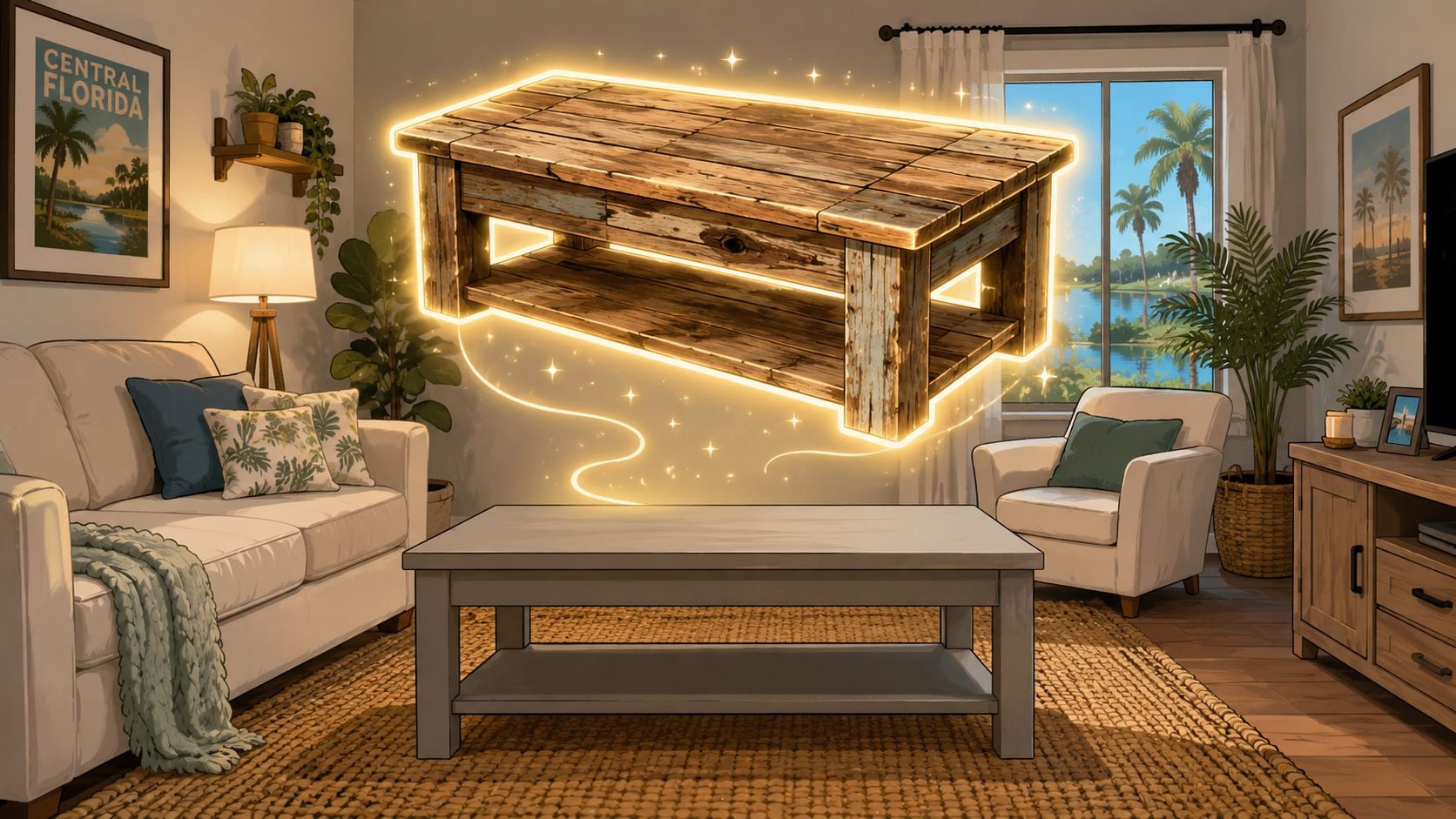
Some tables hold drinks. Others help define the whole room. Reclaimed wood usually falls into the second group because it adds warmth, especially around upholstered seating and smooth flooring.
Homeowners trying to soften a newer home often pair a rustic table with layered lighting, soft textiles, and quieter wall color. For readers gathering ideas beyond furniture, this guide on how to make spaces cozy offers helpful inspiration for creating that lived-in feel.
Why this style works so well in Florida interiors
The look is flexible. A reclaimed wood table can support farmhouse, modern rustic, industrial, transitional, and even coastal-leaning rooms if the lines are right.
A few combinations work especially well:
- With a structured sofa: The table adds contrast and keeps the room from feeling too formal.
- With neutral upholstery: The wood becomes the focal point without needing bright color.
- With metal accents: The space picks up an industrial edge that feels clean rather than heavy.
Practical rule: A coffee table should do more than fill space. It should give the seating area a visual anchor.
For homeowners who like rustic character but still want a curated look, collections in a mindfully rustic style show how reclaimed texture can feel refined instead of rough.
What a Reclaimed Wood Coffee Table Really Is
You walk into a showroom, see a table with saw marks, worn edges, and a sun-faded top, and the tag says reclaimed. In Central Florida, that word deserves a closer look, because appearance alone does not tell you how the wood was sourced or how well the piece will hold up in humidity.
A true reclaimed wood coffee table is built with lumber that served another purpose first. It may have come from an old building, a factory, farm structure, fencing, or industrial decking. The marks on the surface came from years of real use, weather, fastening, cutting, and aging, not from a quick distressing process meant to copy that history.
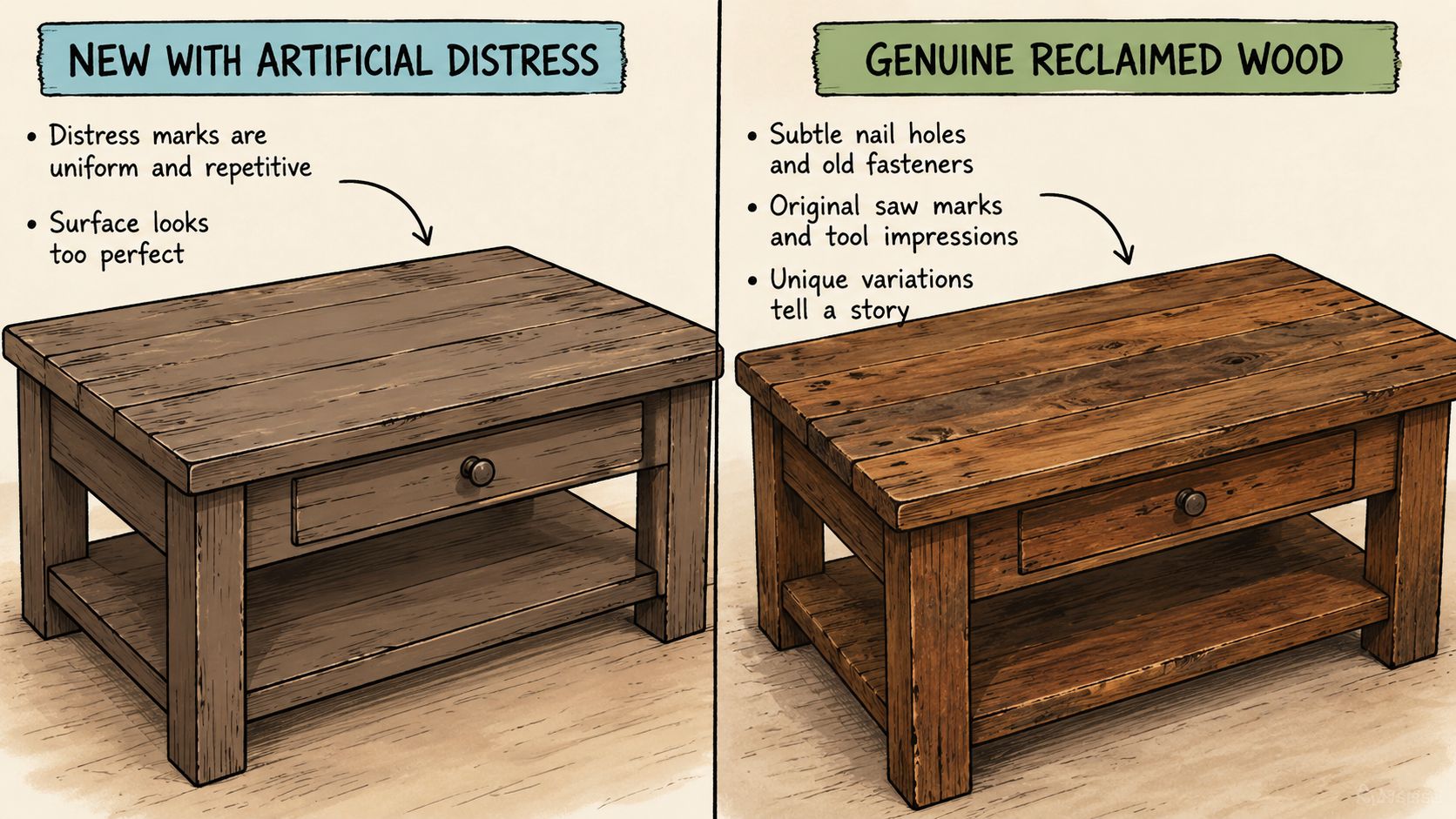
Real reclaimed wood versus a distressed new table
These two categories often get blurred together, and that is where buyers can overspend.
Distressed wood is usually new lumber altered to look older. Makers may add dents, tool marks, rub-through areas, or artificial checking to create a timeworn surface. That can still be a good design choice. It is not the same as wood that spent decades in another structure and was later milled for furniture.
Reclaimed wood has a past. Distressed wood has a style.
That difference matters for three reasons. First, authenticity affects value. Second, reclaimed boards often show more varied grain, oxidation, and color changes than new wood can imitate well. Third, older lumber needs careful preparation, especially in a humid place like Orlando, where poor drying or weak joinery can lead to movement after the table gets into your home.
What “authentic” should mean when you ask the question
If a table is advertised as reclaimed, ask where the wood came from and how much of the piece is made from reclaimed wood. Some well-made tables use reclaimed tops with newer internal supports or bases. That is not automatically a problem. It just needs to be stated clearly so you know what you are paying for.
A good seller should be able to explain the wood's origin in plain language, describe how it was cleaned and stabilized, and talk through the care it will need in a Florida home. Our own advice on how to care for wood furniture in Florida conditions helps make those conversations easier, especially if you are comparing several tables that look similar at first glance.
Simple signs to check before you buy
You do not need to be a woodworker to spot the difference between genuine age and a manufactured effect. Start with a few practical checks:
- Look for natural variation: Real reclaimed boards rarely age in a perfectly even pattern.
- Check the underside and interior edges: Genuine material usually shows character beyond the top surface.
- Ask about old holes and patches: Filled nail holes, knots, and repaired areas can be signs of prior use.
- Study repeated marks: If every board has the same scratches in the same direction, the aging may be decorative.
- Ask how the wood was dried and sealed: In Central Florida, that answer matters as much as the look.
One more practical note. If this table is arriving as part of a larger relocation, broad planning resources like this expert guide for your 2026 Florida move can help with the move itself, but furniture buyers still need to verify materials, construction, and finish details separately.
The best reclaimed wood coffee table is not just old-looking. It is accurately represented, properly prepared, and built to stay steady through Florida seasons.
Benefits and Considerations for Your Florida Home
A reclaimed wood coffee table can do a lot of work in a Central Florida living room. In homes with tile floors, bright natural light, and newer construction, it adds the kind of visual weight that keeps the room from feeling flat or overly polished. It gives the space a center point that feels lived in.
That appeal is only half the story.
Here in Florida, a beautiful table also has to hold up through air conditioning, summer humidity, and the occasional mug ring from real family life. Reclaimed wood can be a smart choice for that setting, but only if the piece is reclaimed, properly dried, and finished for the climate. Old wood and well-prepared wood are not always the same thing.
Why reclaimed wood works so well in Florida interiors
Many Central Florida homeowners want warmth without making the room feel heavy. Reclaimed wood helps with that balance because it brings texture, color variation, and a sense of history to spaces that can otherwise feel a little new from top to bottom.
It also tends to age gracefully in daily use.
Small scratches, shifting light, and ordinary wear usually blend into a reclaimed surface more naturally than they do on a glossy factory table. For a busy household, that matters. A coffee table should feel usable, not precious.
A few design benefits stand out:
- It softens hard surfaces: Tile, glass, and painted walls need something with texture nearby.
- It adds depth to open floor plans: Reclaimed wood helps define the seating area without adding visual clutter.
- It fits more than one style: A well-built piece can sit comfortably with coastal, farmhouse, transitional, or industrial furniture.
For homeowners getting settled after a relocation, timing matters too. Broader planning resources such as this expert guide for your 2026 Florida move can help with the move itself, but the furniture choices that last usually depend on how well the materials suit Florida conditions.
What to watch for in Central Florida humidity
Humidity is where many buyers get caught off guard.
Reclaimed wood is often praised for character, but character does not protect a table from moisture movement. Wood expands and contracts as it takes in and releases moisture, much like a sponge that never looks dramatic from across the room but changes shape over time. In Central Florida, that movement can show up as slight cupping, small joint gaps, finish stress, or a top that no longer sits quite as true as it did on day one.
That does not mean reclaimed wood is a bad fit for Orlando area homes. It means preparation matters.
A table made from properly dried boards, built with sound joinery, and sealed with a finish suited to humid interiors is far more likely to stay stable. A table chosen only for its weathered look can turn into a maintenance problem.
Here is the practical way to judge the tradeoff:
- Benefit: Older wood often has tighter grain and visual depth that new stock struggles to match.
- Consideration: Reclaimed boards can vary in density, moisture history, and surface hardness.
- Benefit: Natural marks help disguise day-to-day wear.
- Consideration: Poor sealing lets spills and damp cleaning habits do more damage than many buyers expect.
Placement matters too. A coffee table near strong afternoon sun, a frequently opened patio door, or an area where condensation is common has a harder job than one in a more controlled part of the room.
For long-term upkeep, our guide to caring for wood furniture in Florida conditions walks through the habits that help protect the finish and slow moisture-related wear.
One final caution from years on the showroom floor. If a seller talks only about the table's rustic look and cannot clearly explain how the wood was dried, sealed, and built for humidity, treat that as a warning sign. In Florida, authenticity and preparation need to travel together.
Finding the Perfect Size and Style for Your Space
A reclaimed wood coffee table can have beautiful color and real history, yet still feel awkward in the room if the scale is off. You see it the first evening you use it. Someone has to stretch for a drink, knees meet the corner, or the table looks like it wandered in from another seating group.
Good proportion fixes that.
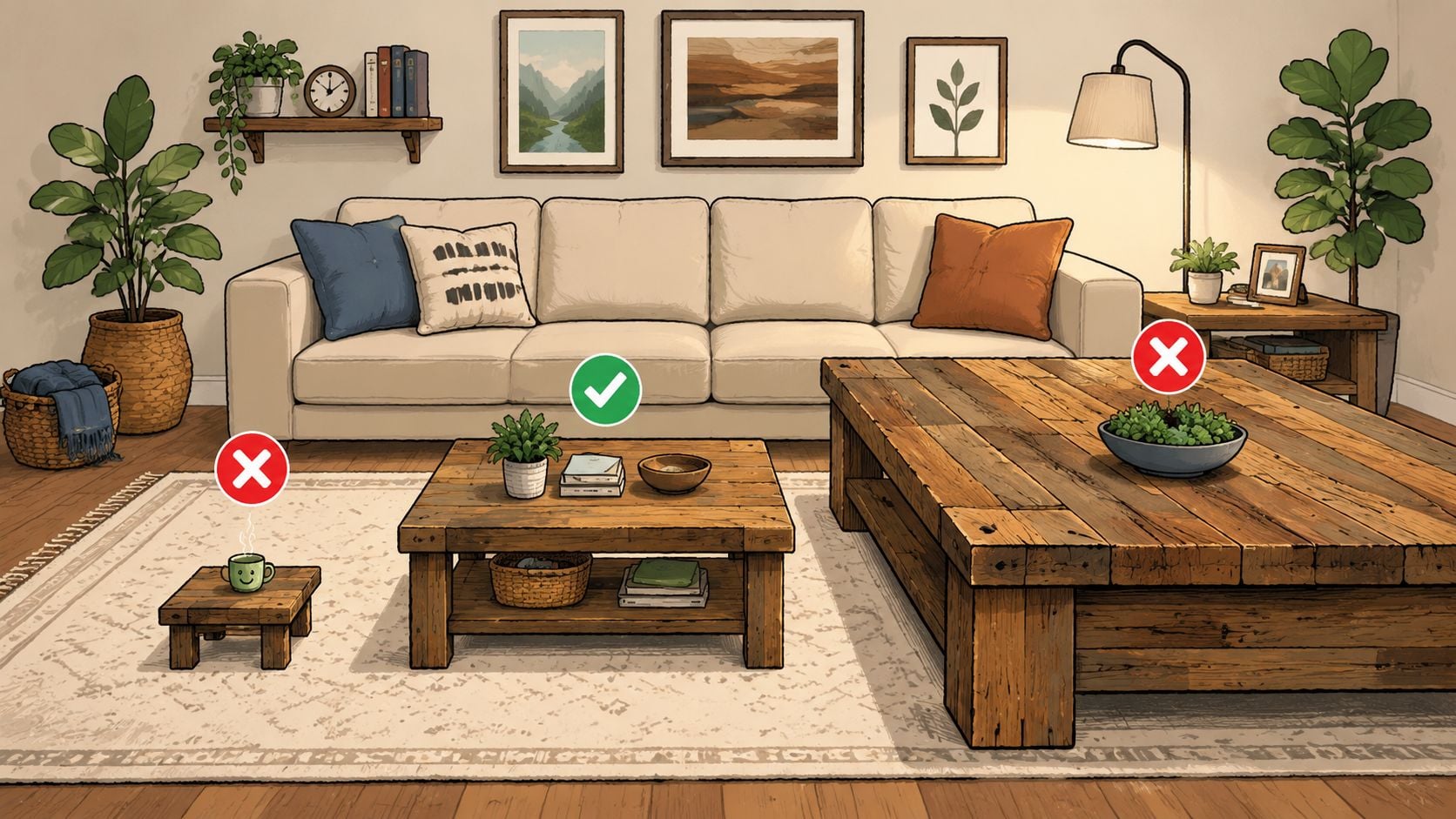
The measurements that keep a room comfortable
A coffee table usually works best when its top sits close to the height of your sofa seat, its length relates to the sofa instead of matching it exactly, and there is enough open space around it for people to walk and sit comfortably. Designers commonly use a simple rule of thumb. Keep the table near seat height, aim for roughly two-thirds the sofa's length, and leave enough clearance between the sofa and table so the room does not feel pinched.
If that sounds abstract, a quick visual helps. A coffee table works like the pause between two sentences. Too little space and everything feels crowded. Too much space and the connection disappears.
Here is how sizing mistakes usually show up in real homes:
| Room issue | What usually caused it |
|---|---|
| Table feels hard to reach | It sits too low or too far from the sofa |
| Room feels cramped | There is not enough clearance around it |
| Sofa and table look mismatched | The table is too long, too short, or too bulky for the seating |
One practical note for Central Florida homes. Large sectionals are common, especially in family rooms that open toward patios or kitchens. In those layouts, buyers sometimes choose an oversized reclaimed table because the wood has so much presence. The better approach is to measure the walking paths first, especially near sliders and high-traffic routes. A table that looks substantial in the showroom can feel heavy fast in a busy Orlando living room.
Matching style without losing function
Once the size feels right, style becomes easier to judge.
Reclaimed wood has more visual weight than many new-wood tables because the grain, saw marks, color shifts, and repaired knots all catch your eye. That means the base and shape matter more than people expect. A thick top on a chunky base can overwhelm a smaller room. The same top on a cleaner metal or tapered wood base often feels balanced.
A few style directions tend to work well:
- Industrial: Reclaimed wood with metal, straighter lines, and a simpler profile.
- Modern farmhouse: Warmer tones, visible texture, and a sturdier silhouette.
- Transitional: Character in the wood surface, but a lighter and more refined overall shape.
Shape matters too. Rectangular tables suit longer sofas and narrower rooms. Square tables often work better with sectionals. Round tables soften tight circulation zones and can be a smart choice for families with young children because there are no sharp corners at knee height.
For Florida homeowners, there is another layer to style. Deep distressing, open cracks, and heavily uneven tops may look authentic, but they are not always the easiest pieces to live with in a humid, active home. A table can still show its age and story while having a flatter, more usable surface and a shape that fits your room. That balance usually gives you the character people want from reclaimed wood, without the daily annoyance.
If you want help comparing shapes, proportions, and layout options before you shop, our guide on how to choose a coffee table gives a clear starting point.
Understanding Finishes and Long-Term Care
The finish decides whether a reclaimed wood coffee table ages gracefully or starts looking tired too soon. Many shoppers focus on species, color, and distressing. Those matter. But the topcoat does the daily work.
In a busy living room, the finish has to stand up to cups, books, remote controls, light abrasion, and the occasional warm dish. In Central Florida, it also has to handle moisture in the air.
Not all clear coats protect the same way
The difference between finishes is often underestimated. According to this discussion of coffee table finishes, polycrylic is the softest clear coat and the least resistant to chemical, abrasion, and heat damage, and it can begin to peel, crack, and show heat rings after as little as six months of actual coffee table use. By contrast, a true polyurethane or drying oil finish like tung oil offers significantly better long-term protection.
That doesn't mean every soft-looking finish is bad. It means the table's expected use should match the finish choice.
A decorative table in a low-traffic sitting room can tolerate more delicacy. A family-room centerpiece in Orlando usually can't.
The finish should match the life the table is going to live, not just the look in the showroom.
A simple care routine for Florida homes
Long-term care doesn't need to be fussy. It just needs to be consistent.
- Use a dry or lightly damp cloth: Heavy soaking can work into seams and grain.
- Protect from heat: Coasters and trays help prevent rings and surface stress.
- Watch seasonal changes indoors: Strong air-conditioning swings and open-door humidity can challenge older wood.
- Address wear early: Small finish issues are easier to correct before they spread.
Some reclaimed pieces eventually need touch-up or refinishing. That's normal. A table built from character-rich wood often rewards maintenance because the core material still has plenty of life left.
For readers considering repair or restoration down the road, this guide on refinishing wood furniture explains the process clearly.
How to Spot Quality in a Reclaimed Wood Coffee Table
A reclaimed wood coffee table can look full of history and still be poorly built. That is the part many shoppers miss. In a Central Florida home, where humidity can swell wood and loosen weak construction over time, quality shows up in the parts you do not notice from across the room.
Start with the table the same way a furniture maker would. Test the bones first, then the surface.
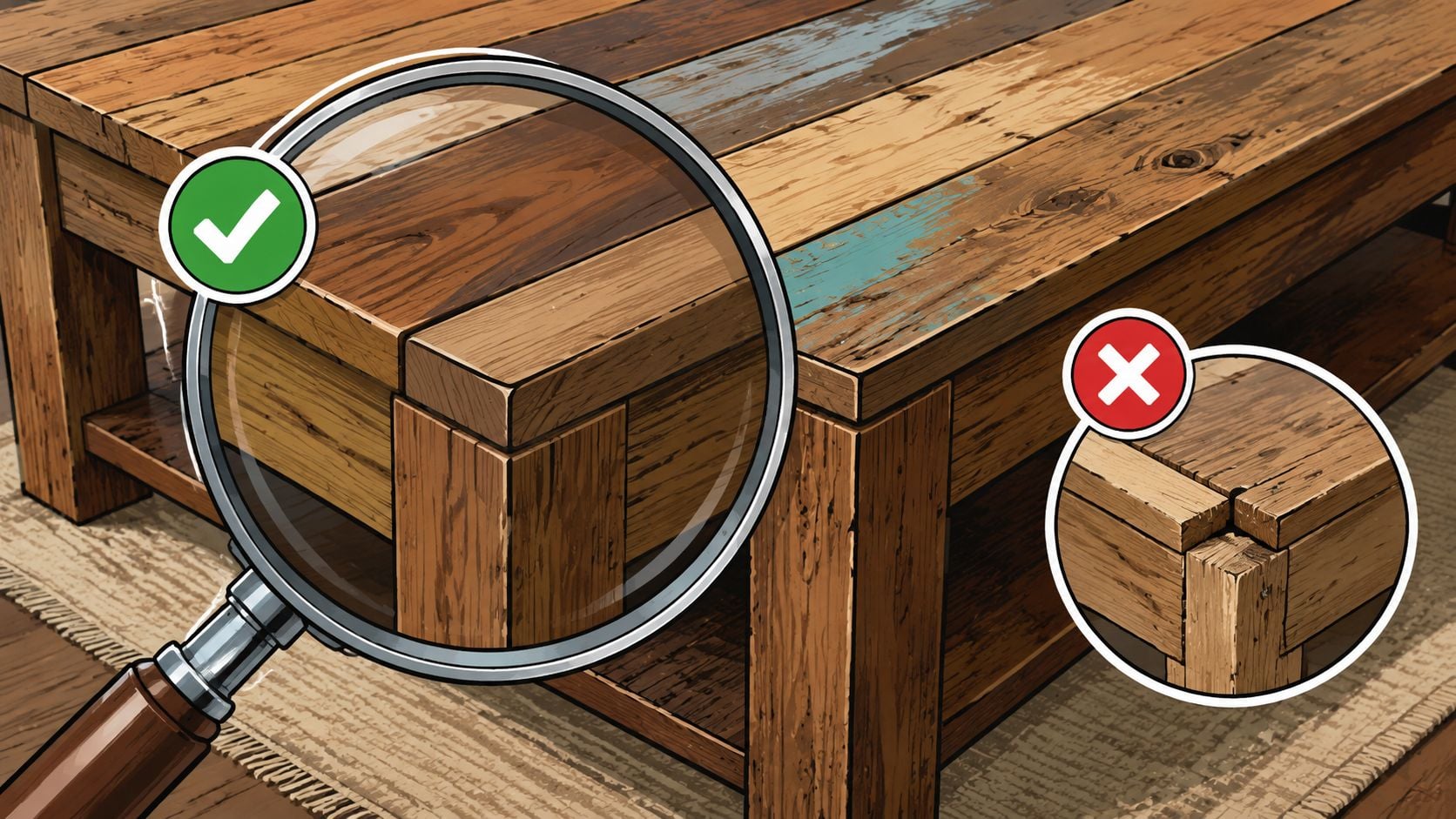
A quick checklist before saying yes
A good reclaimed table usually gives clear signals once you know where to look.
- Press on the corners: The table should feel planted, not loose or springy.
- Look underneath the top: Support rails, braces, and joinery should appear intentional and tidy.
- Check the board layout: Planks should meet with purpose. Gaps, if present, should look consistent and stable rather than random.
- Run your hand along the edges: Timeworn character is fine. Sharp splinters, snagging, and rough tear-out point to poor finishing.
- Look for signs of real age: Nail holes, saw marks, color variation, and filled checks can be normal. Artificial distressing often looks repetitive, as if someone copied the same scar across several boards.
That last point matters more than people expect. Authentic reclaimed wood usually has irregular character, much like an old brick street in downtown Orlando. The wear is varied because real use is varied. If every mark looks evenly spaced or freshly gouged, the table may be using new wood dressed up to look old.
Then check how the base meets the top. A quality piece allows for natural wood movement while still feeling solid. Wood expands and contracts with moisture. In Florida, that movement is not a theory. It is everyday life. If a table is rigid in the wrong places or fastened carelessly, you may see separation, cupping, or wobble sooner than expected.
Why craftsmanship matters as much as the wood itself
Good reclaimed lumber is only half the story. The builder still has to mill it properly, dry it carefully, and join it in ways that hold up in a lived-in home.
That is why the underside tells you so much. Clean joinery, level supports, and a base that feels square usually reflect patient workmanship. A heavy top sitting on a flimsy frame is like putting a solid roof on weak walls. It may look fine at first, but daily use exposes the problem.
Ask a few plain questions before you buy. Where did the wood come from. Was it reclaimed or only made to look reclaimed. Has it been kiln-dried or otherwise stabilized. What species is it. Those answers help you judge authenticity and help you predict how the table may behave in an air-conditioned Florida house.
Custom sizing can help quality too, especially in rooms with tight walkways or oversized sectionals. A table that fits the room properly gets used better and bumped less often. If you want help matching construction, scale, and wood character to your space, a professional interior design consultation for your home can make that choice much clearer.
A quality reclaimed wood coffee table should feel honest in your hands. Solid joinery. Real character. Construction that respects Florida conditions, not just showroom looks.
Experience the Difference at Slone Brothers in Longwood
Reading about reclaimed wood helps. Touching it in person helps more.
At Slone Brothers Furniture, shoppers can compare grain, texture, finish, and scale in a real setting instead of guessing from a product photo. That matters with reclaimed wood, where authenticity and craftsmanship are easier to judge up close. A hand across the surface often reveals more than a listing ever will.
As a local, family-owned showroom serving Greater Orlando since 1980, Slone Brothers focuses on long-term value, not quick furniture turnover. The showroom includes quality collections for living, dining, bedroom, home office, and more, along with strong choices in American-made and Amish-crafted furniture. The team also offers a custom-order program, an in-house design team, home delivery, commercial furnishings, a Low Price Promise, and a clearance outlet for shoppers looking for excellent value.
For homeowners in Longwood, Orlando, Lake Mary, and Sanford, that local guidance can be especially useful when choosing wood furniture that needs to stand up to Florida conditions. Design help is available through the interior design consultation team, which makes it easier to match size, finish, and style to the room instead of buying on guesswork alone.
A reclaimed wood coffee table should feel right in proportion, solid in construction, and believable in material. That's much easier to judge in person than on a screen.
Ready to find the perfect piece for your home? Visit Slone Brothers Furniture showroom in Longwood, FL, and let the design experts help you get started!