
Area Rug on Top of Carpet: A Designer’s Guide

A carpeted living room in Winter Park can feel finished in one sense and still miss a clear center. A well-chosen area rug on top of carpet solves that problem by giving the room a visual anchor, a stronger furniture arrangement, and a more refined look that feels intentional instead of improvised. In Central Florida homes, that matters because style has to coexist with comfort, humidity, and the kind of daily use that makes every design choice count.
The Timeless Appeal of a Layered Rug Foundation
A layered rug works best when the base room already has good bones, but needs definition. That's common in Orlando and Lake Mary homes with wall-to-wall carpet that feels soft underfoot yet visually broad and unstructured.
For a homeowner who wants the room to feel more collected, a top rug can introduce pattern, color, or texture without replacing the carpet beneath. It's a practical design move, not a temporary fix, and it's become a mainstream consideration in soft-surface flooring, with U.S. carpet and area rug sales reaching $11.36 billion in 2023 according to Statista's carpet and area rug sales data.
Slone Brothers has guided Central Florida homeowners since 1980, so the design conversation usually starts with how a room lives, not just how it photographs. That's the same mindset behind a thoughtful living room home decor approach, where rugs, seating, and accessories work together instead of competing for attention.
Practical rule: a layered rug should look like it belongs to the room, not like it was dropped into the middle of it.
The same principle shows up in softer finishes elsewhere in the home. A carefully selected valance or drapery detail can have the same effect of completing a room, and a useful guide to luxury window treatments can help clarify how layered details create polish without visual noise.
The appeal, then, is not only decorative. A layered foundation helps a room feel grounded, subtly refined, and ready for furniture that deserves a stronger stage.
Is Layering a Rug the Right Choice for Your Room
Layering isn't automatically the right move, and that honesty matters. The best results come when the top rug is chosen for the room's proportions and the base carpet can support it without making the whole setup feel bulky.
When the room supports the look
Low-pile or flatweave rugs usually sit best over existing carpet, because they add definition without too much height. Design guidance also emphasizes that the bottom carpet should be heavier than the top rug, and that if the setup feels cumbersome or can't be anchored properly, layering isn't recommended, especially for a refined room where clean lines matter (The Spruce guidance on rugs over carpet).
That makes the technique especially useful in a family room, seating area, or bedroom zone where the goal is to define a destination inside a larger space. In a Longwood or Sanford home, that often means drawing the eye toward a sofa group, a reading corner, or a bed wall without tearing out perfectly good carpet.
When to pause before buying
Not every carpeted room benefits from layering. Plush pile, thick shag, or a rug that sits too high can create a lumpy profile that looks forced rather than polished.
A good decision filter looks like this:
- Choose layering when the room needs a focal point and the carpet is stable, low, and supportive.
- Skip layering when the rug can't lie flat, the edges curl, or the height makes walking surfaces feel awkward.
- Reconsider the size if the room starts looking crowded instead of composed.
A rug selection guide for living rooms can help narrow the style conversation before any purchase is made. The right choice is the one that strengthens the room's architecture, not one that only adds another textile layer.
How to Measure for a Perfectly Proportioned Look
The most common mistake is sizing the rug to the visible open floor, not to the furniture grouping. That's how a room ends up with the dreaded “floating rug” effect, where the top layer looks separate from the seating area instead of anchoring it.
Start with the perimeter, then the furniture
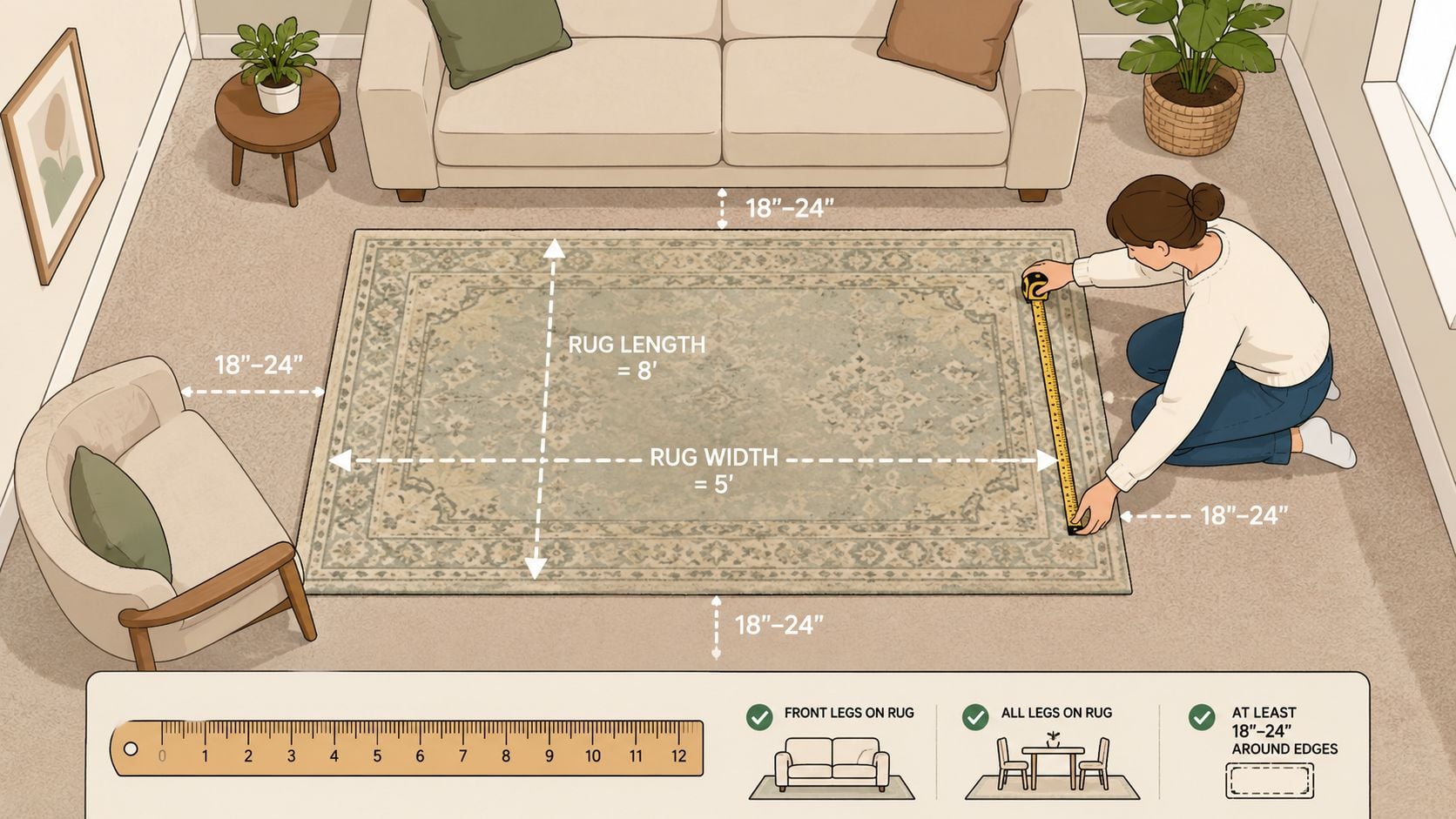
A polished layered look usually leaves 18 to 24 inches of the base carpet showing around the room's edges, and that often points to at least an 8'x10' rug, or a 9'x12' rug in larger rooms. That rule exists because the rug needs to do real visual work, not just sit under a coffee table.
The most stable composition usually keeps either all four legs or at least the front two legs of the primary seating pieces on the rug. That creates a clear anchor and helps the room feel tied together instead of visually scattered.
A simple measuring sequence
- Map the seating group first: trace where the sofa, chairs, and table land.
- Check the exposed border: confirm that the carpet perimeter still reads around the rug.
- Test the leg placement: make sure the main pieces connect to the rug, not hover beside it.
- Use the room, not the rug, as the starting point: the room should dictate the size, not the other way around.
For buyers who want to compare proportions before committing, a guide to choosing the right rug size can help translate measurements into a finished look. In a well-designed room, the rug does more than fit; it completes the composition.
What Is the Best Foundation to Prevent Shifting
A layered rug should feel steady from the first step. The right foundation protects the rug, reduces bunching, and keeps the setup from becoming a maintenance headache later.

Use a pad made for carpet over carpet
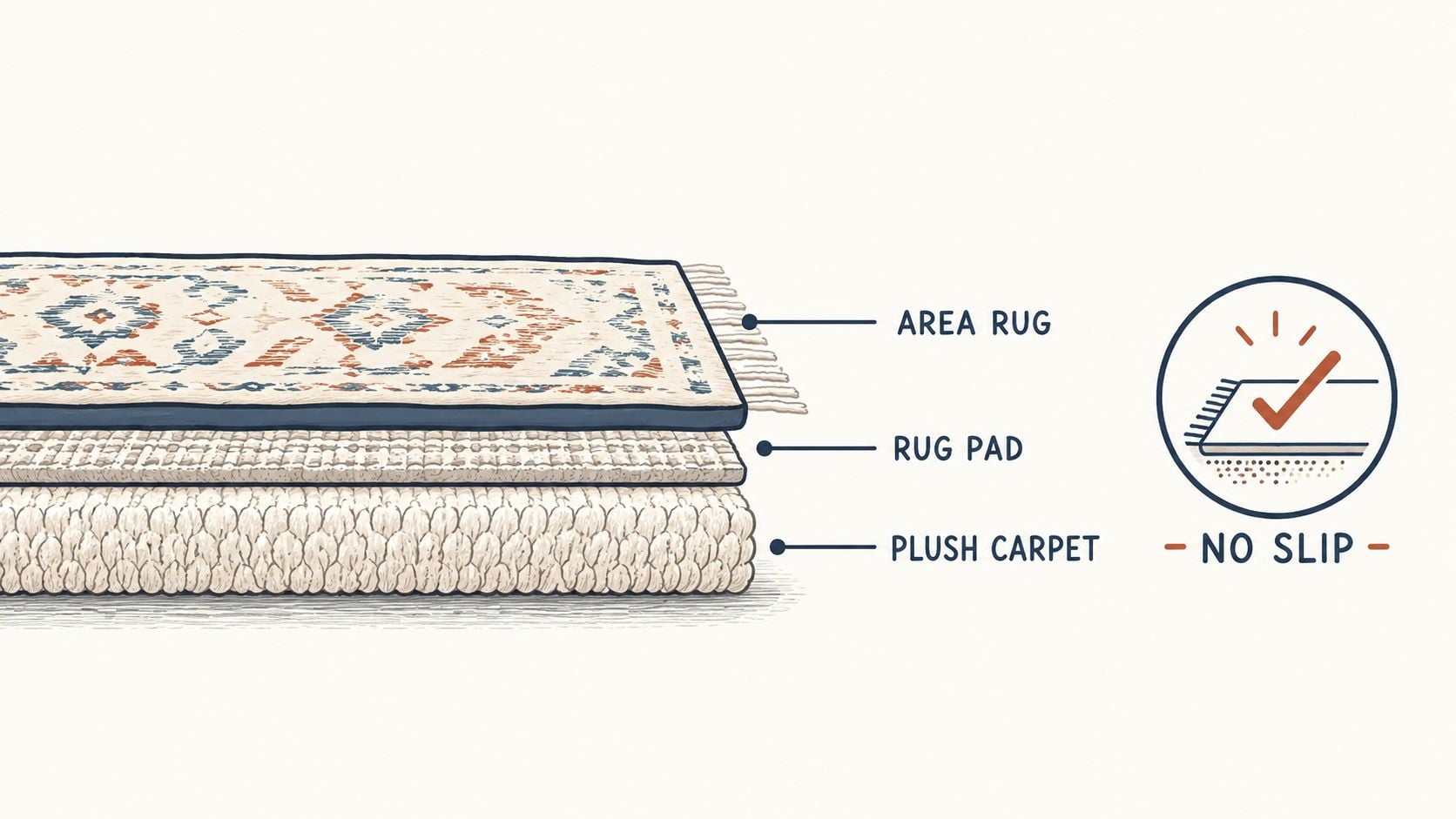
The most reliable approach is a carpet-to-carpet rug pad paired with furniture anchoring. That combination is specifically recommended because it helps keep the top rug stable without damaging the base carpet, and it's more appropriate here than a pad designed for hard flooring (designer guidance on carpet-over-carpet installation).
The practical sequence is straightforward. Vacuum the base carpet first, center the pad, place the rug, and then let substantial furniture help lock the arrangement in place. Heavy pieces on at least two sides materially improve stability, which matters in rooms where people walk around the seating group often.
Why quality furniture helps the whole setup
For proper anchoring, craftsmanship matters more than shortcuts. A substantial coffee table, a properly weighted media console, or a well-built sofa group does more than look good, it gives the rug a true anchor point.
A rug on carpet works best when the furniture has enough presence to hold the composition down.
That's one reason heirloom-quality pieces from well-made collections tend to pair better with layered flooring than lightweight furniture. The room feels settled because every piece has a job, and the rug stops acting like a loose accessory.
For homeowners thinking about floor protection more broadly, a guide to protecting floors from furniture is useful context. In a layered setup, protecting the carpet and stabilizing the rug are part of the same investment strategy.
Expert Styling Advice for Your Central Florida Home
A successful layered rug does more than cover carpet. It gives each room a distinct personality, which is especially valuable in Central Florida homes where open plans can blur one space into the next.

Living rooms, dining spaces, and bedrooms
In a Winter Park living room, a layered rug can ground a Smith Brothers sofa and a pair of chairs so the conversation area feels intentional, not adrift. In a dining room, the same idea works under a Canadel table when the rug is sized so chairs remain on it as they're pulled out, which keeps the space looking complete.
Bedrooms benefit too, especially when the rug frames the bed and softens the room without competing with the carpet already in place. A more restrained design can be especially effective in a home where the rest of the palette is already active.
Let the room's lighting and texture do some of the work
Soft ambient light changes how layered textiles read at night, and that matters in homes where evenings are spent in the main living area. A useful discussion of soft ambient lighting can help explain why rug texture, upholstery, and lighting should be considered together rather than separately.
A few styling principles tend to hold up well:
- Choose contrast with purpose: a subtle pattern can add depth without overwhelming the carpet.
- Match the rug to the room's function: calm for bedrooms, more definition for seating areas.
- Keep the furniture scale honest: the rug should support the room, not compete with oversized pieces.
For homeowners who want a more personal plan, complimentary design guidance can help translate these choices into a finished room. That matters whether the home is in Altamonte Springs, Lake Mary, or right here in Longwood, because the right rug is part of a bigger furniture story.
How Do You Clean and Maintain a Layered Rug
Moisture is the issue that gets overlooked most often, and in Florida that's a real concern. Spills, humidity, and even trapped air can linger between the rug and the carpet if the setup isn't checked regularly, which raises the risk of mildew or mold over time (cleaning guidance on rug-on-carpet moisture concerns).
Keep the layers dry and inspect them often
Any spill should be addressed immediately, with the rug lifted if needed so the carpet beneath can dry completely. Cleaning experts also recommend lifting the rug periodically to inspect and air out the area underneath, which is especially smart in Central Florida's humid climate.
A natural-fiber top rug can be a beautiful choice in the right room, but it still needs the same careful attention to moisture management. More detailed care guidance for those materials is available in natural fiber rug care notes.
Build maintenance into the ownership plan
A layered rug should be treated like a finished textile system, not a set-it-and-forget-it accent. That means vacuuming both the rug surface and the edges where dust can settle, then checking the underside during regular room cleaning.
For deeper sanitation needs, especially after a serious spill or pet accident, professional commercial facility steam cleaning can be a useful point of reference for understanding how deeper extraction work is approached. The principle is simple, moisture must leave the textile layers, not stay trapped inside them.
When the rug is sized correctly, anchored properly, and maintained with care, the result is lasting value for both the carpet and the top layer. For personal guidance on choosing the right piece for a Longwood or Orlando home, visit the Slone Brothers Furniture showroom in Longwood, FL, and speak face-to-face with experienced design consultants who can help you select a rug, furniture, and layout that feel polished, practical, and built to last.
Ready to invest in furniture that lasts a lifetime? Skip the online guesswork and automated digital chatbots. Visit the Slone Brothers Furniture showroom in Longwood, FL today. Connect face-to-face with our experienced design consultants and let us help you transform your house into a beautifully curated home.