
Horizontal Wall Decor That Elevates Every Living Space


The wall above a sofa, buffet, or console is where a room either settles into itself or stays half-finished. In a Longwood or Winter Park home, that blank span is usually the last thing standing between a beautiful furniture purchase and a room that feels fully composed, and horizontal wall decor is often the piece that closes the gap. The right one doesn't just fill space, it gives the whole room a visual spine.
Why Horizontal Wall Decor Changes the Way a Room Feels
A long wall without a clear anchor makes even quality furniture look temporary. A horizontal piece does the opposite, it stretches the eye across the room, settles the composition, and makes the furniture below it feel intentionally placed instead of stranded.
The wall is often the real problem
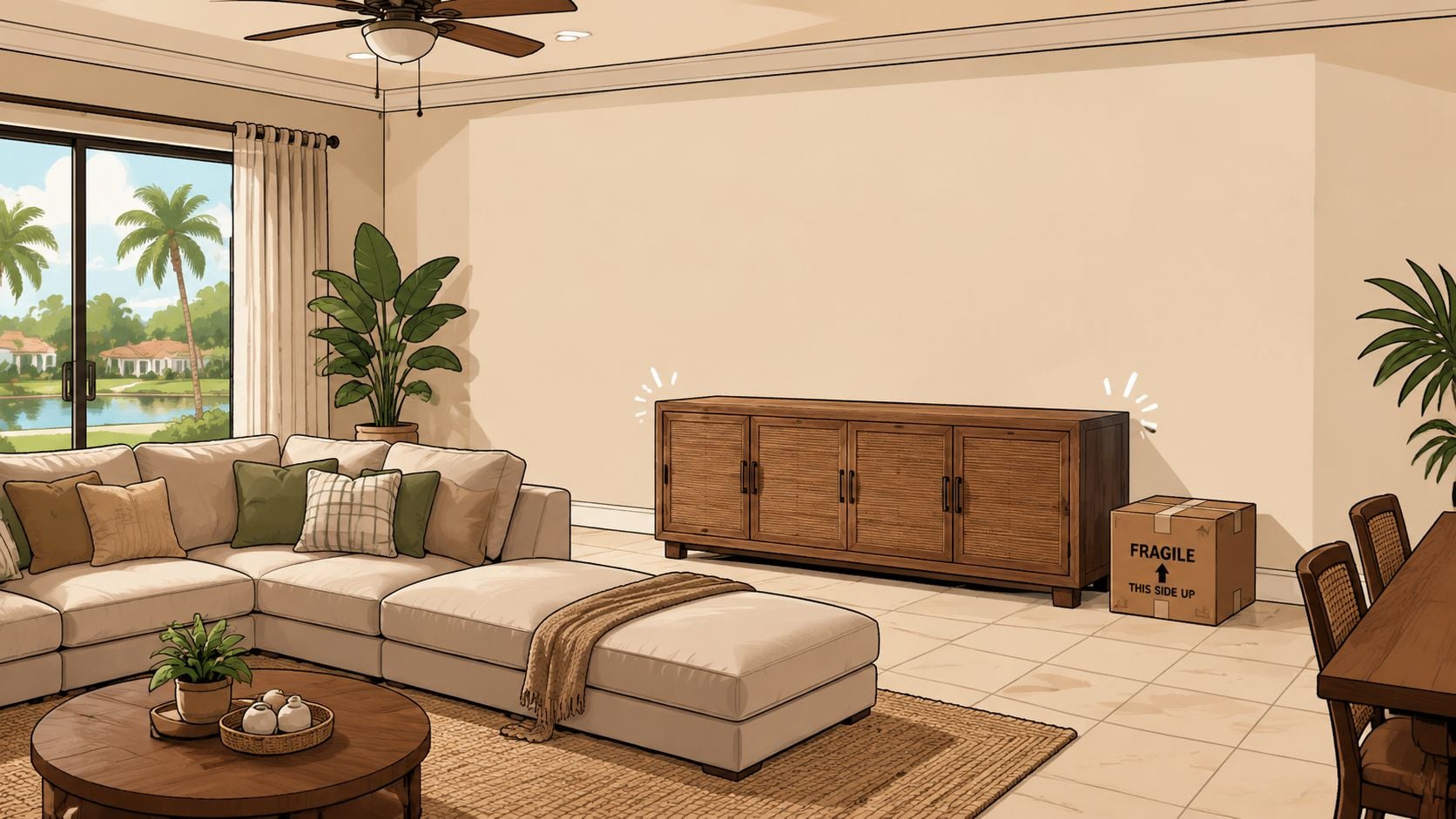
In newer Central Florida homes, open-concept plans create broad sightlines, and that's where a long blank wall starts to dominate. A homeowner can invest in a handsome sectional or a dining buffet, then leave the wall above it empty because the room already has “enough.” It doesn't. The wall still needs a visual job.
Horizontal decor works because it matches the shape of the space beneath it. It reinforces width, which is exactly what long living rooms and dining zones already have in abundance. For a broader look at how wall choices affect the mood of a room, the layout thinking behind designing a room to reduce stress is worth keeping in mind.
Why this matters in Longwood and the surrounding market
Longwood, Lake Mary, Sanford, and Winter Park homes often use long connected rooms rather than small boxed-in spaces. That means the wall above a sofa, buffet, or credenza isn't an afterthought, it's part of the room's architecture. Treating it casually makes the whole space feel thinner and less resolved.
There's also a useful lesson in donor walls and recognition displays. A strong horizontal arrangement creates order, guides the eye, and turns an otherwise blank surface into a deliberate statement. For a different take on that visual discipline, find donor recognition strategies shows how linear composition can be used to create clarity in a public-facing space.
Practical rule: if the furniture below the wall is substantial, the art above it should look equally grounded, not like it was borrowed from another room.
That's the value of horizontal wall decor. It makes the room feel considered, which is what homeowners usually want after they've already invested in the furniture itself.
How Do You Measure Horizontal Wall Decor the Right Way?
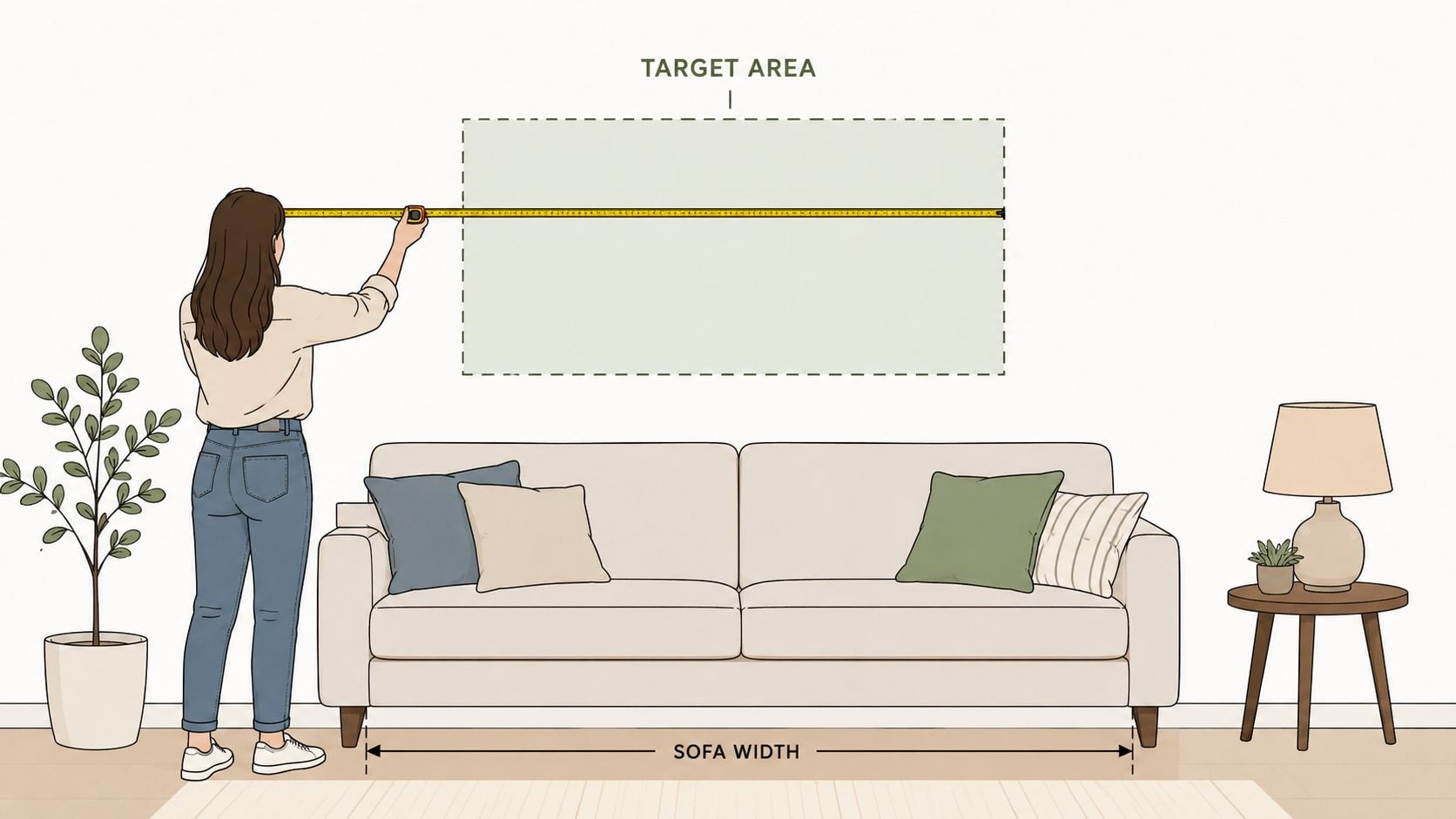
Start with the furniture, not the wall. A sofa, buffet, console, or sectional sets the visual boundary, and the decor above it should respect that line. As a working standard, aim for art that spans about 60% to 75% of the width of the piece below it, with the center hung around 57 to 63 inches from the floor and the bottom edge set roughly 6 to 12 inches above the furniture top, depending on the room and the scale of the piece wall art size guide.
That rule gets clearer once you measure the anchor piece first. A long sectional, a buffet, or a console should be treated as the main reference, then you size the decor to read as roughly two-thirds of that span. In real rooms, that approach keeps the wall from feeling like a separate zone and stops the art from floating.
Use the furniture as your guide
Shopping by empty wall width is how people end up with decor that looks undersized after installation. The better question is simple, which piece below the wall is doing the visual work.
A broad sectional in an open great room can support a larger horizontal piece than a slim settee in an entry. A wide dining buffet can usually take a longer composition than a narrow console in a hallway. The art should reinforce the furniture's width, not fight it, and that is exactly where furniture measuring guide habits pay off before you buy anything substantial.
The wall is often the core issue
The wall itself can throw off the whole read. High ceilings, oversized openings, and long sightlines make a piece look smaller than it seemed in the showroom, while a lower, tighter room can make the same piece feel heavy.
That is why scale has to be checked against the architecture, not just the artwork label. If the furniture is substantial, the decor needs enough width and presence to hold its own. If you are working with a broad, anchored wall, a guide like how to create a balanced accent wall helps you keep the composition centered and intentional instead of top-heavy.
Keep the gap consistent
The space between the top of the furniture and the bottom of the decor matters more than many buyers expect. Around 6 to 12 inches keeps the pieces visually connected without crowding them, and that gap is especially useful above sofas and buffets, where the relationship needs to feel continuous.
The center line matters too. Hanging the midpoint of the art around 57 to 63 inches from the floor usually keeps it in a comfortable sightline. That holds the room together whether the home is a newer build in Lake Mary or an older property in Altamonte Springs with lower ceiling details.
For more exact measuring habits, the furniture measuring guide is the right reference point before buying anything substantial.
Simple decision checks
- Wide sectional: Choose a piece that tracks the sofa's length instead of leaving a large empty band above it.
- Dining buffet: Keep the decor low enough to feel tied to the casegood, not pasted high on the wall.
- Entry console: Use the wall width to your advantage, but do not let a long piece overpower a narrow passage.
If the math is close but the room still feels off, the room usually wins. Scale is always the final judge.
For wall lighting pairings, it also helps to compare sconce placement and style tips when the decor will share the wall with fixtures. Lighting changes how far a horizontal piece reads from across the room, especially in evening light.
Homeowners who prefer a softer, collected look can also borrow ideas from cozy farmhouse wall decor inspiration, especially when the furniture below is warm wood, slipcovered, or hand-finished. The right size still matters first, but the material and finish need to feel as grounded as the piece anchoring the wall.
Should You Choose a Single Statement Piece or a Horizontal Gallery Wall?
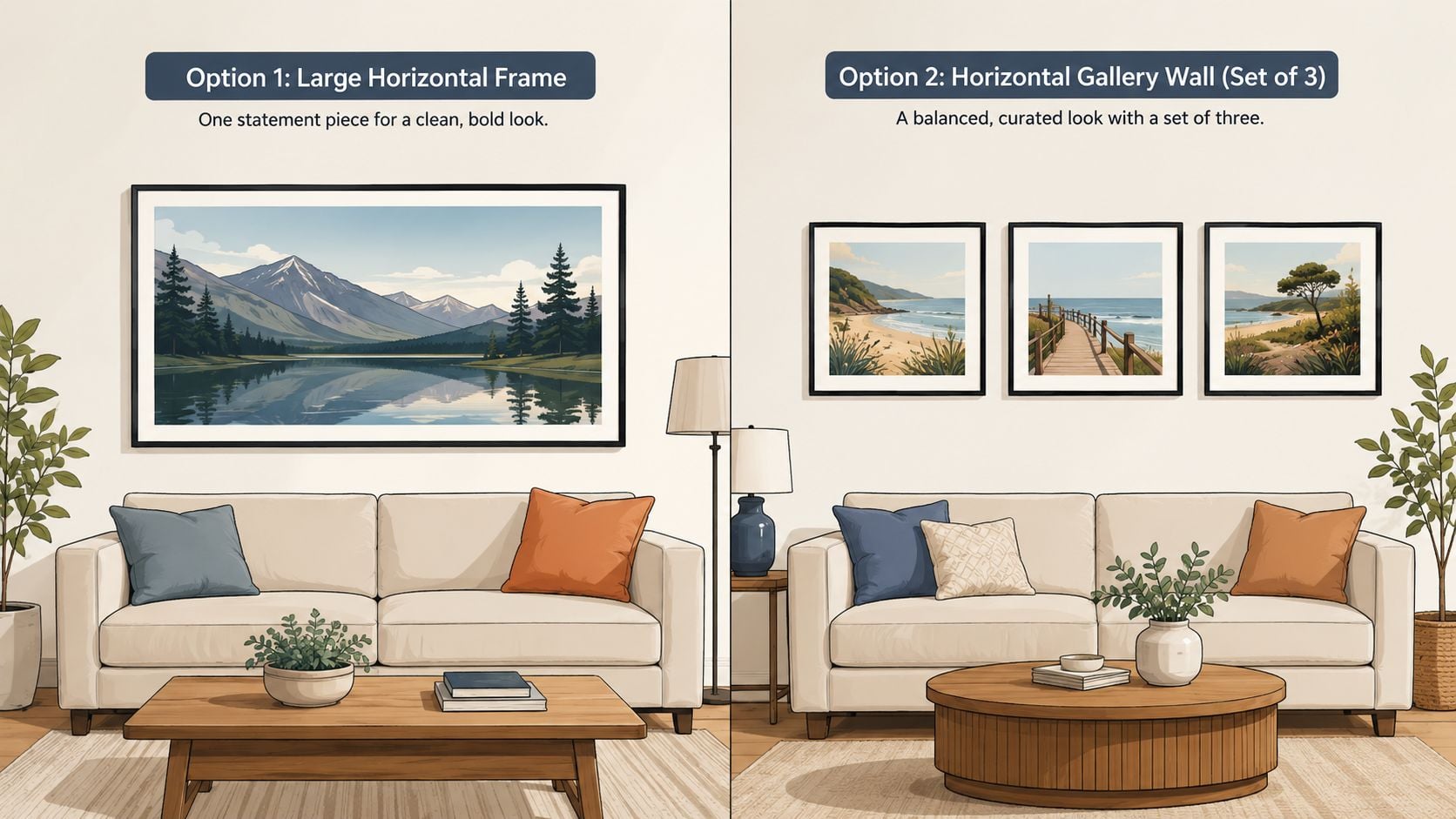
A single statement piece is the cleanest answer when the furniture below it already carries a lot of visual weight. A horizontal gallery wall works better when the room needs personality, texture, or a more collected feel. The wrong choice isn't about taste, it's about whether the wall needs calm or movement.
Single pieces solve the fastest problem
A long framed photograph, panoramic canvas, or wide wood panel anchors a room quickly. Above a buffet in a formal dining room, that's usually the right answer because the furniture already has structure and the wall only needs one strong move. Too many smaller pieces there can look fussy.
A homeowner should think like a designer, not a collector. If the room already has plenty going on, one large horizontal piece is almost always more elegant. For a balanced approach to accent walls and focal points, the balanced accent wall guide is a useful companion reference.
Galleries work when the wall needs more personality
A horizontal gallery wall turns several coordinated frames into one composition. That makes sense in an entry, along a stair run, or on a wall that needs personal photos mixed with art without looking random. The trick is to treat the entire grouping as one unit.
Spacing should stay even, usually around 2 to 6 inches between frames for a composed look. The whole arrangement should be centered at eye level, and the floor layout should be tested first with paper templates before anything goes on the wall. That avoids the common mistake of hanging each frame as if it lives on its own.
For homeowners drawn to a more collected or rustic approach, cozy farmhouse wall decor inspiration shows how linear arrangements can still feel warm instead of rigid.
Use the room type to decide
- Open great room: A single horizontal statement usually feels stronger and cleaner.
- Formal dining area: One wide piece above a buffet keeps the room polished.
- Entryway or stair wall: A horizontal gallery can add personality without crowding the space.
A gallery wall should read like one composed shape, not a row of unrelated frames that happen to share a wall.
For homeowners in Central Florida, the choice usually comes down to whether the room needs one bold anchor or a softer, more personal rhythm. Both can work, but they solve different problems.
How Do You Match Style and Material to Your Existing Furniture?
The decor should speak the same visual language as the furniture below it. If the casegood is warm and rustic, the wall piece should feel grounded and tactile. If the room is sleek and modern, the art should look edited, not busy.
Farmhouse works when it stays honest
Farmhouse horizontal decor should lean into wood, weathered finishes, black frames, and calm imagery. It pairs naturally with substantial casegoods, especially pieces with visible grain, turned legs, or the kind of solid presence often associated with Bassett and Amish furniture. The look should feel collected, not themed.
Typography can work, but only when it's restrained and well-proportioned. Oversized slogans and overly distressed finishes can cheapen a room that already has better furniture underneath it. In a Longwood home, the better version usually comes from real materials, not loud graphics.
Modern needs restraint and clean edges
Modern rooms want horizontal decor with crisp lines, minimal framing, and a deliberate color story. Brushed metal, acrylic, monochrome photography, and abstract pieces work because they echo the discipline of contemporary furniture. That's the same kind of visual restraint that pairs well with seating such as Stressless, where the design already carries a lot of precision.
A modern wall should not feel overworked. If the sofa, console, or dining set has strong geometry, the art should support that geometry instead of interrupting it. Too much pattern or too many competing finishes make the room feel restless.
Coastal should feel refined, not obvious
Coastal decor works beautifully in Central Florida when it avoids the usual clichés. Washed woods, soft blues, framed ocean photography, and subtle driftwood-like textures are far stronger than literal seashell prints. The point is atmosphere, not theme.
A beach-inspired horizontal piece belongs in a room with light upholstery, relaxed lines, and a comfortable finish. It should reinforce the easy mood of the room without turning the space into a souvenir shop. In a Florida home, the best coastal decor feels quiet enough to live with year-round.
Read the furniture first. Leg style, wood tone, upholstery texture, and finish already tell the story, and the wall should finish that sentence.
That's why style matching matters as much as size. A perfectly measured piece can still feel wrong if it ignores the furniture's vocabulary.
How Do You Hang Heavy Horizontal Pieces Safely and Level?
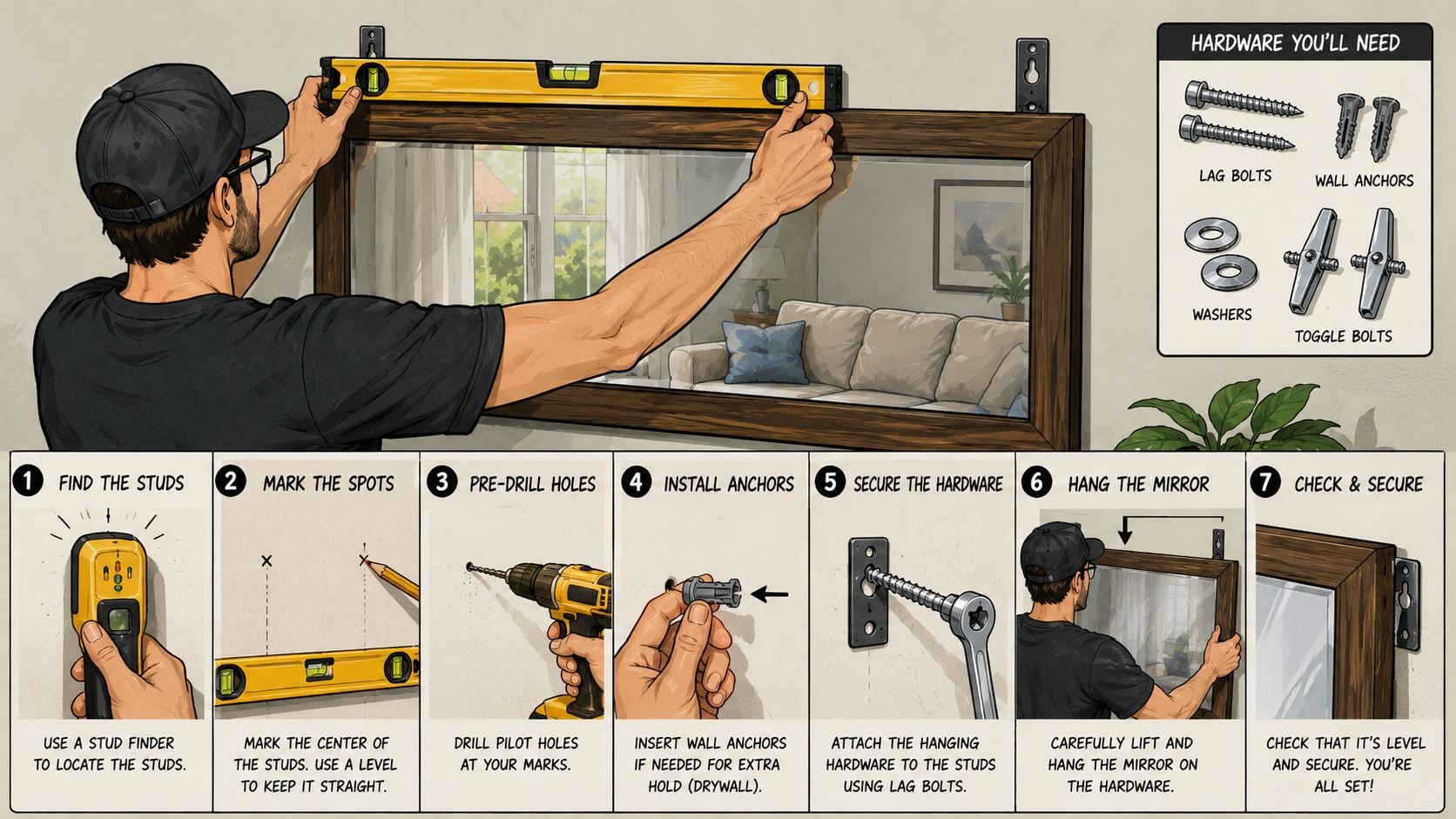
Heavy horizontal decor needs real installation discipline. A piece that looks perfect on the floor can drift off level on the wall, and a panel hung without proper support can turn into an expensive mistake. The safest approach is simple, patient, and boring in the best way.
Start with the wall, not the drill
Mark the level line before you make any holes. For interior walls, studs are commonly found at 16 inches on-center, and full panels should be fastened with four screws, with at least two into studs to improve hold and reduce failure risk wall panel installation guide.
That fastening detail matters more than most homeowners expect. A handsome framed piece can still shift over time if the wall attachment is weak, and once it drifts, the whole room looks sloppy. A level, a tape measure, a pencil line, and the right anchors beat guesswork every time.
Use the right hardware for the wall type
Drywall and plaster do not behave the same way. Plaster walls need different anchors and more caution around brittle areas, while drywall responds well to the right anchor selection once studs are located. If the piece is large, plan the installation around the structure of the wall, not just the shape of the frame.
Lay the layout out on the floor first, then transfer those measurements to the wall. A phone photo of the finished floor mockup also helps when the piece is being lifted into place. That extra step prevents last-minute symmetry mistakes and keeps the final placement honest.
What belongs in the toolkit
- Level and tape measure: These control the line and the spacing.
- Pencil and painter's tape: These keep the wall marked without damage.
- Stud finder and correct anchors: These determine whether the wall can hold the weight.
- Step stool or ladder: These matter more than arm reach when precision counts.
For homeowners who would rather not wrestle with installation, a white-glove delivery team can handle the heavy lifting and placement. That is often the smarter move when the piece is oversized or the ceiling height makes alignment awkward. If you are hanging a mirror or framed art and want the mark-and-mount process done cleanly, use the step-by-step guide to hanging your picture with precision as your reference before anything goes on the wall.
When Is Horizontal Decor the Wrong Answer?
Horizontal decor is not automatically the best move just because a wall is long. In some rooms, it makes the ceiling feel lower, especially when the space already has a sloped profile, dormer, or compressed headroom. That's when a designer should stop following the width rule blindly.
A very wide sectional or long custom sideboard can also create a proportion problem. A single horizontal piece may be technically correct and still look too small once it's mounted above an unusually broad anchor. The eye notices that imbalance immediately, even if a tape measure says the numbers work.
Read the architecture first
If the wall sits under an angled ceiling, a horizontal layout can reinforce the slope instead of balancing it. In those cases, a vertical piece, a mixed-orientation pairing, or a mirror may do more to open the room. The goal is to avoid making the room feel flatter than it already does.
The same judgment applies when the furniture below is unusually long. A sprawling sectional or a wide custom console can swallow a modest horizontal piece. That's not a decorating failure, it's a scale mismatch.
Better alternatives when the wall fights back
Sometimes the best answer is to split the wall into zones. A long wall can hold one dominant horizontal piece in one section and a different format, such as a mirror or vertical art, in another. That keeps the room from feeling monotonous.
Good design doesn't obey one rule everywhere. It solves the room in front of it.
That's the part many generic guides skip. Horizontal wall decor is useful, but it's still only one tool. In rooms with awkward architecture or oversized furniture, the more advanced move is often to break the rule.
Working With Slone Brothers to Get the Wall Right
The smartest way to choose horizontal wall decor is to plan it alongside the furniture, not after it. That's where a real showroom conversation helps, because proportions, materials, and finish choices can be judged against the actual room instead of a screen. A consultation can also connect wall decor to casegoods, seating, and lighting so the whole room feels cohesive.
For homeowners who want exact sizing or a finish that matches a specific buffet, console, or dining setup, custom order capability matters. It keeps the wall piece from feeling close but not quite right. The interior design consultation services page outlines how that hands-on guidance comes together.
That's the advantage of working with experienced design consultants instead of commission-driven order takers. The goal isn't to push a quick sale, it's to help a Longwood or Orlando homeowner make a room feel finished the first time.
Ready to invest in furniture and wall decor that belong together? Skip the online guesswork and automated digital chatbots. Visit Slone Brothers Furniture in Longwood, FL, and talk face-to-face with experienced design consultants who can help you choose horizontal wall decor, furniture, and custom pieces that make your home feel complete.