
Circular Wall Art Guide for Central Florida Homes


A newly painted wall in a Longwood or Lake Mary living room can still feel unfinished when the sofa is in place, the rug is down, and the room needs one calm, deliberate focal point. Circular wall art solves that problem better than another rectangle ever will, because the round form softens hard furniture lines and gives the room a quieter center of gravity.
For Central Florida homes, that matters. Open-plan rooms, tall foyers, and bright walls can make art feel either too small or too stiff, especially when the rest of the home already leans on quality furnishings, real materials, and pieces meant to last. This guide is written for homeowners who want the wall décor to meet the same standard as the sofa, dining table, or bedroom set, with practical advice on materials, sizing, placement, and care.
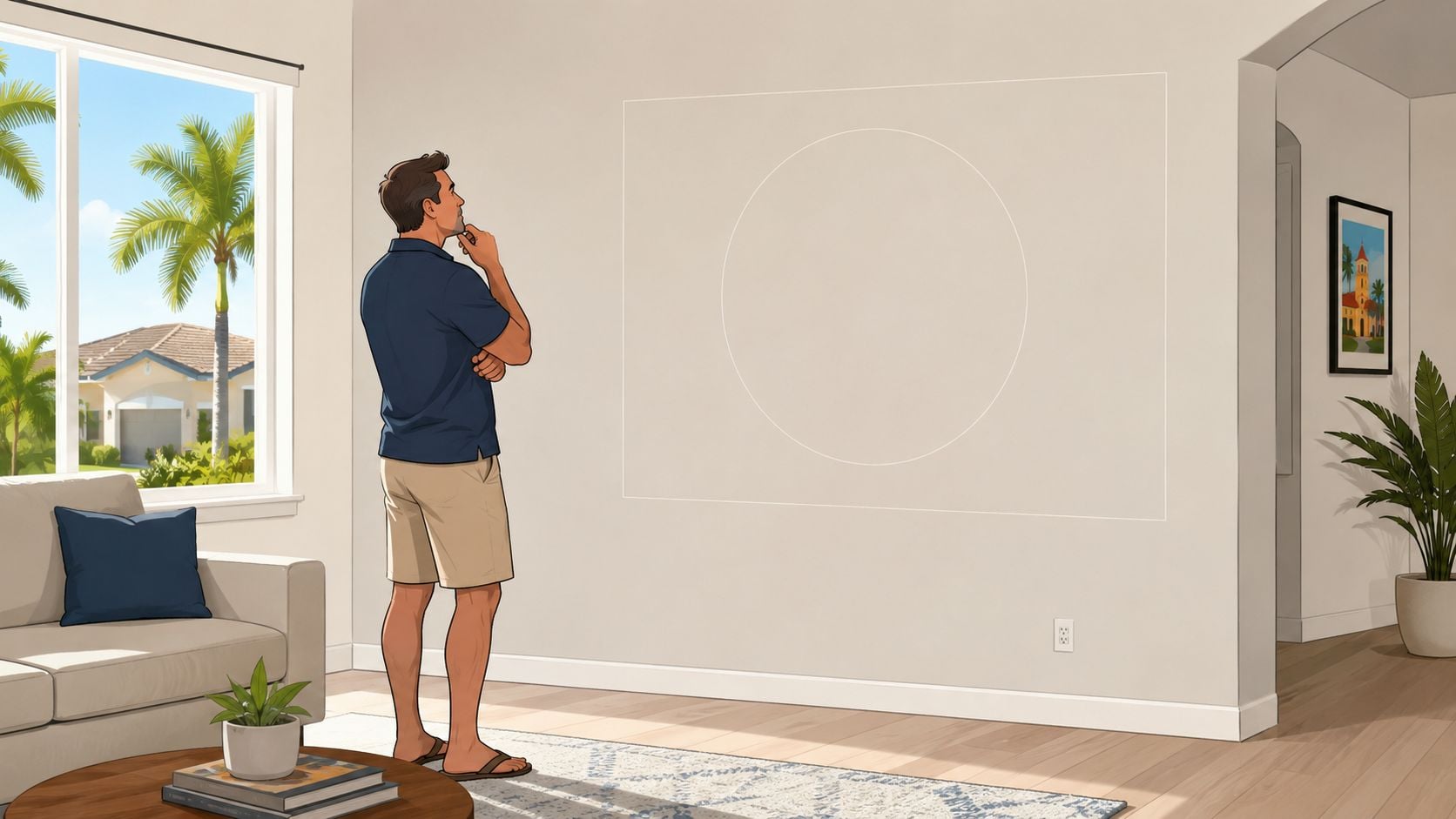
If the room needs a more deliberate plan, interior design services for Florida homes can help turn a blank wall into a finished one without guesswork.
Why Circular Wall Art Belongs in Your Central Florida Home
A blank wall above the sofa looks harsher in a Florida home because the light is strong and the rooms are often open to adjacent spaces. Circular wall art interrupts that hard geometry and gives the room a softer, more composed focal point. The round shape also fits the way many homes in Longwood, Orlando, and Winter Park are furnished now, with larger seating groupings and fewer built-in architectural breaks.
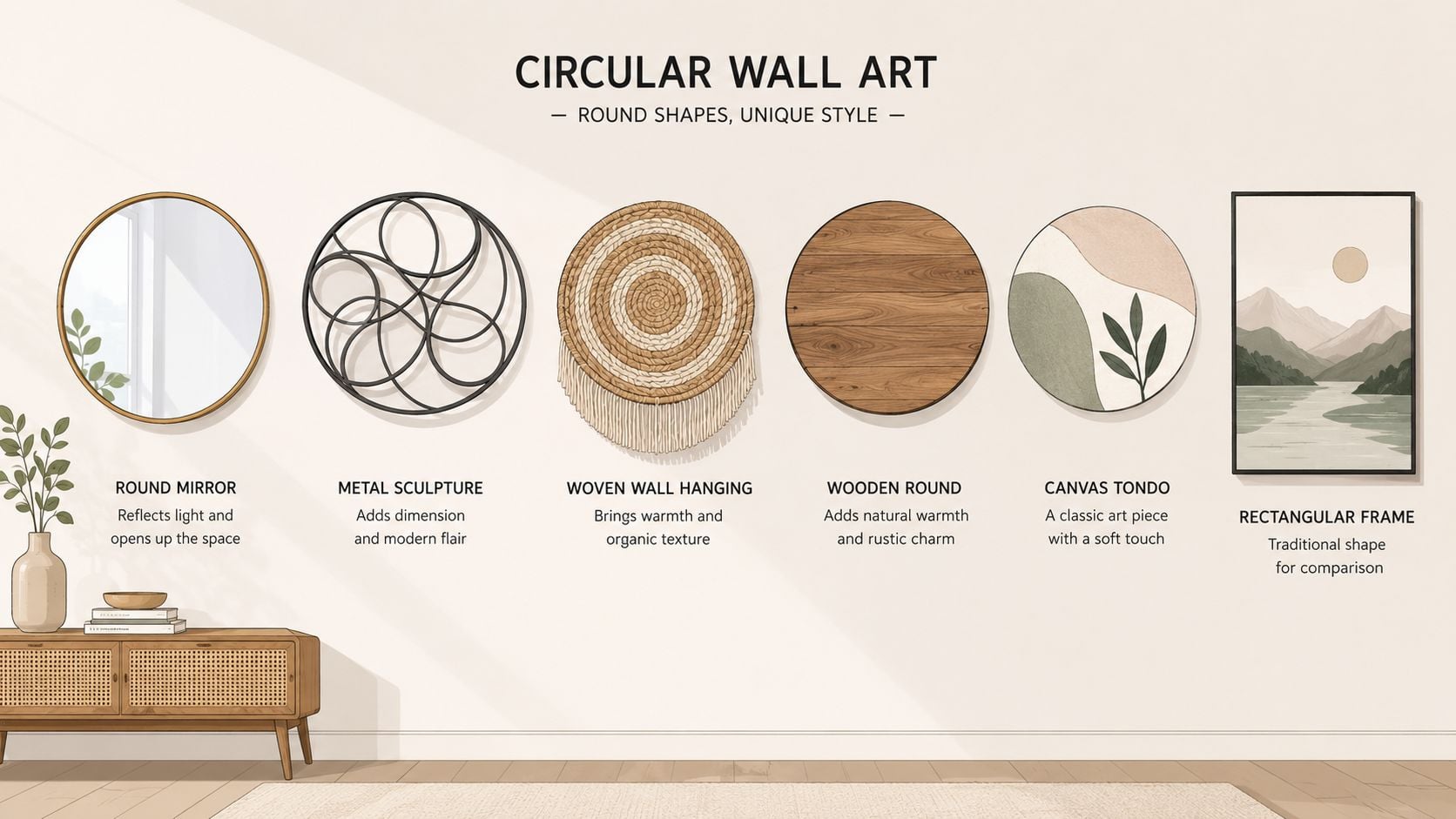
The category is broader than many shoppers expect. A round mirror, a metal disc, a woven piece, a wooden medallion, and a canvas tondo all qualify as circular wall art, and each one changes the mood of a room in a different way. The shape itself has a long art history, which is why it reads as settled and intentional instead of trendy.
A round piece works best when the room already has strong lines, because it brings balance without competing with the furniture.
There's also a practical reason to pay attention to this format now. The modern wall art market sits inside a large global décor category, with the market valued at USD 66.89 billion in 2025 and projected to reach USD 145.49 billion by 2034 at a 9.39% CAGR. That projection makes one thing clear, homeowners are not treating wall décor as a throwaway accessory anymore. They're choosing pieces that need to hold their own in living rooms, bedrooms, and entry spaces.
For a shopper who already cares about craftsmanship, that's the right mindset. The wall should support the furniture, not fight it. Circular wall art does that cleanly.
Defining Circular Wall Art and the Tondo Tradition
Circular wall art is any wall piece built around a round silhouette. That includes mirrors, sculptural metal pieces, woven rounds, carved wood discs, and circular canvas paintings, often called tondos in art history. The term matters because it separates a true round-format artwork from putting a round object on the wall.
The tondo tradition reaches back to Greek antiquity and returned to prominence in the Italian Renaissance, when artists such as Michelangelo, Fra Angelico, Botticelli, and Raphael used the format for paintings and sculpture. That history is why a round piece feels settled in a room with real furniture, especially in Florida homes where buyers want work that can live comfortably beside heirloom pieces instead of chasing a short-lived trend.
Why the shape reads as calm
Design writing has long associated the circle with unity, infinity, wholeness, symmetry, and calmness (Google Arts & Culture). That is why round art works so well over a sectional, above a sideboard, or in a bedroom with angular case goods. The curve softens visual tension without making the room feel flimsy or overdecorated.
A useful breakdown helps here.
- Mirrors bring brightness and depth.
- Metal circles bring sharpness and clean contrast.
- Woven pieces bring texture and softness.
- Wood rounds bring warmth and a more grounded, natural read.
- Canvas tondos bring color and image-making.
A round painting on canvas is still not the same thing as a framed rectangle with rounded corners. A tondo carries the composition differently, and that difference shows up immediately in the room. For homeowners planning a larger wall composition, big wall art ideas helps frame the decision around the wall, not just the object. For material choices that need to hold up over time, a durable wall art comparison can help separate pieces that look good on day one from pieces that stay attractive in bright, humid interiors.
Materials and Formats Worth Knowing
The material matters as much as the shape. A good round mirror can brighten a dim foyer, while a well-made canvas tondo can carry the color story in a bedroom or dining room. In a Florida home, the surface should match the room's light, moisture, and scale, not just the style board. That is the difference between a piece that settles into the room and one that starts looking tired in the heat.
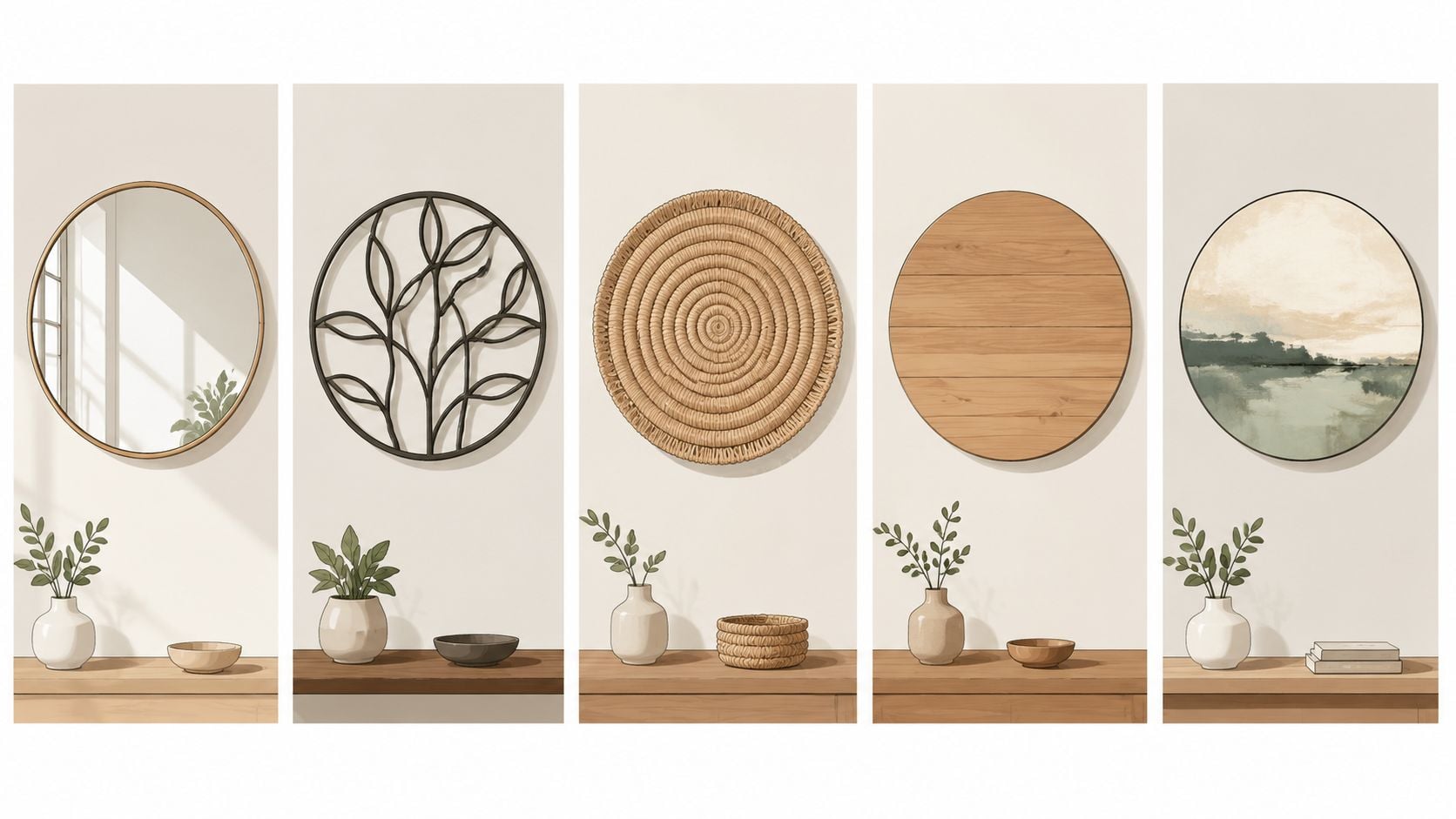
The five formats worth considering
Round mirrors are the most useful in entryways and narrower rooms because they bounce light and make a wall work harder. They fit a foyer that feels too dark or a hallway that needs a focal point without adding visual weight. In an Orlando-area home with open sightlines, that kind of lift matters.
Metal circles suit modern or industrial-leaning interiors, especially when the home already uses clean-lined furniture and simple upholstery. A lightweight metal piece with a compact profile can still read as substantial on the wall while staying easy to hang on standard drywall anchors. For homeowners comparing surface behavior, a durable wall art comparison helps separate finishes that stay crisp from finishes that start to look flat in bright rooms.
Woven and rattan rounds work best in coastal or relaxed spaces where texture matters more than shine. They are strongest in rooms that already use linen, oak, or soft neutral upholstery, because the texture adds warmth without fighting the rest of the furniture.
Wooden rounds add warmth and a more architectural presence. Quality matters here, because a piece built with real wood has a different feel from a thin decorative panel. That difference is obvious beside heirloom cabinets, solid-wood tables, or a proper sideboard.
Canvas tondos are the best choice when the wall needs color or a stronger artistic statement. Higher-end pieces often use hand-stretched poly-cotton canvas over solid wood stretcher bars with a gallery depth, or solid spruce frames with multi-layer textured acrylic surfaces and hanging wires, details that improve rigidity and dimensional presence.
For a practical reference on proportion and how a piece relates to the wall around it, scale and proportion in design is worth a close look before you commit. It keeps the purchase tied to the room, not just the catalog image.
How to Choose the Right Size and Scale
Most homeowners go too small. A round piece that's undersized over a sofa or sideboard looks like it's drifting on the wall instead of anchoring the room. The fix is simple, the diameter has to match the furniture below it and the visual weight of the wall around it.
Start with the furniture, then fill the wall
As a rule, the art should relate directly to the width of the piece beneath it. Above a standard 84-inch sofa, a round piece needs enough diameter to feel intentional, not timid. In many living rooms, that means looking at pieces in the large statement range rather than decorative accents that vanish once hung.
Practical rule: A circle needs a little more diameter than a rectangular piece would need for the same wall presence, because the corners in a rectangle help spread the visual weight outward.
Ceiling height matters too. Central Florida builders often give homeowners open living areas and taller entrys, which means a small round piece can feel lost fast. Over a queen or king headboard, the right circle should settle the bed visually, not hover like a badge.
A useful sizing framework looks like this:
- Above a sofa: choose a piece that feels wide enough to occupy the center of the seating group, not just the middle of the wall.
- Above a bed: keep the circle centered over the headboard and large enough to visually connect to the bed frame.
- Above a sideboard or buffet: let the art echo the length of the furniture without matching it exactly.
- In a two-story entryway: go larger or use a vertical grouping so the wall doesn't swallow the piece.
Scale and proportion in design becomes the deciding factor here, not decoration alone. In Longwood and Orlando homes with open sightlines, a piece that looks fine on a small wall can disappear once it's placed in a larger room. Buy for the room you live in, not the wall you saw online.
Placement Ideas for Every Main Room
Placement should feel deliberate the moment someone walks in. A round piece works because it centers the eye, but only when it's hung where the furniture and the wall agree on the same focal point. In a real house, that usually means using the furniture as the reference, not the ceiling line.
Living room, bedroom, dining room, entryway
In the living room, the strongest placement is usually above the sofa or across a media wall where a round piece breaks up the horizontal run of the console. On a blank wall behind seating, center the art over the sofa rather than the room itself, then leave enough breathing room around it so it doesn't crowd the ceiling line. For wall styling around televisions, decorate wall behind TV is the right place to look for a more room-specific layout.
In the bedroom, a circle belongs above the headboard when the goal is calm symmetry. It also works above a tall chest or dresser if the wall is deep enough to support a strong vertical center. That placement is especially useful in rooms where the furniture has sharp edges and the art needs to soften them.
In the dining room, a round piece pairs well with a buffet or sideboard because the curve balances the long horizontal case good below it. In a foyer, it can sit high enough to greet guests without feeling disconnected from the room's architecture. The key is centering it to the furniture or the primary line of sight, not blindly to the wall.
Keep negative space around the piece. A round object needs room to breathe, or it starts to feel decorative instead of designed.
Styling Round Art With Farmhouse, Modern, and Coastal Looks
Circular wall art earns its place because it can move across styles without looking forced. That makes it especially useful in homes where the furnishings are heirloom-quality and the owner doesn't want every wall to shout for attention. The piece should bridge the furniture and the wall, not compete with the room's best items.
Match the material to the room's language
In a farmhouse setting, raw-edge wood rounds work naturally with substantial tables and honest finishes. They sit comfortably with Simply Amish and Stickley-inspired interiors because they echo the same respect for grain, structure, and durability.
In a modern room, a sleek metal circle feels cleaner and more disciplined. It also keeps a neutral palette from becoming flat, which pairs well with neutral interiors advice from Newline Painting when the walls, upholstery, and rugs all stay in the same soft range.
In a coastal-leaning space, woven or rattan rounds give the room texture without making it look themed. They work especially well with lighter dining sets, pale bedroom furniture, and relaxed upholstery, because the round shape adds softness without adding clutter.
A few room-by-room moves work better than trying to force one style into every wall:
- Stair landings: use round art to interrupt the vertical climb with a softer shape.
- Tall entry walls: use a single oversized circle or a small cluster that rises with the architecture.
- Above-sofa walls: keep the piece centered and let the furniture frame it.
- Open-concept walls: choose a finish that repeats one material already in the room.
Farmhouse decor ideas can help a homeowner see where a round piece belongs without making the room feel overworked. The most successful circular wall art doesn't announce itself as a style statement. It makes the whole room look finished.
Solving Awkward Walls and Tricky Spaces
Slanted ceilings, stair landings, and curved walls are where many homeowners give up too early. They shouldn't. These spaces need better planning, not special pleading, and circular wall art is one of the few formats that can adapt without looking improvised.
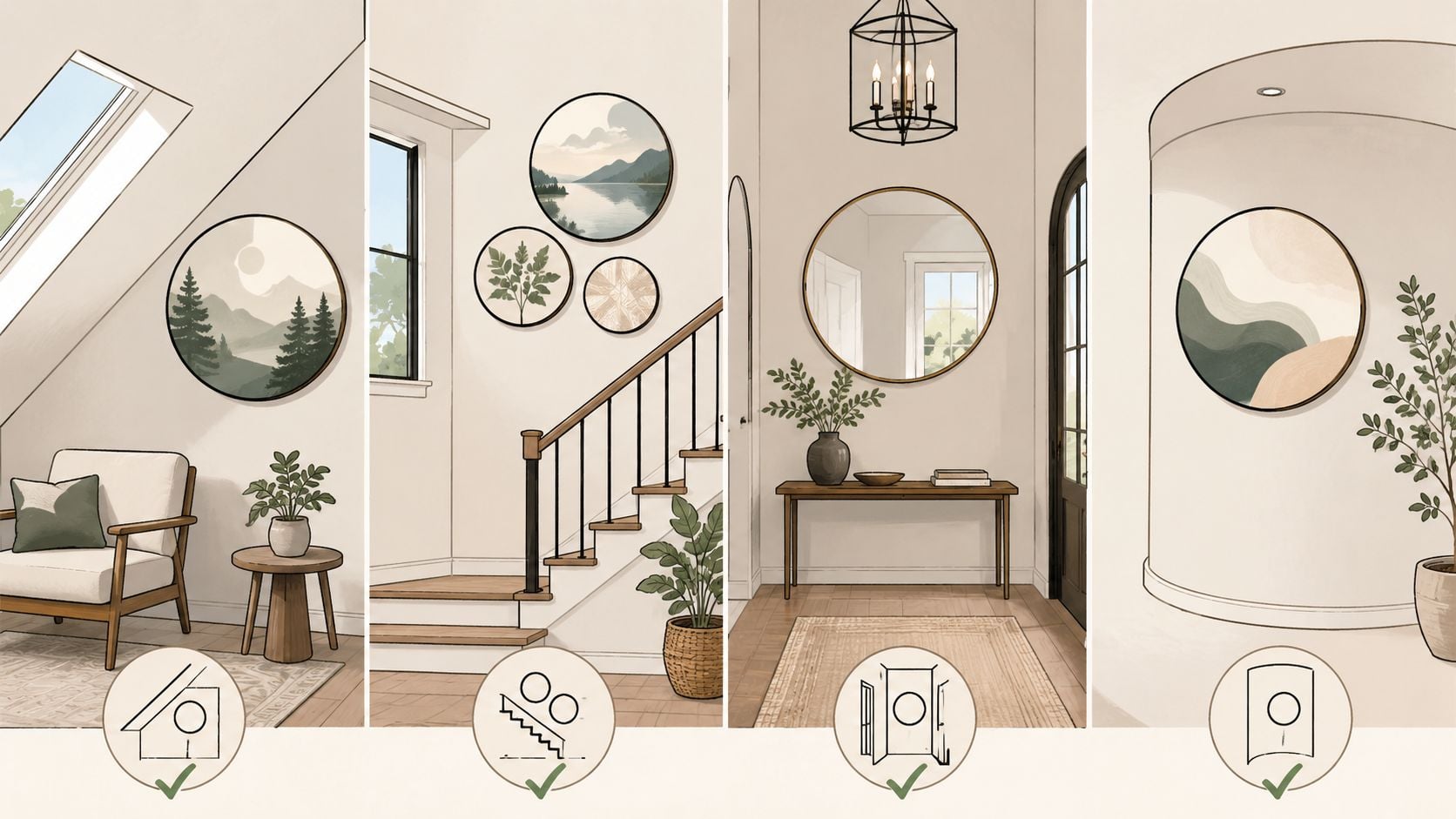
Use the wall's geometry, not against it
On a slanted wall, align the art to the floor rather than trying to mirror the ceiling line. That keeps the piece visually calm and stops it from looking like it's sliding uphill. On staircases, lighter metal or woven rounds are smarter than heavy framed pieces because the wall is harder to reach and the install needs to stay straightforward.
Tall foyers are a different problem. One oversized circle can look undersized if the wall rises far above it, so a vertical cluster of smaller circles often works better than a single lonely statement piece. Curved or irregular walls may need custom solutions, but the basic rule stays the same, respect the architecture and keep the shape legible.
Most round mirrors and metal pieces hang with simple D-rings or sawtooth hardware, and standard drywall anchors are usually enough when the piece is lightweight. That's useful in newer Central Florida homes where walls often need clean, secure installation without unnecessary complexity. A well-positioned round piece should look intentional from day one, not like it was added as an afterthought.
Buying Options and Care for Long-Term Beauty
A good piece of circular wall art should be chosen the same way a homeowner chooses a sofa or dining table, by looking at build, finish, and how long it will stay attractive in the room. In Longwood, there are three sensible ways to buy. Browse curated round mirrors, metal pieces, woven décor, and wooden rounds in person, work through custom-order options with the in-house design team when the size or finish needs to be specific, or use the clearance outlet when a high-quality piece is ready to move into the right room quickly.
Slone Brothers Furniture also carries a dedicated wall decor section for homeowners who want to see how circular pieces fit into a fuller home plan. That matters because wall art should be selected alongside the rest of the room, not as a disconnected impulse purchase.
Care in Florida climate
Florida humidity, air conditioning, and strong light ask more of wall décor than many buyers realize. Metal pieces should be dusted with a soft microfiber cloth. Solid wood rounds benefit from regular conditioning so the surface doesn't dry out in cooler air-conditioned interiors. Woven pieces need protection from direct UV exposure, and round mirrors should be cleaned with non-ammonia glass cleaner so the backing stays protected.
Care choices matter most in real rooms. A round piece above a console in a bright Orlando foyer needs a different finish than one hanging in a shaded bedroom or a dining room that stays closed off during the hottest part of the day. Homeowners who buy for the room they have, not the room they wish they had, usually end up with better-looking art and fewer regrets.
A small maintenance habit pays off for years. Dust carefully, keep pieces out of harsh direct sun, and hang the right format in the right room. That is how you get more value from the art without letting humidity, glare, or sloppy placement wear it down early.
Heirloom-minded décor lasts because it's treated like part of the home, not as a seasonal accessory.
Ready to invest in wall décor that fits the rest of your home instead of fighting it? Skip the online guesswork and see circular wall art in person at Slone Brothers Furniture in Longwood, FL. Connect with experienced design consultants who can help match the right material, scale, and finish to your room, your furniture, and the way you live in Central Florida.