
Art Above TV: A Practical Sizing and Styling Guide


The television is mounted, the sofa is in place, and the wall still looks unfinished. That's the familiar Central Florida living room problem: a large black rectangle dominates the room, while the space above it feels either bare, crowded, or awkwardly disconnected. The right art above TV arrangement solves that issue by treating the entire media wall as one deliberate composition.
For homeowners in Longwood, Orlando, Lake Mary, Winter Park, Sanford, and Altamonte Springs, the answer isn't to buy the largest print available. The TV's width, the seating sightline, the console below, Florida daylight, frame material, and wall proportions all matter. A well-scaled piece can make a media wall feel finished and architectural. A poorly placed one can make the television look even more imposing.
Why the Wall Above a TV Should Read as One Composition
The wall above a TV should be designed as a single visual field, not as two unrelated rectangles stacked by necessity. The television remains the anchor, while the art adds proportion, texture, and personality without competing for attention.
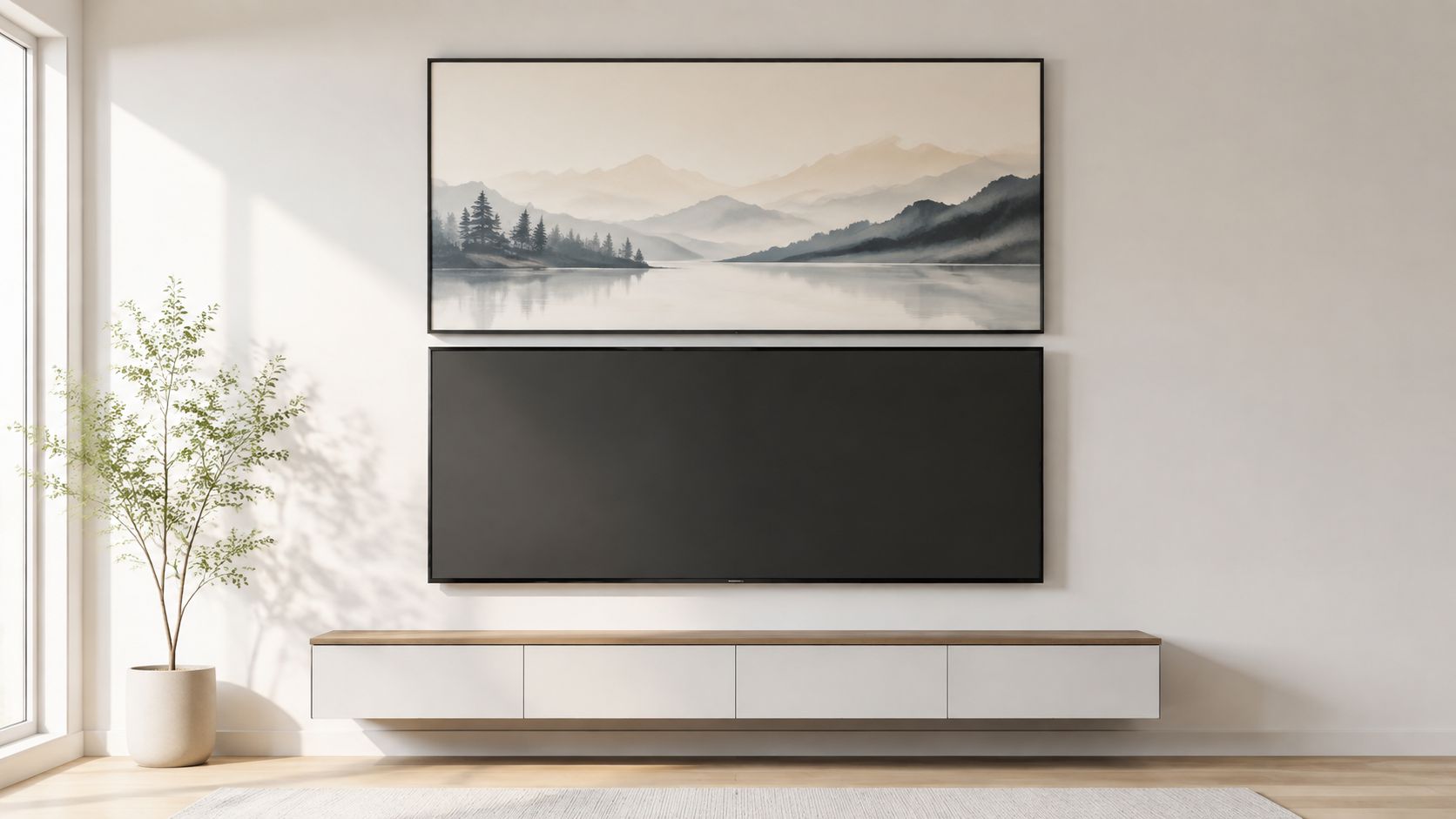
Start by measuring the TV, the wall, and the furniture below it. A widely used rule recommends artwork spanning about two-thirds to three-quarters of the television's width, with roughly 4 to 8 inches between the top of the screen and the bottom of the art. That guidance appears in this wall-art sizing guide for art above a TV, and it works because the gap keeps the pieces connected without making them look crowded.
The art should also sit near a comfortable seated eye-level zone. A living room arrangement becomes uncomfortable when the TV is mounted too high and the artwork is pushed even higher to fill empty wall space. The correct reference point is the main seating position, not the ceiling or the geometric center of the wall.
Build the arrangement around the screen
Center the art on the TV, not automatically on the wall, fireplace, or console. If the screen is slightly offset because of a doorway, window, or open-concept sightline, the art should follow the screen's centerline so the primary focal point remains coherent. A layout guide makes the same recommendation, measure the TV first, then keep the overall art arrangement slightly wider than the screen and within the natural viewing cone, as explained in this guide to balanced TV wall decor.
Visual weight matters as much as measurement. A thin, pale print above a substantial dark television may disappear, while an ornate, heavy frame can overpower a refined room. The strongest result usually repeats one or two existing elements, such as the walnut of a console, the neutral upholstery of a sofa, or the tones in a rug.
Television integration has a long design history. In the 1950 Levittown house, every new home reportedly included an Admiral TV built directly into the living-room wall, while mid-century designers often concealed televisions with bookshelves and paintings. That history, discussed in this account of television design history, shows that integrating media into the home has never been a passing decoration trend.
For a refined starting point, homeowners can review horizontal wall decor before choosing a format. The key decision is simple: the TV, art, console, and surrounding negative space should look as though they were selected together.
Choosing Between a Single Piece and a Gallery Wall
A single statement piece creates a calmer, more refined result. A gallery wall offers more flexibility and personality, but it demands stronger planning because every frame, gap, and hanging point contributes to the final balance.
A single piece is usually the better choice above a standard living room television when the homeowner wants quiet luxury. It suits a broad wall, keeps the composition visually clean, and requires less framing coordination. The piece should be at least as wide as the TV when the wall has enough room, or it should be selected carefully so it doesn't look undersized.
A gallery wall earns its place when the console and wall extend substantially beyond the screen. It can fill a long horizontal stretch, introduce multiple subjects, and connect several colors already present in the room. It can also disguise slight irregularities in the wall or furniture alignment, although it won't excuse careless spacing.
Compare the two formats before shopping
| Factor | Single Piece | Gallery Wall |
|---|---|---|
| Overall mood | Calm, edited, architectural | Collected, layered, expressive |
| Best setting | A wider wall with a clearly sized TV | A long wall above a broad console |
| Planning | Straightforward scale and centering | Requires a complete arrangement before hanging |
| Framing | Fewer frames and simpler coordination | More hardware, finishes, and spacing decisions |
| Visual risk | Can look lonely if too small | Can overwhelm a small screen |
| Maintenance | Easier to clean and adjust | More surfaces and pieces to maintain |
A small television on a modest wall often looks lost beneath a sprawling gallery arrangement. The opposite problem occurs on a long media wall, where one undersized frame leaves excessive empty space at both sides and makes the television feel stranded.
Before drilling, homeowners can study layout ideas from local installers for ways to organize mixed frames and varied artwork. The useful lesson isn't to copy a particular arrangement. It's to create the entire composition on the floor first, then assess its outer edges, centerline, and visual weight.
Use a direct decision rule
Choose one substantial piece when the wall is compact or the television is the dominant object. Choose a gallery wall when the wall is long, the console is broad, and the homeowner wants the surrounding decor to carry more personality than a single artwork can provide.
For homeowners seeking a larger statement, big wall art ideas can help clarify whether the room needs one panoramic piece or a coordinated grouping. The correct choice is the one that supports the TV's scale rather than trying to distract from it.
Sizing the Art to the TV and the Wall
Place the TV first, then size and position the art around it. The seating position controls the composition, because a beautiful arrangement fails if viewers must tilt their heads upward or if the artwork sits so high that it feels detached from the room.
For a typical sofa setup, the bottom of the TV often lands about 42 to 48 inches from the floor, while the art is centered above the screen with a 4 to 8 inch vertical gap. These measurements should be checked from the primary seat rather than applied mechanically. A low sofa, tall console, fireplace, or unusually high ceiling may require a thoughtful adjustment.
A common placement target keeps the center of the wall decor around 57 to 60 inches from the floor in living spaces, while the TV center should sit at or slightly below seated eye level. Guidance on optimal TV mounting height reinforces the practical sequence: choose the main seat, mark the relaxed eye line, and position the screen and artwork from that reference.
Recommended art widths
| TV Size | Minimum Art Width | Ideal Art Width | Art Centerline From Floor |
|---|---|---|---|
| 55 inches | 40 inches | 60 inches | 57 to 60 inches |
| 65 inches | 50 inches | 70 inches | 57 to 60 inches |
| 75 inches | 60 inches | 85 inches | 57 to 60 inches |
The table gives a useful starting point, not permission to ignore the room. A narrow wall may require a smaller piece, while a wide wall with a substantial console may support a panoramic format that extends beyond the TV. The artwork's outer edges should still feel intentional, with enough breathing room to avoid looking squeezed against adjacent windows, built-ins, or door casings.
A homeowner choosing art for a professional environment can also find useful format considerations in this resource on buying art prints for the workplace. The same principle applies at home: artwork must be sized for the architecture and the people using the space, not selected in isolation from a screen.
Measurement rule: Tape the proposed art outline on the wall before purchasing or drilling. A paper template reveals scale problems faster than a product photograph ever can.
Break the rules on purpose only when the room gives a clear reason. A narrow vertical piece may work beside an offset TV, and a lower panoramic piece may suit a low media console. Random exceptions look accidental. Intentional exceptions respond to wall width, seating, light, and furniture.
For a more detailed placement process, homeowners can consult the complete guide to finding optimal TV positioning. The screen's comfort should always govern the final arrangement.
Picking Frames, Colors, and Materials That Hold Up Next to a Screen
Artwork beside a television needs enough presence to hold its own, but it shouldn't become a second competing focal point. The frame, surface, and color palette should connect the media wall to the rest of the living room while controlling glare from Central Florida windows.
Solid wood frames in walnut, oak, or black provide visual authority and pair naturally with substantial consoles and fine upholstered furniture. Thin metallic frames in brushed brass or black create a more restrained profile, especially in contemporary or transitional rooms. Very delicate wire-style frames often disappear beside a large screen and make the art look under-scaled.
Choose surfaces for Florida light
Bright Orlando daylight can expose every reflective surface. Matte or anti-reflective glazing helps reduce distracting reflections, particularly when the wall faces windows or a glass door. Canvas, textured prints, and framed textiles tend to absorb more light than high-gloss paper, and they often read more comfortably during dark movie scenes.
A decorating guide on above-TV wall treatments and glare-conscious art choices also notes that canvas and framed prints can soften the visual impact of a wall-mounted TV. The point isn't to make the art invisible. It's to prevent the artwork from producing a bright reflection that competes with the screen.
Color should come from the room, not from the television alone. Pull one tone from the TV bezel, another from the sofa, and a quieter accent from the rug or flooring. In a Longwood home with warm oak furniture, an image with muted greens and earth tones will feel more settled than a print selected only because it looks attractive on a phone.
Use these checks before committing:
- Frame weight: The frame should feel proportionate to the TV and the furniture below it.
- Reflectivity: Stand between the artwork and a bright window to test whether the surface throws glare.
- Palette: Repeat at least one established room color so the piece doesn't float independently.
- Texture: Favor tactile, low-sheen surfaces that remain legible in both daylight and a dim viewing room.
A showroom test under bright light is worthwhile. A design consultant can place frame and finish samples beside a comparable screen, then compare how the surfaces behave from the sofa rather than judging them under retail lighting alone. Homeowners can also use this living-room color palette guide to coordinate the artwork with existing upholstery, rugs, and wood finishes.
Hanging, Mounting, and Hiding Wires Safely
A polished art-above-TV wall depends on secure installation. Find the strongest attachment point first, use hardware rated for the frame, and treat cable management as part of the design rather than an afterthought.
Begin by locating studs with a reliable stud finder. Mark the TV and artwork centerlines, preview the height with painter's tape, then use a level before drilling. Pre-drill where appropriate, and seat the correct screw or anchor for the wall construction and the frame's actual weight.
Secure the artwork before refining the styling
Drywall-only anchors aren't enough for a heavy framed piece, especially when the arrangement sits above a television and valuable furniture. The wall surface, not the art, determines which anchor system is appropriate, and a heavier frame may require direct attachment to a stud or a properly installed rated support.
Two hooks connected by picture wire can make final leveling easier. Once the hooks are positioned securely, the wire allows small adjustments without forcing the entire frame to hang from a single central point. A homeowner wanting a broader hardware overview can review these tools for hanging pictures, then confirm the hardware choice against the frame manufacturer's specifications.
For the television, a recessed power box and in-wall-rated cable pass-throughs create a cleaner installation. If a cable must remain visible, one slim raceway painted to match the wall is preferable to several loose cords crossing the surface.
Preview every hole
Painter's tape can mark the TV outline, artwork boundary, console height, and proposed cable path. Step back from the main sofa and inspect the arrangement from the actual viewing angle. A layout that looks centered while standing directly in front of the wall may look too high or slightly shifted from the seat.
The step-by-step guide to hanging your picture with precision provides a useful reference for careful placement. In a high-quality home, installation deserves the same attention as the frame itself. A beautiful piece mounted insecurely or left with crooked wiring undermines the entire room.
Keep art away from heat sources and follow the television and fireplace manufacturer's requirements where those features share a wall. Safety is part of good design, particularly when heavier framed work, children, pets, or high-traffic living areas are involved.
Alternatives Worth Considering for the Same Wall
Art above a TV is not the only intelligent solution. Some rooms gain more from a shelf, mirrors, or a vertical sculptural element, especially when the screen is offset or the wall's proportions resist vertical stacking.
A floating shelf
A single floating shelf works well on a modest wall when the homeowner wants a controlled display of a few objects. It adds useful surface area and can connect the TV to the console below, but it also collects dust near the screen and encourages over-styling.
Choose a shelf when the TV is used frequently and the homeowner prefers a flexible arrangement of pottery, books, or small objects. Keep the objects low enough that they don't intrude into the viewing area, and use restraint. A media wall already has substantial visual activity.
Framed mirrors
A pair of framed mirrors can brighten a darker Florida room by reflecting available daylight. They're especially effective beside a centered TV when the wall has enough width for balanced side placement.
The trade-off is glare. Mirrors can reflect windows, lamps, or daylight directly onto the screen, so their success depends on the room's orientation and the viewer's seat. Test the reflection from the sofa before installation rather than judging the mirrors from the wall.
Plants and sculptural pieces
A tall plant or vertical sculpture works best when the TV sits off-center because of a doorway, window, or open-concept layout. The height draws the eye through the room and softens the hard geometry of the media wall without forcing artwork into an awkward position.
Plants need practical care in Central Florida, and darker rooms may require an accessible outlet for a grow light. Sculptural pieces need enough surrounding space to feel intentional rather than squeezed against the screen.
Decision rule: Choose a shelf for flexible display, mirrors for controlled light reflection, and a plant or sculpture when the TV is offset. Choose art when the wall needs a deliberate focal composition above the screen.
The room's ceiling height and furniture scale should settle the decision. A tall element can help a high ceiling, while a low shelf often suits a compact wall. If the TV dominates every seating view, a measured horizontal artwork arrangement usually offers the most complete finish.
Bringing It All Together With Local Design Help
Ordering art from a screen leaves too many variables unresolved. A product photograph can't show how a frame reacts to the intense daylight common in Central Florida, whether the scale works from the main sofa, or how the artwork relates to existing flooring, upholstery, and case goods.
A face-to-face consultation gives the homeowner a more reliable path. During a showroom visit, an experienced design consultant can:
- Measure the wall and TV: Confirm width, height, console dimensions, and available clearance.
- Check seating sightlines: Evaluate the arrangement from the actual viewing position instead of relying on a straight-on wall photograph.
- Compare finishes: Place frame, glazing, wood, and textile samples together under bright showroom light.
- Refine the palette: Coordinate artwork with the sofa, rug, flooring, lighting, and surrounding furniture.
- Explore custom sizing: Review custom-order options when a standard print doesn't fit the wall correctly.
This matters in Longwood, Lake Mary, Orlando, and neighboring Central Florida communities because homes vary sharply in daylight, ceiling height, open-concept views, and window placement. A media wall that looks balanced in a closed den may need a wider horizontal treatment in a great room visible from the kitchen.
Slone Brothers Furniture offers home furnishings and décor through a local showroom model, with an in-house design team that can help homeowners coordinate a room rather than purchase isolated objects. The visit should be practical and specific. Bring wall measurements, the TV dimensions, console measurements, and several photographs taken from the seating area.
The consultation should end with a clear plan, not another open browser tab. The homeowner should know the selected piece, frame finish, placement, mounting approach, and how the arrangement will connect to the rest of the room. That level of confidence is difficult to achieve when art is judged against a blank product page.
Ready to resolve the wall above your TV with a properly scaled piece and a thoughtful frame? Visit Slone Brothers Furniture in Longwood, FL, bring the room measurements and seating photos, and work face-to-face with an experienced design consultant on a complete layout plan.