

Black Floor Vase: A Complete Buyer’s Guide

A homeowner in Longwood can spend an afternoon choosing the right sofa, rug, and lighting, then weaken the entire room with one undersized vase. The common scene is familiar: a small light-purple vase arrives from an online order, looks harmless in the box, and disappears beside a tall console once it meets Central Florida's bright natural light.
A black floor vase deserves a more careful decision. It can anchor an empty corner, echo dark window frames, and give a light room architectural weight. It can also look too glossy, too narrow, or too fragile for the household. The right choice depends on scale, material, finish, and whether the piece should read as sculpture or quietly support the existing decor.
Why a Black Floor Vase Is Worth Choosing Carefully

A floor vase is rarely treated like a temporary accessory. Once it occupies a corner beside a sofa, console, or media wall, homeowners tend to move it only when the room is rearranged. That makes proportion, surface, and construction more important than a passing color preference.
A black floor vase also carries visual authority from across the room. Black absorbs attention and can stabilize pale upholstery, bright Florida flooring, and rooms filled with indirect daylight. The wrong finish, however, becomes an argument with the rest of the furnishings.
Three reasons quick choices go wrong
- The finish conflicts with the furniture. A glossy black vase can look harsh beside a matte sofa, textured rug, or softly finished wood. Matte, satin, or lightly textured surfaces usually feel more integrated in a refined Longwood living room.
- The profile is too thin. Tall ceilings and generous rooms need visual mass. A narrow cylinder may technically be tall enough yet still look lost beside substantial furniture.
- The light changes the piece. Central Florida's bright daylight can make a reflective surface sparkle at one angle and look severe at another. A matte black finish absorbs light more evenly and gives sculptural curves a calmer presence.
A practical consultation starts before shopping. The homeowner should measure the corner, identify the nearest furniture, study the sightline from the entry, and decide whether the vase will carry the room or remain secondary. The high-quality home decor collection can be evaluated with that same discipline, especially when the room already includes investment pieces from Stickley, Stressless, Smith Brothers, or American Leather.
Design rule: A black floor vase should earn its footprint. If it doesn't improve the room from the doorway, the scale or role is wrong.
The global vase market reached about $2.8 billion in 2025 and is projected to reach $3.7 billion by 2034, a 4.5% CAGR, while home decor represents about $1.82 billion, or 65.0% of revenue, according to market data on the vase category. Those figures place floor vases within a substantial residential decor category, but they don't make every piece a good investment. Craftsmanship and placement still decide whether the object looks intentional.
Materials That Hold Up in a Florida Home
The material determines whether a black floor vase feels secure beside a busy entry or vulnerable near an open lanai door. Ceramic and metal offer the strongest sense of permanence, while glass and woven materials require more careful placement and maintenance.
Ceramic is the dependable workhorse. A well-made ceramic vase has useful weight, supports a stable base, and can carry a matte glaze, reactive surface, or subtle texture. Lower-grade stoneware may show finish changes over time in humid conditions, so the buyer should inspect the glaze and base rather than judging the silhouette alone.
Metal creates a sharper, more architectural effect. Powder-coated or sealed aluminum and steel resist ordinary moisture better than untreated metal, though raw steel can spot in rooms exposed to coastal air or frequent pool-door traffic. The broader material guidance for large black floor vases confirms that ceramic and metal generally provide more stability, while glass needs level flooring and greater care because it is more fragile. Material and care guidance for black floor vases supports that distinction.
| Material | Weight & Stability | Humidity Performance | Best For |
|---|---|---|---|
| Ceramic | Heavy and grounded when properly proportioned | Reliable with a sound glaze, but inspect for finish quality | Living rooms, entries, and households wanting substance |
| Metal | Often stable, with weight varying by construction | Strong when sealed or powder-coated, less forgiving when raw | Modern interiors, busy areas, and architectural styling |
| Glass | Light visually and physically, but vulnerable to impact | Unaffected by humidity in principle, yet exposed to breakage and visible dust | Protected corners and lighter compositions |
| Bamboo or rattan | Light and warm, with less inherent mass | Can fade or dry when exposed to direct Florida sun | Covered spaces and relaxed interiors |
Bamboo and rattan bring warmth to a black finish, but they shouldn't sit in direct sun for long periods. Woven surfaces can fade, dry, and collect dust more visibly than smooth ceramic or sealed metal.
The practical recommendation for active households
For children, pets, sliding doors, or regular entertaining, a substantial ceramic or sealed metal vase is the right starting point. Solid metal and aluminum generally handle daily bumps better than ceramic or glass, while stability, water compatibility, and cleaning requirements still need confirmation before purchase. Durability guidance for floor-standing black vases reinforces why those questions matter in high-traffic rooms.
A local consultant should also consider flooring. Heavy ceramic may be ideal on tile or engineered flooring with a suitable protective pad, but it requires careful placement on delicate surfaces. The same climate awareness used for caring for wood furniture applies here, particularly when a vase shares space with solid wood from Simply Amish, Canadel, or Mavin.
How to Size a Black Floor Vase to Your Space
A black floor vase should relate to the furniture around it, not merely fit into an empty patch of floor. The most reliable starting point is roughly two-thirds the height of the tallest adjacent piece, whether that piece is a sofa back, console, or nearby drapery element.
A vase beside a low-profile sofa needs enough height to register above the upholstery without towering over the seating. Beside a tall console, it can approach the console's visual height while remaining clearly separate. This relationship keeps the vase connected to the composition instead of making it look like an object placed after the room was finished.
Three measurements that prevent returns
- Measure the ceiling. Leave six to twelve inches between the top of the vase and the ceiling. A piece pressed too close to the ceiling makes the corner feel cramped, even when its shape is beautiful.
- Measure the void. A broad, empty corner needs a fuller belly or a more generous shoulder. A narrow gap beside a media console calls for a slim cylinder or tapered profile.
- Measure movement. Check the distance from seating, the entry sightline, and the clearance needed for cleaning equipment. A beautiful vase that interrupts a walking route is the wrong vase.
The buyer should record the following before visiting a showroom:
- Ceiling height
- Height of the nearest furniture
- Distance from the main seating position
- View from the entry door
- Width and depth of the available floor area
- Flooring clearance around the base
A furniture measuring guide can help organize those dimensions before a design consultation. Photos taken from the doorway and primary seating position are useful as well, because a vase can look balanced close up and undersized from across the room.
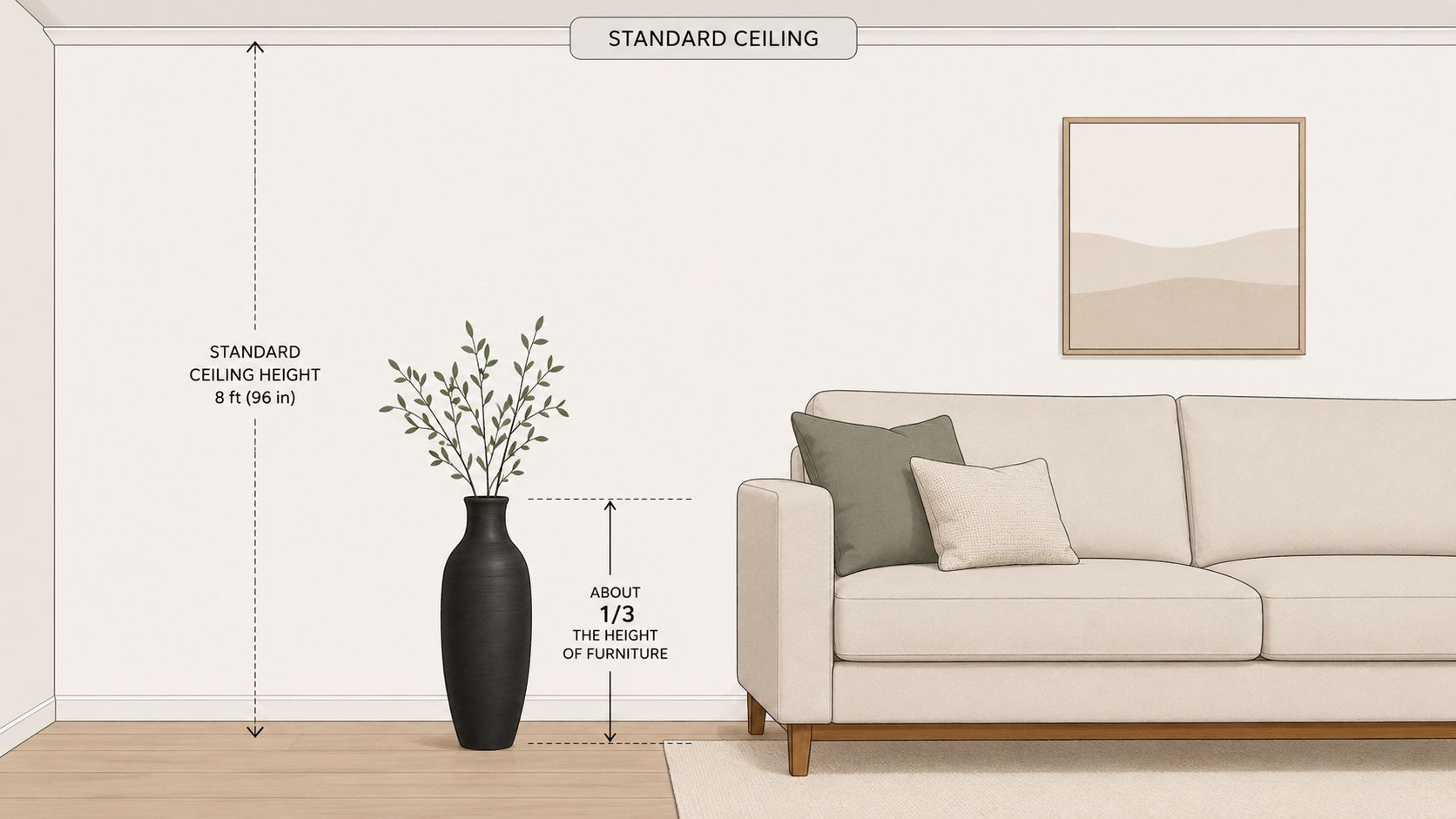
Proportion check: Bad scale sends more vases back than bad color. Measure once, then shop with the actual room in mind.
The vase should also leave the floor functioning properly. A stable base, a protective pad, and enough clearance for routine cleaning matter in Central Florida homes where tile, wood, rugs, and frequent indoor-outdoor traffic meet in the same living space.
Sculptural Anchor or Quiet Accent
A tall black floor vase should be judged as sculpture first and container second. Flowers are optional. The silhouette, surface, and visual weight must work before a single branch enters the opening.
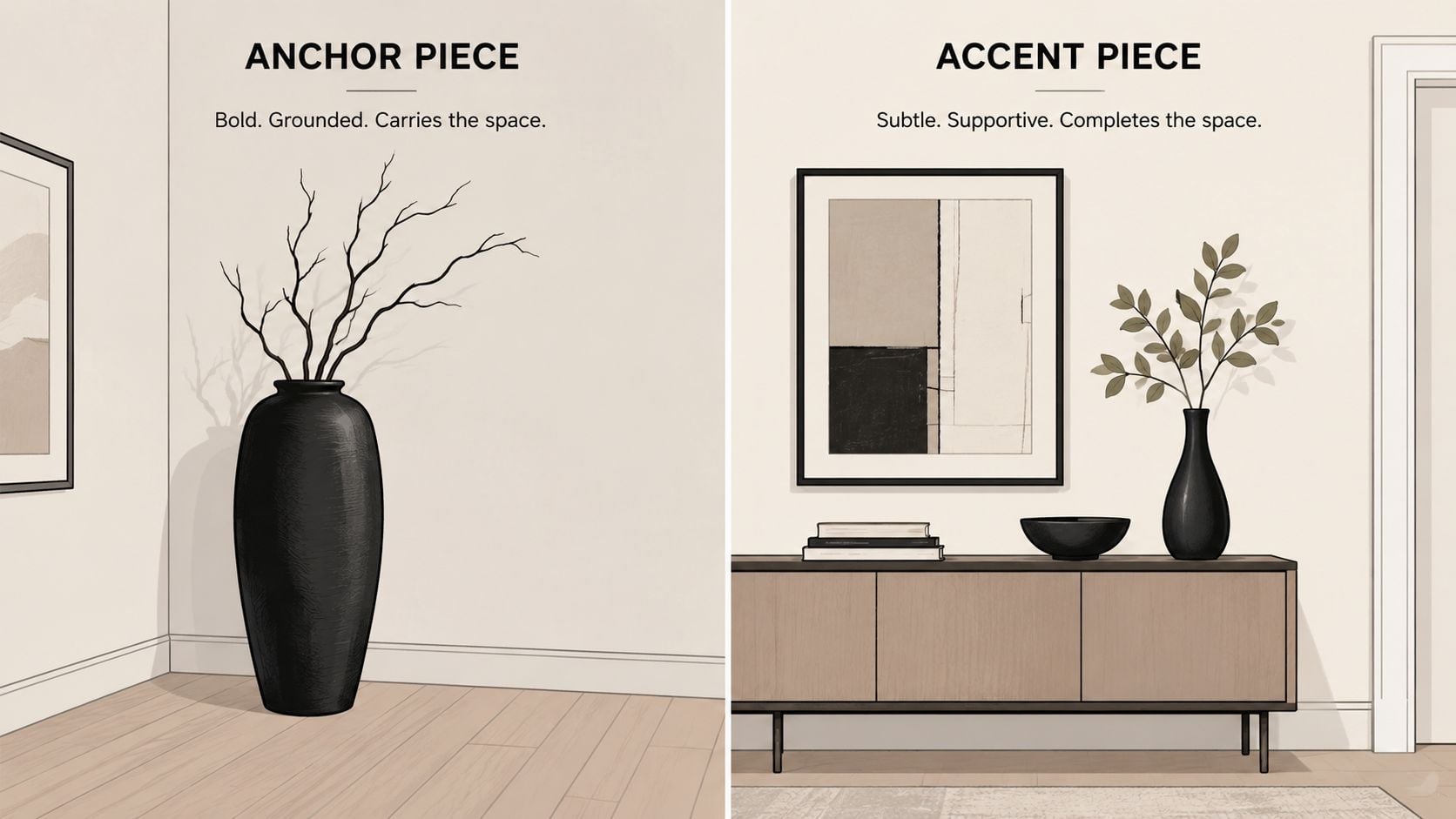
An anchor piece earns an empty corner. It competes comfortably with a sofa, media wall, or large artwork because the room needs a strong vertical shape. A quiet accent behaves differently. It may sit behind a chair, frame a doorway, or fill a narrow transition zone without asking the eye to stop.
The working decision rule
If the corner is taller than the nearest furniture and people can walk past it without noticing, the room needs an anchor. Choose a fuller body, an expressive neck, a carved surface, or an irregular profile that gives the negative space a clear purpose.
If the room already contains a statement chandelier, large painting, dramatic sectional, or heavily figured dining table, the vase should step back. A slim, smooth form in matte or textured black will support the composition without competing for authority.
Designers use empty corners through scale, contrast, and negative space. One generous sculptural object often reads more confidently than a cluster of smaller pieces, particularly when the surrounding furniture has room to breathe. Recommended anchor finishes include matte ceramic, hammered metal, and carved stone. Quiet accents work better in smooth ceramic, sealed metal, or restrained woven forms.
When the vase should remain empty
An anchor vase often looks strongest without contents. Empty space emphasizes the opening, curve, and finish, especially when the piece has a carved or asymmetrical silhouette. Adding tall branches to an already dramatic form can create unnecessary height and make a corner feel busy.
A quiet accent can carry dried pampas, eucalyptus, or bare branches when the room needs a softer transition. A sculptural plant can also work, but live greenery introduces care requirements that shouldn't be ignored. Homeowners considering a cactus as a separate sculptural element can consult this practical totem pole cactus care guide before placing one near bright windows.
The best decision comes from the room's existing hierarchy. Guidance on scale and proportion in design helps clarify whether the vase should lead the eye or complete the composition.
Styling a Black Floor Vase by Room
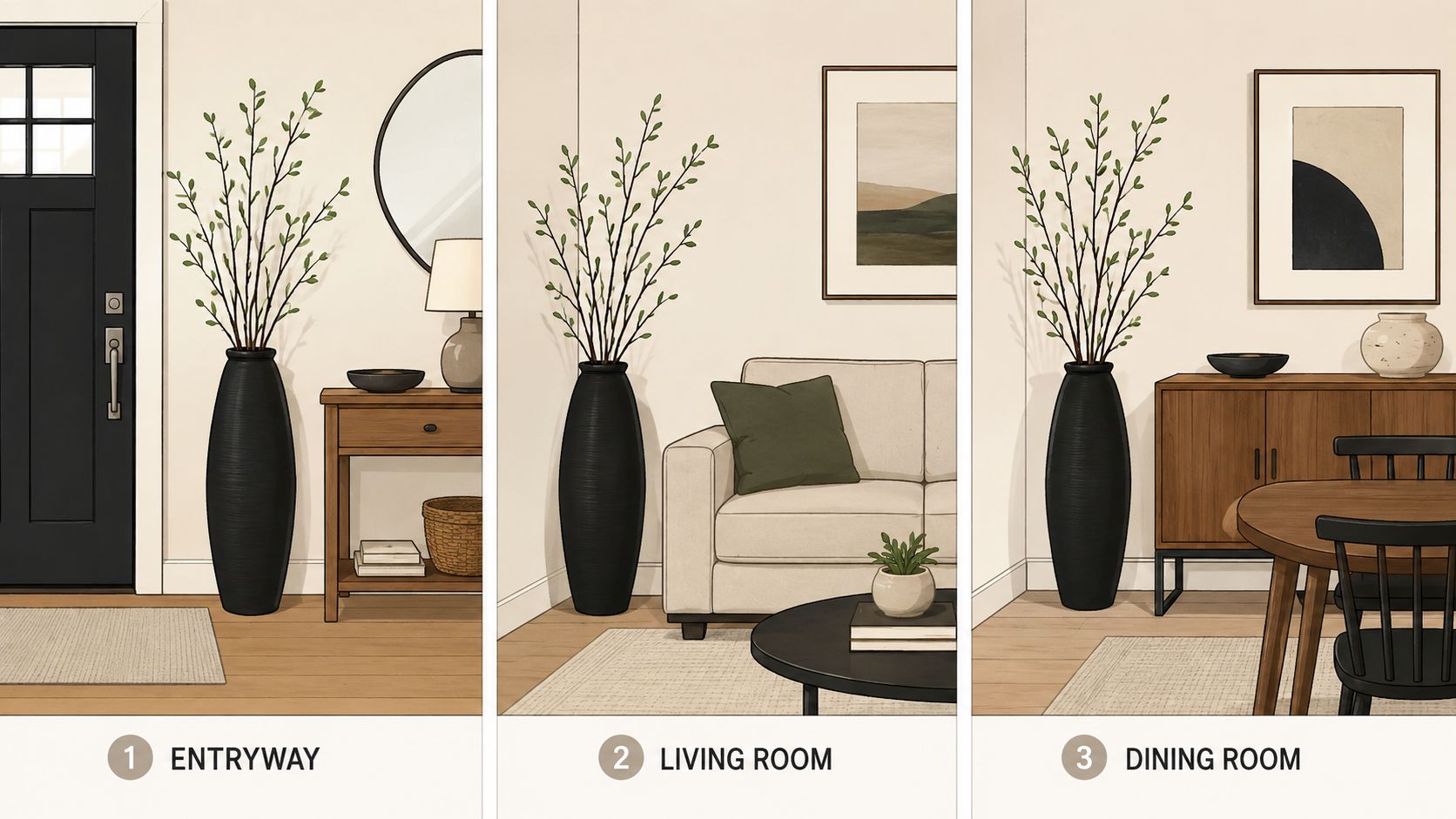
A black floor vase succeeds when its placement solves a room problem. In an entryway, it should establish arrival. In a living room, it should balance upholstery and architecture. In a dining room, it should occupy unused vertical space without interrupting conversation.
Entryways
Place the vase beside the door or at the end of a console where it can be seen immediately upon entry. A useful proportion is two-thirds the height of the console, or a form that reaches within six inches of a standard transom when the architecture allows it.
Keep at least thirty inches of walking clearance through the entry. That space matters in homes where family members move between the garage, foyer, kitchen, and lanai. A heavy ceramic or sealed metal vase works well here because the location receives more incidental contact than a quiet living room corner.
Leave an anchor vase empty if its silhouette has enough authority. Use branches or dried eucalyptus when the console is simple and the entry needs a softer welcome.
Living rooms
A low-profile sofa gives a tall vase room to register. Position it roughly eight to twelve inches beyond the arm so it flanks the conversation group without crowding the seating. The vase should relate to the sofa's outer edge, not sit directly behind a person's shoulder.
Two matching vases can bracket a fireplace or media unit, but symmetry should be reserved for architecture that can support it. Place the pair about one-third of the wall width apart, keeping their visual weight consistent with the console, artwork, or television below.
A black vase can ground a pale rug and repeat the tone of dark window frames, iron lighting, or blackened hardware. Lighting should graze the surface rather than flatten it. Matte ceramic benefits from side light, while hammered metal can catch a warmer lamp or late afternoon glow.
Dining rooms
A single tall vase belongs in an unused corner or between a sideboard and the wall. Keep stems below seated eye level so guests can see across the table. Bare branches, restrained eucalyptus, or an empty sculptural vessel are better choices than an oversized arrangement that competes with the meal.
Fresh flowers require a safer location. Use them only where water spills won't damage wood flooring, rugs, or a sideboard finish. A removable liner makes the arrangement more practical and keeps the decorative vessel from becoming a maintenance problem.
For additional composition ideas, Fiore's guide to vase ideas for home decor offers useful visual direction. Central Florida homeowners should still adapt those ideas to local light, humidity, traffic patterns, and the actual proportions of the room. The living room home decor ideas collection can also help connect the vase to sofas, rugs, lighting, and case goods rather than treating it as an isolated purchase.
Care, Cleaning, and What to Expect from Custom Orders
Ownership should be simple, but every material has a maintenance limit. Matte ceramic usually needs a weekly microfiber dusting, and solvent-based polishes should be avoided because they can strip or alter the finish.
Sealed or lacquered pieces respond well to a barely damp cloth followed by a dry wipe. Metal benefits from protection against moisture, particularly in homes near the coast or with regular lanai access. A light coat of paste wax twice a year can help protect suitable metal finishes, provided the manufacturer permits it.
Care by material
- Matte ceramic: Dust gently and avoid abrasive cleaners that polish the surface unevenly.
- Sealed metal: Remove moisture promptly and follow the finish-specific care instructions.
- Glass: Use a felt pad under the base on hard flooring, then clean the surface often enough to prevent floor-level dust from becoming conspicuous.
- Bamboo or woven material: Rotate the vase away from direct Florida sun to reduce fading and drying.
Fresh flowers require another layer of caution. A removable liner protects the decorative shell, while unglazed ceramic shouldn't hold standing water because moisture can migrate through the body and affect nearby flooring.
Custom ordering deserves realistic timing
Custom and made-to-order furniture is commonly measured in weeks rather than days. A 2026 industry guide places domestic custom furniture at eight to sixteen weeks, with custom millwork at ten to twenty weeks and custom case goods at ten to fourteen weeks. The furniture lead-time guide explains why approvals, production capacity, and materials affect the schedule.
Custom commercial furniture is generally listed at four to ten weeks after approved shop drawings or receipt of fabric, according to industry guidance on custom commercial lead times. The same principle applies to decorative pieces ordered to coordinate with a broader room plan. An in-house consultation can match the black finish to existing wood, upholstery, and lighting before the order is placed.
Delivery should include placement, not a box left at the door. Slone Brothers Furniture provides custom-order furniture, an in-house design team, a Low Price Promise, and home delivery options for Central Florida homes. Buyers should confirm the delivery scope, inspection process, and final placement before approving an order.
Questions Buyers Ask and the Local Next Step
What height works with standard ceilings?
For an eight-foot ceiling, the vase should usually leave the recommended ceiling gap while relating to the nearest sofa, console, or artwork. For a ten-foot ceiling, a taller and fuller profile usually works better, provided it still leaves breathing room above. The two-thirds furniture rule matters more than choosing a number from a catalog.
Does black look dated?
Black remains timeless when the shape is considered and the finish suits the room. A matte ceramic, softly textured metal, or carved form looks architectural and restrained, while a highly glossy decorative profile can feel tied to a narrower style. The room's existing dark accents should guide the decision.
How can finishes handle Florida humidity?
Choose sealed or powder-coated metal, inspect ceramic glazing, and keep woven materials out of direct sun. Near pool doors, coastal air, or an open lanai, stability and surface protection matter more than a dramatic profile. The vase should also stand on level flooring with a suitable protective pad.
Why do designer pieces cost more?
The difference usually appears in material quality, finish consistency, weight, base construction, and the ability to coordinate the piece with a larger furnishing plan. A mass-produced vase may satisfy a temporary need, but an investment piece should earn its place through durability and proportion. The FTC's household furniture guidance defines furniture broadly as articles of utility, convenience, or decoration suitable for a dwelling, which supports treating a substantial floor vase as home decor with lasting design value.
Buyers should also read origin claims carefully. The FTC states that an unqualified “Made in USA” claim means a product is “all or virtually all” made in the United States, including final assembly and significant parts and processing, while foreign parts require clear nearby disclosure. The FTC's Made in USA guidance is useful when a buyer values American-made construction.
For homeowners in Longwood, Lake Mary, Sanford, Winter Park, or Altamonte Springs, the next step is an in-person assessment. The design team can review measurements, compare ceramic and metal finishes, discuss custom ordering, explain delivery options across Greater Orlando, and apply the Low Price Promise when identical pieces are compared.
Visit Slone Brothers Furniture in Longwood, FL, with room measurements and a doorway photograph so the in-house design team can recommend a black floor vase that fits the architecture, traffic, and Florida light. The showroom offers custom-order guidance, home décor, and face-to-face design support for Central Florida homeowners who want a lasting piece rather than a quick online guess.


