

Christmas Swags and Garlands: A Central Florida Styling


A Longwood homeowner can spend an afternoon arranging a brick fireplace mantel, only to discover that the greenery looks too short, too flat, or oddly crowded once the stockings and accessories return. Central Florida homes add another layer of complexity. Air conditioning dries fresh foliage, humidity challenges outdoor displays, and screened lanais turn holiday decorating into an extension of the living space.
The right Christmas swags and garlands begin with proportion, material selection, and placement rather than ornament quantity. Whether the setting is a Lake Mary entryway, a Winter Park dining room, or a Sanford home prepared for holiday entertaining, greenery should support the architecture and the way the household lives.
What Swags and Garlands Actually Are
A garland is a horizontal runner, while a swag is a hanging accent. That simple distinction helps homeowners choose the right form before considering color, lighting, or embellishment.
A mantel garland travels along the length of a shelf, similar to a runner across a table. It can rest evenly across the surface, dip gracefully between attachment points, or trail over both ends. A swag behaves more like a rosette or teardrop. It hangs vertically, gathers at a central point, or drapes over a door, mirror, railing, or architectural feature.
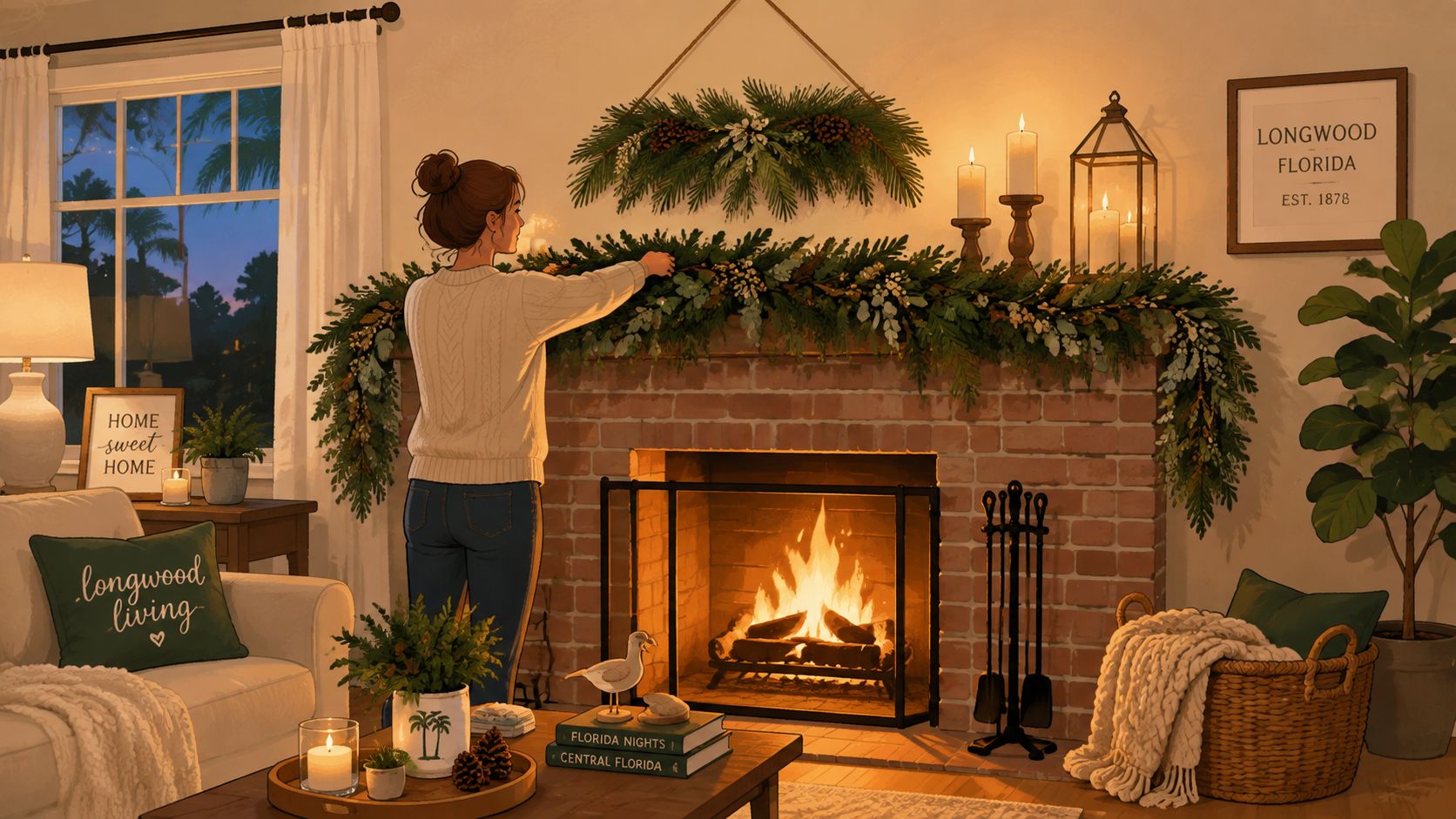
The two basic forms
A garland makes a long architectural line. Common placements include:
- Mantel garlands, arranged above a fireplace or across a media console.
- Staircase runners, secured along a banister or railing.
- Table garlands, used as low centerpieces on dining or console tables.
- Doorway garlands, framing an opening or interior passage.
A swag creates a concentrated focal point. Door swags, mailbox pieces, mirror swags, and smaller accents over artwork all use the same basic idea, a fuller center with foliage that falls or tapers away.
Both forms can be made from fresh pine, fir, spruce, artificial evergreen, mixed foliage, magnolia, eucalyptus, berries, branches, ribbon, or specialty materials. Historical accounts trace wreath-like greenery to ancient Persia, Egypt, and Greece, while ancient Rome helped establish the custom of placing floral and evergreen decorations outside doors. By the 16th century, evergreen wreaths had gained Christian symbolism, and a recorded Lutheran Advent-style candle-in-wreath custom dates to 1833. These traditions help explain why greenery still feels familiar even when its styling becomes more contemporary. Read this historical overview of Christmas wreaths and garlands for additional context.
For Central Florida homeowners, the practical vocabulary matters. A door swag creates an arrival moment. A stair garland draws the eye upward. A mantel garland anchors a room. More design guidance for coordinating decorative layers appears in these home décor tips.
Choosing the Right Materials for Central Florida Homes
In Central Florida homes, material choice determines how holiday greenery responds to humidity, heat, air conditioning, and screened-lanai conditions. Fresh greenery brings fragrance and natural variation. Artificial greenery offers steady color and shape. Mixed arrangements combine a durable base with seasonal texture, which suits a layered home aesthetic and year-round entertaining.
Fresh-cut pine, fir, and spruce work especially well indoors when the display is meant to feel temporary and richly botanical. In an air-conditioned Longwood home, circulating air can speed moisture loss, so fresh garlands may brown within two to three weeks. Fresh wreaths and garlands can last four to six weeks, and up to eight weeks in cooler climates, when misted regularly and kept away from heat and direct sunlight. Placement is part of the design decision, not an afterthought. Fresh greenery care guidance explains how moisture, light, temperature, and location affect longevity.
Artificial greenery suits front entries, covered porches, screened lanais, and busy rooms where consistent appearance matters. Dense, UV-resistant foliage can retain its color season after season in sun-exposed areas, provided it is designed for outdoor conditions. Humidity adds another concern, particularly on screened porches. Inspect pieces regularly for trapped moisture or mildew, and allow damp components to dry before storing them.
Magnolia and eucalyptus soften a uniform evergreen base. Their broad leaves and muted tones coordinate with Florida's bright light, tile floors, natural woods, and indoor-outdoor entertaining style. Used selectively, they help the greenery feel connected to the room rather than placed on top of it. That layered approach reflects a design-led showroom philosophy, where seasonal pieces support the home's existing materials and proportions.
Greenery materials compared for Central Florida conditions
| Material | Indoor Performance | Outdoor Performance | Typical Lifespan |
|---|---|---|---|
| Fresh evergreen | Fragrant and organic, but air conditioning can dry it quickly | Best in protected, shaded settings | Seasonal, with fresh greenery commonly lasting 4 to 6 weeks and up to 8 weeks in cooler climates, with proper care |
| Artificial evergreen | Consistent shape, color, and density | Strong choice when labeled for outdoor use and protected from excessive exposure | Reusable across seasons, depending on construction and storage |
| Mixed evergreen with magnolia or eucalyptus | Adds contrast and a collected, layered look | Works well in covered settings when components are rated appropriately | Depends on the fresh and artificial components |
| PVC or PVC-blend artificial greenery | Durable and easy to reshape | Suitable only when the product's outdoor and safety specifications support the installation | Reusable with careful storage; some products meet standards such as DIN 4102-1, BS EN 13501-1, or NEN EN 71-2 as shown in product specifications |
Artificial greenery is judged by more than visible realism. Better pieces reproduce believable needle direction, branch movement, and color variation. Match the material to the room, climate exposure, maintenance preference, and intended number of seasons.
Central Florida rule: Fresh greenery belongs where its fragrance and short seasonal life can be appreciated. Artificial greenery belongs where sun, traffic, moisture, or repeated use would make fresh material impractical.
The same climate-conscious approach applies when choosing outdoor furniture, particularly around exposure, ventilation, and material durability.
Sizing and Measuring for Mantels, Stairs, and Doorways
On a Lake Mary mantel set flush against a cased opening, measuring only the shelf width can produce greenery that looks skimpy once the desired drape reaches over the trim. Central Florida homes also bring humidity, heat, screened porches, and year-round entertaining into the decision. Measure for the finished shape, not merely the surface.
Start with a tape measure. Remove stockings, mirrors, vases, and other objects from the area, then record the usable run. Decide whether the garland will sit straight, dip between supports, or trail over the ends. That choice changes the amount of material required.
Use the feature as the measuring guide
For a mantel, a graceful swag generally needs roughly 1.5 to 2 times the mantel width. The additional length creates movement and lets the greenery fall naturally instead of ending abruptly at each corner. On a shallow shelf or near artwork, keep the profile controlled so the display supports the room's layered look without hiding architectural details. For more fireplace-specific placement ideas, see this guide to decorating around a fireplace.
A banister needs a different calculation. Allow 10 to 12 inches of greenery per tread, then add material around the newel post or terminal point. A tightly stretched runner can look thin and put unnecessary strain on attachment points, especially in a busy home where guests regularly use the stairs.
A standard 36-inch entry door typically looks balanced with a door swag between 36 and 48 inches tall. The final choice depends on the door's panel layout, surrounding trim, and whether the swag is centered or offset. On a covered entry or screened porch, leave enough clearance for airflow and routine movement.
Add length before ordering
Many neutral buying guides recommend adding 10 to 15 percent extra length after measuring the exact run. That allowance accommodates compression, bending, drape, branch separation, and the fullness created during installation. This measuring guidance is particularly useful for staircases and mantels, where a straight measurement rarely matches the finished shape.
Product specifications should show both length and density. One commercial artificial model measures 540 cm and includes 400 branches, illustrating why labels such as “full” or “extra lush” need closer examination. See the example of length-and-density specifications.
Depth matters as much as length. A garland with approximately 10 to 14 inches of depth generally reads as lush without blocking sightlines or interfering with artwork. On a shallow mantel, a narrower profile may look more refined.
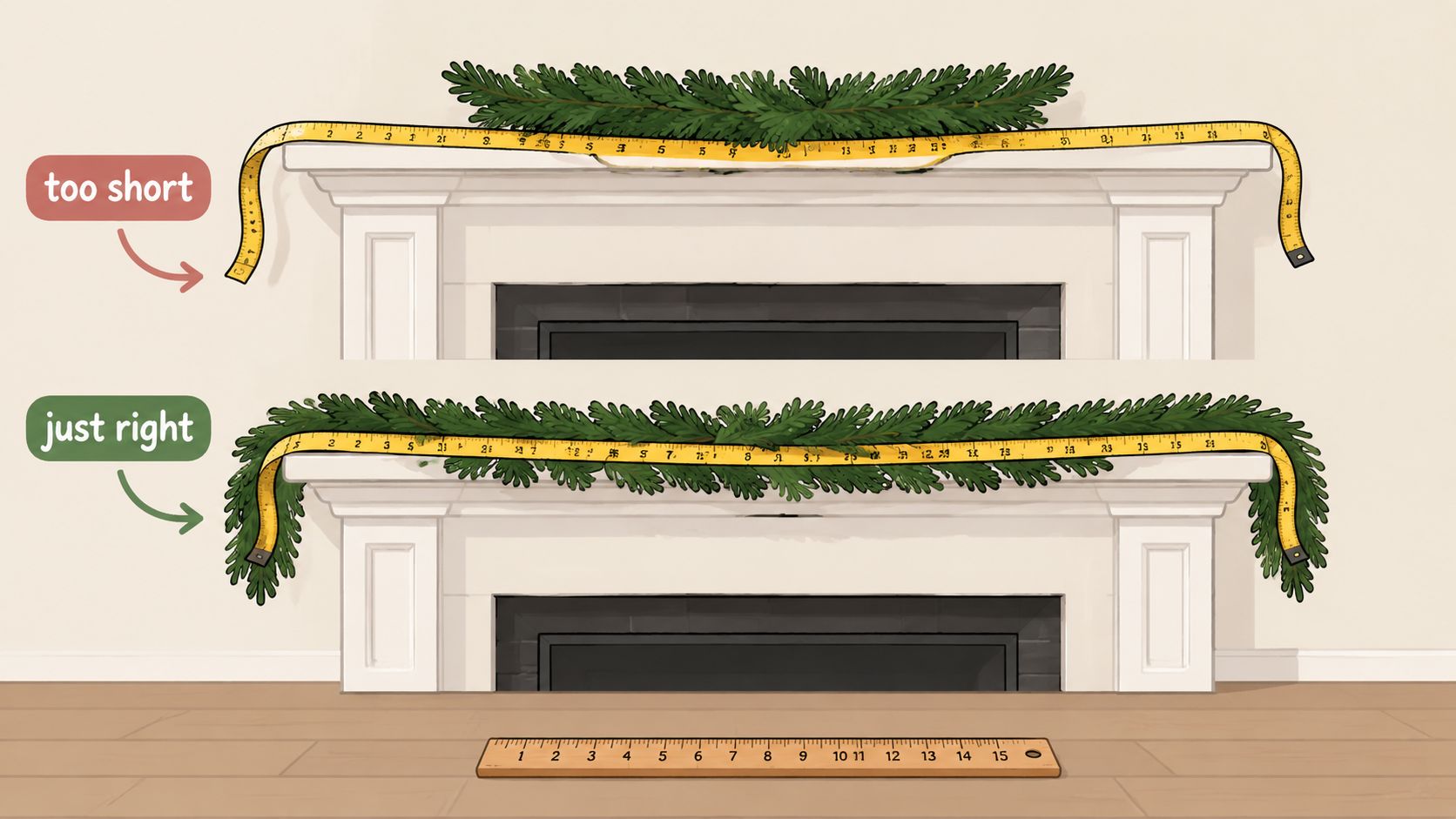
Before ordering, record the width, height, depth, attachment locations, and desired overhang. In Longwood's humid conditions, that preparation helps the greenery fit the room, porch, or entry cleanly while supporting the layered, design-led feel associated with Slone Brothers showrooms.
Pre-Lit, Unlit, and DIY Options Compared
The three principal choices are pre-lit artificial garlands, unlit artificial garlands, and DIY arrangements assembled from individual sprigs and stems. None is universally superior. The right choice depends on how much setup labor the household accepts, how often the display will be reused, and how precisely the greenery must coordinate with the room.
Pre-lit pieces reduce annual installation work. A homeowner preparing a pool deck, lanai, and interior entertaining areas can place a finished strand instead of adding lights manually along every run. The convenience comes with a higher initial investment and a greater need to verify the quality of the wiring, plug, light source, and replacement policy.
Unlit garlands suit a layered lighting plan. They can work beside wall sconces, table lamps, candles, or architectural lighting without forcing every greenery placement to glow. This option also gives a designer more control over where illumination appears, especially in a dining room where candlelight may be the desired focal point.
DIY construction offers the greatest flexibility. Individual stems can be directed around artwork, shelves, stair posts, or unusual mantel depths. The trade-off is time, repeated adjustment, and the risk of uneven fullness. Experienced installers generally avoid that unevenness by building the base first, then layering texture and accents with a clear visual rhythm.
Pre-lit, unlit, and DIY garlands
| Option | Upfront Cost | Season Lifespan | Setup Labor | Best For |
|---|---|---|---|---|
| Pre-lit artificial | Higher initial investment | Reusable across seasons when stored correctly | Lower annual setup | Busy households, outdoor entertaining zones, and long stair runs |
| Unlit artificial | Moderate investment depending on density and construction | Reusable across seasons | Moderate, especially when lighting is added separately | Homes with established sconces, lamps, or candle arrangements |
| DIY from sprigs and stems | Varies with the number and quality of components | Components can be reused when protected | Highest, with shaping and balancing required | Homeowners seeking custom proportions and highly personal styling |
A DIY approach resembles the planning required for decorative lighting projects. Readers exploring related lamp ideas can apply the same principle here, coordinate the light source with the room's existing layers instead of treating illumination as an afterthought.
For any pre-lit or separately lit arrangement, buyers should confirm that the product is designed for the intended location and that the manufacturer's stated link limit won't be exceeded. Longer continuous runs aren't automatically better. Over-linking can create dimming and electrical strain, while an appropriately divided design often looks more intentional.
Styling Ideas for Every Room and Exterior
Christmas greenery works best when it follows the home's circulation and architecture. In Central Florida, that often means styling the entry, living room, dining area, staircase, and screened outdoor spaces as connected scenes rather than decorating one isolated surface.
Start at the arrival point
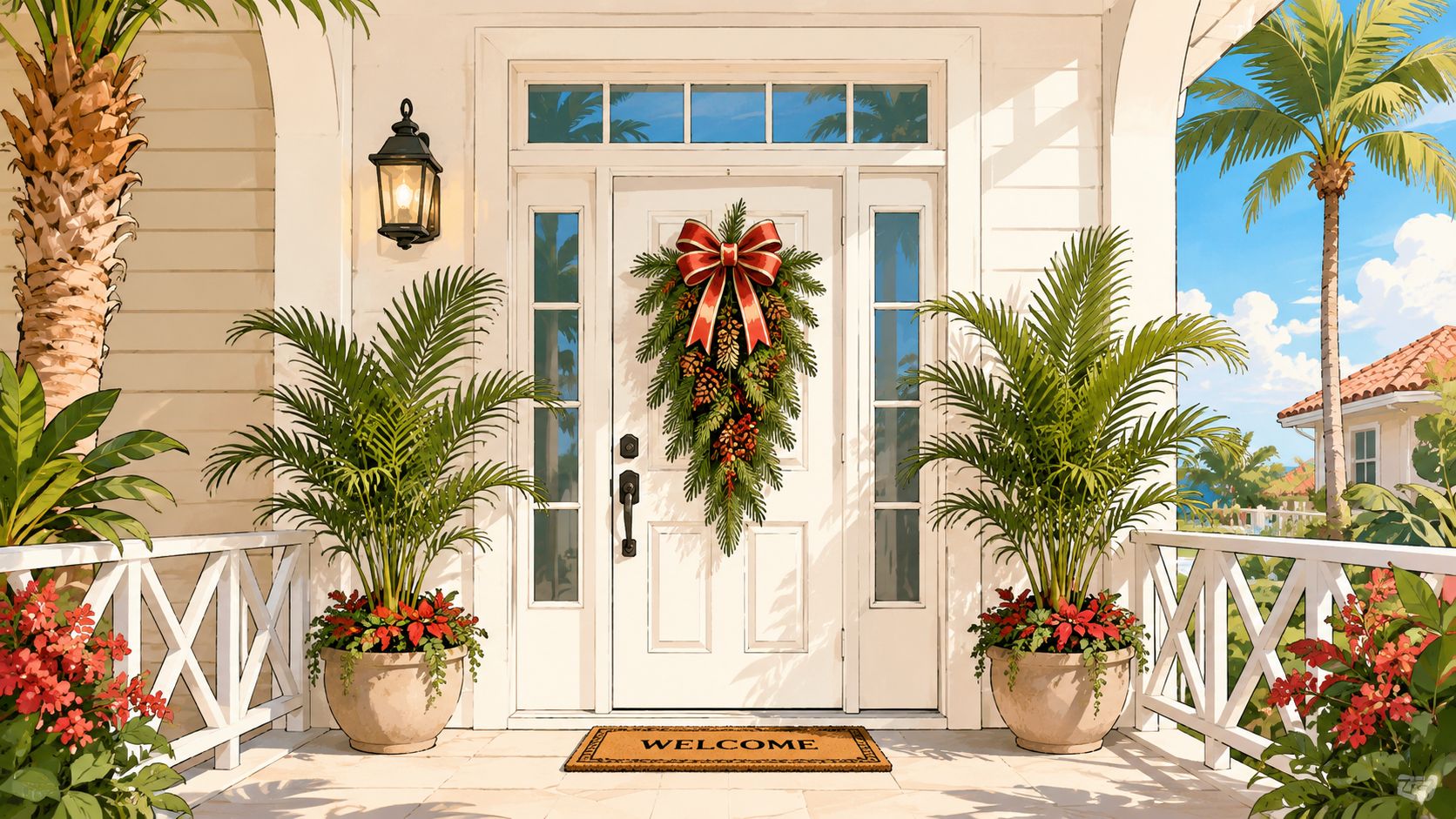
A front-door swag creates an immediate focal point without requiring a full frame of greenery. In neighborhoods around Wekiva and Lake Mary, where tropical landscaping and bright exterior finishes are common, a pine base softened with magnolia, eucalyptus, or restrained ribbon can bridge the holiday palette.
Inside the living room, a mixed garland can echo the colors already present in the upholstery, wood finishes, rugs, and artwork. The most polished arrangements vary texture rather than adding decoration everywhere. A refined evergreen base with a few seasonal picks often has greater presence than a densely decorated line that obscures the mantel.
The living room home décor guide offers a useful design principle for this placement. Greenery should support the furniture arrangement and sightlines, not compete with the room's primary seating or artwork.
Let each room use greenery differently
- Dining table: A low-profile garland can function as a runner, leaving enough clearance for serving pieces and conversation. Broad foliage should remain below the sightline across the table.
- Kitchen island: A pre-lit, finished piece can add warmth without requiring a long installation during a busy entertaining season. Keep the profile controlled so food preparation and seating remain comfortable.
- Staircase: Follow the measured drape allowance and secure the greenery at consistent visual intervals. A fuller drop near the newel post can make the termination feel intentional.
- Bedroom headboard: A narrow, unlit swag or a restrained horizontal accent adds seasonal warmth without making the room feel theatrical. Artificial material is usually easier to maintain in a sleeping environment.
- Console or buffet: A brambly, loosely layered arrangement can soften a hard furniture line and connect a mirror or artwork to the rest of the room.
Covered porches and screened lanais deserve equal attention. Weather-resistant greenery on railings, columns, or pavilion beams extends the holiday atmosphere into outdoor entertaining areas, but every component must be rated for the actual exposure. In a Florida home, “outdoor” can mean shaded and protected, or it can mean wind-driven rain, intense sun, and moisture entering through an open lanai door. Those conditions require different specifications.
Installation and Safety Fundamentals
Installation affects both appearance and safety. A beautifully proportioned garland can still damage a finish, obstruct a walkway, or create a hazard if the attachment method and electrical components don't match the surface.
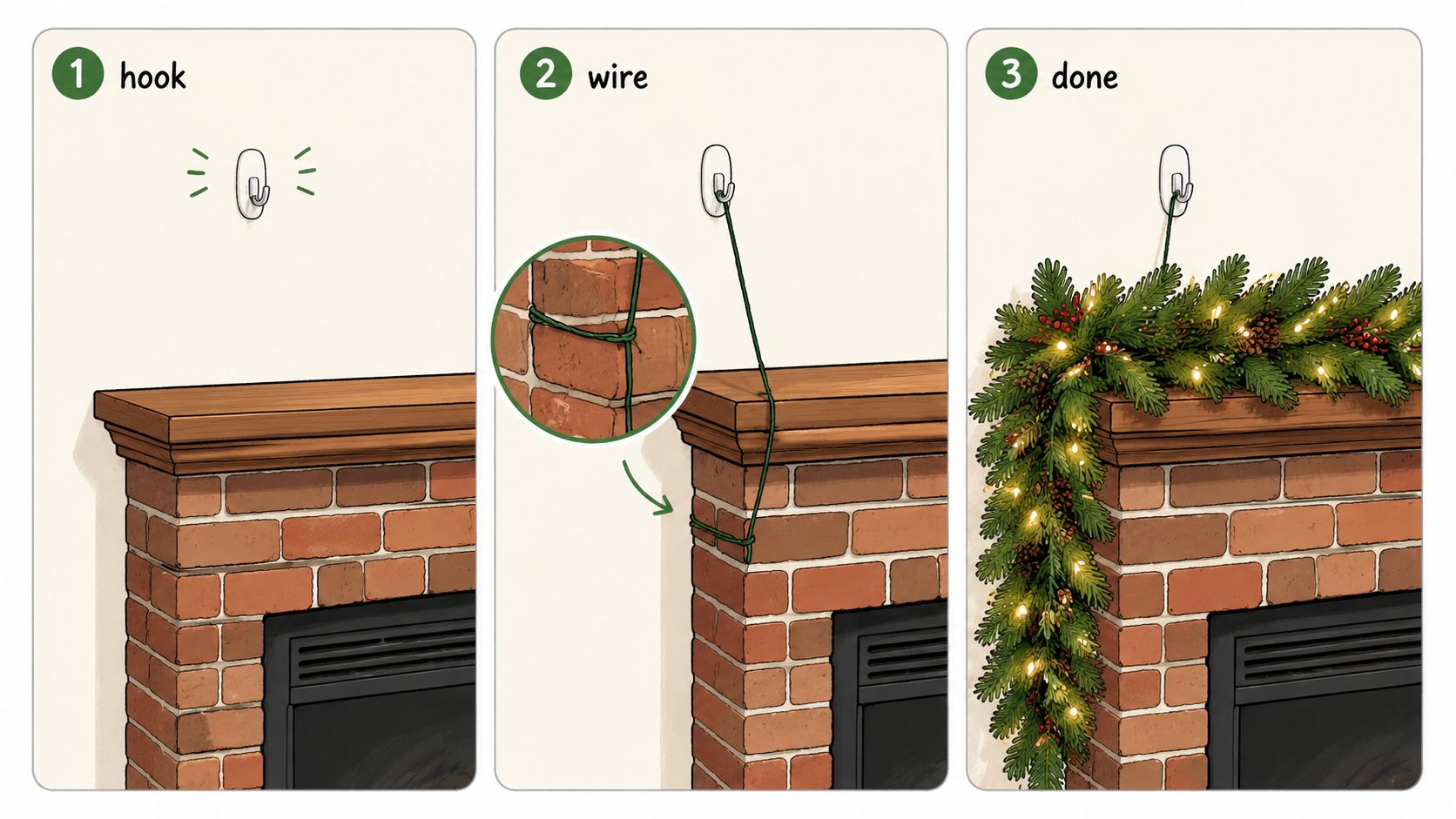
For painted interior walls, removable command-style hooks can provide a discreet solution when the surface is clean, sound, and compatible with the product. Brick and stone around a fireplace generally need coated wire or carefully placed masonry-compatible attachment points. Banisters and railings often work well with green zip ties, provided the ties are secured without crushing the rail finish or creating sharp exposed ends.
Outdoor mounting requires attention to the construction common around Central Florida homes. Aluminum and vinyl soffits shouldn't carry unnecessary concentrated weight. Spread attachment points across the run, keep connections protected, and avoid pinching wires against sharp edges.
A safety inspection before installation
- Fire resistance: Artificial greenery used in commercial or public settings is commonly specified as flame-resistant or flame-retardant. One institutional policy permits only artificial garland labeled fire resistant or flame retardant under UL 2358 in those environments. Review the institutional fire-safety policy and confirm the label on any product used near a fireplace, doorway, or public gathering area.
- Heat clearance: Keep garlands at least three feet from fireplaces, radiators, candles, and vents, as recommended in holiday decorating guidance. The same guidance recommends independently tested light strings, replacing worn or broken cords, and switching lights off before sleeping or leaving home. Review this holiday lighting safety guidance.
- Outdoor lighting: Outdoor garlands should state an IP rating of at least IP44, and both the garland and its plug or battery box should be rated for exterior conditions. Use this pre-lit garland guidance when checking an outdoor installation.
- Electrical protection: Use GFCI-protected exterior outlets, keep in-line timers and connections off the ground, and inspect every cord before mounting.
- Light spacing: Maintain at least six inches of clearance from incandescent bulbs and recessed lighting. LED systems generally produce less heat, but the product's own instructions still control the installation.
Moisture deserves special attention near open lanai doors. Humid air and wind-driven rain can migrate toward displays that appear to be indoors, so connections should remain raised and protected. Homeowners who prefer professional electrical planning can use a qualified resource to find holiday light installers for exterior applications.
Care, Storage, and Where to Find Them Near You
Artificial garlands reward careful handling. Before storage, gently vacuum loose dust from the branches using a low setting and a soft attachment, then reshape separated branches by hand. Minor branch separations can often be corrected with discreet floral wire or by repositioning the internal stem, but damaged wiring or cracked insulation deserves replacement rather than concealment.
Fresh greenery needs a different routine. Cool misting can help in dry indoor air, while distance from heat sources and direct sunlight protects moisture levels. Fresh pieces should be treated as seasonal materials, not stored for reuse after they've dried.
Storage conditions matter in Central Florida. Attics and garages can hold substantial heat and humidity, which may distort plastic foliage, weaken adhesives, or encourage mildew on organic accents. Breathable storage bins in a cool, dry interior location offer better protection than tightly sealed containers placed in an unconditioned attic.
A thoughtful storage cycle includes:
- Clean before packing: Remove dust, loose needles, ribbon, berries, and other detachable accents.
- Preserve the shape: Avoid compressing full branches into a container that forces them permanently flat.
- Separate delicate elements: Place glass, fragile ornaments, and wired embellishments in protective wrapping.
- Label the destination: Mark pieces for the mantel, staircase, entry, or lanai so installation begins with the correct proportions.
- Inspect before reuse: Check wiring, connectors, branch joints, and signs of moisture before the next season.
Homeowners with non-standard mantels, oversized staircases, or large covered porches can benefit from in-house design consultation when selecting layered greenery. A Longwood showroom on State Road 434 can help coordinate custom orders, compare density and material, and plan delivery across Longwood and Greater Orlando, including Lake Mary, Winter Springs, Altamonte Springs, Casselberry, Sanford, and Oviedo. Coordinating greenery with complementary décor stocked in the same space also makes it easier to create a unified room rather than a collection of disconnected holiday pieces.
The category has grown beyond a narrow seasonal niche. One industry estimate projects the global Christmas wreaths and garlands market from US$770.4 million in 2025 to US$1.2941 billion by 2033, a projected 6.7% CAGR from 2026 to 2033. A separate market view projects growth from US$1.289 billion in 2025 to US$1.838 billion by 2033, with about 4.5% CAGR, while one North American estimate places the regional market at US$310.0 million in 2025 and projects US$434.0 million by 2033. Review the market estimate and its residential and commercial category context. Those projections reinforce a practical design point. Well-made greenery can serve as a recurring part of a home's seasonal visual identity rather than a disposable decoration.
Ready to select Christmas swags and garlands that suit a Central Florida home, its architecture, and its entertaining spaces? Visit Slone Brothers Furniture in Longwood to speak with experienced design consultants about coordinated décor, custom proportions, and a layered holiday setting supported by personal service.