
Top Farmhouse Decor Ideas for Your Florida Home


Bring cozy farmhouse charm to a Central Florida home by starting with what many Orlando-area homeowners are already trying to solve: a room that feels comfortable, polished, and lived in without looking theme-driven. Farmhouse decor ideas work well because the style isn't tied to one exact product list. It's built around natural materials, neutral palettes, practical function, wood texture, woven layers, and a few vintage or repurposed pieces that add character, as noted in this farmhouse style overview from Backsplash.
That flexibility makes farmhouse especially useful for homes in Longwood, Lake Mary, Sanford, and across Central Florida, where many families are furnishing several rooms at once and want a look that can move from the entryway to the dining room to the bedroom without feeling disconnected. The style also lends itself to mixing better-made anchor pieces with thrifted finds, practical storage, and softer layers that hold up to everyday life.
Since 1980, Slone Brothers Furniture has helped local homeowners build rooms that feel personal, functional, and lasting. These farmhouse decor ideas focus on exactly that. Warmth, balance, and quality that won't feel dated next year.
Table of Contents
- 1. Reclaimed Wood Accent Walls and Shiplap
- 2. Vintage and Antique Furniture Mixing
- 3. Distressed and Painted Furniture Finishes
- 4. Neutral Color Palettes and Warm Whites
- 5. Open Shelving and Display of Collections
- 6. Vintage Lighting Fixtures and Farmhouse Pendant Lights
- 7. Natural Textiles and Cozy Layering
- 8. Vintage Rugs and Layered Rug Styling
- 9. Farmhouse Décor Accents Galvanized Metal and Mason Jars
- 10. Farmhouse Kitchen Islands and Functional Kitchen Design
- 10-Item Farmhouse Decor Comparison
- Create Your Farmhouse Haven in Longwood
1. Reclaimed Wood Accent Walls and Shiplap
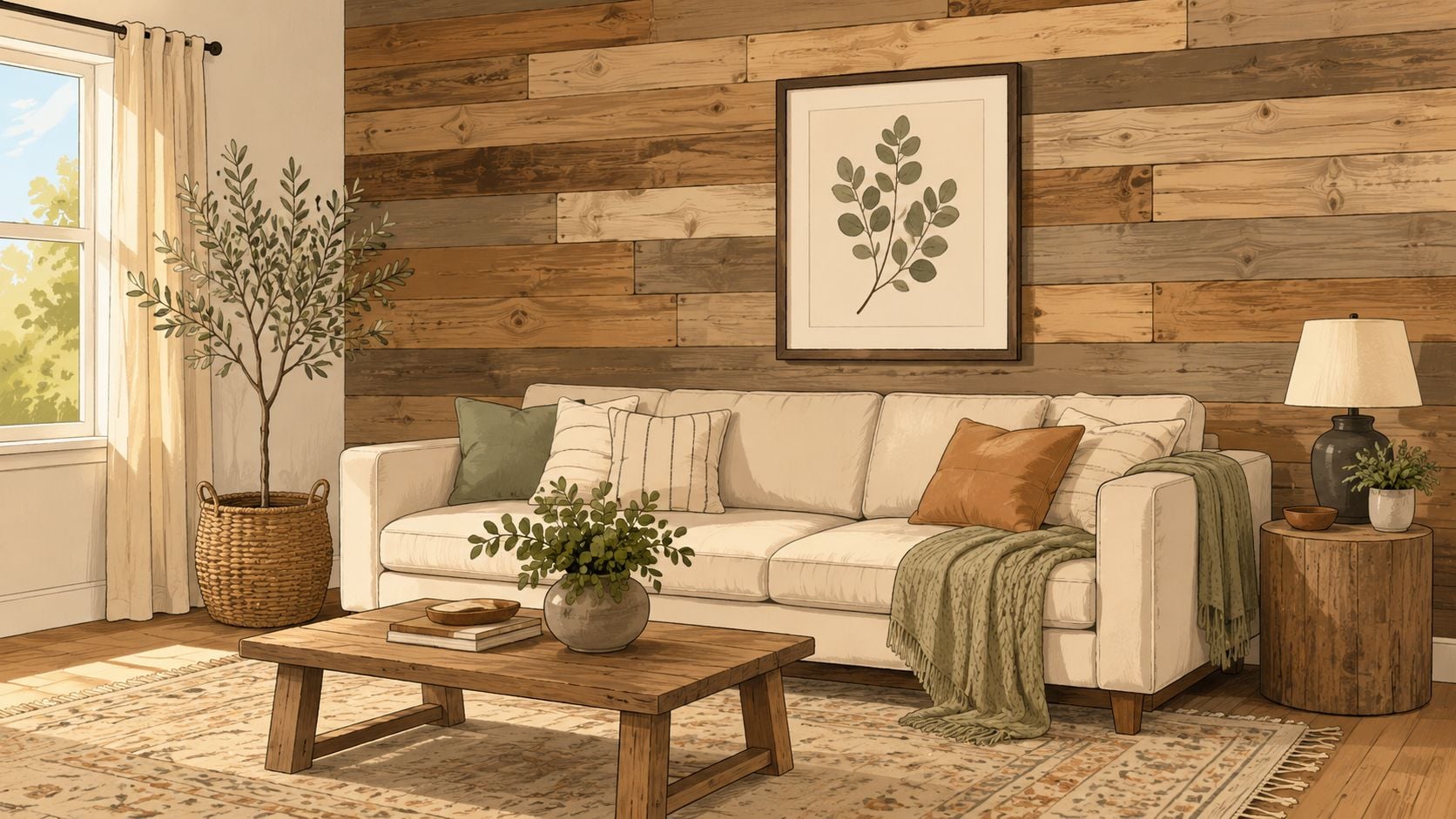
Few farmhouse decor ideas change a room faster than wood on the wall. Shiplap and reclaimed planks bring instant texture, and they help a newer Central Florida home feel more grounded and relaxed. In a Longwood bedroom, that might mean a white-painted shiplap wall behind the bed. In a Lake Mary family room, it could be a reclaimed wood accent wall above a low console or behind open shelving.
Shiplap works because it adds structure without demanding too much attention. Reclaimed wood works because every board has variation. Knots, grain shifts, worn edges, and natural color changes keep the room from feeling flat.
Where It Works Best
A farmhouse wall treatment doesn't need to cover the entire house. One focal point is often enough.
- Bedroom backdrop: A warm white or soft greige shiplap wall gives wood beds, upholstered headboards, and layered bedding a clean backdrop.
- Living room feature wall: Barn wood or distressed planks pair well with neutral upholstery and a substantial cocktail table.
- Entryway detail: A smaller paneled section can make an entry feel finished without overwhelming a narrow space.
Practical rule: Keep the rest of the room quieter when the wall has strong texture. Let wood be the feature, then support it with softer fabrics, simple art, and a few darker accents.
For homeowners who want guidance on proportion and placement, Slone Brothers shares helpful ideas on creating a perfectly balanced accent wall. Those same principles work especially well with farmhouse panel treatments.
For broader inspiration on wall treatments, this guide to panelling ideas for your renovation can help homeowners compare looks before choosing a direction.
2. Vintage and Antique Furniture Mixing
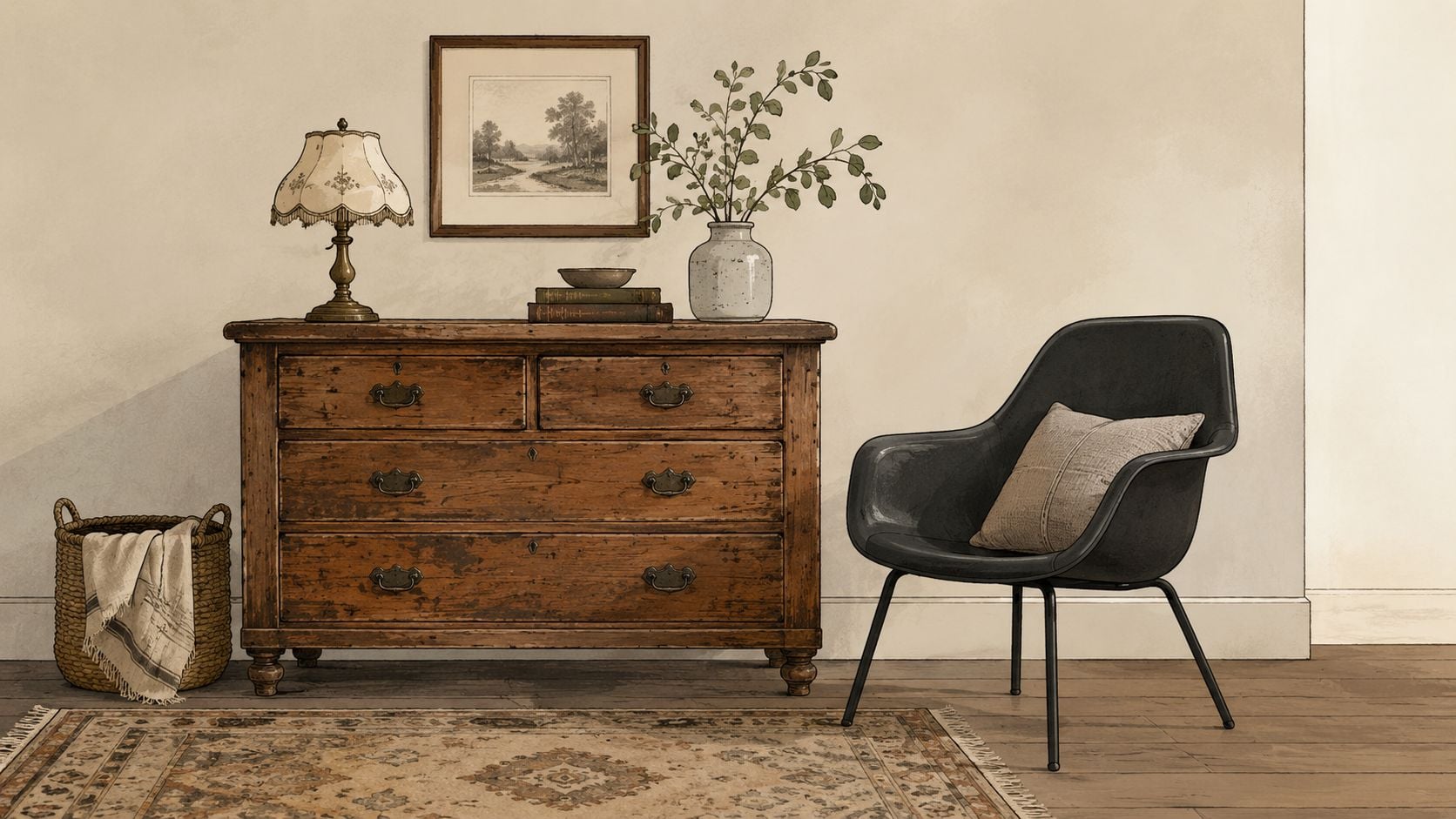
Farmhouse style looks more convincing when every piece doesn't match. A home feels collected when an older dresser sits beside a cleaner-lined chair, or when a farmhouse dining room combines a timeworn cabinet with newer seating that's comfortable for everyday use. That layered approach is one reason farmhouse decor ideas stay relevant.
This style is also closely tied to budget-conscious decorating and reuse. One farmhouse guide describes it as “a great way to style your home while staying on budget” and points shoppers toward thrift stores, yard sales, dollar stores, and Facebook Marketplace in this roundup of farmhouse home décor ideas.
How to Mix Old and New Without the Room Feeling Random
A simple formula works well. Start with one or two pieces that have age or age-like character. Then support them with newer furniture that handles the daily wear.
A Sanford homeowner, for example, might use an antique pine chest in the bedroom but pair it with a current mattress and a sturdier bedside lamp. A dining room might center on a solid wood table with visible grain, then add fresh upholstered chairs for comfort.
- Use old pieces as anchors: Dressers, cabinets, benches, and dining tables usually have enough visual weight to ground a room.
- Let newer pieces handle performance: Sofas, mattresses, and dining chairs often need current comfort and durability.
- Repeat one connecting element: Black hardware, warm oak tones, or linen-like fabric can tie mixed eras together.
Shoppers who want farmhouse with long-term quality often do well with American-made and Amish-crafted pieces from brands carried in Longwood, including Simply Amish and Mavin. Slone Brothers also offers advice on how to mix furniture styles, which is especially useful when farmhouse meets transitional or modern design.
3. Distressed and Painted Furniture Finishes
Not every farmhouse room needs raw wood. Painted finishes can soften the look and make a room feel lighter, especially in homes that already have darker floors or stronger natural light. A distressed white dresser, a muted green sideboard, or soft gray nightstands can all bring in farmhouse character without leaning too rustic.
The best distressed finishes look believable. They don't feel overworked or overly themed. Edges show wear where real furniture would naturally age, and the color underneath still feels useful in the room.
Best Colors for a Current Farmhouse Look
Warm whites, creams, soft grays, and earth-based neutrals tend to look most natural. Those tones fit farmhouse's broader material language and work across bedrooms, dining rooms, and living spaces.
A painted console in an Orlando entry can hold baskets and lamps without feeling heavy. In a guest room, a chalky painted chest can add that relaxed farmhouse note while still feeling fresh.
Less is usually better. A lightly worn finish on one cabinet or dresser often looks more refined than distressing every wood piece in the room.
For homeowners updating an older piece instead of replacing it, Slone Brothers offers practical guidance on how to refinish wood furniture. That approach fits farmhouse well, since the style often embraces repurposing and gradual room-by-room decorating rather than starting from scratch.
4. Neutral Color Palettes and Warm Whites
Among all farmhouse decor ideas, this one does the most work behind the scenes. Farmhouse rooms usually begin with light neutrals, then layer in wood, wicker, jute, vintage touches, and practical furniture. That combination helps the style move easily from room to room without losing consistency, as described in the earlier farmhouse design reference.
For Central Florida homes, warm whites are often easier to live with than bright, stark whites. They read softer in strong sunlight and pair more comfortably with oak, pine, walnut, and natural fibers.
Building a Neutral Room That Doesn't Feel Flat
A good farmhouse palette uses more than one neutral. Cream, beige, greige, soft taupe, and weathered wood tones create depth.
- Choose a warm base: Wall color, large upholstery pieces, and bigger case goods should feel calm and easy to live with.
- Bring in contrast through texture: Woven baskets, wood grain, linen-like fabric, and darker metal accents keep the room from fading into one tone.
- Let natural light guide the final choice: In bright Florida rooms, undertones show up fast. Test paint and fabric where the sun hits.
The broader home décor market is large, with U.S. revenue estimated at US$128.31 billion in 2023 and projected to grow at 3.89% CAGR through 2029, while another U.S. estimate places the market at US$135.98 billion in 2023 and US$180.39 billion by 2030. For farmhouse shoppers, that matters because the look isn't a one-item purchase. It usually comes together as a whole-room solution through rugs, lamps, wall décor, textiles, and furniture.
Homeowners choosing colors for several spaces can also use Slone Brothers' expert guide to the perfect color palette to narrow combinations before ordering furniture. For kitchen inspiration, this article on cream color kitchen cabinets shows why warmer cabinet colors remain so easy to pair with farmhouse wood tones.
5. Open Shelving and Display of Collections
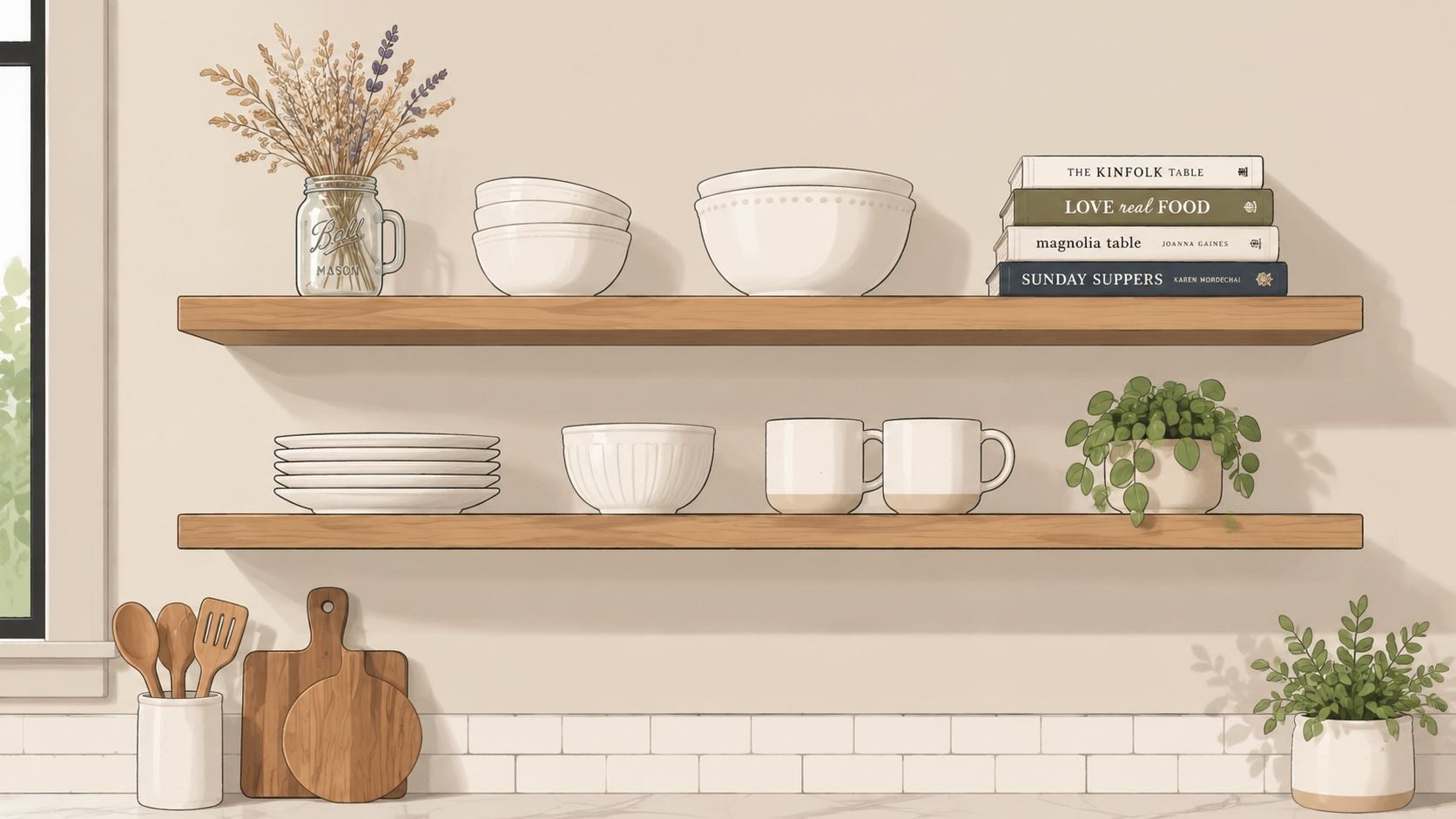
Open shelving is useful farmhouse style. It turns everyday dishware, cookbooks, pottery, and collected pieces into part of the room instead of hiding everything behind doors. In a farmhouse kitchen, that might look like stacked white plates, clear glassware, and a few cutting boards. In a dining room, it could be a hutch or floating shelves with pitchers, baskets, and old serving pieces.
The trick is editing. Shelves need breathing room, especially in homes where daily life already brings plenty of visual activity.
Styling Shelves So They Feel Collected, Not Cluttered
A shelf arrangement works best when it mixes practical items with decorative ones. One shelf can hold bowls used every week. Another can show a framed print, a basket, and a small vase.
A family in Longwood might use open kitchen shelves for everyday plates and mugs, then tuck less attractive storage into lower cabinets. In a living room, a shelf can display books, pottery, and one darker accent to keep the arrangement grounded.
- Repeat materials: White ceramic, warm wood, woven fibers, and glass usually work well together.
- Vary height and shape: Stack some pieces, stand others upright, and leave some open space.
- Limit small loose items: Too many tiny objects make farmhouse styling feel fussy instead of relaxed.
Slone Brothers shares more shelf styling ideas in this guide on how to decorate shelves in any room. That kind of restraint is what keeps farmhouse looking current rather than crowded.
6. Vintage Lighting Fixtures and Farmhouse Pendant Lights
Lighting sets the tone faster than many homeowners expect. A simple room can read farmhouse immediately when it includes a lantern-style pendant, an iron chandelier, or a metal-and-glass fixture with a slightly aged finish. Good lighting adds shape during the day and warmth at night.
In Central Florida homes with open layouts, lighting also helps define zones. A kitchen island fixture can separate the work area from the family room. A dining chandelier can give a table more presence, even in a casual space.
What Makes Farmhouse Lighting Feel Right
Farmhouse lighting usually works best when it has a little weight. Thin, ultra-minimal fixtures can feel disconnected from the rest of the look unless they're balanced by wood and texture elsewhere.
A Lake Mary dining room might use a black iron chandelier above a solid wood table from Canadel or Mavin. A kitchen could pair pendant lights with simple counter stools for a look that feels both practical and styled.
A room needs more than one light source. Overhead fixtures bring shape, but lamps, sconces, and softer accent lighting are what make farmhouse rooms feel welcoming after sunset.
Recent design advice has moved away from heavy-handed farmhouse formulas and toward restraint, mixed eras, real antiques, black accents, and layered texture, according to The English Home's farmhouse décor perspective. That's especially helpful with lighting. One well-chosen fixture often says more than several themed ones.
7. Natural Textiles and Cozy Layering
Texture is what keeps farmhouse from becoming just a white room with wood furniture. Linen-like upholstery, cotton throws, woven shades, seat cushions, and soft bedding all make the space feel warmer and more comfortable. Many farmhouse decor ideas either come together or fall apart depending on these elements.
Natural-looking fabrics are especially useful in Florida interiors because they visually cool the room while still feeling soft. A slipcovered sofa, a loosely woven throw, and clean-lined drapery can create warmth without heaviness.
Layering Without Overloading the Room
Start at the largest textile surface. In a living room, that's usually the sofa and rug. In a bedroom, it's the bedding.
Then add contrast through touch more than pattern. A cream sofa can take a striped pillow, a knit throw, and a woven basket beside it. A bedroom with wood furniture and white bedding often needs only one quilt, one lumbar pillow, and soft drapery to feel complete.
The category mix in home décor supports that emphasis on base layers. Floor coverings accounted for 35.72% of home décor revenue in 2025, and textiles are projected to grow at 7.28% CAGR through 2031. For farmhouse spaces, that points to a practical order of operations. Start with rugs and soft goods, then build into lighting, art, and smaller accents.
Shoppers in Longwood who want lasting upholstery often benefit from custom options, especially when trying to match farmhouse neutrals to an existing rug or dining finish. Slone Brothers carries brands such as Bassett, Craftmaster, Smith Brothers, and American Leather that can help homeowners fine-tune fabric, scale, and comfort.
8. Vintage Rugs and Layered Rug Styling
A rug grounds farmhouse furniture and gives the room a finished center. Without one, even beautiful wood pieces can feel like they're floating. With one, the whole space settles.
Layered rugs work particularly well in open Central Florida floor plans. A larger neutral rug can define the main seating area, and a smaller vintage-style rug can add color, age, and softness where it matters most.
Smart Ways to Layer Rugs
The easiest combination is a quiet base with a more expressive top layer. Think jute or a muted woven rug underneath, then a faded patterned rug over it.
A Sanford living room with a neutral sectional and wood cocktail table might use a larger natural-fiber rug to set the room, then place a smaller worn-look rug under the front legs of the table. In a bedroom, a soft broad rug can make the room comfortable underfoot, while a smaller patterned rug adds character at the bench or bedside.
- Keep the colors muted: Faded brick, soft blue, warm rust, sage, and cream usually play well with farmhouse neutrals.
- Use rug layers to define zones: This works especially well in open living and dining spaces.
- Let some wear show: Vintage character usually improves farmhouse styling rather than hurting it.
For many homeowners, rugs are the point where farmhouse starts to feel complete. They connect furniture, soften hard flooring, and make even a simpler room feel intentional.
9. Farmhouse Décor Accents Galvanized Metal and Mason Jars
Small accessories can help a farmhouse room feel personal, but they're also where the style can slide into cliché. Galvanized metal, old crocks, mason jars, trays, and lanterns still have a place. They just work better when used with restraint.
A few practical accents almost always look stronger than a collection of novelty pieces. One galvanized planter on a console. A simple grouping of glass jars on open kitchen shelving. A metal tray holding hand soap and towels in a guest bath.
The Best Use of Small Farmhouse Accessories
Accessories should support the room's materials. They shouldn't become the entire story.
A Longwood homeowner might place a mason jar with clipped greenery on a dining table, then use a wooden bowl and woven runner to round out the setting. In an entry, a galvanized container can hold umbrellas or faux stems without looking overly decorative.
Farmhouse accents look best when they could plausibly be useful. Storage jars, trays, baskets, and pitchers usually feel more natural than signs or overly literal themed décor.
Because farmhouse has such strong visual shorthand, restraint matters. Black accents, real texture, mixed materials, and a cleaner edit help the room feel current and lived in rather than staged.
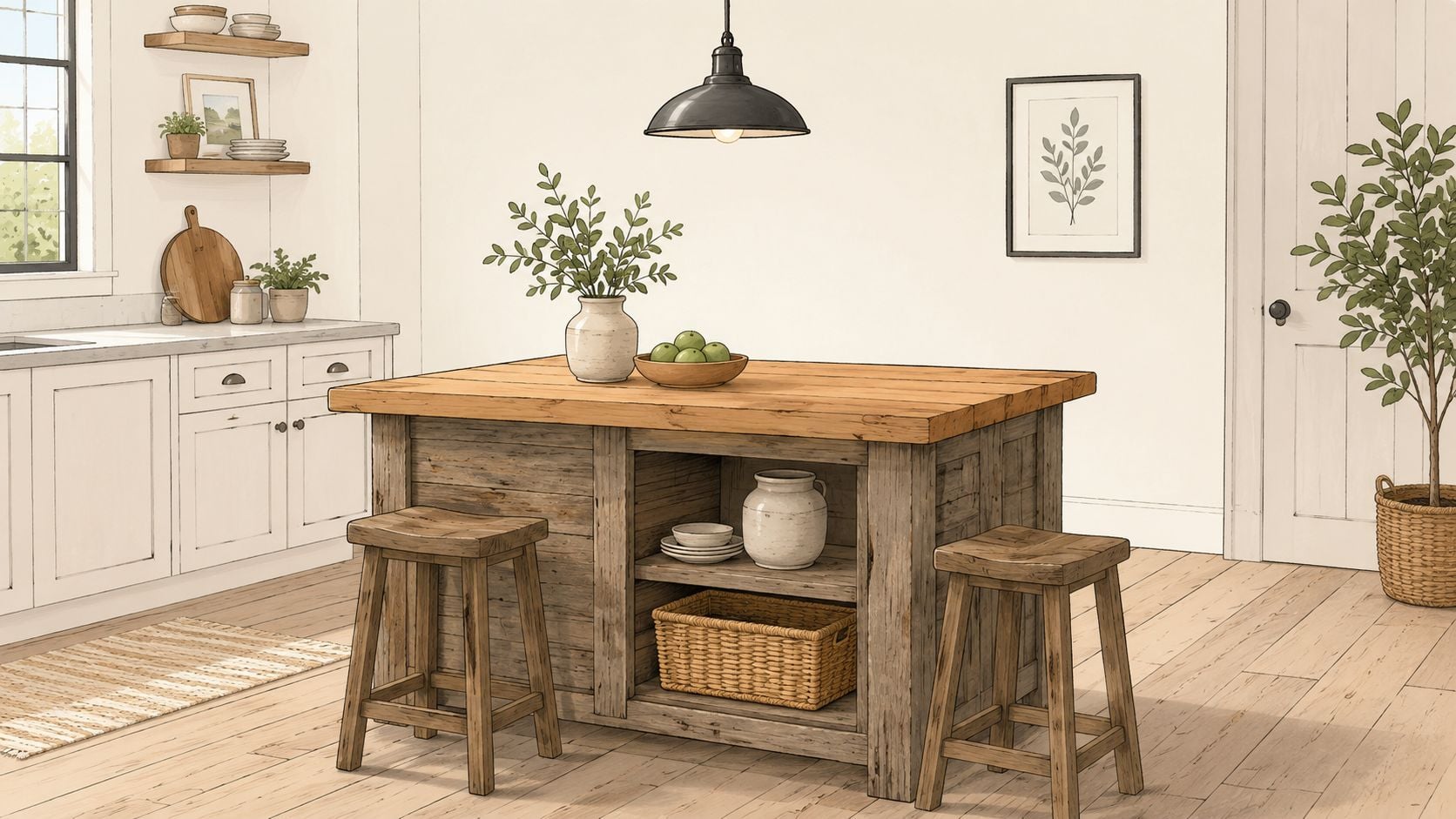
10. Farmhouse Kitchen Islands and Functional Kitchen Design
The kitchen island often becomes the anchor for farmhouse style because it combines beauty with function. That's a natural fit for a design language centered on practical living. A farmhouse island can add storage, prep space, seating, and display all in one piece.
Wood tones work especially well here. A painted perimeter with a warmer wood island can make the room feel layered. An island with open shelves or baskets can echo farmhouse style without requiring a full kitchen renovation.
What to Include in a Farmhouse-Friendly Island Setup
The strongest islands support everyday habits. They give family members a place to gather, they handle prep work, and they create visual weight in the center of the room.
For a Central Florida household furnishing a kitchen and dining space together, this is also where cohesive furniture matters. Counter stools, nearby dining chairs, a sideboard, and even pendant lighting should feel related without becoming too matched.
- Choose durable surfaces: Butcher block brings warmth. Stone-look surfaces offer a cleaner contrast.
- Add comfortable seating: Quality stools from brands like Amisco or Canadel can make the island more usable every day.
- Repeat farmhouse materials: Wood, black metal, woven baskets, and warm neutrals keep the look coherent.
A well-scaled island can also help homeowners bridge farmhouse and modern style. Cleaner stool lines, simpler hardware, and better-made wood furniture create a look that feels timeless instead of overly themed.
10-Item Farmhouse Decor Comparison
| Item | Implementation complexity | Resource requirements | Expected outcomes | Ideal use cases | Key advantages |
|---|---|---|---|---|---|
| Reclaimed Wood Accent Walls and Shiplap | High, professional install often recommended | High material and labor costs; sourcing reclaimed pieces | Strong tactile farmhouse character; focal wall impact | Accent walls, living rooms, bedrooms, kitchens | Authentic patina, sustainability, high visual impact |
| Vintage and Antique Furniture Mixing | Medium–High, requires sourcing and curation skills | Time to hunt, possible restoration costs, variably priced pieces | Curated, collected-over-time aesthetic with durability | Living/dining/bedrooms as anchor pieces | Unique character, craftsmanship, sustainable reuse |
| Distressed and Painted Furniture Finishes | Medium, DIY feasible but skill affects result | Paints, tools, time or professional refinishing | Time-worn, customized finishes that match palette | Upcycling furniture, cabinets, accent pieces | Cost-effective customization; sustainable; hides flaws |
| Neutral Color Palettes and Warm Whites | Low, selection and testing required | Paint samples, lighting assessment, minimal materials | Serene, cohesive backdrop that brightens spaces | Whole-home bases, small Florida homes, staging | Timeless flexibility; highlights texture and furnishings |
| Open Shelving and Display of Collections | Medium, moderate installation; ongoing styling | Shelving hardware, curated objects, maintenance time | Curated, accessible displays; visual focal points | Kitchens, dining areas, living-room vignettes | Affordable display, shows collections, increases openness |
| Vintage Lighting Fixtures and Farmhouse Pendants | Medium–High, electrical work often needed | Fixture cost varies; electrician for install; bulbs | Warm layered lighting and strong focal elements | Dining rooms, kitchens, entryways, living rooms | Dramatic character, ambiance control, stylistic statement |
| Natural Textiles and Cozy Layering | Low, sourcing and styling mainly | Investment in quality fabrics; occasional specialized care | Tactile warmth and layered comfort; breathable interiors | Sofas, bedding, rugs, curtains in living/bedrooms | Comfort, natural aging, climate-appropriate materials |
| Vintage Rugs and Layered Rug Styling | Medium, sourcing and sizing skill required | Potentially high purchase/cleaning costs; rug pads | Anchored spaces, visual depth, improved acoustics | Living rooms, bedrooms, dining areas, entryways | Authenticity, space definition, one-of-a-kind pieces |
| Farmhouse Décor Accents: Galvanized Metal & Mason Jars | Low, easy to source and arrange | Low cost; wide availability; minor maintenance | Rustic, budget-friendly charm and practical storage | Shelves, centers, bathrooms, mantel displays | Affordable, versatile, functional decorative elements |
| Farmhouse Kitchen Islands and Functional Kitchen Design | High, design, structural and MEP work may be required | Significant budget, space, carpentry/plumbing/electrical pros | Central workspace, storage, social hub; design anchor | Open-plan kitchens with adequate clearance | Multi-functional centerpiece, increases usability and value |
Create Your Farmhouse Haven in Longwood
The best farmhouse decor ideas don't come from copying one showroom vignette or filling every room with the same rustic motif. They come from repeating a few reliable design choices. Warm neutrals. Honest materials. Comfortable seating. Wood with visible character. Storage that's both useful and attractive. A few older pieces that make the room feel personal.
That's why farmhouse remains so practical for Central Florida homeowners. It adapts well across living rooms, dining rooms, bedrooms, and entryways. It also works with real life. The style can be built gradually, layered over time, and mixed with better furniture pieces that hold up to daily use. A homeowner might begin with a reclaimed-wood accent wall, then add a solid dining table, a pair of woven counter stools, and softer textiles as the room evolves.
This approach also pairs naturally with quality American-made and Amish-crafted furniture. A farmhouse dining space often benefits from a substantial wood table with lasting construction. A bedroom usually feels more grounded with a well-built dresser and bed instead of lighter trend-driven pieces. In living spaces, custom upholstery in a durable neutral fabric can help the room stay comfortable and versatile through seasonal changes and style updates.
That's where local guidance matters. Since 1980, Slone Brothers Furniture has served Central Florida families from its Longwood showroom, helping homeowners furnish homes with a focus on craftsmanship, value, and long-term livability. The showroom includes brands such as Amish, Mavin, Bassett, Craftmaster, Smith Brothers, Canadel, Amisco, Stickley, Stressless, American Leather, and Palasar, along with design support for homeowners who want help pulling a room together. For shoppers balancing farmhouse style with Florida light, humidity, and open floor plans, in-person material selection can make the process much easier.
For those who want even more texture and artisan character in a farmhouse-inspired home, it can also be helpful to explore Ecuadane's heirloom textiles for ideas on layered, hand-touched materials.
Creating a farmhouse-style home doesn't require doing everything at once. One wall, one dining table, one better sofa, or one room with the right rug and lighting can set the tone. Then the rest of the home can follow in a way that feels natural, useful, and personal.
Ready to find the perfect piece for a farmhouse-inspired home? Visit Slone Brothers Furniture in Longwood, FL, and let the in-house design experts help bring the look together with quality furniture, custom-order options, and practical guidance for homes across Orlando and Central Florida.