
Living Room Storage Solutions for Central Florida Homes


The living room is usually the first place a Central Florida home starts to feel crowded. One week it's remotes and chargers on the coffee table, the next it's toys, throws, magazines, and a stack of streaming devices that never seem to have a permanent home. In Longwood, Lake Mary, Sanford, and Winter Park, the problem isn't lack of style, it's that the room has to work harder than ever.
That's why living room storage solutions deserve real planning, not a last-minute basket or a flimsy console that bows under daily use. The market shift backs that up, too, with the broader home-organization category valued at $12.4 billion in 2024 and projected to reach $18.3 billion by 2028, while living-room-specific products account for about 28% of the total, up from 19% in 2020. One industry analysis also places living-room storage growth at 9.2% annually, faster than the category's 6.8% CAGR through 2030, which tells you households want furniture that hides clutter and still looks intentional (industry analysis).
At Slone Brothers Furniture in Longwood, that trend shows up in conversations every day. Homeowners want pieces that feel calm, durable, and useful for the long haul, not quick fixes that look tidy for a month and fail by next season.
Why Central Florida Living Rooms Need Smarter Storage
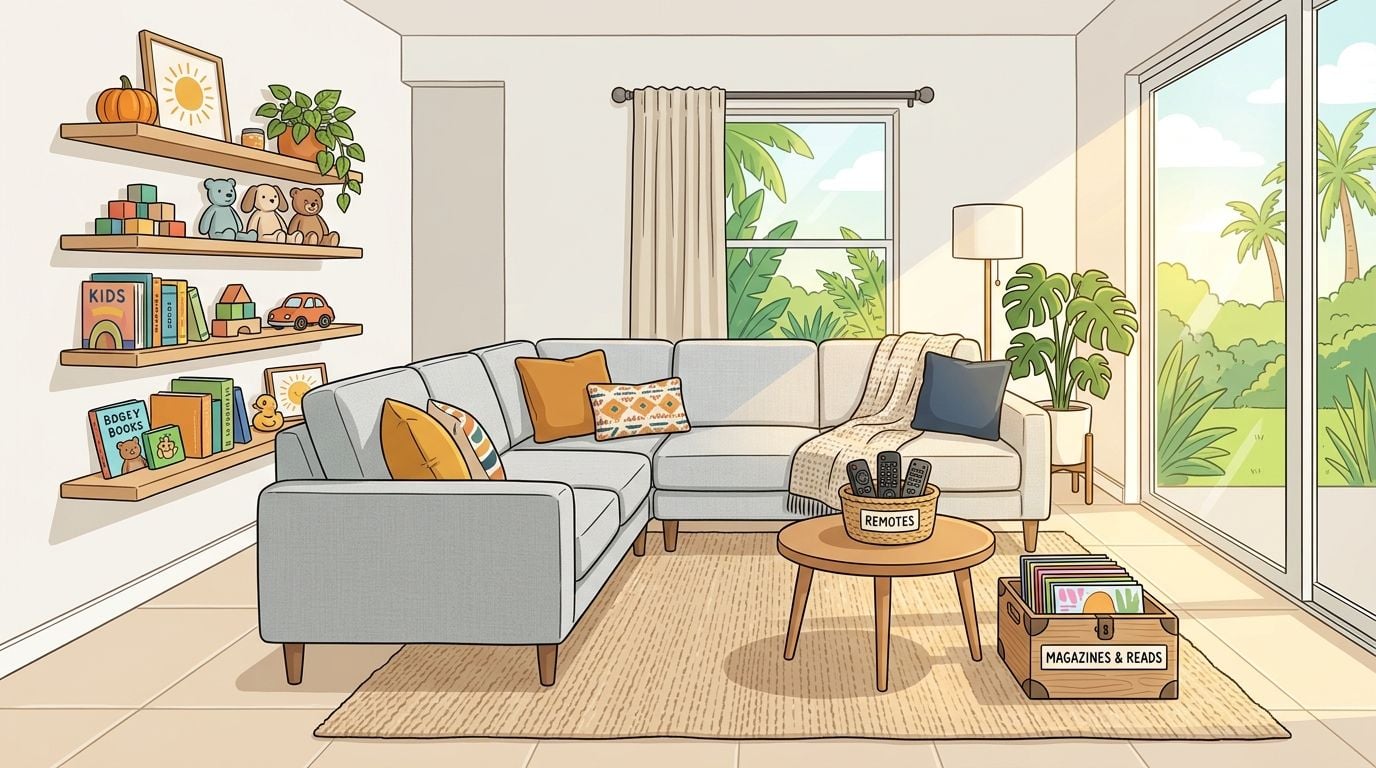
A builder-grade living room can look generous on move-in day, then start shrinking as life gets in it. The issue isn't just clutter, it's that visible clutter makes a room feel unfinished, and in Central Florida homes that often connect to kitchens, dining spaces, and patios, the mess is always on display. Smarter living room storage solutions solve both problems at once, they organize the room and protect the way it feels.
The demand isn't theoretical. A U.S. homeowner study found about 2.3 million households buy closet storage systems each year, and those households increased their average installation from 15 linear feet to 18 linear feet between survey periods, while garage storage households rose 8% year over year and ceiling storage jumped 28% (consumer study). That pattern matters because buyers are choosing more capacity per household, which carries directly into media consoles, cabinets, ottomans, and other furniture that can hold more without making the room feel busy.
What that means for a Longwood home
Central Florida families don't want storage that looks temporary. They want pieces that can handle guests, kids, screens, work gear, and seasonal décor without turning the room into a storage closet. A good system keeps the room polished on ordinary Tuesdays and still functional when the whole family piles in on the weekend.
Practical rule: if a piece solves clutter but makes circulation feel tight, it's the wrong piece for the room.
Local expertise matters. At Slone Brothers, the conversation starts with how the room is used, not with a trend photo or a catalog headline. That approach lines up with what homeowners need, which is long-term function in a climate and lifestyle that don't forgive flimsy furniture. See the complimentary interior design services for Florida homes for the kind of planning that makes a room feel composed instead of crowded.
Measuring Your Space and Planning Your Layout
The first mistake many homeowners make is shopping before they measure. A storage piece can look perfect and still throw off a room if its depth cuts into a walkway or its width crowds a window. Start with the room, then choose the furniture that fits its circulation, light, and daily use.
Start with the room, not the furniture
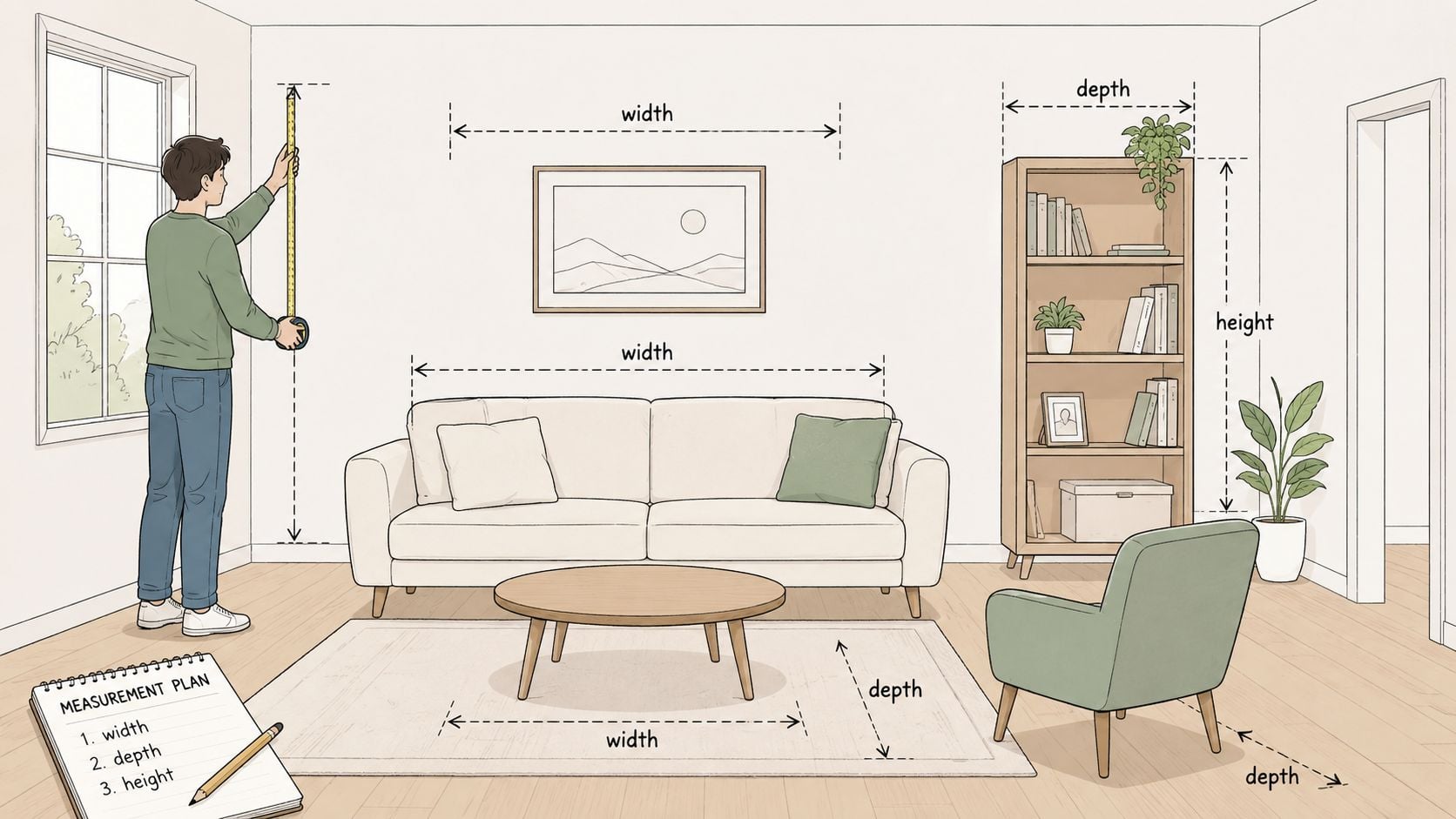
Interior design guidance recommends identifying what must be stored, then measuring the height, depth, and width the room can support before you pick any piece. That order holds up in Central Florida homes, especially around Lake Mary, Sanford, and Winter Park, where sliding glass doors, large windows, and open-concept plans often control where storage can go without disrupting traffic flow.
Measure the actual constraints, not just the open wall.
- Measure door swings and walkways so storage does not pinch circulation.
- Mark outlets and cable routes before choosing media furniture.
- Note sunlight exposure if a piece will sit near a bright window.
- Sketch the room at scale so depth does not become an afterthought.
Planning protects long-term value. A cabinet that fits the wall but blocks the room costs more in daily frustration than it ever saves in storage. The right layout leaves room for guests, kids, and everyday movement, while still giving the room a composed look.
Use vertical space with discipline
Vertical storage is the smartest move in a smaller living room because it uses wall space instead of floor space. Guides for compact rooms consistently recommend floor-to-ceiling shelving, wall-mounted cabinets, floating shelves, and tall bookcases, and vertical storage helps keep floors clear while making the room feel less crowded.
For smaller rooms, the strongest balance is 70/30 closed-to-open storage. Most of the storage should hide behind doors or drawers, while a smaller share stays open for books, art, or objects that deserve to be seen.
That balance matters in Central Florida homes, where living rooms often have to handle bright daylight, family traffic, and a mix of formal and casual use. Too much hidden storage can make a room feel heavy and lifeless. A better approach is to leave a few well-chosen surfaces open so the room keeps some character and does not read like a locked cabinet wall. For a practical example of keeping blankets organized without overfilling the room, see the 2026 guide to tidy blanket storage.
Before anything is ordered, use a room-measuring guide for furniture planning and confirm the layout on paper first. That step prevents the most expensive mistake in the category, buying storage that fits the wall but fails the room.
Choosing the Right Storage Types for Your Lifestyle
The right storage piece earns its footprint twice. A storage ottoman gives you a seat and a place to tuck away throws. A coffee table with drawers adds surface space and keeps remotes, chargers, and small clutter out of sight. A media cabinet organizes electronics without turning the room into a command center.
Match the piece to the way the room really works
For active households, multifunctional furniture is the cleanest answer because it cuts down on separate pieces competing for space. Storage furniture that doubles as seating or surface area is repeatedly recommended for smaller living rooms, and pieces that fold flat or disappear when not needed are especially useful in tightly furnished rooms.
That points to a few categories worth prioritizing:
- Storage ottomans for blankets, board games, and extra seating.
- Coffee tables with drawers for remote controls and paper clutter.
- Storage benches for a window wall or an entry-adjacent living room.
- Closed media cabinets for consoles, chargers, and controllers.
Open shelving alone rarely holds up in a family room. It can look organized at first, then turn into a daily restacking job once books, toys, and media gear start landing on it. A better plan is to mix concealed storage with a small amount of display space, so the room still feels personal without becoming visually noisy. For homeowners who want blankets tucked away without relying on baskets that spill over, the 2026 guide to tidy blanket storage fits neatly into a real furniture plan.
The test is daily use. If a room has to handle movie nights, kids' projects, guest drop-ins, and the usual pileup of small items, closed storage should carry most of the load. One open shelf or tray can hold the things you reach for every day, but the rest should stay behind a door or in a drawer.
For a concrete example, a coffee table with storage drawers is one of the most efficient choices for an Orlando living room because it keeps the most-used items close at hand without adding visual clutter. Explore the coffee table with storage drawers option if the room needs function without sacrificing polish.
Material and Craftsmanship Guide for Lasting Quality
Central Florida is hard on weak furniture. Humidity cycles, bright sun, and daily use expose shortcuts fast, which is why particle board and bonded surfaces usually disappoint in living room storage. The difference between disposable and durable shows up in the frame, the joinery, the finish, and the way a drawer feels when it opens.
Solid wood changes the whole equation
Solid hardwood has structural integrity that engineered alternatives can't match over time. In a humid climate, properly dried and finished wood handles movement far better than low-density composites, and that matters when a cabinet has to stay square, open smoothly, and look good for years. For homeowners in Longwood and across Central Florida, that is not a luxury detail. It is the reason a piece keeps its value.
The same logic applies to upholstery and mixed-material storage pieces. A strong frame matters, especially when a storage ottoman or bench is used daily. If the base flexes, the piece stops feeling like furniture and starts behaving like a temporary fix.
Know what you're paying for
Heritage American furniture makers have prioritized joinery that emphasizes durability over shortcuts since the late 1800s. That same standard still matters now, whether a piece is built with solid wood frames, heavier drawer boxes, or hand-finished details that hold up under regular use. Certain American-made lines keep that focus on structure, while handcrafted pieces made in the United States often bring the kind of heft and joinery that signal long service, not short-term convenience. Contemporary craftsmanship brands can also deliver clean styling without abandoning the construction standards that separate real furniture from filler.
For a homeowner choosing between options, the practical test is simple:
- Lift a drawer to feel whether it tracks smoothly.
- Open the cabinet doors to check for solid alignment.
- Examine the back and underside for evidence of real construction.
- Ask how the finish performs in bright light and humidity.
See the hardwood furniture guide for a closer look at how wood selection affects everyday use. For a Longwood household, the better move is usually fewer pieces, chosen with more care, rather than filling the room with storage that only looks practical at first glance.
The right construction also changes how a room ages. A well-built cabinet keeps its lines, resists seasonal stress, and avoids the sagging doors or loose edges that make storage feel tired long before the rest of the room does. That matters in a living room that has to look finished while still handling family use, guest visits, and the constant shuffle of everyday life.
If the room needs hidden storage, choose pieces with honest construction and a finish that suits Florida light. If it needs to display books or collected objects, keep the open area limited and let the storage pieces do the hard work. That balance gives you a living room that still feels composed after years of use, which is measure of value.
Custom Orders and Design Consultation Services
Some living rooms need a standard piece. Many don't. An odd alcove in an Altamonte Springs home, a media wall with a specific width, or a fabric match that has to work with existing seating all point toward custom ordering instead of settling for almost-right.
How the process should work
A proper custom order starts with the room, then moves to finish, size, and function. The consultant should ask what has to be stored, what needs to stay visible, and how the room is used on an ordinary weeknight, not just on a staged showroom visit. That's how a piece ends up fitting the life around it.
At Slone Brothers, the in-house design process is built around that kind of conversation. A homeowner can choose a wood finish, tailor dimensions, and select upholstery for pieces that need to blend with the rest of the home. For a broader reference point on design-led customization, the custom home interior design article offers a useful way to think about how furniture decisions support the whole room.
Why human guidance still matters
A design consultant can catch things an online form won't, like a finish that reads too dark in Florida light or a cabinet depth that works on paper but fights the walkway. That matters in mixed-use rooms, where a media wall can't look like an office and a display cabinet can't feel precious or impractical.
One practical sequence works well:
- List the items that need storage.
- Separate daily-use items from occasional items.
- Choose the storage type that matches each category.
- Review finishes and sample pieces in natural light.
- Confirm dimensions before ordering.
That sequence saves time and prevents regret. It also keeps the room aligned with the way Central Florida homeowners live, which is flexible, busy, and not especially forgiving of guesswork.
Budgeting, Financing, and Long-Term Value
Living room storage is one of those categories where the upfront number can fool people. A piece built from quality materials and proper construction costs more because it lasts longer, holds up better, and keeps its usefulness when cheaper furniture starts to wobble, chip, or swell. That isn't a sales line, it's how long-term value works.
Spend for longevity, not for temporary convenience
A good storage piece should survive daily opening, closing, and rearranging without losing its shape or finish. That's why the cheapest option is often the most expensive over time, especially if it needs replacing sooner than expected. A home furnished with better-built pieces usually ends up with fewer repeat purchases and less ongoing frustration.
For shoppers who want quality without strain, Slone Brothers offers furniture financing options that make room for stronger materials and better construction. That matters because a living room often needs more than one piece, and financing can help a homeowner choose the right combination instead of settling for a compromise.
Think beyond the purchase date
White-glove delivery and post-purchase support matter just as much as the furniture itself. A cabinet that arrives properly placed, protected, and inspected starts its life in better shape, and maintenance guidance helps that piece stay that way in Central Florida conditions. Humidity control, careful cleaning, and limiting prolonged sun exposure are all part of protecting wood and leather finishes over time.
Bottom line: if a storage piece looks affordable but needs replacement early, it wasn't affordable at all.
That's why quality furniture should be treated as an investment, not an impulse. It should earn its place in the room, hold up to Florida life, and still look right when the rest of the house changes around it.
Visit Our Longwood Showroom for a Personal Consultation
The right living room storage solutions are easier to choose in person. Wood tone, drawer action, hardware, scale, and finish all reveal themselves when a homeowner can touch the piece, open it, and see it in real light instead of guessing from a screen. For Central Florida families, that kind of clarity is worth the drive.
Slone Brothers Furniture in Longwood brings together curated collections from Stickley, Stressless, Smith Brothers, Palasar, Bassett, Craftmaster, Simply Amish, Canadel, Amisco, American Leather, and Mavin, along with experienced design consultants who help match the right piece to the right room. The showroom is built for homeowners who want a long-term solution, not a fast purchase.
Ready to invest in furniture that lasts a lifetime? Skip the online guesswork and automated digital chatbots. Visit the Slone Brothers Furniture showroom in Longwood, FL today. Connect face-to-face with our experienced design consultants and let us help you transform your house into a beautifully curated home.
Slone Brothers Furniture helps Central Florida homeowners choose living room storage that fits their space, their style, and their daily life. Visit Slone Brothers Furniture in Longwood to see durable materials, custom options, and thoughtful design support in person, then leave with a plan that feels right for your home.