
Brass Seagull Wall Decor: Styling & Installation


Most advice treats brass seagull wall decor like a beach-house inside joke. That's too narrow, and it misses the point. Brass has a long decorative history, and when a seagull form is handled well, it reads as a metallic accent, not a gimmick, which is why it can sit comfortably in a Winter Park dining room, a Longwood entry, or a calm Sanford bedroom without looking forced.
For Central Florida homes, the smart move is to think in terms of scale, finish, and placement, not theme. A good piece should work with the room's furniture, light, and wall color, whether the space leans modern, farmhouse, or collected. That's the difference between décor that feels intentional and décor that feels like a souvenir.
Why Brass Seagull Wall Decor Transcends Coastal Design
Brass seagull wall decor gets filed under beach house décor too quickly. That reading is too narrow for a material with real decorative weight. Brass has long been used for interior ornament, and the National Park Service describes it as an alloy of copper and zinc used extensively for interior decorative features in 19th- and 20th-century buildings, especially for statuary and large-scale furniture. That heritage gives a seagull form presence. It can feel refined, not gimmicky.
The reason the shape works in more than one style is simple. It is recognizable, but it does not dominate a room the way a literal coastal sign or shell motif can. A brass bird reads cleanly against painted drywall, plaster, wood paneling, or textured wallpaper, which is why it fits eclectic, modern, farmhouse, and transitional interiors as well as shoreline spaces. In a Central Florida home, that flexibility matters. The piece can sit over a walnut dining set, beside a painted console, or above an upholstered headboard without forcing the room into one theme.

Brass works better as an accent than as a theme
The strongest use is usually the quietest one. A single brass bird adds warmth to a pared-back room, while a small grouping can bring movement to a larger wall without tipping into novelty. Used well, it behaves like a metallic accent, not a decoration that announces a theme.
Practical rule: If the room already has shells, rope, anchor shapes, or obvious coastal prints, keep brass seagull decor restrained. Let it serve as the metallic note, not the whole story.
Furniture pairing matters here. Brass looks strongest with dark wood, linen upholstery, black metal, and painted millwork because those materials give the finish enough contrast to read intentional. If you want a broader sense of how restraint changes a room, compare it with the logic behind coastal design style guide. For a more literal coastal reference, browse coastal canvas prints and notice how quickly a room shifts from sculptural to thematic.
How to Evaluate Scale and Finish Before You Buy
Start with the wall, not the object. Brass seagull wall decor can read as a discreet accent or as a substantial sculptural feature, and that difference comes down to dimensions, projection, and where the piece sits relative to furniture. Marketplace listings show brass seagull pieces ranging from a few hundred dollars into the mid-thousands, with the spread driven by age, size, and craftsmanship.
The wrong assumption is that all wall art behaves the same way. It doesn't. A compact accent piece serves a different purpose than a large sculpture with stronger projection, and the wider the span, the more exact the proportion has to be.
Use the room like a measuring tape
A small piece works when you want a quiet nod, especially above a narrow chest, beside a mirror, or in a hallway where the wall is already doing a lot of visual work. Bigger compositions need more breathing room, especially in open-plan spaces where nearby furniture and lighting fixtures compete for attention. A two-piece seagull composition can look tall without being broad, so height alone never tells you enough about how it will read once it is on the wall.
If you want a simple rule, use the same standard you would apply to any sculptural object: check the width of the wall, the height of the furniture beneath it, and the amount of empty space around the piece. For a clear framework on visual balance, use scale and proportion in design before you commit.
Size guide for brass seagull wall decor
| Size Category | Typical Dimensions | Best Wall Placement | Spacing from Furniture |
|---|---|---|---|
| Small accent | Around 12" × 9" × 2.5" | Narrow wall sections, gallery clusters, powder rooms | Leave modest clearance above a console or ledge |
| Medium statement | Around 24" high for a two-piece composition | Entry walls, dining rooms, hallways | Keep balanced spacing above a buffet or dresser |
| Large sculptural set | Roughly 46" × 6" × 23" | Tall feature walls, large living rooms, open plan spaces | Needs generous visual distance from furniture below |
Finish matters more than most buyers think
Polished brass reflects light and makes a stronger statement, so it fits cleaner interiors and brighter rooms. Brushed brass softens the shine and usually feels easier in homes with mixed materials, while antiqued brass has more depth and looks better where a collected, layered atmosphere is the goal.
Watch the finish under real light, not showroom glare. A piece that looks elegant under bright retail lighting can read brassy or flat at home, especially in Florida sunlight.
A disciplined buyer also checks construction details. Look for corrosion resistance, easy cleaning, and built-in hooks, because those details signal a piece made to function as wall sculpture, not just decorative metal. That is the standard for long-term value, and it matters just as much for brass as it does for wood or upholstery. A finish that feels right in a bright display can look overly shiny or too dull once it is on your wall, so judge it in the room where it will live. For homeowners who are also chasing the green flash in Key West, the same eye for restraint applies, boldness works only when the scale and finish are controlled.
Room-by-Room Placement Ideas for Central Florida Homes
Brass seagull wall decor works outside the obvious coastal box. In Central Florida, it adds motion to a dining wall in Lake Mary, gives a modern hallway in Altamonte Springs a sharper finish, and keeps a bedroom from feeling overstyled. Use it as a metallic accent first, a themed object second.
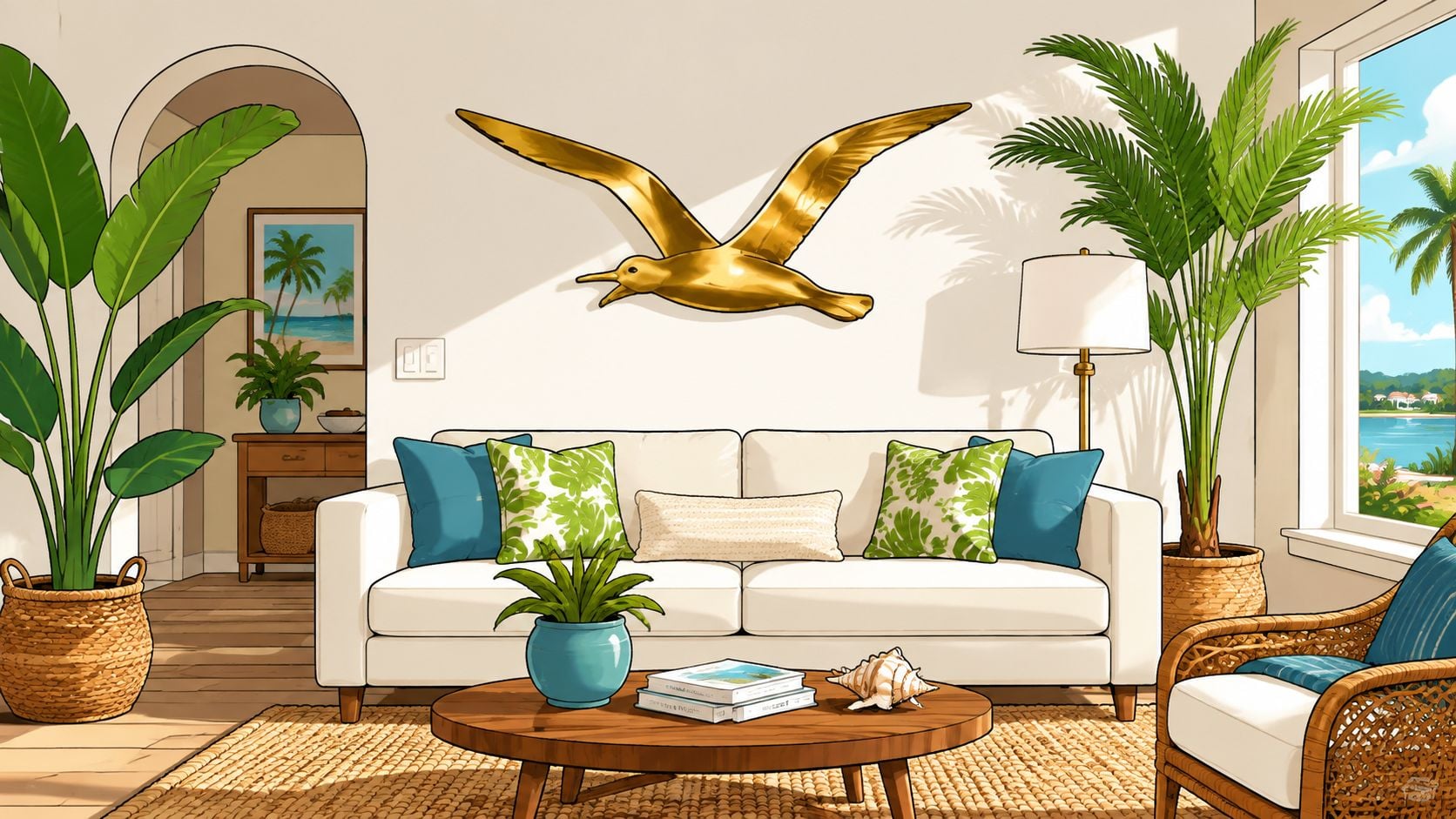
The best placements respect the room's furniture and light. In a dining room, hang the piece above a table or sideboard with enough width around it for the silhouette to register cleanly. A warm wood dining set pairs well because brass picks up the grain instead of competing with it. In a living room, place the sculpture above a sofa or beside lamps only when the wall has enough open space for it to read as the focal point. In a Florida room, keep the mood light and breathable, then use brass with woven textures, upholstered seating, or painted case goods for a more edited result. The Florida room decorating guide gives a practical local framework for that balance.
Specific rooms, specific decisions
- Living room: Use a larger sculptural set above a sofa only when the furniture below is substantial. A smaller room benefits more from one strong bird than from a crowded cluster.
- Dining area: Pair brass with solid wood, especially when the table has visible grain. The warmth helps the wall art feel integrated rather than pasted on.
- Bedroom: A single brass bird above a bench or dresser can quiet a room without making it sentimental. That works especially well with upholstered furniture and pale wall color.
- Entryway: Choose a piece that reads instantly from the doorway. Brass is effective here because it catches light quickly and gives a first impression of intention.
A lanai deserves the same discipline. Keep the piece near seating, railings, or a protected wall where natural light can strike the finish without overwhelming it. A brass seagull above a lanai railing pairs well with chasing the green flash in Key West, because both rely on light, movement, and a clear horizon. That connection works best in homes that want a polished look, not a literal nautical set.
A room with strong sunlight usually handles brushed or antiqued brass better than mirror-bright polish. A darker den or a bedroom with limited sun can take a brighter finish because the metal becomes part of the room's lighting plan. If the home already leans farmhouse, place the piece near wood, linen, and quieter accessories, not beside more literal nautical objects. In a more eclectic interior, let the brass sit among mixed materials so it reads as a deliberate metallic note rather than a novelty.
One rule holds across every room.
Place brass seagull wall decor where it creates movement, not where it has to fight for attention.
Mounting Brass Wall Sculptures Safely and Securely
Treat brass seagull wall decor like a small sculpture, not like framed art. That mindset changes everything, because the mounting choice has to account for weight, projection, and the wall substrate, not just the look of the hardware. In Florida homes, that substrate is often drywall, plaster, or concrete block, so the fastener should match the wall rather than the object.
Start by confirming the finished dimensions and the distance the sculpture stands off the wall. A piece with deeper projection puts more stress on the fastener than a flat plaque does, and the wrong hanger can fail even when the metal itself is fine. Larger pieces, especially multi-bird compositions, need enough support to keep the layout level and visually calm.
Mounting sequence that prevents trouble
- Measure the finished footprint. Confirm how much wall width the piece occupies, including any spacing between birds.
- Identify the wall type. Drywall needs a different approach than block or plaster.
- Match the anchor to the load. A generic picture hook is rarely the right answer for a sculptural metal piece.
- Check the hook or bracket engagement. The mount should lock in before weight is released.
- Level the composition. Multi-piece sets need a controlled line, not a casual eye-balled placement.
The safest method is to find studs when the layout allows it. If the design forces a different position, a properly selected anchor or toggle system is still better than assuming a lightweight hanger will do the job. Built-in hooks and simple wall-mount hardware are common in this category, which makes installation easier, but easy isn't the same as careless.
A well-mounted sculpture should feel permanent the moment it leaves your hands.
For a long wall, align the centerline with furniture below so the piece doesn't drift visually. For a pair or trio, use painter's tape to map spacing first, then check the rhythm from across the room. The step-by-step guide to hanging your picture with precision is a good framework for the measuring discipline, even when the object is sculptural rather than framed.
Caring for Brass Finishes in Florida Humidity
Florida humidity doesn't ruin brass, but it does expose weak care habits. Brass seagull wall decor stays attractive when dust is removed regularly, fingerprints are handled quickly, and the finish is respected instead of overtreated. In a Central Florida home, that means the maintenance plan should be simple and consistent, not aggressive.
Lacquered brass is easier to live with because it resists change and usually needs less routine attention. Unlacquered brass develops patina over time, which many collectors like, but it needs more regular polishing if the goal is to keep the tone bright. The right choice depends on whether the homeowner wants a more static finish or a surface that will age visibly.
Keep the care routine restrained
A soft dry cloth is the first move, not a chemical cleaner. Dust tends to settle faster on decorative wall pieces than on furniture, and in rooms near windows or exterior doors, that buildup can appear sooner than expected. For tarnish, use a product designed for brass care and follow the label carefully, because over-polishing can erase the character that makes vintage brass appealing.
For homeowners who need a practical reference on residue and tarnish removal, the Evo Dyne Products tarnish guide offers a useful starting point for understanding cleaner selection and application discipline. The basic principle remains the same across finishes, though, which is to clean gently and stop before the surface looks stripped.
What to avoid
- Abrasive pads: These can scratch a brass finish and leave it looking tired.
- Heavy, repeated polishing: More isn't better, especially on vintage or collectible pieces.
- Harsh all-purpose sprays: Some cleaners are too aggressive for decorative metal.
- Ignoring fingerprints: Skin oils show faster on polished finishes and should be wiped away promptly.
Vintage or collectible pieces deserve a more cautious hand. If the brass has visible provenance or unusual craftsmanship, aggressive restoration can reduce its character and potentially damage its value. In those cases, a measured cleaning routine is smarter than trying to make the surface look factory-new.
Investing in Heirloom-Quality Decor Through Local Expertise
Brass seagull wall decor is easy to buy badly. The piece may look fine online, then arrive with the wrong scale, the wrong finish, or mounting hardware that doesn't suit the wall. A showroom conversation avoids that mistake because someone can look at the room, ask how the home functions, and steer the choice toward something that will still work a few years from now.
That matters in Longwood and across Central Florida, where homes vary widely in ceiling height, wall material, and natural light. Local guidance helps separate a decorative object from a thoughtful purchase, especially when the goal is to pair wall art with existing furniture, not just fill space. Slone Brothers Furniture offers furniture stores with design services support that can help homeowners think through scale, finish, and room flow before they commit.
Custom-order options matter here too. When dimensions, finishes, and mounting details can be specified, the result is more likely to fit the room cleanly instead of forcing the room to adapt to the object. That's the same logic behind investing in better wood, better upholstery, and better craftsmanship elsewhere in the home.
Slone Brothers Furniture has served Greater Orlando since 1980, and that kind of local continuity gives homeowners a place to make decisions with real people, not a faceless checkout screen. For a decorative piece with room-scale implications, that human step is worth more than impulse convenience.
Ready to invest in a wall accent that feels deliberate instead of trendy? Visit Slone Brothers Furniture in Longwood, FL and work face-to-face with experienced design consultants who can help match brass seagull wall decor to your room, your furniture, and your long-term style.