
The Best Recliners for Back Support: A 2026 Guide

A lot of Central Florida homeowners know this routine. The workday ends, the drive through Orlando traffic is over, shoes come off, and the first seat in the living room feels disappointing almost immediately. The lower back tightens, the neck leans forward, or the legs never quite settle. What should feel restful just feels like more strain.
That's why the search for the best recliners for back support isn't about adding a luxury item. It's about finding a chair that helps the body recover at home. Since 1980, Slone Brothers Furniture has served Longwood and the Greater Orlando area as a local, family-owned showroom, and that kind of long view matters because back comfort usually comes down to fit, support, and good guidance, not hype.
The most important place to start is simple. The single most critical feature is adjustable lumbar support. It helps maintain the natural inward curve of the lower spine and reduces muscle strain and spinal pressure, while power-adjustable versions let a person fine-tune firmness and position instead of settling for a fixed cushion, as noted in this overview of recliners for back pain. For many households, a supportive sleep setup matters too, which is why this guide to a mattress that can help back pain is also worth reviewing alongside seating choices.
Daily relief usually works best as a combination of habits, movement, and better support at home. For readers looking for broader, non-chair ideas, MedAmerica Rehab Center shares several effective lower back pain strategies that pair well with an ergonomic recliner.
Table of Contents
- Finding Relief from Back Pain in Your Own Living Room
- Anatomy of the Best Recliners for Back Support
- How to Test a Recliner in Our Longwood Showroom
- Matching a Recliner to Your Specific Back Condition
- Choosing the Right Upholstery and Size for Your Home
- Your Investment in Comfort at Slone Brothers Furniture
Finding Relief from Back Pain in Your Own Living Room
Back pain often gets blamed on the wrong thing. Many people assume the problem is age, a long commute, yard work, golf, working from home, or standing too long on tile floors. Those things can contribute, but the chair used every evening can either calm the back down or keep aggravating it.
A recliner should support the body in a way a standard sofa often can't. Good support helps the pelvis settle, keeps the lower back from collapsing, and lets the shoulders relax without forcing the neck forward. That's the difference between feeling “soft” and feeling supported.
Why comfort and support aren't the same
A chair can feel plush in the first minute and still be a poor fit after dinner and a full movie. The problem usually shows up when the body starts to slide, the low back loses contact with the chair, or the headrest pushes the chin down. At that point, muscles start working when they should be resting.
Practical rule: The best recliner for back support should help the spine keep its natural shape instead of asking the body to adapt to the chair.
That's why adjustable features matter more than overstuffed cushioning. A static chair may fit one body type in one position. A better recliner adjusts to the person sitting in it.
What Central Florida homeowners should focus on first
Shoppers in Longwood, Lake Mary, Sanford, and across Central Florida usually do best when they ignore decorative extras at first and start with the support system underneath.
Key priorities include:
- Lumbar control: The chair should fill the lower-back curve without creating a hard lump.
- Stable recline: The body should stay supported while changing positions.
- Neck alignment: The head should rest comfortably without being pushed forward.
- Leg support: The feet and calves should feel carried, not cut off at the edge.
A well-chosen recliner can turn an ordinary living room into a recovery space. That matters in real homes where people read, watch TV, nap, and spend long stretches sitting after active days around Orlando and Central Florida.
Anatomy of the Best Recliners for Back Support
A good back-support recliner works like a mattress with moving parts. Every section has to carry its share of the load, or one small mismatch can show up as a sore low back, numb legs, or a stiff neck halfway through the evening.
For Central Florida homeowners dealing with sciatica, lower back strain, or pain that flares up after long periods of sitting, the chair has to do more than feel soft. It has to keep the pelvis, spine, and legs in a position the body can relax in.
Start with the part that controls the whole posture
The most useful feature for many people is power-adjustable lumbar support.
Here is why. The lower back is not meant to sit flat like a board against a wall. It has a gentle inward curve. When a recliner fills that curve correctly, the muscles in the low back can settle down. When the chair leaves a gap there, the body starts “holding itself up,” even while seated.
That matters for common pain patterns. A person with lower back strain often feels relief when the chair supports that curve without poking it. A person with sciatica often does better when the lower back and hips stay level, instead of rolling backward and increasing pressure through the seat and upper legs.
A simple rule helps here. If the support feels good only in one position, it is not doing enough. The lumbar area should still meet your back as you recline, not disappear the moment the chair moves.
The seat sets the foundation
Seat depth and seat height decide whether your body can use the back support at all.
If the seat is too deep, you end up perching forward to keep your feet comfortable. That pulls your lower back away from the chair. If the seat is too short, your thighs lose support and more pressure lands on the hips and tailbone.
The pelvis is the starting point. If it tips the wrong way, the rest of the spine follows. That is why two recliners can look nearly identical on the floor and feel completely different after ten minutes.
Recline control matters because pain relief is personal
Many shoppers ask for “good lumbar,” but the better question is whether the recliner lets them stop in the position where their back settles.
Power recline helps because it gives finer control. You are not limited to a few fixed stopping points. That is helpful for someone with disc irritation or general lower back fatigue, since a small change in angle can mean less pressure through the spine and hips.
For people who spend long stretches seated, good posture habits outside the chair still matter. Gentle movement and exercises that can relieve sitting pain often pair well with a supportive recliner.
Head, neck, and legs also affect the low back
Back pain rarely stays in one place. If the headrest pushes the chin forward, the upper spine rounds. If the footrest stops too short, the legs feel unsupported and the body starts sliding. Both problems can pull the low back out of position.
Independent headrest and footrest controls help because they let the upper and lower body settle separately. A reader may want the head lifted a bit while keeping the back only slightly reclined. Someone resting swollen legs after a long day may want more elevation below the knees without flattening the whole spine.
That adjustability is where showroom testing becomes useful. Our ultimate recliner buying guide for comfort, fit, and support explains the bigger picture, but the short version is simple. The best chair is the one that lets each part of your body rest without forcing another part to compensate.
Key Recliner Features for Back Support
| Feature | Benefit for Back Support | What to Notice in Real Use |
|---|---|---|
| Adjustable power lumbar support | Fills the lower-back curve and helps reduce strain from unsupported sitting | The support should stay in contact with your lower back through different recline positions |
| Seat depth and height | Keeps the pelvis stable so the spine can stay aligned | Your hips should reach the back of the chair while your feet still rest comfortably |
| Power recline control | Lets you fine-tune the angle that feels best for your back and hips | You should be able to stop where your body relaxes instead of settling for a preset position |
| Independent headrest control | Helps the neck stay supported without pushing the chin down | Your head should feel carried, not shoved forward |
| Independent footrest or leg elevation | Supports the legs evenly and reduces pull on the hips and lower back | The calves should feel supported without pressure building behind the knees |
A practical way to read the whole chair
A recliner should support the body like a well-built staircase. If the first step is off, every step above it feels wrong.
In chair terms, that means the seat supports the pelvis, the pelvis sets the lower back, the lower back affects the upper back, and the upper back influences the neck. Once you understand that chain, it gets easier to spot why one recliner brings relief and another only feels soft for a few minutes.
How to Test a Recliner in Our Longwood Showroom
A lot of folks walk into our Longwood showroom after a familiar kind of day. They have stood in the kitchen too long, sat in traffic on I-4, and settled into the sofa that night only to feel that same pull in the lower back or a sharp line down the leg. At that point, a recliner is not just another seat. It is a tool for relief, and it needs to be tested that way.
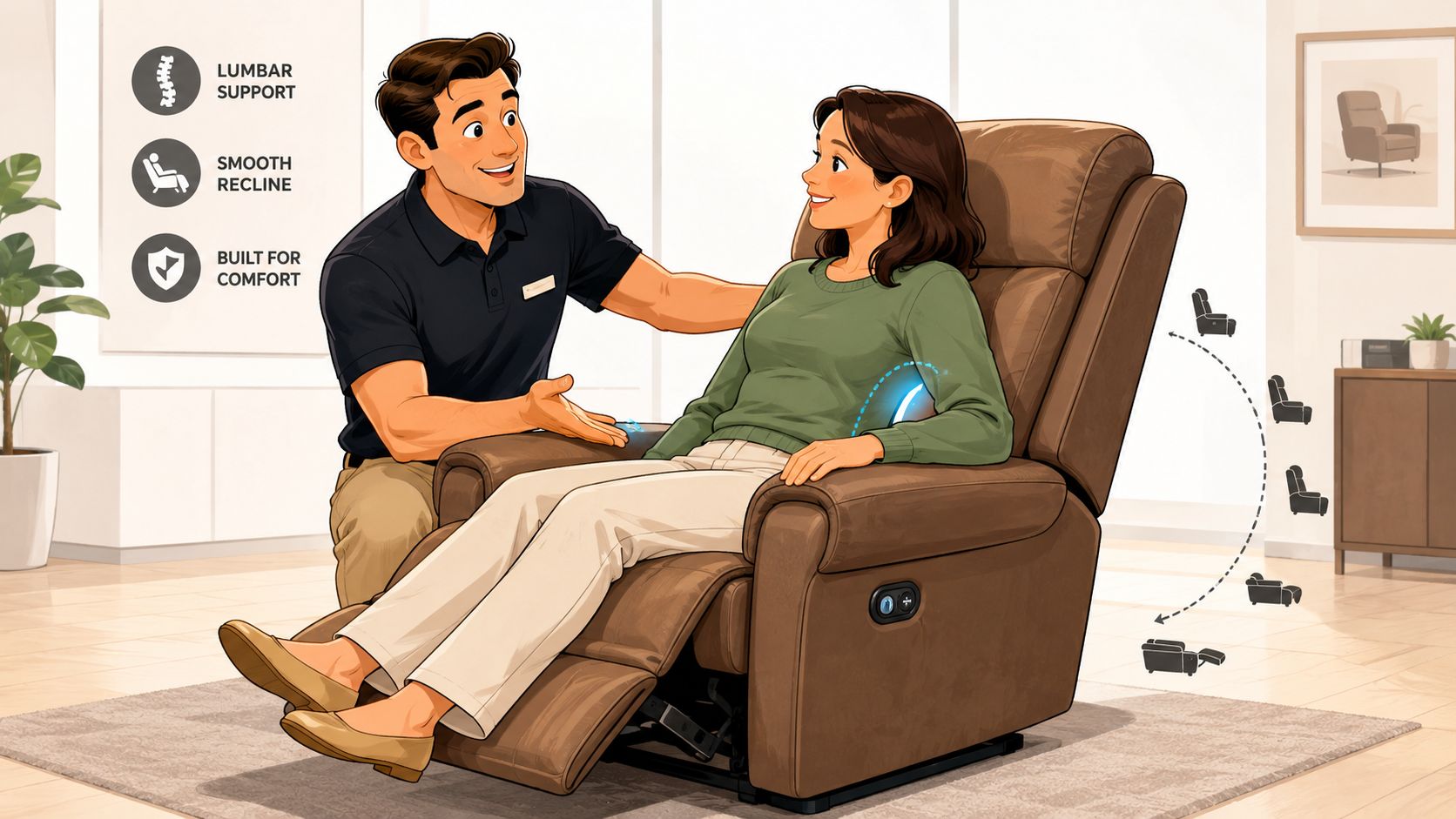
The biggest mistake is judging a chair by the first soft minute. Back pain usually shows up after the body settles, the hips relax, and the spine starts asking the chair to carry more of the load. That is why we encourage shoppers to test a recliner the same way they would use it at home. Sit. Adjust. Stay a while. Then notice what changed.
A better in-store test
Start with your own pain pattern in mind. If you deal with sciatica, pay close attention to what happens in the hips, seat edge, and leg support. If your issue is lower back strain, focus on whether the chair keeps contact with the natural curve of your back as you recline and return upright.
Use this step-by-step process:
- Sit back until your hips reach the rear of the seat. This tells you whether the chair fits your frame or only feels good when you perch forward.
- Let both feet rest flat on the floor first. Before you touch any controls, the chair should already feel steady and centered.
- Adjust one setting at a time. Try lumbar first, then recline, then headrest, then leg support. Changing everything at once makes it hard to tell which feature helped and which one caused the problem.
- Hold each position for a few minutes. A good fit usually feels calmer with time, not more irritating.
- Return upright and repeat the motion. Support should feel predictable each time, like a door that closes in the same place instead of one that shifts on its hinges.
A more detailed shopping checklist can help before you visit. This ultimate recliner buying guide gives you a clear way to compare what you feel from one chair to the next.
What your body is telling you
A recliner works like a good mattress. If one area misses the body, another area has to overwork.
That shows up in simple ways during a showroom test. If there is a space behind your lower back after you recline, your lumbar area is losing contact right when it should feel supported. If your chin gets tipped toward your chest, the headrest is pushing instead of carrying. If you feel pressure building behind the knees, the seat depth or footrest angle may be off. If you keep sliding forward, the chair is not holding your pelvis in a stable position.
One more practical tip. Bring the chair through the positions you use at home, not just the fully reclined one. Reading, watching TV, and resting after yard work all place your back at slightly different angles. The right recliner should support you through those changes without making you hunt for the comfortable spot each time.
For some shoppers, back discomfort is tied to more than posture alone. If hormonal changes or inflammation play a role, these PT-approved exercises for PCOS back pain may be a helpful companion to better seating.
Central Florida homes ask a lot from one chair. It may be the place you recover after a long workday, cool down after time outside, or settle in for the evening. Testing slowly in the showroom helps you find a recliner that supports your back in real life, not just on the sales floor.
Matching a Recliner to Your Specific Back Condition
Back pain is not one problem. It is a group of problems that show up in different places for different reasons. A recliner that feels good to someone with tired lumbar muscles may feel wrong to someone with sciatic pain running from the low back into the leg.
The useful question is simple. Where does your pain start, and what position calms it down? Once you know that, it becomes much easier to match the chair's mechanics to what your body is asking for in our Longwood showroom.
For sciatica and leg pain
Sciatica usually gets irritated when the lower back, hips, and legs are held in a cramped position for too long. Many shoppers from around Central Florida notice it after a long commute, a day on their feet, or an afternoon of yard work. In a recliner, the goal is to open the hip angle a bit, support the full length of the leg, and avoid a footrest position that leaves the knees hanging.
A zero-gravity style recline or a well-balanced leg rest can help because it spreads your weight more evenly and reduces the loaded feeling through the lower spine. A chair like that works a bit like putting a ladder flat on the ground before you climb it. The pressure gets distributed instead of concentrating in one spot.
In the showroom, test this slowly. Sit upright first, then recline in stages. Notice whether the pull in the back of the thigh eases when your legs are supported and whether the pressure in the low back settles down instead of shifting into the seat edge. If leg pain increases as the chair reclines, the angle may be wrong for your body.
For readers dealing with hormone-related discomfort that includes low-back symptoms, Lake City Physical Therapy outlines several PT-approved exercises for PCOS back pain that may complement a supportive seating setup.
For lower back strain
Lower back strain often responds best to steady contact in the lumbar area. Not extra bulk. Steady contact.
That difference matters. Thick padding can feel soft for a minute, but if it pushes your pelvis forward or leaves a gap behind your waist once you recline, your back muscles still have to work. The better fit is the one that keeps your natural curve supported as the chair moves through reading, TV, and resting positions.
This is also where adjustability helps. A recliner offered in the right size, seat depth, and power configuration often serves a strained back better than a one-size-fits-all chair pulled from a warehouse lineup. If standing up is part of the problem, a lift model may make daily use much easier, such as this Vega medium power lift chair recliner.
For upper back and neck tension
Neck tension often starts lower than people expect. If the pelvis rolls back and the shoulders round forward, the neck has to carry the head in an awkward position. Then the headrest gets blamed for a problem that started with the whole sitting posture.
Still, the headrest matters a lot. If it pushes your chin toward your chest, the muscles between the shoulders and along the neck stay switched on. A good headrest supports the head in a neutral position, like a pillow that meets you where you are instead of shoving you forward.
Reading and TV watching are the test here. In our Longwood showroom, hold your usual viewing posture for a few minutes instead of judging the chair in a quick sit. If you feel your shoulders creep upward or your chin tuck in, keep looking. An adjustable headrest or a back design that supports the upper spine more naturally will usually feel calmer within minutes.
The best recliner for back support is the one that matches your condition, your build, and the way you spend time at home. That is how a chair starts acting less like furniture and more like relief.
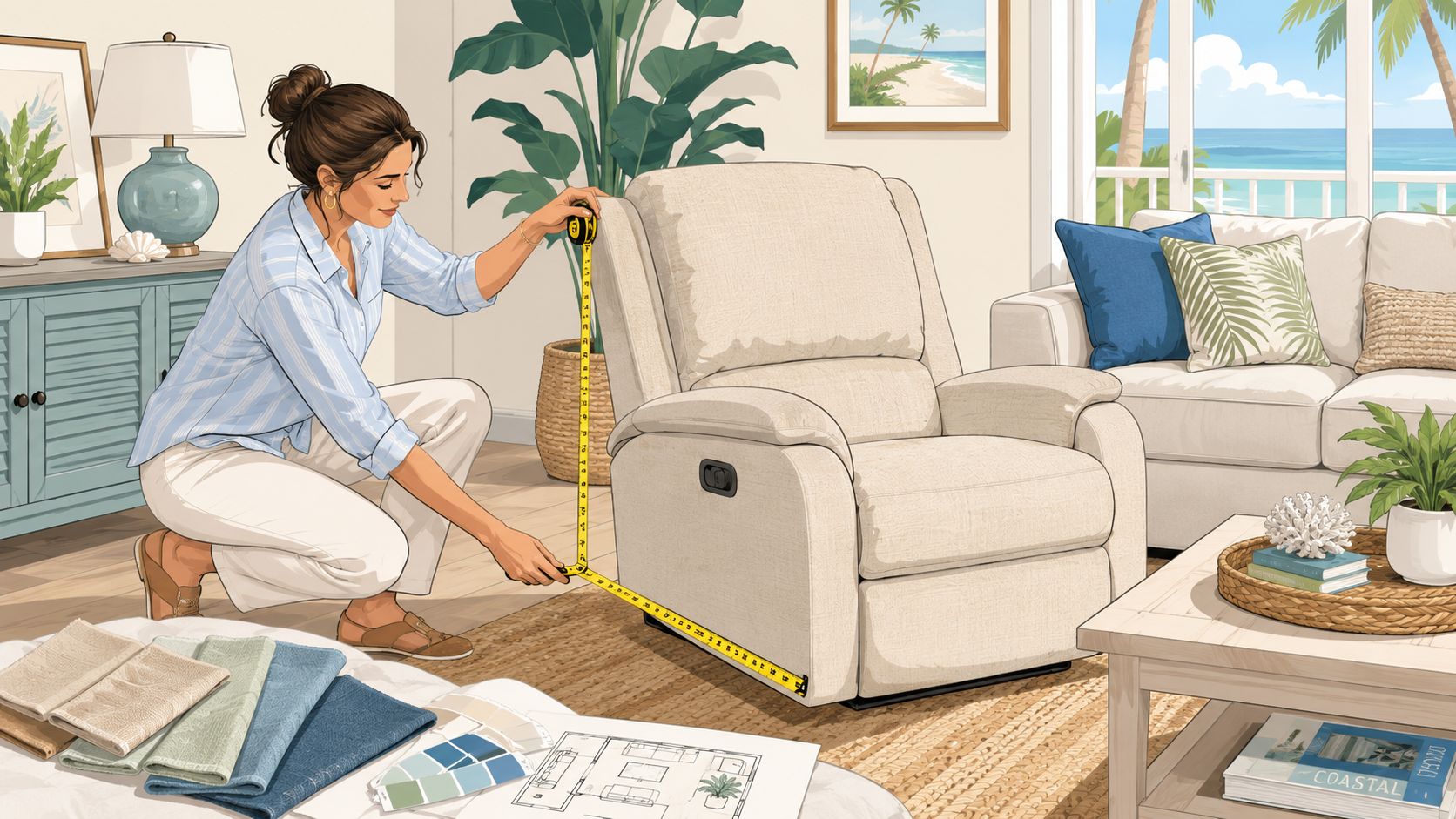
Choosing the Right Upholstery and Size for Your Home
Ergonomics matter first, but long-term satisfaction also depends on practical choices. In Central Florida, upholstery and room fit affect whether a recliner still feels like a smart decision a year from now.
Materials that make sense in Central Florida
Florida homes deal with humidity, sun exposure, and everyday traffic from family life. That's why performance fabrics and quality leather often rise to the top. The right material should feel comfortable against the skin, clean up well, and hold its appearance in bright living spaces.
For shoppers comparing finishes and textiles, this guide on how to choose upholstery fabric is helpful when narrowing down practical options for a Longwood or Orlando home.
A custom-order program can be especially useful here. Brands such as American Leather, Smith Brothers, Canadel, and Amisco are good examples of furniture lines where customization can help match comfort needs with the look of the room.
Size still affects comfort
A recliner can fit the room and still fit the body poorly. That's a common mistake.
Use this quick check before falling in love with a silhouette:
- Body fit first: The sitter's back should reach the support zone naturally.
- Leg comfort next: The seat shouldn't crowd the knees or leave the legs unsupported.
- Room clearance last: Make sure there's enough space for full recline and easy walkways.
A useful reminder: The prettiest recliner in the showroom won't help much if it's too deep, too tall, or too shallow for the person using it every day.
An in-house design team adds value as room scale, traffic flow, fabric choice, and body fit all need to work together, especially in homes that blend open-plan living, family seating, and Florida-friendly natural light.
Your Investment in Comfort at Slone Brothers Furniture
A quality recliner is one of the few furniture purchases that affects health, posture, and daily recovery all at once. For that reason, the best choice usually comes from balancing three things carefully: the right support features, a body-specific fit, and enough in-person testing to confirm the chair still feels good after time passes.
What matters most before making a decision
The strongest buying checklist is short and practical:
- Choose adjustable lumbar support first. That feature carries the most weight in back comfort.
- Test for lasting support. A good recliner should feel stable after the body relaxes, not just at first contact.
- Match the chair to the pain pattern. Sciatica, lumbar strain, and neck tension don't all need the same setup.
- Think beyond the mechanism. Upholstery, room placement, and body scale affect comfort too.
For many Central Florida families, the value of shopping locally shows up in the details. Long-term brands, custom-order flexibility, and hands-on guidance often lead to better decisions than guessing from a screen. Slone Brothers Furniture has served Longwood and the Greater Orlando area since 1980, with a focus on quality, American-made and Amish-crafted furniture, a knowledgeable design team, commercial furnishings support, reliable delivery, and a Low Price Promise that emphasizes lasting value over throwaway buying.
Financing can also make a thoughtful purchase easier to plan, especially when furnishing more than one room. These furniture financing options are worth reviewing for households that want to invest in comfort without rushing the decision.
A recliner shouldn't just fill a corner. It should become the seat in the house that helps the body settle, breathe, and recover.
Ready to find the perfect piece for your home? Visit Slone Brothers Furniture in Longwood, FL, and let the design experts help you get started. Homeowners across Central Florida can explore the comfort of Stressless recliners, the heritage of Stickley, the custom comfort of Smith Brothers, and the American-made quality of Bassett, Craftmaster, and American Leather in person. Since 1980, Slone Brothers has helped families throughout Longwood, Lake Mary, Sanford, and the Greater Orlando area choose furniture with lasting value, great service, and real everyday comfort.