

Butcher Block Coffee Table: Styles & Care Guide

A lot of Central Florida homeowners reach the same point with their living room. The sofa works. The chairs work. But the table in the middle either feels too flimsy, too small, or too forgettable for the way the room gets used.
A butcher block coffee table solves that problem for many homes in Longwood, Lake Mary, Sanford, and across the Orlando area. It brings warmth, visual weight, and a practical surface that feels made for real life. Morning coffee, game night, stacks of books, a tray for candles, or a place to rest tired feet in the evening all feel natural on a solid wood centerpiece.
For Florida homes, the choice matters even more. Heat, air conditioning, and humidity can all affect wood furniture over time, so shoppers need more than style advice. They need to understand construction, finishing, care, and whether a table will still look good years from now.
Table of Contents
- Your Guide to Finding the Perfect Living Room Centerpiece
- What Makes a Butcher Block Coffee Table Special
- Choosing the Right Size and Style for Your Orlando Home
- The Pros and Cons of a Butcher Block Coffee Table
- Care and Maintenance for Long-Lasting Beauty
- Customization and Finding Your Perfect Match
- How to Buy at Slone Brothers Furniture in Longwood
Your Guide to Finding the Perfect Living Room Centerpiece
A living room usually asks one piece to do more work than any other. The coffee table has to look right, fit the room, hold up to daily use, and still leave enough space for people to move comfortably around it.
That's why a butcher block coffee table keeps showing up in well-loved homes. It has presence without feeling formal. It adds wood texture without looking delicate. And it tends to feel more grounded than lighter accent-style tables.
For families in Central Florida, that combination makes sense. Many homes around Orlando have open layouts, tile floors, and bright natural light. A substantial wood table can warm up those spaces and make the seating area feel finished.
Practical rule: A coffee table shouldn't just fill the center of the room. It should help the room feel settled.
There's also a value question behind this choice. A butcher block design often appeals to shoppers who want furniture that lasts, not something that looks tired after a short stretch of everyday use. That's especially true for homeowners who are furnishing a main living space instead of a rarely used sitting room.
Longwood shoppers often want a piece that balances character and durability. A table should feel sturdy enough for daily living, but flexible enough to work with farmhouse, transitional, industrial, or clean modern interiors.
A butcher block coffee table sits comfortably in that middle ground because it doesn't depend on a passing trend. It depends on solid materials, visible craftsmanship, and proportions that make sense in a real home.
What Makes a Butcher Block Coffee Table Special
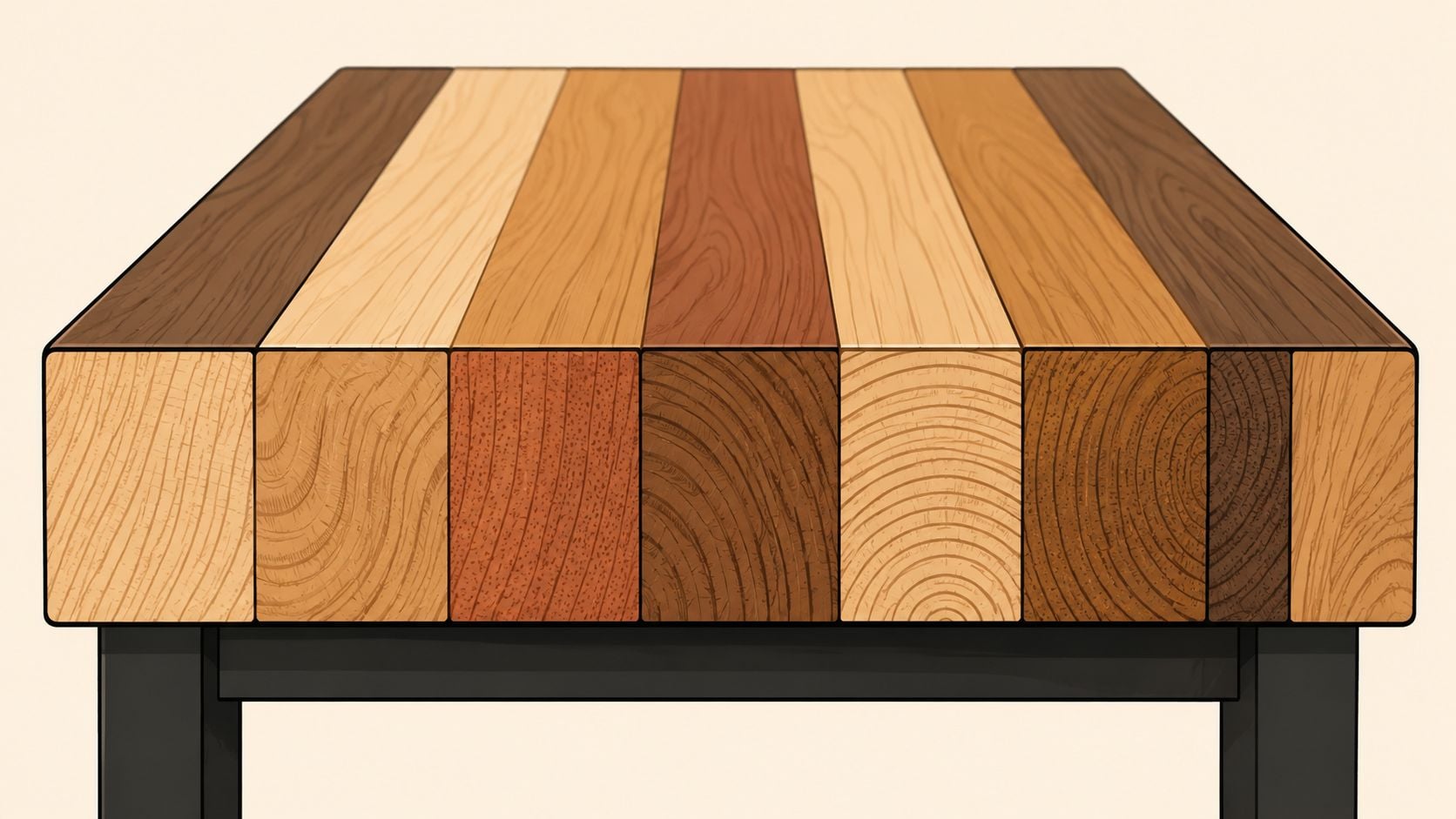
A butcher block top isn't one wide slab. It's made by joining multiple pieces of wood into one thick panel. That construction method gives the surface its distinct look and is a big reason the style feels substantial.
In plain terms, it helps to think of butcher block as a carefully assembled wood surface rather than a single oversized board. That difference matters in both appearance and performance.
How butcher block is built
Many butcher block builds rely on edge-gluing multiple planks, followed by planing, squaring, sanding, and sealing. One build reference also notes that a solid 4-inch-thick hardwood top is a meaningful structural specification because it increases mass and bending stiffness compared with thinner tops, which helps reduce flex and wobble under everyday load, as described in this hardwood butcher block build guide.
That sounds technical, but the takeaway is simple. Each production step affects how flat, stable, and durable the table feels over time.
Some shoppers get confused here because all wood tables can look similar from a distance. Up close, butcher block has a more intentional, built-up character. The grain repeats in sections, the top often looks thicker, and the surface usually carries more visual texture than a plain panel top.
For readers comparing wood furniture styles, this guide to types of wood for dining tables helps explain how wood choice and construction shape the final look.
What quality looks like
A quality butcher block coffee table should feel deliberate, not rough. The boards should appear evenly joined. The top should look flat. The finish should feel protective without hiding the natural character of the wood.
A quick showroom check can help:
- Look at the glue lines: They should appear neat and consistent, not messy or obvious.
- Check the edges: The perimeter should feel smooth and finished, not sharp or uneven.
- View the top from the side: A well-made top usually looks straight and balanced against the base.
- Notice the finish: A good finish helps the table resist daily wear and supports long-term stability.
Clean construction usually ages better than flashy styling.
American-made and Amish-crafted furniture often stands apart. Brands such as Mavin and Simply Amish are known for craftsmanship that puts the structure first. For a living room table, that matters just as much as stain color or leg style.
Choosing the Right Size and Style for Your Orlando Home
A beautiful table can still be wrong for the room. Most coffee table mistakes come down to scale. The table is too tall, too bulky, too small for the seating area, or awkward for the traffic path.
That matters in Central Florida homes, where many living rooms open into dining spaces, kitchens, or lanais. A coffee table has to do its job without making the room feel cramped.

Getting the proportions right
One guide notes that well-built coffee tables often fall in the 18- to 20-inch height range, with a solid butcher-block top frequently around 50 mm (about 2 inches) thick. The same guide cites a commercially sold example measuring 36 x 24 x 19 inches, which reflects a common living-room size class for this category, according to this butcher block coffee table sizing guide.
Those numbers are useful because they explain what “normal” looks like before a shopper ever walks a showroom floor. A table in that range usually sits low enough to work with a sofa while still feeling substantial.
For practical planning, it helps to think in these terms:
| Room concern | What to watch for |
|---|---|
| Narrow walkways | A thick top can still work, but the footprint needs to leave easy circulation |
| Large sectionals | A tiny table often gets lost, even if the finish is beautiful |
| Low-profile seating | A coffee table that feels too tall can interrupt comfort and sightlines |
| Open-concept rooms | The table should anchor the seating group without floating awkwardly |
For homeowners who want a more confident starting point, this room-planning guide on how to measure a room for furniture can help before shopping in person.
Matching the table to the room style
Style is where butcher block becomes surprisingly flexible. The same wood top can read rustic, refined, or modern depending on the base and finish.
A few common directions show how adaptable it is:
- Farmhouse warmth: A thicker wood top with a simple wood base feels natural in homes around Lake Mary or Sanford that lean relaxed and welcoming.
- Industrial edge: Pairing a butcher block top with metal legs creates a cleaner, stronger contrast. That look works well in loft-inspired Orlando spaces and with brands such as Amisco.
- Transitional balance: A softly finished wood top with simple lines bridges traditional upholstery and modern accents.
- Modern organic: In bright Florida interiors, butcher block can soften hard surfaces like tile, glass, and painted walls.
The key is balance. If the room already has a lot of heavy wood, a lighter base can keep the table from feeling too dense. If the room has sleek upholstery and metal accents, a richer wood top can bring warmth back in.
The Pros and Cons of a Butcher Block Coffee Table
A butcher block coffee table has real strengths, but it isn't perfect for every household. Honest shopping works better than idealized shopping, especially when a piece is going into the busiest room of the house.
Where this style shines
The biggest advantage is presence. A butcher block top usually looks grounded and useful, not temporary. That visual weight helps anchor the seating area and gives the room a stronger center.
Another plus is durability. Because the table is built from solid wood components, it tends to appeal to buyers who want something that can live through normal wear instead of being treated like a fragile accent piece.
Many homeowners also like the fact that solid wood furniture can often be refreshed over time. Light wear doesn't automatically mean the table is done for. That long-view value is one reason butcher block remains popular with people furnishing a main family room.
A butcher block coffee table also works across many design styles. That flexibility matters for households that may update rugs, pillows, lamps, or upholstery later on. The table usually still fits.
A good butcher block table doesn't have to match every future style change. It just has to keep the room grounded.
What to think through before buying
The tradeoff is weight. These tables often feel heavier than veneer or lightweight mixed-material options. That's a benefit when stability matters, but it can be less convenient for people who rearrange furniture often.
Maintenance is the other consideration. Wood asks for some care. It doesn't have to be difficult, but owners do need to wipe spills promptly and pay attention to the finish.
In a Central Florida home, humidity adds another layer to that conversation. Air conditioning helps, but wood still benefits from good finishing and steady care habits. A poorly sealed surface may show wear faster than a properly finished one.
A balanced way to think about the pros and cons looks like this:
- Strong point: Solid wood character that feels warm and lasting
Tradeoff: It won't feel as lightweight or easy to move - Strong point: Timeless look that fits many interiors
Tradeoff: The wrong size can feel visually heavy in a small room - Strong point: Surface can often be maintained over time
Tradeoff: Owners need to use coasters, trays, and basic wood-safe habits - Strong point: Distinct craftsmanship and texture
Tradeoff: Lower-quality construction can show seams or finish issues more clearly
For many Orlando-area homes, those drawbacks are manageable. They're less about avoiding the category and more about choosing the right build quality and finish from the start.
Care and Maintenance for Long-Lasting Beauty
A butcher block coffee table doesn't need fussy care. It needs consistent care. That's an important difference.
Wood tends to reward simple habits, especially in a humid climate. Most long-term problems start with repeated small mistakes such as leaving condensation under a glass, letting spills sit, or using harsh cleaners that wear down the finish.
Daily habits that protect the wood
The best routine is straightforward and easy to stick with.
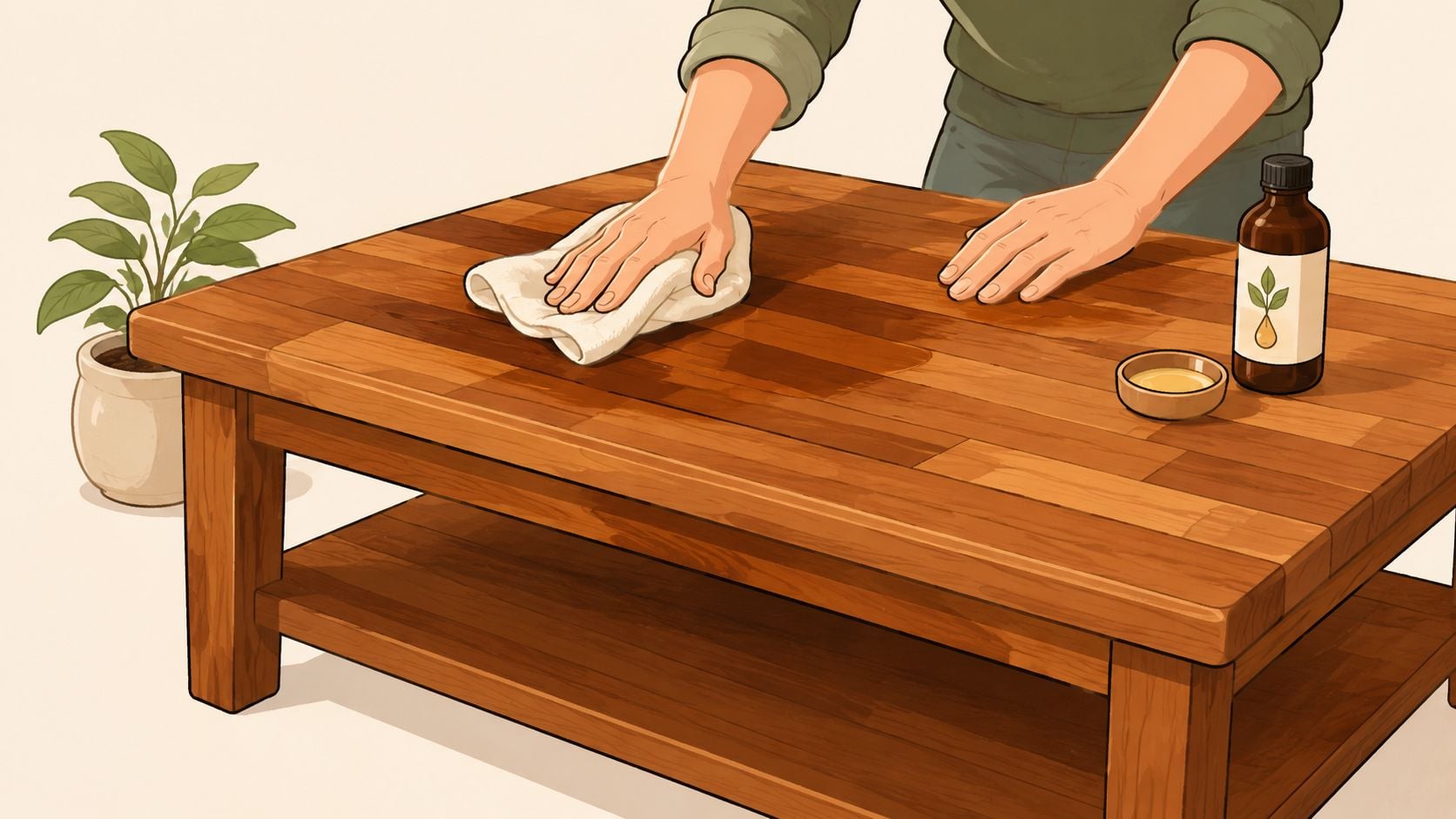
- Dust gently: Use a soft cloth. A dry cloth works for most dust, and a slightly damp cloth can help with light buildup.
- Wipe spills quickly: Water, coffee, and condensation are easier to manage right away than later.
- Use a barrier for heat and moisture: Coasters, trays, and felt-bottom accessories help limit finish wear.
- Avoid harsh cleaners: Wood-safe care products are the safer choice for preserving the finish.
That kind of maintenance matters in Florida because indoor conditions change. Air conditioning dries the room differently than open windows do, and repeated swings can be harder on wood than many shoppers expect.
For a broader overview, this guide on how to care for wood furniture is a helpful companion for day-to-day upkeep.
Understanding sealed and oiled finishes
Shoppers often mix these up, and the difference matters.
A sealed finish places more of a protective layer on the surface. That usually makes it a practical choice for family rooms where drinks, snacks, and daily use are part of the routine.
An oiled finish tends to look more natural and closer to the wood itself. Many people love that appearance, but it usually asks for more active maintenance to keep the surface looking its best.
The right finish isn't only about appearance. It's about how the room gets used.
If a home sees frequent entertaining, kids' activities, or nightly TV time with drinks on the table, a more protective finish often makes ownership easier. If the goal is a softer, more natural wood look and the household is comfortable with periodic upkeep, an oiled surface can be a good fit.
Customization and Finding Your Perfect Match
A lot of shoppers don't struggle because they dislike butcher block. They struggle because the ready-made version is close, but not quite right.
The top may be the right look but the base feels too rustic. The finish may be right but the size is wrong for the sectional. The shape may work, but the room needs storage or a different leg style to connect with nearby furniture.
Why customization works so well with butcher block
This category has a strong history of personalization. One documented build used a 36-inch by 96-inch butcher-block slab and cut it down to create an 18-inch leg layout. Another used 12 boards total, then planed, squared, and sanded the material with 100-grit and 220-grit abrasives before attaching steel A-frame legs, as shown in this butcher block customization example.
That matters because it shows how naturally this style lends itself to adjustment. A butcher block table can be shaped around the room instead of forcing the room to work around a fixed standard.
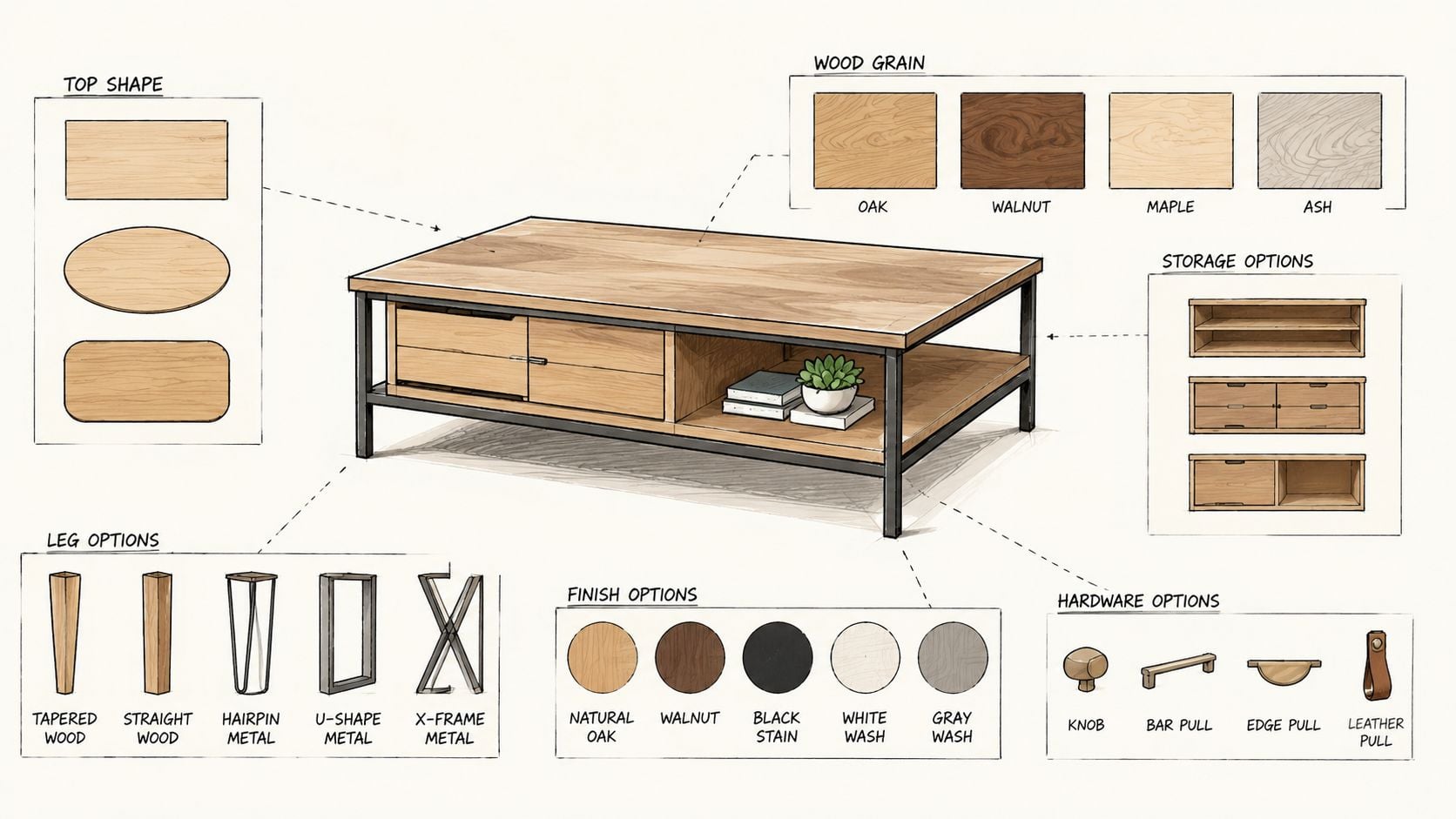
Common custom decisions include:
- Wood species: Some homeowners want a calmer grain, while others prefer more movement and texture.
- Finish tone: In Central Florida homes with tile or mixed flooring, stain color can make a major difference.
- Base style: Wood, metal, open-frame, and storage-focused bases all change the personality of the piece.
- Scale: A compact room may need a smaller footprint, while a larger seating group may call for more presence.
One practical path for that process is custom furniture made simple, which outlines how customized pieces can be specified around space and style needs.
Getting help with the details
Customization sounds complicated until someone narrows the decisions. That's where a design-focused approach helps.
A shopper usually doesn't need endless options. The room needs a few smart choices that work together. In many cases, that means matching the table to existing upholstery, nearby end tables, flooring tone, and how the household uses the living room.
Brands such as Canadel, Smith Brothers, Mavin, and Simply Amish fit well into that conversation because customization and craftsmanship are already part of their appeal. The result feels less like chasing the perfect table and more like building the right one.
How to Buy at Slone Brothers Furniture in Longwood
Buying a butcher block coffee table online can answer some questions, but not the most important ones. It can't show how the top feels under hand, how the wood tone shifts in light, or whether the scale looks right next to the seating.
That's why showroom shopping still matters for a piece like this, especially for homeowners in Longwood, Orlando, Lake Mary, and Sanford who want to make one good decision instead of several expensive guesses.
How to shop with a clear plan
A productive visit usually starts before anyone steps into the store.
Bring a few basics:
- Room photos: Wide shots help show the layout, flooring, wall color, and nearby furniture.
- Measurements: Sofa size and walkway concerns matter more than many shoppers expect.
- Style cues: A saved photo or two can quickly show whether the room leans farmhouse, transitional, industrial, or modern.
- Usage needs: Storage, rounded corners, or a sturdier build may matter more than a specific stain.
For shoppers who want design help as part of the process, furniture stores with design services can make the visit more useful by connecting product choices to room planning.
This is also where Slone Brothers Furniture fits into the conversation as a local option in Longwood, with access to living room furniture, custom-order programs, design support, home delivery, and a clearance outlet for value-focused shoppers.
Why local showroom shopping still matters
A butcher block coffee table is tactile. The finish, edge detail, thickness, and joinery all matter. Those are easier to judge in person than on a screen.
A local showroom also helps shoppers compare direction, not just product. Sometimes the right answer is a substantial wood table with a metal base. Sometimes it's a warmer wood-on-wood look. Sometimes the best move is to custom order the size that fits the room.
For Central Florida homeowners, shopping local also means getting advice shaped by local conditions. Humidity, bright sun, active family rooms, and open layouts all influence the right choice.
The process tends to go more smoothly when the focus stays on these steps:
- Confirm the room size and traffic flow
- Decide how much visual weight the room needs
- Choose the finish based on lifestyle
- Compare standard sizes with custom possibilities
- See the construction in person before deciding
That approach usually leads to a table that feels right on day one and still feels right years later.
Ready to find the perfect piece for a Central Florida living room? Visit Slone Brothers Furniture in Longwood, FL, and let the design team help match the right butcher block coffee table to the room, lifestyle, and long-term goals for the home.