

Tropical King Bed Guide for Central Florida Homes


A homeowner in Longwood stands in a freshly painted primary bedroom, holding a tape measure in one hand and a saved bedroom photo on a phone in the other. The main wall looks ready for a king bed, but the decision isn't simple. Should the room have a rattan headboard, a teak platform, or a woven cane panel? Will the chosen frame feel airy beneath a Florida ceiling fan, or will it make the room feel crowded?
A tropical king bed is both a style decision and an engineering decision. The right choice must respect the mattress dimensions, room clearances, Central Florida humidity, sunlight, airflow, construction quality, and the visual weight of the surrounding furnishings. A bed can look beautiful in a photograph and still be wrong for a Lake Mary or Winter Park primary suite.
A guided showroom visit turns that uncertainty into a practical shortlist. The homeowner can compare materials, test proportions, review finishes, and consider custom details instead of trying to judge rattan density or teak grain from a screen. For an introduction to relaxed bedroom styling, the coastal furniture collection offers a useful starting point.
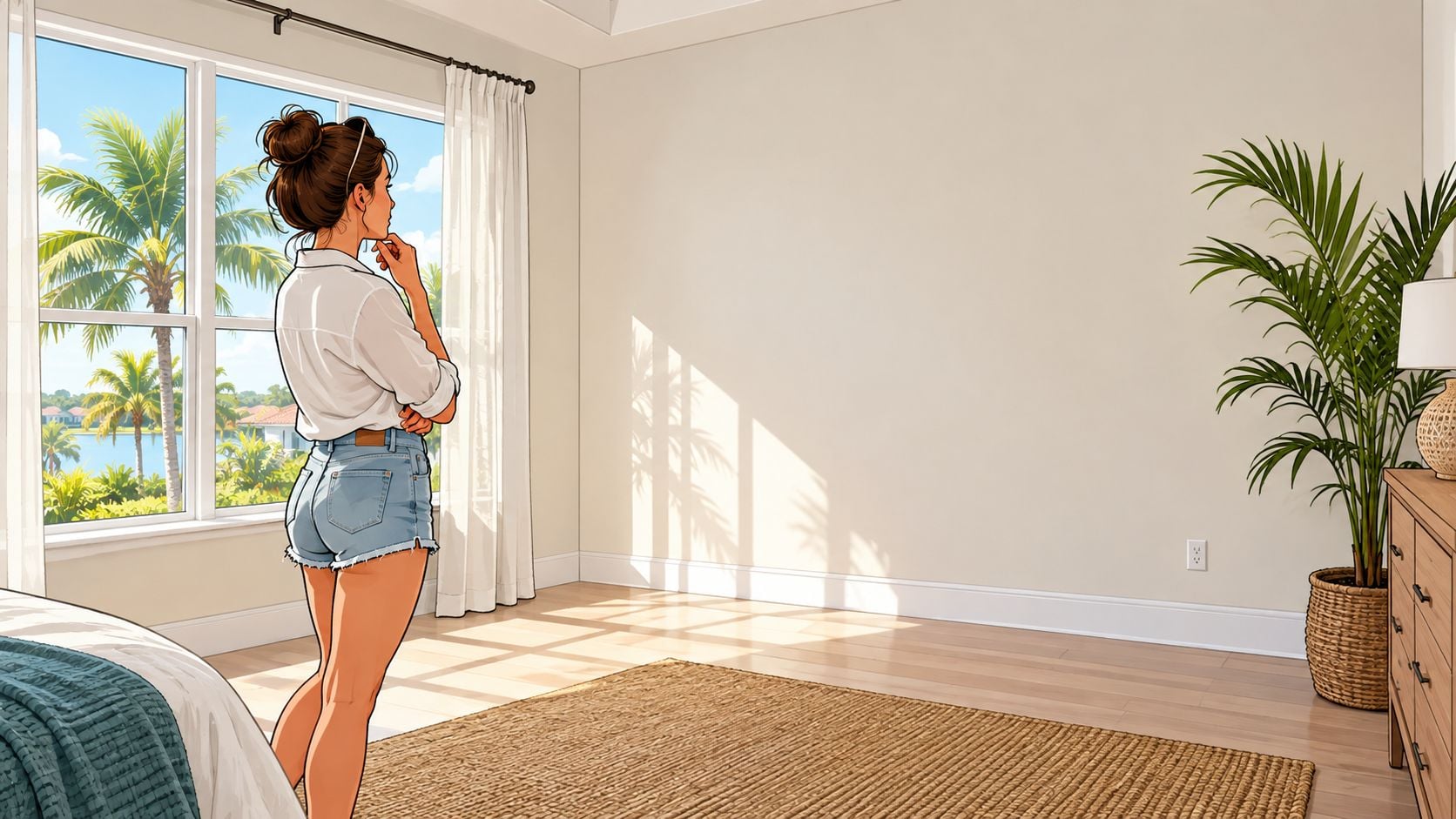
The best tropical king bed for a Central Florida home should look intentional on the first day and remain structurally sound through years of humid summers, air-conditioning cycles, and changing room furnishings. The decision deserves more than a weekend of online browsing.
What Makes a Bed a True King Size
A standard U.S. king mattress measures 76 inches wide by 80 inches long, creating 6,080 square inches of sleeping surface. That mattress footprint determines the frame dimensions, not the other way around, so every tropical design should begin with the correct mattress specification. The National Council on Aging mattress size guide confirms that a standard king provides the same surface area as two Twin XL mattresses placed side by side.
A minimalist platform may add only a few inches around the mattress, while a substantial tropical frame can extend much farther. Side rails, footboards, carved posts, and oversized woven headboards all change the actual footprint. A tall headboard may also change the room's visual balance, particularly in a Florida ranch home with a lower ceiling.
The standard geometry matters
A California king measures 72 by 84 inches, while a standard king measures 76 by 80 inches, as documented by the Sleep Foundation's king-size dimensions guide. The standard king gives couples more lateral room. The California king gives taller sleepers additional length.
A split king uses two separate mattress sections and is commonly considered when an adjustable base or different sleep positions matter. Tropical-style custom work generally begins with standard Eastern King geometry, but the mattress and base must be confirmed before a frame is ordered.
| Size | Mattress (W x L) | Frame footprint typical | Best for |
|---|---|---|---|
| Standard king | 76 x 80 inches | Mattress dimensions plus frame structure | Couples who want maximum width |
| California king | 72 x 84 inches | Mattress dimensions plus frame structure | Taller sleepers needing more length |
| Split king | Two adjustable sections | Depends on the base and surrounding frame | Separate adjustability preferences |
Leave roughly 24 to 30 inches of walking space around the accessible sides of the bed. A tall post or canopy needs additional attention because ceiling height, fan blades, lighting, and window treatments all compete for vertical space.
Practical rule: Measure the mattress, frame, walking paths, doors, and ceiling together. A king bed is successful only when the entire room still functions comfortably.
Choosing the Right Tropical Materials for Florida Humidity
Material choice determines whether a tropical king bed feels like refined island design or just looks like themed furniture. Central Florida homes face humid summers, strong sunlight, and repeated transitions between outdoor moisture and indoor air conditioning. The material should match the room's exposure and the homeowner's willingness to maintain it.
Solid teak is the strongest starting point for a moisture-conscious tropical bedroom. Its natural oils help it resist moisture, and its grain gives a platform bed enough visual authority to anchor a large primary suite. Teak still needs a stable indoor environment and appropriate care, but it generally offers a more convincing long-term foundation than a thin decorative finish over an unstable core.
Kiln-dried mahogany creates a richer, more traditional appearance. It accepts stain and polish beautifully, making it a good choice for a homeowner who wants tropical influence without a pale beach-house look. Mahogany demands more consistent indoor conditions, so a bedroom that is regularly closed, unconditioned, or exposed to fluctuating humidity deserves closer evaluation.
Woven texture versus solid structure
Rattan and cane bring the most immediate tropical character. A woven headboard feels light, allows visual air to pass through the design, and can feel cooler than a fully upholstered or solid panel during a Florida summer. Its weakness is exposure. Direct ultraviolet light, standing moisture, rough handling, and neglected dust can shorten the life of a woven panel.
A solid wood platform creates a heavier, more grounded composition. That weight works well in a large primary bedroom in Sanford or Winter Park, especially when the rest of the room includes linen, stone, or quiet neutral upholstery. A woven headboard suits a homeowner who wants openness and texture, but it requires more attentive care than sealed hardwood.
Bamboo-look engineered materials can reproduce tropical grain with less material cost, but edge delamination becomes a concern when the core absorbs humidity. The edges, fasteners, and underside deserve inspection, not just the front-facing finish.
The upholstery fabric selection guide helps frame the same decision for upholstered tropical elements. A fabric-covered headboard must be selected with sunlight, cleaning, touch, and overall room use in mind.
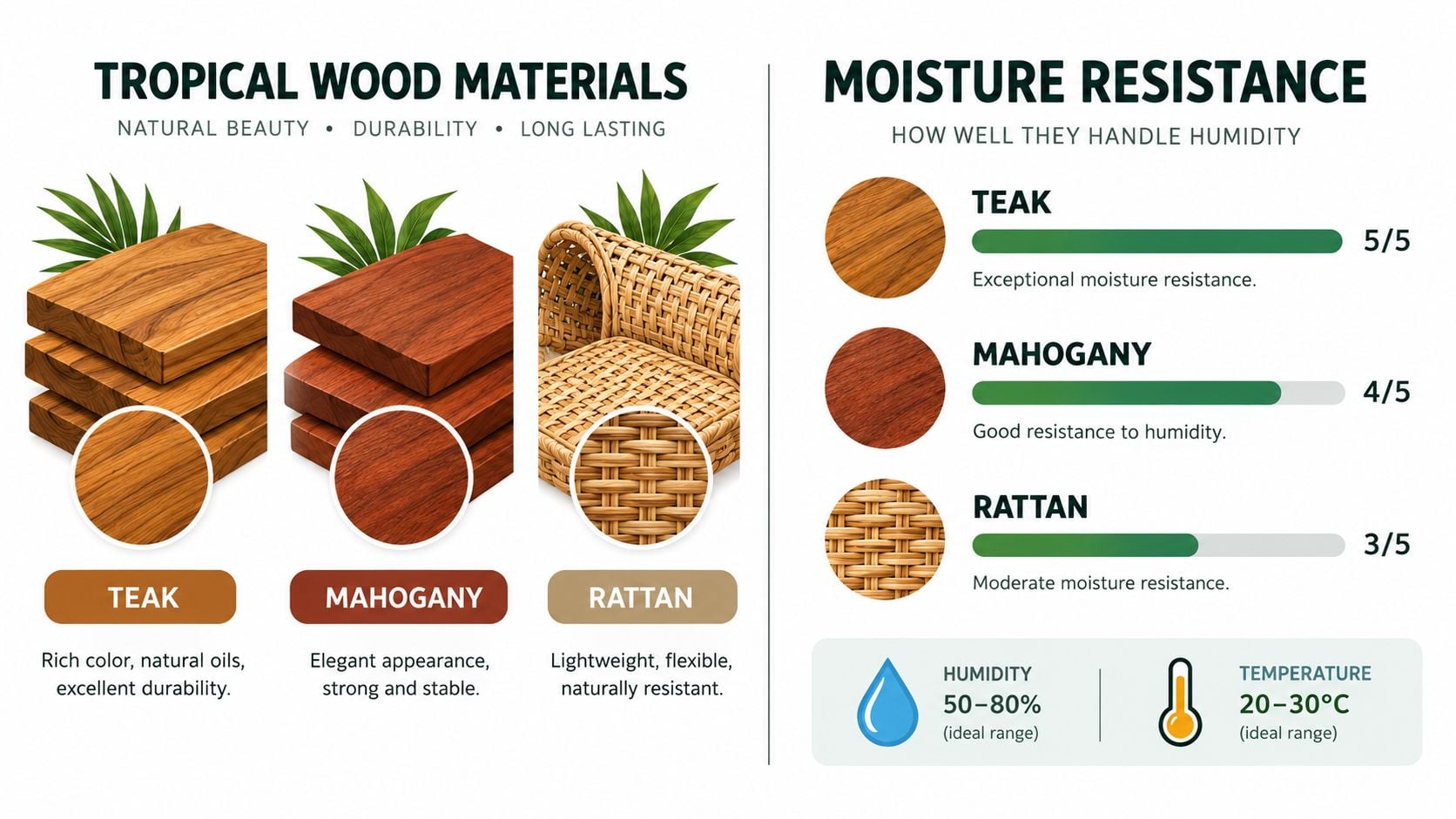
The practical recommendation is straightforward:
- Choose teak for a durable, naturally tropical platform with strong visual presence.
- Choose mahogany for a deeper, more formal bedroom with controlled indoor conditions.
- Choose rattan or cane for breathable texture and a lighter composition, provided the headboard is protected from direct sun and moisture.
- Choose engineered tropical-look materials cautiously, with particular attention to sealed edges and the stability of the internal core.
Planning Room Scale and Mattress Fit Around a King Frame
A king mattress occupies a serious portion of a primary bedroom. The mattress itself measures 76 by 80 inches, and a frame with side rails, a headboard, or a footboard can push the working footprint beyond 88 inches wide. The Avocado king bed dimensions guide notes that frames often add about 2 to 5 inches beyond the mattress dimensions, while headboards commonly measure roughly 79 to 81 inches wide.
That difference matters in Central Florida homes where a bedroom may also contain a ceiling fan, dresser, closet doors, windows, and supply vents. A bed that technically fits can still make the room unpleasant if a door strikes the footboard or a nightstand blocks a vent.
Mark the footprint before ordering
Use painter's tape to mark the mattress outline first. Then extend the tape to show the frame, headboard, nightstands, and likely walking paths. This simple exercise exposes scale problems before delivery rather than after a large piece has arrived.
A nightstand should sit close enough for comfortable reach, ideally within 6 inches of the mattress top. The bed should also preserve walking space on at least two sides, with 24 to 30 inches as the practical range for movement.
| Measurement | Minimum | Recommended |
|---|---|---|
| Walking space beside the bed | 24 inches | 30 inches |
| Nightstand relationship to mattress | Within reach | Within 6 inches of mattress top |
| Bed-wall planning | Mattress and frame fit | Include outlets, vents, windows, and door swings |
| Vertical planning | Clear ceiling and fan | Confirm headboard, lighting, and fan relationships |
A split-king adjustable base can help when a room has limited depth or when each sleeper needs separate positioning. It doesn't eliminate the need to measure the exterior frame, though. Platform and slatted designs also change mattress height, which affects how easily sleepers enter the bed and how tall the headboard feels.
The room measurement guide gives homeowners a useful preparation method before visiting a showroom. A complete measurement should include ceiling height, window trim, outlet locations, HVAC vents, door swings, and the location of any ceiling fan.
Construction Details That Make Tropical Beds Last in Florida
A tropical finish can't rescue a weak frame. Long-term performance comes from joinery, support, finish selection, and airflow beneath the mattress. Those details matter more in Central Florida because wood responds to moisture and temperature changes, even inside an air-conditioned home.
Look for mortise-and-tenon joinery, properly executed dowels, and reinforced corner construction. Mortise-and-tenon and dovetail joints transfer stress through the wood rather than depending entirely on nails, staples, or adhesive, as explained in this furniture construction quality guide. Solid-wood furniture also needs room to expand and contract without splitting or loosening at weak connections.
Finish and support deserve equal attention
A penetrating oil finish keeps the wood's grain tactile and natural, but it requires attentive maintenance. Marine-grade varnish creates a more protective surface, while a catalyzed lacquer can deliver a refined, consistent sheen when applied correctly. A matte or satin finish usually suits tropical furniture better than a high-gloss surface because it hides minor handling marks and keeps the room from feeling overly formal.
King frames need dependable center support. The center rails and support legs carry significant load, and a frame that looks substantial at the corners can still fail if the center structure is underbuilt. Slat spacing must also match the mattress requirements, especially with latex and hybrid constructions that depend on continuous, stable support.
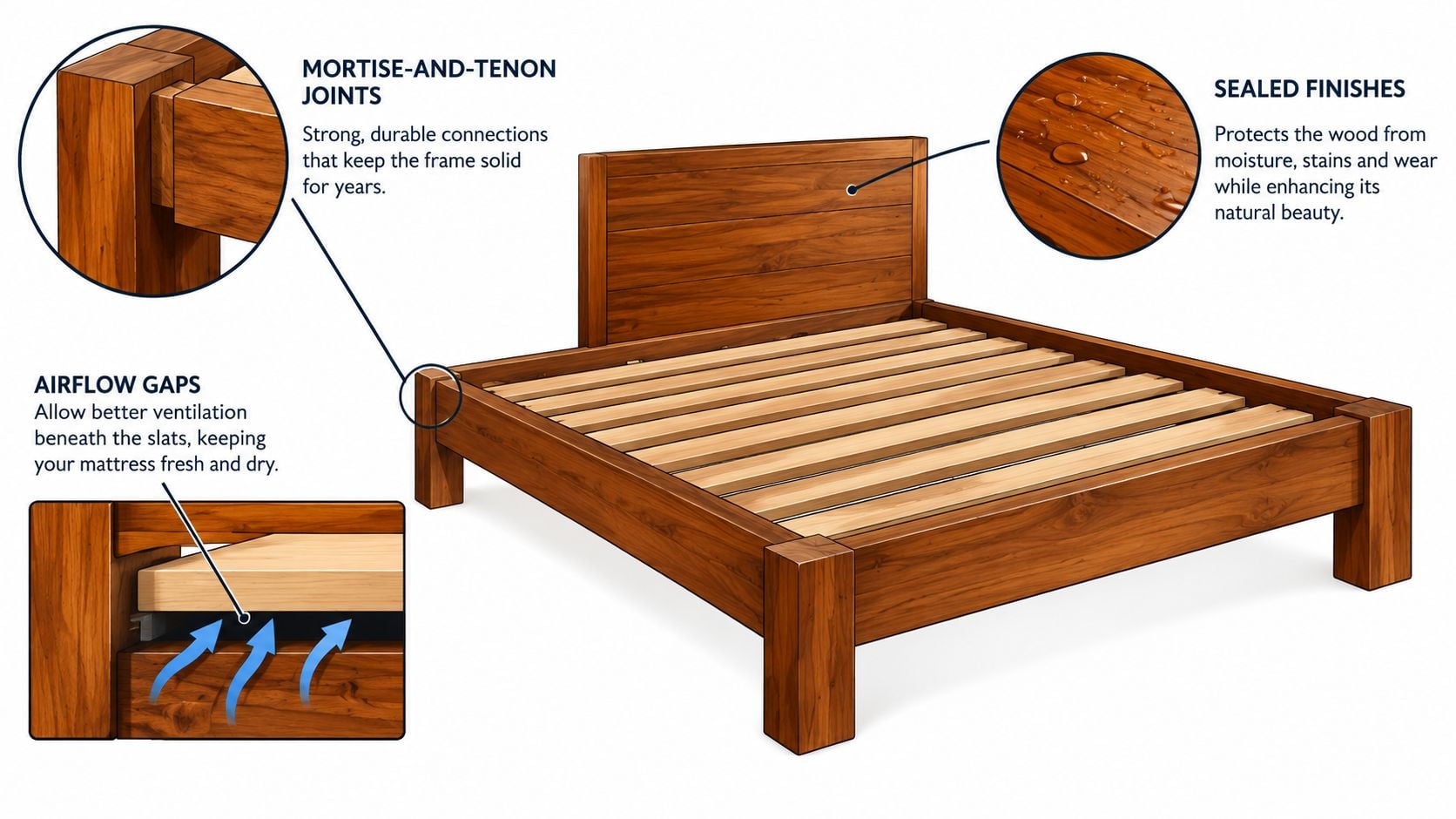
Raised platforms and open-weave headboards improve air movement around the mattress and behind the bed. That design choice is valuable in bedrooms where the bed sits against an exterior wall or where dehumidification isn't used continuously.
A tropical bed should show its structure. Open space beneath the mattress, solid center support, and honest joinery are more important than decorative carving.
For a broader explanation of species, grain, and construction, the wood furniture guide gives homeowners a stronger basis for evaluating hardwood furniture beyond surface color.
Custom Orders and Why a Longwood Showroom Matters
A tropical king bed is a long-term furnishing decision, not a temporary accent. A focused showroom visit can prevent a homeowner from living with the wrong headboard height, finish sheen, or frame proportion for years.
Screen-shopping hides the qualities that matter most. Rattan weave density is difficult to judge from a styled photograph. Teak grain varies from piece to piece, and a finish that looks warm online may appear too yellow or too dark beside the home's actual flooring. Upholstered elements also need to be tested for texture, firmness, and visual scale.
A local consultation solves practical problems
A Longwood showroom visit allows a homeowner to place finish samples beside paint and flooring references, test mattress height on real frames, and inspect hardware rather than relying on a product description. A design consultant can also evaluate whether the bed's visual weight suits the room's windows, ceiling, fan, and existing casegoods.
Custom work becomes especially valuable when the room has an unusual constraint. A homeowner may need:
- A lower headboard for a low ceiling or prominent window.
- A specific woven panel pattern to control visual openness.
- A selected wood species that coordinates with existing furniture.
- Modified rail dimensions for a narrow bedroom or difficult access path.
- An upholstered section in a chosen fabric or leather for added softness.
A made-to-order frame is built around the room rather than around a warehouse specification. Custom furniture guidance commonly places straightforward custom luxury pieces around 8 to 12 weeks, while more involved work can extend to 16 to 24 weeks, according to this custom furniture build timeline. A practical planning range for many custom orders is therefore measured in weeks, not days.
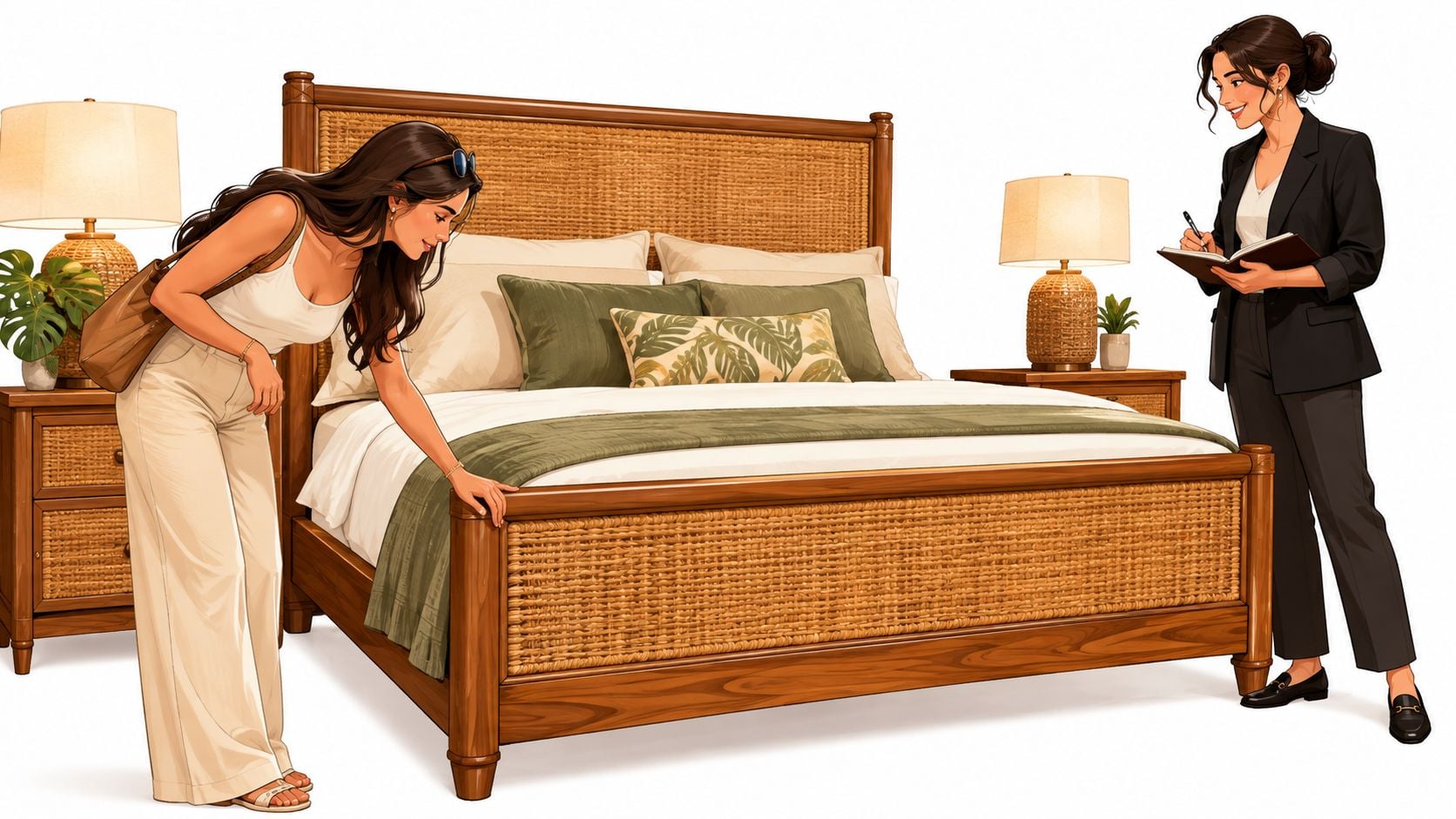
A homeowner should also inspect the joinery, rail connections, finish transitions, underside, and support structure. Heirloom-quality furniture commonly combines solid hardwood, traditional joinery, repairable finishes, and durable hardware. Properly maintained solid wood can be sanded, restained, and refinished multiple times, which gives the piece a serviceable future rather than a fixed expiration date, as outlined in this heirloom furniture guide.
For homeowners considering a custom frame, the custom furniture ordering service provides a starting point for discussing materials, finishes, and configurations in person.
Your Next Step Toward the Right Tropical King Bed
The right tropical king bed emerges when four decisions agree: material, scale, construction, and finish. Style comes first emotionally, but those four tests determine whether the bed belongs in the room and continues to serve the household well.
A homeowner in Longwood, Lake Mary, Altamonte Springs, or Orlando should complete the following before choosing a frame:
Measure the room and ceiling. Record wall lengths, ceiling height, door swings, window trim, outlets, vents, and the ceiling fan location. Mark the mattress and frame footprint on the floor with tape.
Photograph the room in daylight. Include the bed wall, flooring, windows, adjacent furniture, and paint. Florida light changes the appearance of teak, mahogany, cane, rattan, and upholstered panels.
Bring finish references. Paint chips, flooring samples, curtain fabric, and photographs of existing furnishings help a consultant evaluate the entire composition rather than one isolated piece.
Confirm mattress compatibility. Identify whether the household needs a standard king, California king, split king, platform support, slats, or an adjustable base. The bed and mattress must be treated as one system.
Visit a Longwood showroom. Inspect actual wood grain, weave, hardware, finish sheen, headboard height, rail construction, and mattress elevation. A real consultation can reveal a scale problem that a digital rendering conceals.
The best test is simple: the bed should look intentional on day one and still look appropriate after ten humid Florida summers.
A custom order can solve problems an off-the-shelf tropical frame can't. It can reduce a headboard for a lower ceiling, adjust rail dimensions for a tight passage, specify a more suitable wood species, coordinate a woven panel with the room's light, and create the support structure required by the selected mattress. It also gives the homeowner a chance to assess whether the design feels genuinely tropical or merely decorative.
The consultation should include room measurements, photographs, finish samples, mattress information, and a clear account of how the bedroom is used. That preparation lets a design consultant focus on the decisions that affect comfort and longevity instead of guessing at the room from a screen.
Slone Brothers Furniture offers custom-order bedroom furnishings, mattresses, complimentary in-home design services, and face-to-face guidance from experienced consultants in Longwood, Florida. Homeowners planning a tropical king bed can visit Slone Brothers Furniture to compare materials, review construction, and build a bedroom plan suited to Central Florida living.