
Smart Living Room Furniture Ideas for Small Spaces

Maximize Your Small Living Room's Potential
Living in Central Florida often means making the most of every square foot. If you're looking for smart living room furniture ideas for small spaces, you're not alone. The challenge isn't the size of your room; it's how you furnish it. As local furniture experts since 1980, Slone Brothers believes great design isn't about having more space. It's about using your space more wisely. This guide walks through seven practical ideas that can help transform a compact living room in Orlando, Longwood, Lake Mary, or Sanford into a space that feels stylish, comfortable, and functional.
Small rooms usually struggle in the same ways. Seating feels bulky, storage disappears fast, and traffic flow gets tight. The good news is that the right furniture choices can solve all three problems at once, especially when each piece does more than one job.
For readers comparing layouts and sofa sizes, this guide to compact living room seating offers extra inspiration before visiting a showroom.
Table of Contents
- 1. Sectional Sofas with Built-in Storage
- 2. Wall-Mounted Shelving and Floating Shelves
- 3. Nesting Tables and Stackable Side Tables
- 4. Ottoman-Coffee Table Hybrids
- 5. Console Tables with Hidden Storage and Narrow Profiles
- 6. Wall-Mounted Entertainment Centers and Slim TV Stands
- 7. Multi-Functional Accent Chairs with Storage and Dual-Purpose Features
- 7-Item Small-Space Living Room Furniture Comparison
- Your Perfect Small Space Awaits in Longwood
1. Sectional Sofas with Built-in Storage
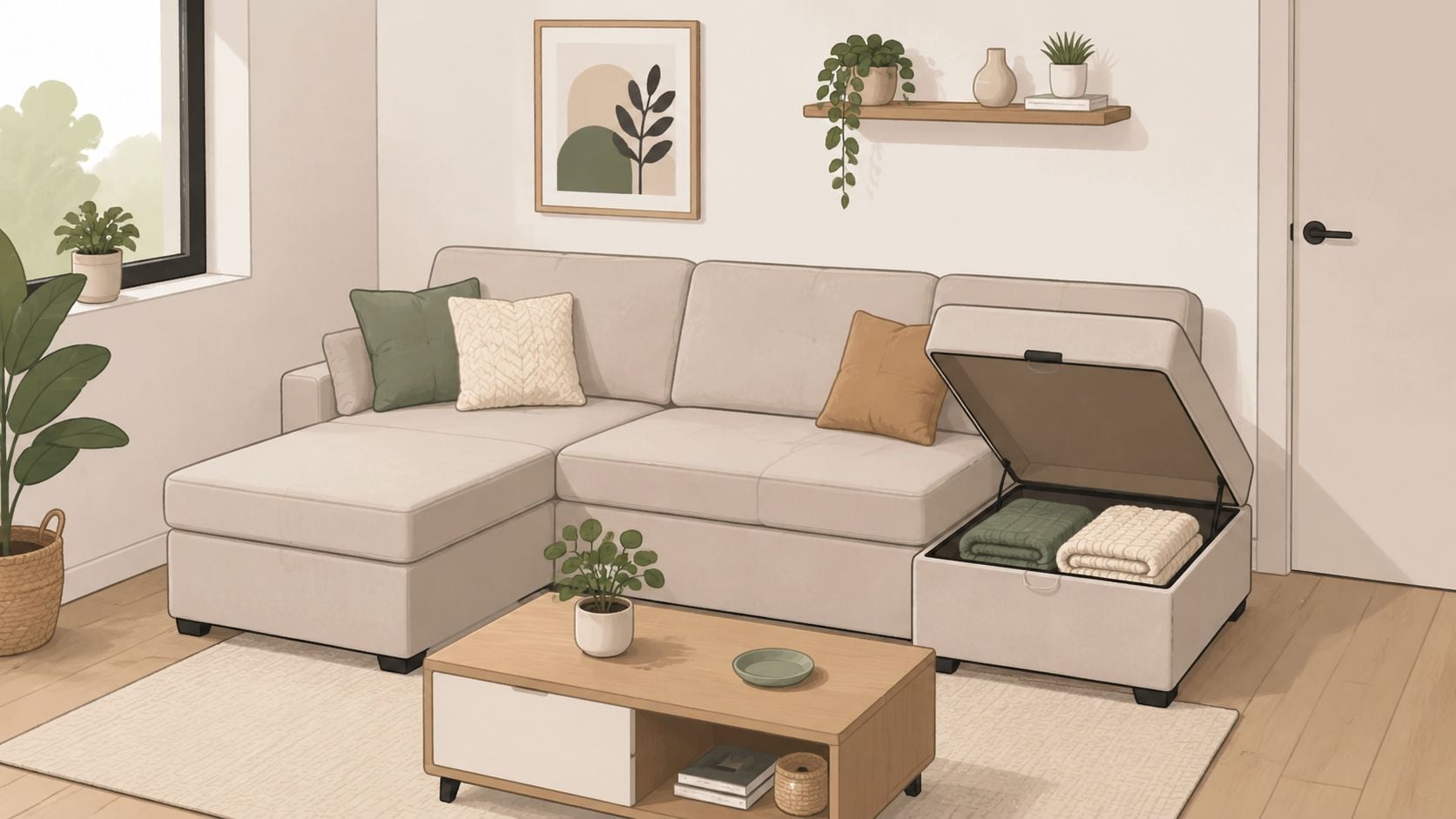
A small living room in Central Florida often has to serve several roles in a single day. It is the spot for family TV time, a place to chat with guests, and sometimes the overflow zone for throws, board games, and extra pillows. A sectional with built-in storage helps because it puts seating and storage in one piece instead of asking the room to hold a sofa, extra chair, and another cabinet.
That makes a real difference in condos, townhomes, and open-concept homes around Longwood, Lake Mary, and Orlando where every square foot has to work harder. Storage tucked into a chaise or ottoman works like a hidden closet in the middle of the room. The room stays calmer because the items you use often are nearby, but not always on display.
Choose a sectional that earns its footprint
The key is choosing a sectional that solves more than one problem. In a compact room, a large piece should seat people comfortably, fit the traffic path, and reduce the need for extra furniture. That is why storage sectionals are often a smarter choice than combining several separate pieces that eat up floor space and make the layout feel busy.
A Longwood homeowner, for example, might choose a sectional with storage under the chaise for light blankets during summer, then switch that space to holiday pillows later in the year. Central Florida homes do not always have generous linen closets, so hidden storage in the living room can take pressure off the rest of the house.
A few design details help a sectional feel appropriate for a smaller room:
- Slim arms save inches: Those inches matter more than many homeowners expect.
- Raised legs create visual breathing room: Seeing a bit of floor under the frame helps the room feel more open.
- A moderate seat depth keeps the scale in check: Very deep cushions can crowd a compact layout fast.
- Reversible or modular pieces add flexibility: They give you more options if you move or rework the room later.
- Storage should be easy to reach: If the lift-top or chaise compartment is awkward, it will not get used much.
This is also where local guidance helps. At Slone Brothers' Longwood showroom, the design team can help you compare dimensions, doorway access, and room flow before you order, which is especially useful in homes with tighter entries or combined living and dining spaces. If you are weighing layouts, their guide to the best furniture for small spaces is a helpful starting point.
Brand selection matters too. Slone Brothers carries quality options known for comfort and smart proportions, and the showroom can help Central Florida homeowners explore customized orders that fit a specific room more precisely. The goal is simple: choose a sectional that acts like two pieces of furniture while taking up the space of one.
2. Wall-Mounted Shelving and Floating Shelves
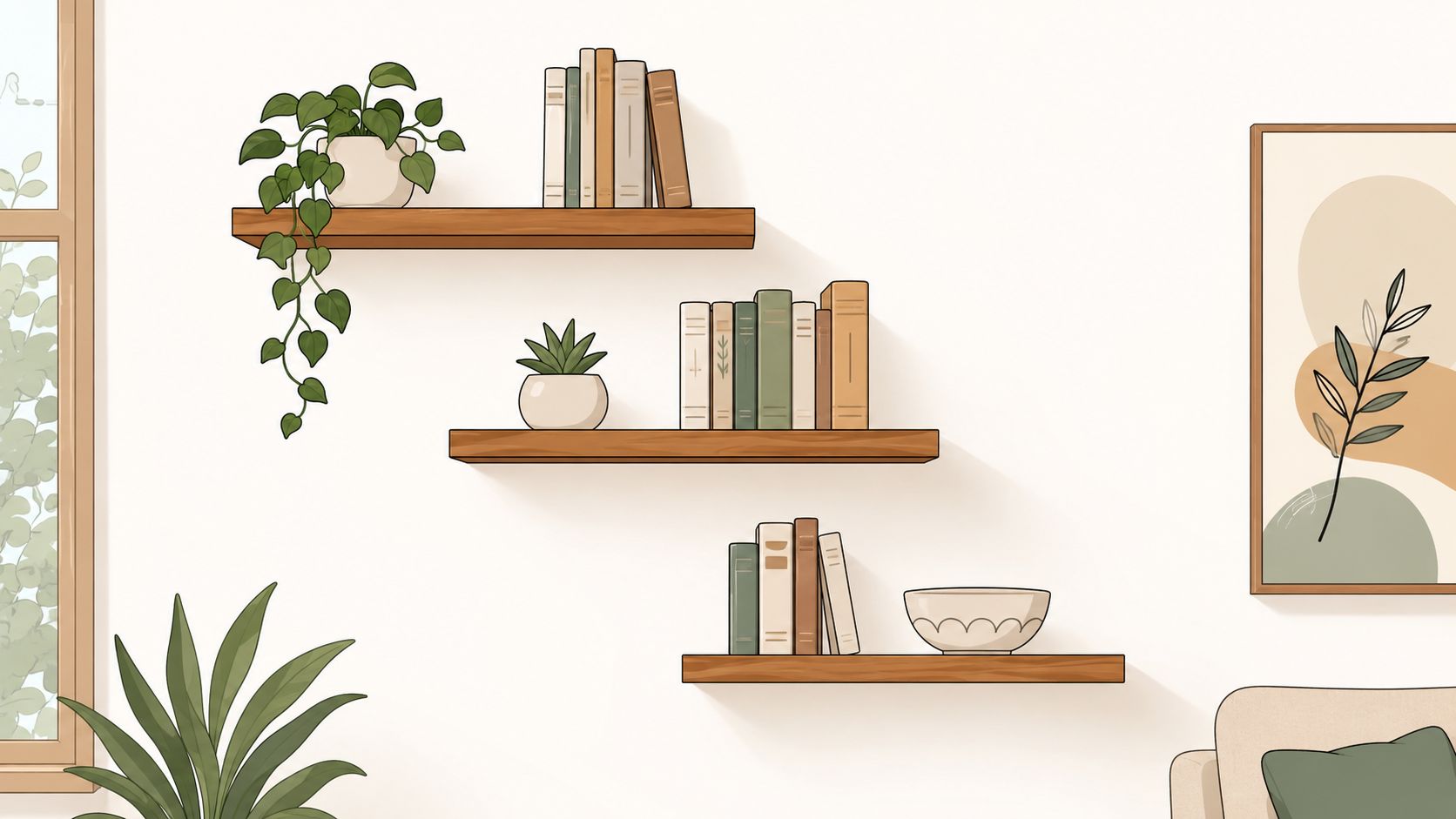
A small living room often runs out of floor before it runs out of wall. For many Central Florida homeowners, that shift in thinking changes the whole room. Wall-mounted shelving stores what you need while keeping walkways clearer and the layout lighter.
It works like using vertical space in a kitchen pantry. Once storage moves upward, the room usually feels less crowded at eye level and underfoot. That matters in Longwood condos, Orlando apartments, and townhomes in Lake Mary where every square foot has to do more than one job.
A slim stack of floating shelves above a sofa can hold books, framed photos, or a pair of baskets for remotes and chargers. A taller built-in style arrangement around one wall can give a living room more function without adding another bulky case piece. The goal is not to fill every inch. The goal is to store and display with restraint so the room still feels open.
Use the wall to create storage without adding bulk
Floating shelves help most when they solve a specific problem. If the room lacks a spot for books, media accessories, or decorative pieces, shelves can handle those items without taking up the footprint of a cabinet. In a compact living room, that difference can make traffic flow feel easier from the sofa to the TV area or into an adjacent dining space.
Placement matters.
Shelves that are too high become decoration only. Shelves that are too low can make a room feel crowded. A good setup keeps everyday items within reach and leaves enough breathing room around the furniture below so the wall does not feel heavy.
A few guidelines help:
- Sketch the arrangement before drilling: Painter's tape on the wall helps you judge width, spacing, and alignment.
- Mix open display with practical storage: Books, framed art, and closed baskets create a more usable setup than rows of décor alone.
- Choose finishes that handle humidity well: In Central Florida, sealed wood and well-finished metal tend to hold up better over time.
- Keep visual weight balanced: If the sofa or console has a substantial wood tone, shelves in a related finish usually feel more settled in the room.
Shelving looks better when part of the wall stays empty. That open space gives the eye a place to rest.
Material quality makes a difference here because wall storage sits at eye level and gets noticed quickly. Slone Brothers' Longwood showroom can help homeowners compare wood tones, proportions, and custom-order possibilities that suit a smaller room. Brands such as Simply Amish often appeal to homeowners who want real wood shelving or case pieces with lasting character, especially when they are trying to make one compact living area feel intentional rather than pieced together.
3. Nesting Tables and Stackable Side Tables
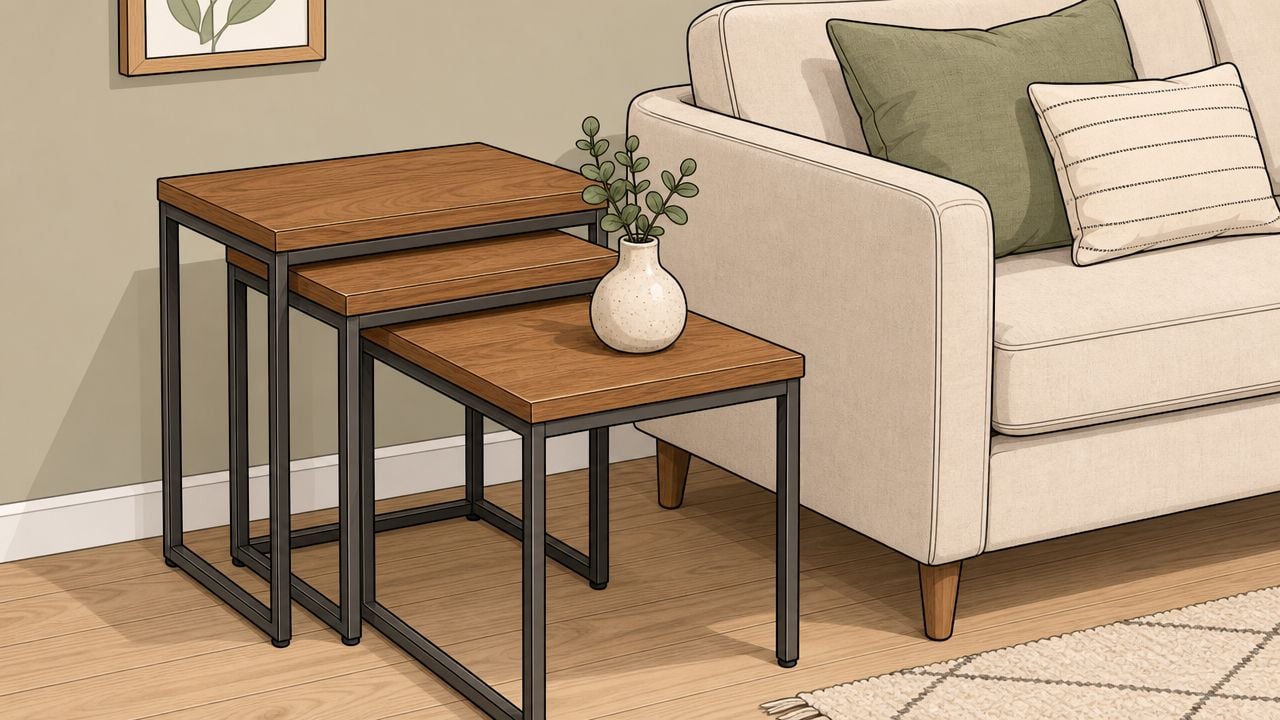
A small living room in Central Florida often has to do several jobs in one day. It might be a quiet spot for coffee in the morning, a family hangout after school, and extra seating space when neighbors stop by. Nesting tables help because they give you usable surface area only when you need it.
They work like measuring cups in a kitchen drawer. Each piece has a purpose, but they store inside one another instead of taking up floor space all day.
An Orlando condo owner might keep the full set tucked beside the sofa, then pull one out for a laptop and another for drinks when friends visit. A Sanford family might separate the tables for puzzles or snacks, then stack them again before the room needs to open up for kids or pets.
Small tables that adapt quickly
The biggest advantage is flexibility. In a compact room, furniture that can spread out and pull back tends to work better than pieces with a fixed footprint. Open bases also help the room feel lighter because you can still see more of the floor around and beneath the tables.
Material choice matters here. Wood and metal usually hold up well for busy households, and they often feel more grounded than very delicate options. In Central Florida, that practical durability matters, especially in homes where sandy feet, pets, and frequent entertaining are part of everyday life.
Style is easier to manage than many homeowners expect. A nesting set can bridge different looks in the same room, especially if you are pairing upholstery with wood case goods. At Slone Brothers' Longwood showroom, homeowners often compare finishes in person to see whether a lighter metal frame, a warmer wood top, or a softer rounded profile will sit comfortably with pieces from quality collections such as American Leather or Simply Amish.
A few buying guidelines make the choice clearer:
- Match the tallest table to the sofa arm: If the top is too low or too high, the table becomes awkward to use.
- Choose shapes that support traffic flow: Round or softly curved corners can make a tighter layout easier to move through.
- Check the nesting clearance: The tables should slide together easily without scraping or wobbling.
- Look at the base width: A stable base matters if the table will hold a lamp, drinks, or a small work setup.
- Consider how each piece works alone: The largest table should still look intentional if it ends up standing by itself.
If you like the idea of flexible surfaces but want more hidden function, Slone Brothers also offers options like a coffee table with storage drawers for small living rooms that can pair well with a nesting set.
One more tip. Bring your room measurements, sofa height, and a few photos when you visit the Longwood showroom. That makes it much easier for the design team to help you choose tables that fit the scale of your space instead of just filling an empty corner.
4. Ottoman-Coffee Table Hybrids
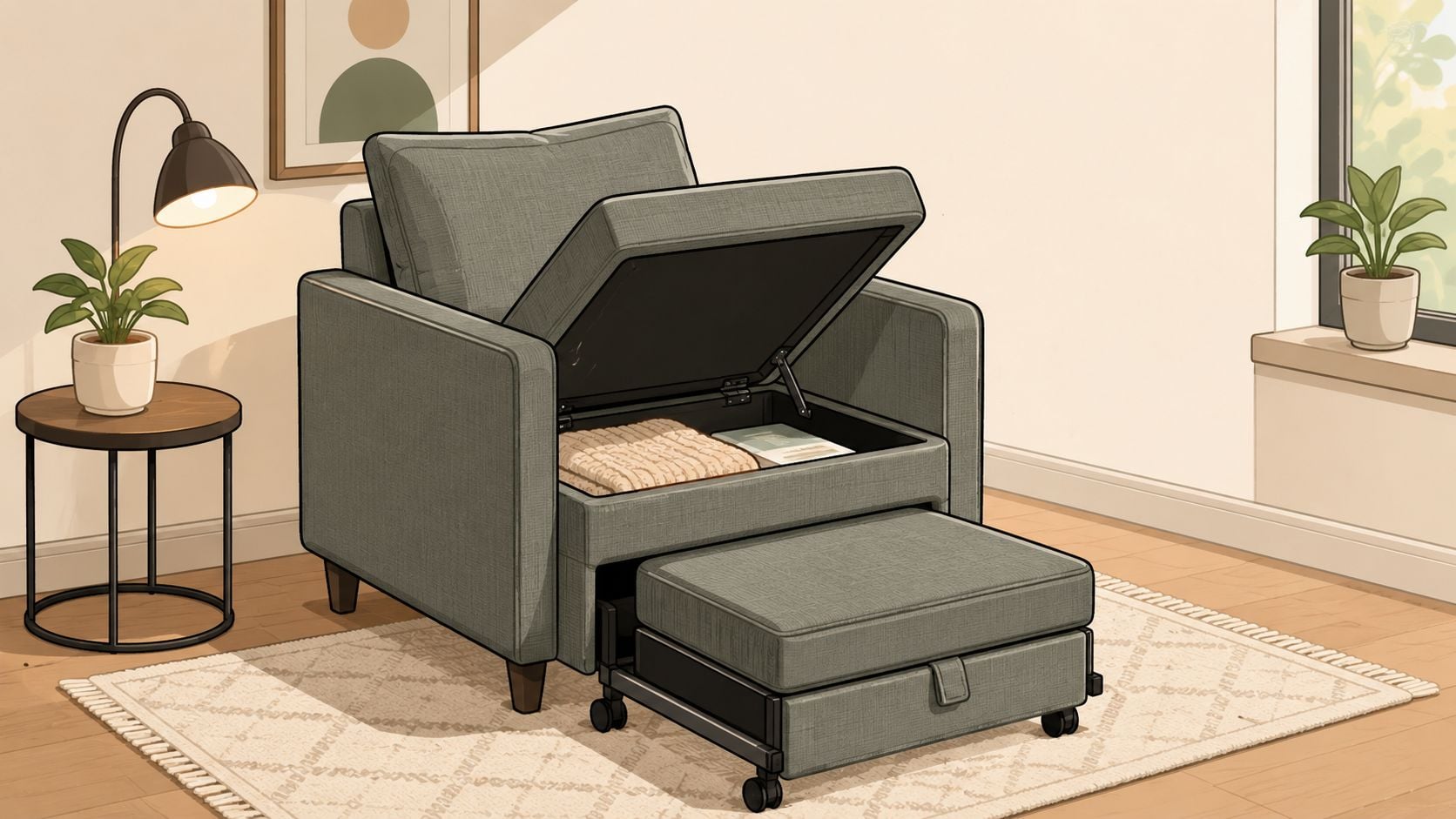
A small living room in Central Florida often has to do several jobs in one day. It might be a place to watch a movie after work, spread out laptops in the afternoon, and host extra family during a weekend visit. An ottoman-coffee table hybrid handles that kind of real-life use better than a fixed coffee table in many homes.
The idea is simple. One piece sits at the center of the room, but it works like a padded table, a footrest, a spare seat, and sometimes a storage box. That combination matters in tighter layouts because every piece needs a clear purpose.
A Lake Mary family might choose a leather storage ottoman for board games, throws, and chargers. An Orlando condo owner may prefer an upholstered style with a tray on top, so the surface can switch from morning coffee to evening lounging without much effort.
Softer form, harder-working function
Traditional coffee tables give you one main surface. Ottoman hybrids usually give you a softer edge and more flexibility, which can make a compact room easier to live in. In practical terms, they reduce visual heaviness in the center of the seating area and make circulation feel less cramped, especially if children or guests are frequently moving through the room.
That softer profile helps in another way too. In smaller homes, the center table often becomes a traffic obstacle. A padded ottoman works more like a cushion in the layout than a hard block, so the room feels less rigid.
Shoppers should focus on fit before style details:
- Keep the height close to the sofa seat: Slightly lower usually feels more comfortable for resting feet and reaching a tray.
- Choose a firm, usable top surface: If you plan to set down drinks or snacks, test it with a tray instead of assuming any ottoman will work.
- Check how the storage opens: Hinged tops, lift-off lids, and drawer-style compartments each need different clearance.
- Watch the visual bulk: Deep tufting, oversized proportions, and heavy skirts can crowd a small room quickly.
- Measure around the piece: Leave enough space to walk comfortably on all sides.
For homeowners who want the function of a table but need hidden organization, Slone Brothers also offers accent tables with drawers for living room storage and this collection of coffee tables with storage drawers. In the Longwood showroom, the design team can also help you compare sizes, upholstery options, and custom-order choices that better suit Florida homes, especially if you want a piece that coordinates with quality seating from collections such as American Leather, Stressless, or Simply Amish.
5. Console Tables with Hidden Storage and Narrow Profiles
Console tables are quiet problem-solvers. They fit behind a sofa, along a short wall, or near an entry without asking for much depth. In a small living room, that narrow footprint is exactly the point.
A Longwood homeowner might place a Canadel console behind a sectional to hold lamps, remotes, and a bowl for keys. In a Lake Mary apartment, a wood console with a shelf underneath can create a drop zone near the living room entrance while still displaying framed photos and plants.
Make use of the narrow zones
Some of the most useful areas in a small room are the ones people forget to furnish. The strip behind a sofa. The shallow wall near a hallway. The open edge between the living room and dining space. A narrow console helps define those spaces without closing them off.
The strongest versions include drawers, a lower shelf, or room for baskets underneath. That gives the piece a practical role instead of making it decorative only. For homeowners drawn to long-term value, this is a category where Amish-made construction stands out. Amish craftsmen build living room furniture in solid hardwoods such as oak, cherry, maple, walnut, and hickory, which are known for durability and rich grain character, as described in this overview of Amish living room craftsmanship.
A few placement rules keep a console useful instead of awkward:
- Measure depth carefully: Narrow is the whole advantage here.
- Limit the top display: A lamp, a small plant, and one or two accessories usually look better than a crowded arrangement.
- Use baskets below: Hidden storage makes the room feel calmer.
- Coordinate finishes: The console should support the room's palette, not interrupt it.
For drawer storage in compact footprints, Slone Brothers offers a range of accent tables with drawers. Canadel and Mavin are especially relevant for homeowners who want a more customized wood finish that matches nearby dining or occasional pieces.
6. Wall-Mounted Entertainment Centers and Slim TV Stands
A small living room can start to feel crowded the moment the TV wall gets too heavy. In many Central Florida homes, especially condos, townhomes, and older ranch layouts, a full-size entertainment center uses space you need for walking, seating, and everyday living. A wall-mounted TV with a slim media piece below usually gives the room a cleaner, more balanced look.
The idea is simple. Keep visual weight off the floor and keep storage focused on what you use.
An Orlando condo owner might choose a floating media cabinet so the floor stays visible beneath it. That little gap matters more than people expect. Seeing more floor often makes a room feel less boxed in, much like using furniture with exposed legs instead of pieces that sit heavy and flat on the ground. A Lake Mary family may prefer a low stand with doors that hide game systems, remotes, and charging cords without turning the whole wall into a storage block.
Keep the TV wall light, not bulky
Deep media cabinets often create two problems at once. They narrow the walking path, and they make the focal wall feel larger than the room itself. In a compact living room, the TV area should support the layout, not dominate it.
That is why proportion matters so much here.
A slim stand or wall-mounted cabinet works best when it matches the scale of the room and leaves open space around it. If your sofa already has visual weight, the media piece should feel quiet by comparison. If the room is narrow, a low profile can help the ceiling feel taller and the wall look less crowded.
A few practical guidelines help:
- Mount the TV at seated eye level: Comfortable viewing matters more than filling wall space.
- Handle cords before installation: Concealed wire management keeps the setup looking finished.
- Choose closed storage if clutter builds quickly: Game consoles, routers, and remotes read as visual noise when left exposed.
- Watch the depth of the stand: Even a few extra inches can tighten a walkway in a small room.
- Leave some empty wall space: A media wall does not need to be filled edge to edge to feel complete.
For Central Florida homeowners, humidity, daily family use, and open-concept layouts all shape this decision. Pieces with quality construction and restrained proportions tend to age better than oversized media walls with lots of decorative bulk. At Slone Brothers' Longwood showroom, this is one of the categories where seeing the scale in person helps. Brands such as Stickley, Bassett, and Palasar can suit homeowners who want clean lines, durable build quality, and options that fit a smaller footprint without looking temporary.
If your room has an unusual wall width or an awkward outlet location, custom order options can solve problems that standard media units cannot. That is often the difference between a TV wall that merely fits and one that helps the whole room work better.
7. Multi-Functional Accent Chairs with Storage and Dual-Purpose Features
A small living room often works better with one highly useful chair than with extra full-size seating. The right accent chair can create a reading spot, add a comfortable place for guests, and solve a layout problem at the same time. In many Central Florida homes, that matters more than squeezing in another sofa that makes the room feel boxed in.
A good way to evaluate these chairs is to ask one question first. What job does this chair need to do every day? In a Lake Mary condo, that answer might be quiet evening reading near a window. In a Longwood townhome, it might be supportive seating that can recline without taking over the room. In a family home near Orlando, it could be a chair with a hidden ottoman or sleeper function for grandchildren who stay over now and then.
This category works a lot like a well-designed guest room. One piece has to cover more than one purpose, so every inch needs to earn its place.
For homeowners who want comfort without visual heaviness, compact recliners and dual-purpose lounge chairs are often the strongest fit. A well-scaled ergonomic chair gives one person a true relaxation seat while keeping the room open for conversation and traffic flow. That is one reason Central Florida shoppers often respond well to Stressless seating. It offers supportive comfort in proportions that do not feel oversized in a smaller living room.
Storage features can help too, but they need to be practical, not gimmicky. Some accent chairs pair with ottomans that open for blanket storage. Others include sleeper or recline functions that help one corner of the room handle daily use, weekend guests, and movie night without adding separate furniture for each task.
Wall-hugger recline functions deserve special attention in tighter layouts because they need less clearance from the wall than many traditional recliners. In a Sanford bungalow or a Winter Park condo, that can be the difference between a chair that fits on paper and one that works once people start walking through the room.
At Slone Brothers' Longwood showroom, this is another category where in-person testing helps clear up confusion quickly. A chair can look compact online and still feel bulky once you sit in it or recline it. The design team can also help Central Florida homeowners compare upholstery choices, check scale against an existing sofa, and explore custom order options when a standard floor model is close, but not quite right.
A few guidelines make the decision easier:
- Test the chair the way you will use it: Sit, recline, and get up from it more than once.
- Measure the full operating footprint: Closed dimensions do not tell the whole story.
- Check arm height and seat depth: A chair that fits the room still needs to fit your body.
- Choose fabrics that suit Florida living: Sun exposure, humidity, pets, and frequent guests all affect what wears well.
- Keep the chair proportional to the main seating: It should add function and personality without becoming the only thing the room notices.
7-Item Small-Space Living Room Furniture Comparison
| Item | Implementation Complexity | Resource Requirements | Expected Outcomes | Ideal Use Cases | Key Advantages |
|---|---|---|---|---|---|
| Sectional Sofas with Built-in Storage | Medium–High (measuring, delivery, custom orders) | High (cost, space, possible customization) | Expanded seating plus discreet storage; tailored fit | Small living rooms/condos needing seating and storage | Combines seating & storage, customizable, durable fabrics |
| Wall-Mounted Shelving and Floating Shelves | Medium (secure mounting, stud alignment) | Low–Medium (shelves, hardware, occasional pro install) | Vertical storage and visual openness; frees floor space | Apartments, narrow walls, display areas | Maximizes vertical space, affordable, airy aesthetic |
| Nesting Tables and Stackable Side Tables | Low (plug-and-play, no installation) | Low (affordable purchase, minimal assembly) | Flexible surface options that compact when not used | Entertaining, renters, small apartments | Versatile, space-saving, easy to move and store |
| Ottoman-Coffee Table Hybrids | Low–Medium (height/size planning) | Medium (purchase, possible upholstery choices) | Multi-use surface, extra seating and hidden storage | Multi-purpose living rooms, families, condos | Consolidates table+ottoman, adds seating, concealed storage |
| Console Tables with Hidden Storage and Narrow Profiles | Low (placement, minimal assembly) | Low–Medium (purchase, finish selection) | Slim surface and concealed storage without bulk | Behind sofas, hallways, entryways in compact homes | Narrow footprint, hides clutter, decorative surface |
| Wall-Mounted Entertainment Centers and Slim TV Stands | High (professional mounting, cable routing) | Medium–High (hardware, installation, media components) | Streamlined media setup and cleared floor space | Small TV-focused living rooms, modern condos | Minimalist look, frees floor, concealed cables |
| Multi-Functional Accent Chairs with Storage and Dual-Purpose Features | Medium (testing mechanisms, sizing) | Medium–High (higher-priced multifunctional pieces) | Seating plus storage and optional recline or sleep function | Reading nooks, guest needs, corners in small rooms | Multi-use (seating/storage/sleep), ergonomic options, compact |
Your Perfect Small Space Awaits in Longwood
A small living room can still feel polished, comfortable, and easy to live in. The biggest shift usually comes from choosing pieces that do more than one job and keeping visual weight under control. Storage sectionals, floating shelves, nesting tables, ottoman hybrids, narrow consoles, slim media pieces, and multifunctional chairs all help a compact room feel more open without stripping away comfort.
That approach fits the way many Central Florida homeowners live now. A living room in Orlando may also need to function as a workspace. A townhome in Lake Mary may need flexible seating for guests. A historic home in Sanford may need carefully scaled pieces that respect unusual walls or tighter walkways. In each case, better furniture planning matters more than bigger square footage.
Slone Brothers has served Central Florida since 1980, and that local perspective matters when helping homeowners furnish real rooms with real constraints. The showroom in Longwood gives shoppers the chance to compare scale, comfort, wood finishes, and upholstery in person. It also makes custom-order conversations easier, especially for shoppers considering brands like American Leather, Stressless, Stickley, Bassett, Craftmaster, Simply Amish, Canadel, Amisco, Smith Brothers, Palasar, or Mavin.
For homeowners who want lasting value, materials matter too. Amish-crafted and American-made furniture can be especially appealing in smaller rooms because every piece needs to hold up over time and justify its place. Slone Brothers' in-house design team can help with layout planning, custom sizing, finish selection, and coordinated solutions across the whole room. Readers who want to learn more about the company can also visit the Slone Brothers About Us page or explore the Slone Brothers Design Team services before stopping by the showroom.
Ready to find the perfect piece for your home? Visit the Slone Brothers Furniture showroom in Longwood, FL, and let the design experts help you get started.
Ready to find the right fit for a compact Central Florida living room? Visit Slone Brothers Furniture in Longwood, FL, to explore quality living room furniture, custom-order options, Amish and American-made styles, and practical guidance from the in-house design team. Want to experience the comfort of a Stressless recliner or the beauty of Stickley in person? Stop by the Longwood showroom today.