
Expert Custom Upholstery Services in Longwood, FL


A lot of Central Florida homeowners are looking at the same kind of piece right now. It might be a well-built sofa that still fits the room perfectly in Winter Park, a dining chair set that's structurally sound but dated, or a favorite armchair from a parent or grandparent that has seen too many years of sun, use, and humidity.
The question usually isn't whether the piece matters. It's whether it's still worth saving.
For a discerning homeowner in Longwood, Lake Mary, Sanford, or greater Orlando, custom upholstery services often make far more sense than replacing a quality piece with something lesser. A strong frame, good lines, and meaningful craftsmanship are valuable foundations. Fresh fabric, upgraded cushioning, and thoughtful tailoring can turn a worn piece into something that feels current, personal, and built for another long chapter of daily life.
That's especially true in a climate like Central Florida, where furniture has to do more than look beautiful. It has to hold up to bright sun, fluctuating humidity, active households, and homes that blur the line between formal comfort and relaxed living.
Giving Your Favorite Furniture a New Lease on Life
A homeowner in Altamonte Springs may have a sofa that looks tired but still has the right scale for the room. Another in Lake Mary may have inherited a chair with excellent bones and sentimental value, yet the fabric no longer suits the home. In both cases, replacement can feel wasteful and oddly unsatisfying.
A well-made piece often deserves another look before it's dismissed.
That's where custom upholstery services become more than repair. They become a design decision. Instead of settling for a generic replacement, homeowners can preserve what's structurally worth keeping and reshape the finish, comfort, and style around the way they live now.
What restoration does better than replacement
Reupholstery works best when the piece already has something worth preserving. That may be:
- A strong frame that still feels stable and substantial
- A shape that fits the room better than most new pieces on the market
- Sentimental value that makes the furniture part of the home's story
- Craftsmanship that would be expensive to replicate in a new piece
A sofa with sagging seats, for example, may not need to be discarded at all. In many cases, the problem starts at the cushion level rather than the frame. Homeowners comparing options often benefit from reviewing common causes of seat failure, including the issues covered in this guide to fixing sagging couch cushions.
Practical rule: If the frame is good and the proportions still work in the room, the piece is usually worth serious consideration.
Some homeowners also like to explore broader design ideas before committing to a full upholstery project. For inspiration beyond fabric changes alone, this roundup of creative ways to upcycle furniture offers useful perspective on how older pieces can be refreshed with intention.
Why this matters in Central Florida
Homes in Orlando and surrounding communities often combine traditional pieces, custom finishes, and long-term investments. Furniture isn't chosen for one season. It's chosen to live well across years of family use, entertaining, and changing interiors.
That's why a thoughtful upholstery project can feel so satisfying. It respects the piece, respects the home, and gives the owner control over the final result. For households that care about craftsmanship, comfort, and enduring design, that's rarely a small thing.
Why Reupholster a Quality Piece in Central Florida?
Reupholstering a well-made piece is often the smarter long-term choice when the frame and construction are still strong. For many homeowners, the better question isn't “Is this old?” but “Is this built well enough to deserve restoration?” In Central Florida, that distinction matters because climate stress exposes weak construction quickly.
A quality sofa or chair typically has something today's mass-market replacements often lack. It has weight, stability, and a frame worth preserving. Pieces from heritage-minded manufacturers such as Stickley, Bassett, or Smith Brothers are often designed around longevity, not convenience. That changes the economics of the decision.
According to industry analysis on reupholstery versus replacement, reupholstering a mid-range sofa can save 40 to 60% compared to buying a new high-quality American-made piece. For a homeowner who already owns a strong frame, that's not a minor difference. It's a meaningful shift in value.
What makes a piece worth reupholstering
Not every item deserves restoration. The right candidates usually share a few traits.
| Piece characteristic | Why it matters |
|---|---|
| Solid construction | A stable frame can support new materials and years of continued use |
| Good proportions | If it already fits the room, replacing it can create new layout problems |
| Strong design lines | Classic silhouettes age better than trend-driven shapes |
| Better-than-average materials | A well-built base responds well to quality upholstery work |
What often doesn't work
Reupholstery isn't a shortcut to fixing poor construction. If the original piece was built with weak internal components, low-grade support, or a shape that never felt comfortable, new fabric won't solve the deeper issue.
That's especially true with leather seating. Surface wear can look like the main problem, but often the primary concern is whether the leather itself was worth preserving in the first place. For homeowners sorting through those questions, this guide on how to protect leather furniture helps clarify what holds up and what doesn't.
A beautiful fabric can revive a worthy frame. It can't turn disposable furniture into heirloom furniture.
Why the local climate changes the decision
Central Florida homes ask more from upholstery than many other regions do. Sunlight through large windows, daily air conditioning cycles, and year-round humidity all put pressure on coverings, padding, and finishes. A cheap replacement may look appealing on the showroom tag, but it often reveals its limitations quickly.
That's why reupholstering a quality piece can be such a sound investment in Longwood, Winter Park, and Orlando homes. The homeowner keeps the stronger foundation and updates the materials with intention, rather than starting over with a lesser structure.
Navigating the Consultation and Design Process
A professional upholstery project starts with evaluating the furniture itself, then matching the right materials and design details to the way the piece will be used. The process should feel collaborative, clear, and grounded in real construction knowledge, not sales pressure.
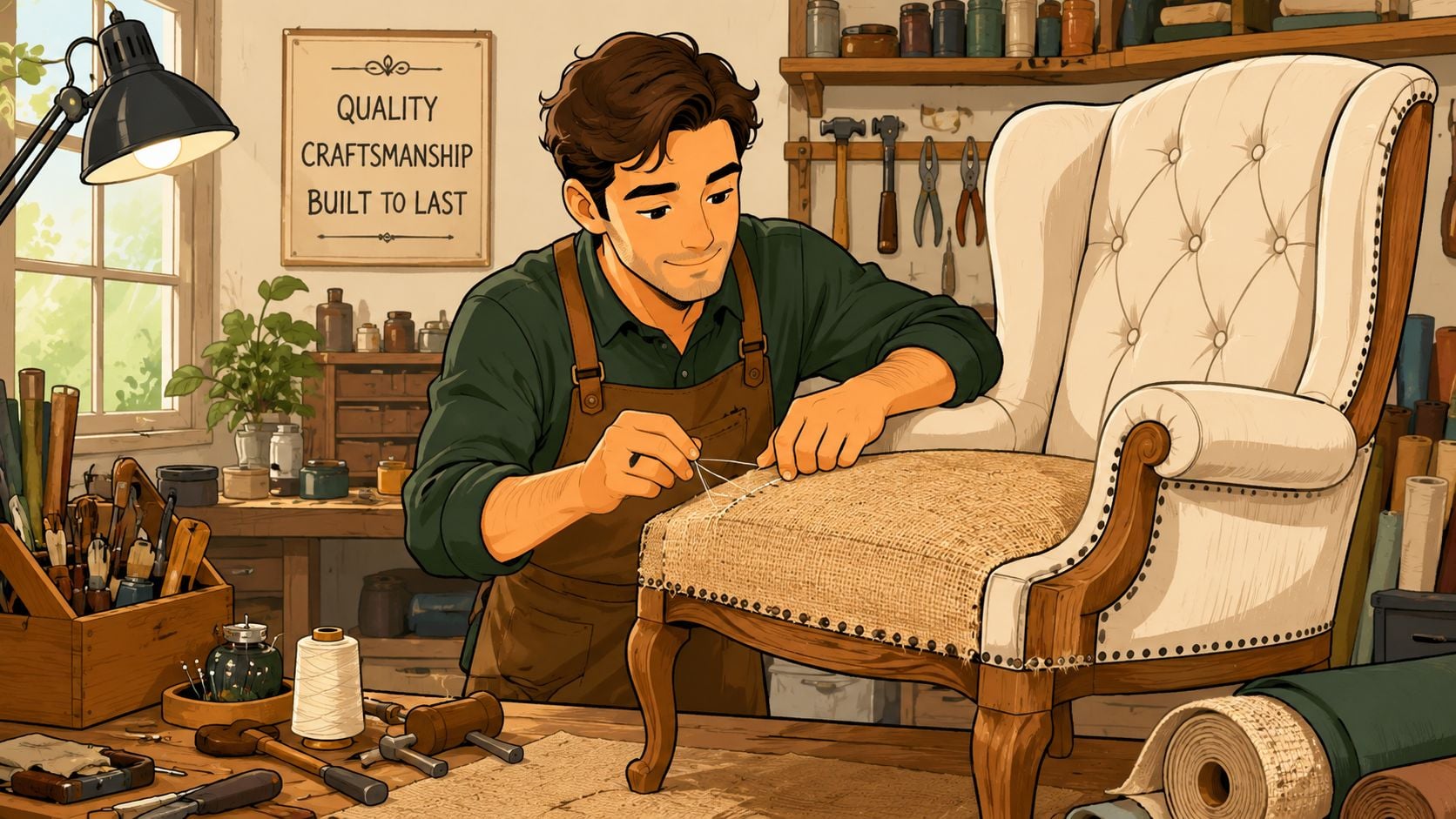
According to this overview of professional upholstery steps, the process begins with a structural evaluation of the frame and springs, followed by material selection, design pairing, and custom preparation like foam cutting, before a final quality assurance inspection verifies all details. That sequence matters because good outcomes come from solving structure first and style second.
What a thoughtful consultation should cover
A strong consultation usually moves through several layers of decision-making.
Structural review
The frame, springs, seat support, and padding are assessed first. If the foundation isn't sound, the design conversation needs to account for that.Lifestyle discussion
A home in Sanford with grandchildren, pets, and frequent entertaining needs different upholstery choices than a formal sitting room in Winter Park.Aesthetic direction
Fabric, texture, color, trim, and cushion style need to work with the room, not just with the piece in isolation.Room context
The furniture has to make sense alongside flooring, wall color, lighting, wood tones, and adjacent furnishings.
That's where a design consultant adds real value. A measured, in-person process usually avoids the two biggest upholstery mistakes. Choosing a fabric that looks right only under showroom lighting, and rebuilding a piece without considering how it will live in the room.
Why in-home context matters
A custom chair or sofa can be beautifully upholstered and still feel wrong if scale, color temperature, or silhouette are off. That's why many Central Florida homeowners benefit from a broader room-level conversation before final decisions are made.
For those planning around an existing layout or furnishing multiple spaces at once, interior design consultation services provide a practical way to align upholstery choices with the home as a whole.
The right fabric on the wrong scale still feels wrong. Good design solves the room, not just the piece.
What clients should bring to the first conversation
A productive consultation doesn't require technical knowledge. It helps to bring a few practical reference points:
- Room photos that show surrounding finishes and natural light
- Measurements of the piece and the space
- Inspiration images that reflect mood, not just exact replicas
- Honest usage notes about kids, pets, entertaining, and daily wear
Custom upholstery services should feel personal, but not vague. The best process combines warmth with precision. That's what gives a finished piece its polish.
How to Choose the Right Fabric for Florida Living
A sofa that looks perfect in the showroom can feel tired fast in Central Florida. I see it happen when a crisp natural fabric goes into a sunlit sitting room, or when a soft weave is asked to handle damp pool traffic, pets, and everyday use. The better approach is to choose fabric for the way the piece will live here, then choose the color and pattern within that range.

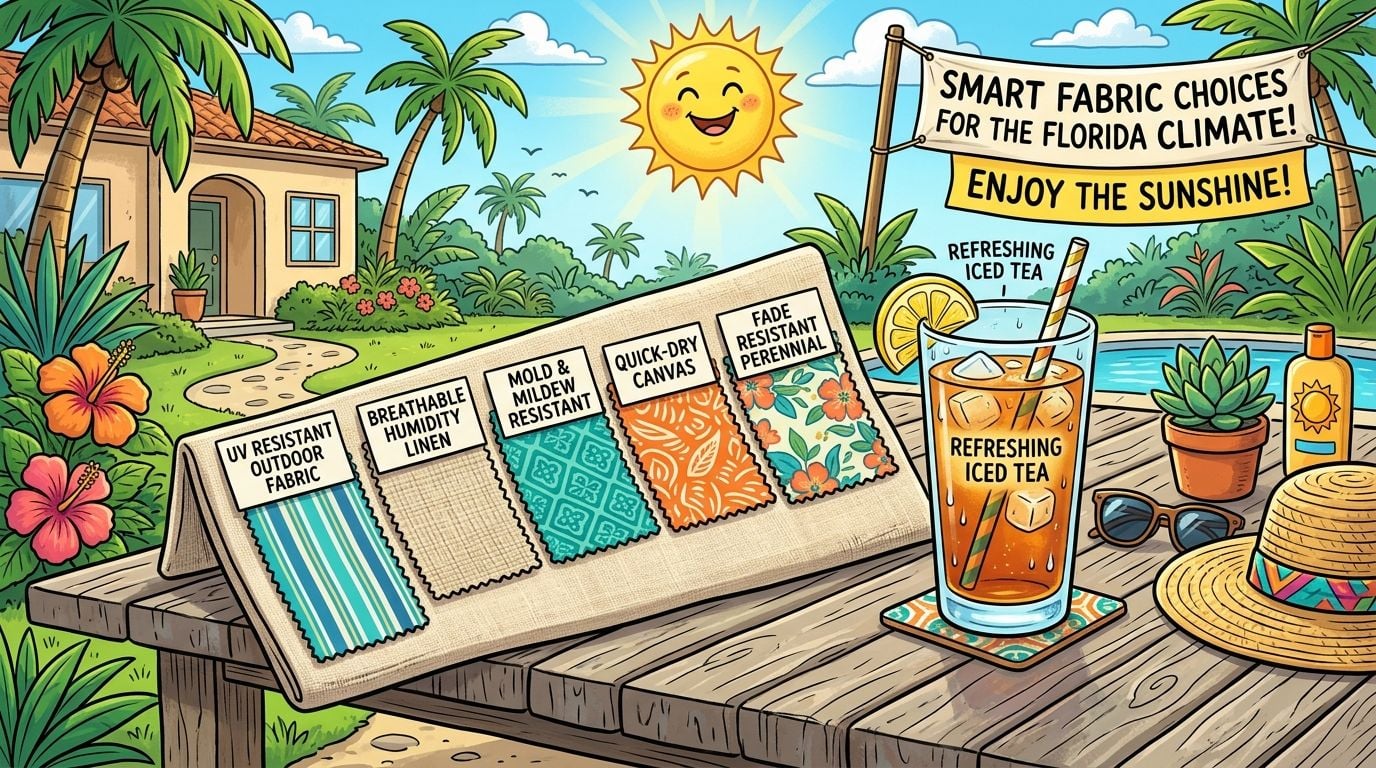
Central Florida homes ask more from upholstery than many clients expect. Strong daylight can fade color. Humidity can leave some fibers looking limp or tired. Rooms that open to lanais, pools, and patios often bring in more moisture, sunscreen, and general wear than a formal space in another climate.
What to prioritize before pattern and color
Start with placement. A bench in a bright breakfast nook needs a different fabric than a pair of occasional chairs in a shaded study.
These questions usually lead to the right decision:
- How much direct sun does the piece get each day?
- Will people use it daily, or only when guests visit?
- Do you need easier cleanup for spills, pets, or grandkids?
- Will the fabric still hold its shape and surface texture after regular use?
- Is this room air-conditioned year-round, or does it open frequently to outdoor humidity?
That last question matters more in Florida than many homeowners realize. A home in Winter Park with controlled interiors can support more delicate options than a casual lakefront room or a covered transition space in Longwood.
Fabric types that tend to work well here
No fabric solves every problem. Good upholstery work matches the textile to the room, the frame, and your expectations for upkeep.
Performance fabrics
A smart choice for family rooms, breakfast banquettes, and everyday seating. They usually offer better stain resistance and easier maintenance without sacrificing softness.Solution-dyed acrylics
These hold up well where sun and moisture are constant concerns, especially in rooms that blur the line between indoors and out.Top-grain leather
Leather can be a strong long-term investment in the right setting. It wears in rather than wearing out, but only if the hide quality is good and the room is not punishingly hot or sun-exposed.High-quality linen blends
Linen blends bring beautiful texture and a relaxed, tailored look. They are better suited to lower-stress rooms unless the blend includes fibers that improve durability.
For readers who want a closer look at natural fiber behavior, this article on comparing linen and cotton for sewing offers useful background.
Match the material to the room, not just the swatch
Experience saves money. A fabric can pass the hand test and still be wrong for the job if it pills too easily, shows every watermark, or loses its freshness after one Florida summer. At Slone Brothers, we guide clients toward choices that still look right a few years from now, not just on installation day.
If you want a practical starting point before narrowing options, our guide on how to choose upholstery fabric explains how durability, texture, and maintenance work together.
The best custom upholstery projects feel personal, but they also feel grounded. In Central Florida, heirloom quality comes from choosing materials that respect the climate as much as the design.
Understanding Your Project's Cost and Timeline
The cost of custom upholstery services depends on labor, materials, and the condition of the piece underneath the fabric. The timeline depends on complexity and material availability. Homeowners usually make better decisions when they understand both upfront.
The first cost driver is the furniture itself. A simple dining chair seat is one kind of project. A detailed sofa with new foam, spring work, welt detail, and pattern matching is another. Labor increases when the silhouette is more intricate or when the upholsterer needs to correct structural issues before any new fabric is applied.
What shapes the investment
Several factors usually determine where a project lands:
Fabric selection
Higher-grade textiles, specialty weaves, leather, and performance materials can affect the total significantly.Condition of the frame
Repairs to joints, springs, decking, or internal support add labor, but they're often essential to long-term results.Cushion rebuilding
New foam, wrap, and seat balance change both comfort and appearance.Decorative detailing
Tufting, skirt styles, nailhead trim, contrast welt, and complex seams require more handwork.
That's why transparent estimating matters. A serious upholstery project isn't priced like a quick cosmetic refresh. It's an investment in extending the life of a piece that already has value.
What timeline is realistic
According to the same professional process overview cited earlier, most projects require 2 to 4 weeks from evaluation to completion depending on material availability and job complexity. That range is reasonable for homeowners in Central Florida who want careful work rather than rushed work.
A realistic timeline usually includes:
| Project phase | What happens |
|---|---|
| Evaluation | Frame, support, and finish details are reviewed |
| Material ordering | Fabric and related components are confirmed |
| Preparation | Old upholstery is removed and repairs are handled |
| Execution | New materials are cut, fitted, and installed |
| Inspection | Final alignment, symmetry, and finish are checked |
A lower quote isn't always a better value if corners are being cut on prep, cushioning, or inspection. In a market like Orlando, where homeowners often want quality that lasts, the smarter lens is long-term value, not the cheapest immediate number. That's the spirit behind a Low Price Promise at this level of furnishing. Not bargain-basement work, but strong value for craftsmanship, service, and durability.
Your Local Partner in Craftsmanship and Quality
Custom upholstery services make the most sense when they're part of a larger commitment to quality. The furniture has to be worth restoring. The material choices have to suit Central Florida living. The guidance has to come from people who understand design, construction, and the way a home functions over time.

That's why heirloom-minded homeowners often think differently about furniture. They aren't furnishing a room for a quick cycle. They're building a home with pieces that deserve care, customization, and, when appropriate, restoration. As noted in this look at Amish craftsmanship and longevity, custom Amish furniture provides unmatched longevity and long-term value, as skilled woodworkers use careful joinery and select the best solid wood to ensure pieces last for generations, making them ideal candidates for reupholstery.
Why legacy construction changes everything
A well-made chair or sofa behaves differently over time. It can be repaired. It can be refinished. It can be reupholstered. That's the entire point of buying well in the first place.
This is especially relevant for homes furnished with pieces that reflect American-made and Amish-crafted values. Simply Amish and Mavin emphasize solid construction and customization. Stickley has a long heritage tied to enduring design principles. American Leather and Smith Brothers are often chosen for comfort engineering and made-to-order flexibility. Bassett, Craftmaster, Canadel, Amisco, Palasar, and Stressless each bring a distinct construction or comfort story that rewards an informed buyer.
One option available locally is Slone Brothers Furniture, a family-owned Longwood showroom serving Central Florida since 1980 with custom-order furniture, design support, delivery, and a curated mix of American-made and Amish-crafted lines.
Why local service still matters
For homeowners in Longwood, Orlando, Lake Mary, Sanford, and Winter Park, furniture decisions are easier when they happen face-to-face. Upholstery projects are tactile. Fabric has to be touched. Cushion comfort has to be discussed directly. Room context has to be understood by people, not automated prompts.
That kind of service matters before the sale and after it. White-glove delivery, follow-through, and long-term relationships are part of what make a premium furnishing experience feel complete.
A quality home isn't assembled by accident. It's shaped by good materials, careful choices, and people who know how to guide both.
A restored piece can carry history forward. It can also look entirely fresh. That combination is what makes custom upholstery such a valuable part of a well-designed Central Florida home.
Ready to invest in furniture that lasts a lifetime? Skip the online guesswork and automated digital chatbots. Visit the Slone Brothers Furniture showroom in Longwood, FL today. Connect face-to-face with experienced design consultants and get help transforming a worn but worthy piece into something beautifully customized for the way Central Florida homes really live. Want to explore American-made comfort, Amish-crafted quality, or complimentary in-home interior design services in person? Stop by the showroom and collaborate with a real design expert who understands craftsmanship, scale, and long-term value.