
Save Space Furniture: A Room-by-Room Guide for Florida Homes

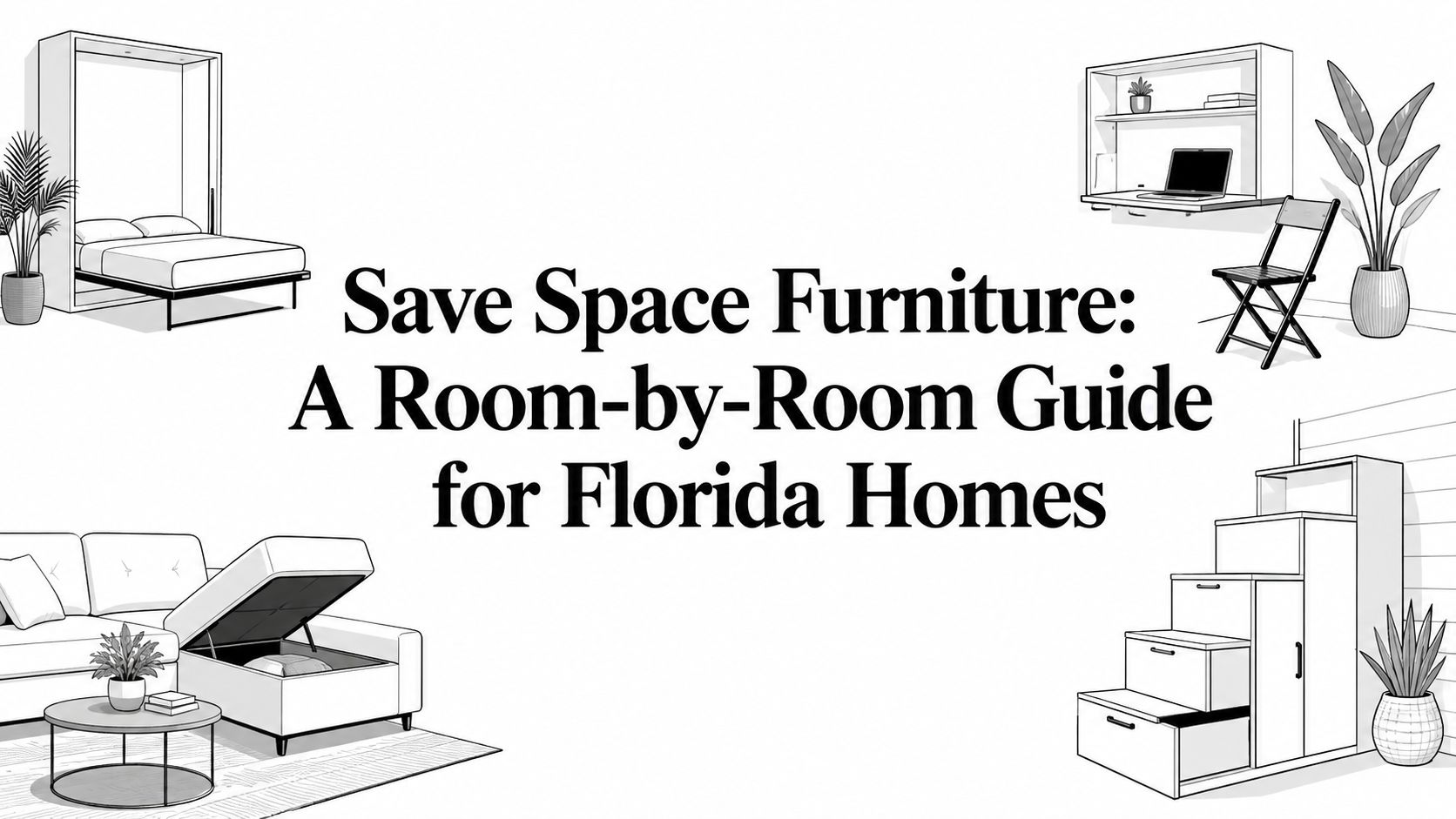
Many believe save space furniture means buying smaller pieces and living with less comfort. That's the wrong goal. In a well-planned Central Florida home, the objective is space-optimizing, choosing furniture that recovers floor area, improves circulation, and still feels substantial enough for daily use in Longwood, Orlando, Lake Mary, Sanford, Winter Park, or Altamonte Springs.
The market backs up that shift. Mordor Intelligence puts the space-saving furniture market at USD 12.62 billion in 2026 and projects USD 17.56 billion by 2031, with residential buyers accounting for 81.2% of revenue, which tells you this is a household-driven category, not a niche office trend (Mordor Intelligence). For Florida homeowners, that matters because the right piece should solve a layout problem without making the room feel temporary.
Why Space-Saving Furniture Is Really About Space-Optimizing
Save space furniture works best when it does more than shrink a footprint. The smarter approach is to recover usable area by giving one piece several jobs, while keeping comfort, durability, and visual balance intact. That's why serious buyers should think in terms of space-optimizing, not minimalism for its own sake.
Multifunctional furniture usually falls into three groups. Convertible furniture changes shape or function, space-saving furniture folds, stacks, nests, lifts, or conceals itself, and combination furniture merges two uses into one frame, such as a desk with hidden storage or a bed with shelving integrated into the surround (academic review). Those distinctions matter because each mechanism solves a different problem in a room.
Practical rule: the best piece is the one that replaces two or three single-purpose items without making the room harder to live in.
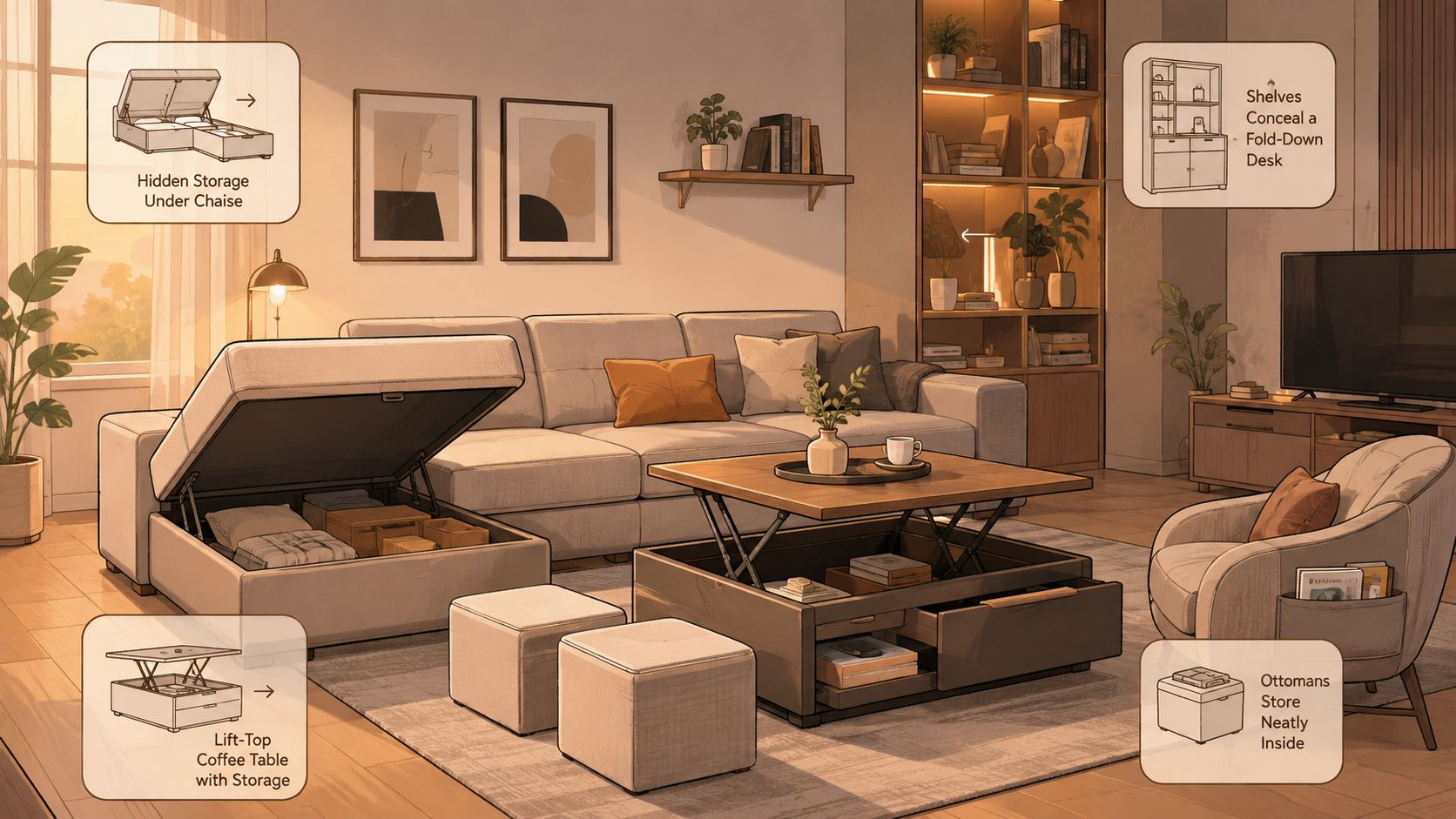
A thoughtful set of six multifunctional pieces can recover about 85 to 140 square feet in a typical 550-sq-ft one-bedroom apartment, depending on what each item replaces. That's a meaningful gain in a guest room, den, or compact Orlando condo because it changes how the room functions, not just how full it looks. A wall bed with shelving, a storage chaise, or a custom sofa with hidden compartments can each earn its place if the construction is right.
A useful comparison comes from small bathroom design for Melbourne homes. The same mindset applies here, use every inch intelligently, protect circulation, and choose pieces that solve real layout pressure instead of stuffing a room with tiny furniture.
For homeowners who want a practical framework, Slone Brothers' guide on how to choose multi-functional furniture for modern homes is the right place to start. The point is simple, buy fewer pieces, but make each one work harder. That's how a room starts feeling larger without becoming spartan.
Living Room Solutions That Preserve Comfort and Flow
The living room is where bad space-saving decisions show fastest. If a sofa feels flimsy, a coffee table blocks the path, or a sectional chokes off the room, the whole house feels crowded. The fix is not to buy smaller pieces, it's to buy better-shaped ones with the right mechanism, right scale, and right clearance.
Start with the seating, not the accessories
A storage sofa with a strong frame and quality cushions can anchor the room without adding extra cabinets. American-made pieces from brands such as American Leather and Smith Brothers are worth attention here because premium convertible construction usually means better frame reinforcement and more dependable hardware, which matters when a sofa is opened, closed, and sat on every day. Slone Brothers' living room furniture ideas for small spaces follows that same logic, slim arms, raised legs, modular pieces, and sectional layouts that don't waste corners.
Nesting tables deserve more respect than they usually get. They tuck away when the room is quiet, then expand when guests arrive, which keeps the floor visually open without forcing the homeowner to commit to one oversized table. A lift-top coffee table does even more work, since it can hide remotes, chargers, and throws while still giving you a hard surface for drinks and books.
Keep 18 inches between seating and a coffee table, and preserve 30 to 36 inches for main walkways. Those clearances come before style choices, because comfort collapses when circulation is squeezed.
Central Florida homes often lean toward open concept living, which sounds spacious until the furniture starts floating in the middle of the room. In those homes, a sofa with raised legs can make the room read lighter, a corner sectional can preserve the central path to the lanai, and a pair of chairs often works better than one bulky loveseat. The best layout doesn't just fit the room, it respects the routes people take from entry to kitchen to patio.
For shoppers who want a storage-first solution, Slone Brothers' custom upholstery options can support that approach without forcing a compromise on seat depth or cushion quality. That's where a showroom visit matters, because a living room piece has to feel right when someone sits down, not just look tidy from across the room.
Bedroom and Home Office Strategies for Dual-Purpose Rooms
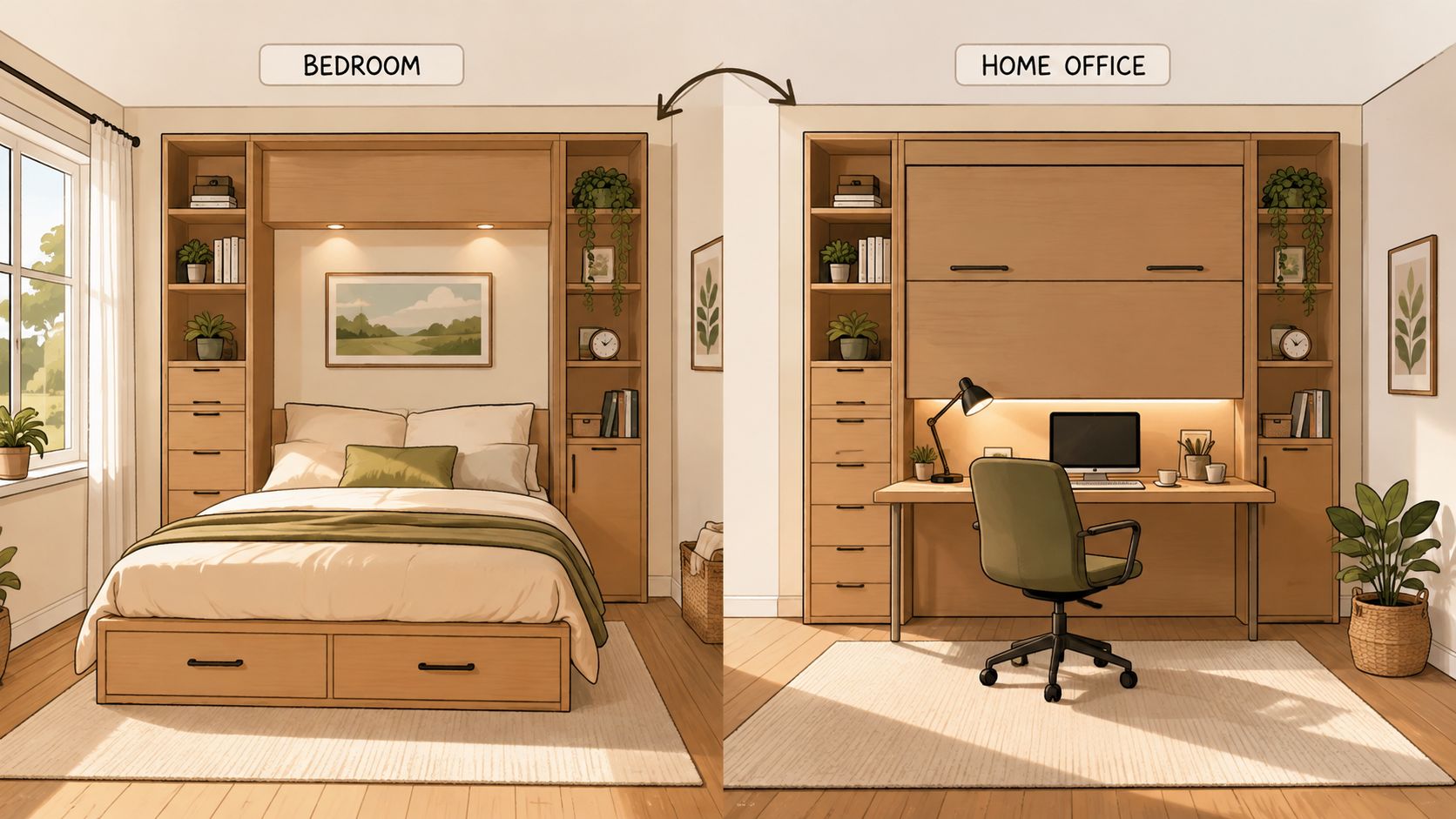
A bedroom that also serves as an office or guest room has to work harder than almost any other space. If the bed dominates the room all day, productivity suffers. If the desk feels temporary, the room never feels settled. The right answer is vertical, concealed, and built to disappear cleanly when the room changes purpose.
Use the wall and the height of the room
Murphy beds with integrated desks are the most efficient choice when a guest room must also support real work. A quality wall bed is often rated for 600 lbs, and the material mix of solid wood plus MDF shows why the structure matters more than the footprint alone. That kind of load tolerance is what separates a serious mechanism from a novelty piece.
Storage beds with drawers are the quiet workhorse of small bedrooms. They reduce the need for extra dressers and let bedding, seasonal clothing, or spare pillows stay close to where they're used. Bed risers add another layer of function by creating hidden storage underneath, while hanging lamps free up nightstand space for the items that need to be reachable.
A good office setup in a bedroom should also fold away cleanly. Wall-mounted desks, slim task chairs, and closed storage are the right trio when the room has to switch roles between workday and overnight guest use. If the desk can't disappear visually, the room will always feel like a compromise.
For readers who like a more visual planning reference, guide to small bedroom storage in Boston shows how much can be gained when furniture is selected for function first. The same principle applies in Florida, especially in homes where a guest room doubles as a home office.
Slone Brothers' desk and TV stand combo is a practical example of how one footprint can support more than one need. The right piece should still leave room for bedside movement, door clearance, and a proper seating position at the desk. If it can't do all three, it's not solving the room, only filling it.
Material Quality and Construction That Lasts
Space-saving furniture puts stress where cheap furniture fails first, at hinges, wall mounts, drawer glides, and joints. That's why buyers in Longwood and across Central Florida should judge these pieces by construction, not by how cleverly they fold. A compact piece that wears out quickly is a bad investment, no matter how neat it looks on delivery day.
Solid construction beats clever marketing
Solid wood frames hold up better than particle board in convertible furniture because they resist fatigue at the points that move and bear weight. That matters in storage sofas, drop-leaf tables, and wall beds, where repeated motion can loosen weak construction long before the upholstery looks tired. Heirloom-quality craftsmanship costs more up front, but it avoids the cycle of replacing furniture every few years.
Materials also affect comfort. High-density foam and down-wrapped cushions support longer sitting sessions better than thin, flattening fills, which is especially important for a sofa that doubles as a guest sleep surface. The seat has to feel inviting in the afternoon and still perform at night.
A good showroom question is simple, where does the stress land, and what material is carrying it?
Leather deserves the same scrutiny. Top-grade leather ages differently from bonded options, and in a convertible piece, that distinction becomes more important because seams, folds, and moving parts put the surface under more strain. The same goes for the engineering of pistons, hinges, and drawer glides, because those parts determine whether the furniture feels smooth in year ten or sloppy in year three.
A study-table-cum-bedside-table design reduced space use by about 35%, reduced material usage by 30%, and 87% of users reported a clear decrease in mess (IJNRD study). Those numbers point to something obvious but often ignored, well-designed multifunctional furniture can be spatially efficient and genuinely useful in daily life. The room gets calmer because the furniture is doing more, not because it's doing less.
For homeowners who prefer American-made and Amish-crafted pieces, Slone Brothers' American made solid wood furniture category is the right place to inspect the difference between a temporary fix and a long-term purchase. In a Florida climate, good materials and proper construction aren't luxury extras. They're the whole point.
Measuring and Planning for Awkward Room Layouts
Most rooms aren't perfect rectangles, and that's where generic furniture advice falls apart. A bedroom with two windows and a hallway entrance, a living room with a sliding glass door to the lanai, or a den with a diagonal traffic path all need furniture that respects the room's obstacles. The winning move is to measure circulation first, then choose the pieces that fit the movement pattern.
Plan around doors, windows, and natural light
Independent interior-design guidance recommends angling furniture, pulling pieces slightly away from doors and windows, and choosing chairs instead of a loveseat when a room needs lighter visual weight. That advice is useful because the problem isn't just square footage, it's conflict between furniture and movement. A room can have enough area on paper and still feel wrong if a door swings into a sofa arm or a window is blocked by a tall back.
Measure more than the wall where the furniture will sit. Check door swing clearance, window access, outlet positions, and the exact width of the walking path from entry to the next room. Slone Brothers' how to measure a room for furniture is the kind of planning tool that prevents expensive mistakes before a truck ever arrives.
A few rules make the process cleaner.
- Keep major circulation open: Main routes should stay clear enough that no one has to turn sideways to pass through.
- Protect light and sightlines: Furniture should sit off windows far enough that the room still feels bright, not boxed in.
- Respect the room's odd angles: In irregular spaces, a slight diagonal can improve flow more than forcing every piece against a wall.
A custom-sized piece often solves the issue better than a standard sofa or table. That's especially true in Florida homes with mixed-use rooms, where the furniture has to handle guests, family time, and day-to-day movement without blocking the house's natural rhythm. The goal is not to cram in more furniture. The goal is to let the room breathe.
A useful outside reference on furnishing oddly shaped rooms reinforces the same point, layout comes first, furniture comes second. The most elegant solution is often the one sized to the room, not the catalog.
How Custom Orders and Design Consultations Solve Space Challenges
Off-the-shelf furniture forces the homeowner to accept the manufacturer's idea of scale. That's a problem in small rooms, irregular spaces, and homes that need multiple uses from one area. Custom-order furniture gives control back to the homeowner, which is why it so often outperforms a generic compact piece.
Fit the room instead of fighting it
A seasoned design consultant starts with the room's actual use. That means traffic patterns, the size of nearby openings, the height of adjacent furniture, and the way the family really lives in the space. In a Longwood showroom, that kind of conversation is more useful than scrolling through endless product tiles because it turns a vague wish for “something smaller” into a specific plan.
Custom orders can solve problems that standard pieces can't touch. A storage sofa can be sized to preserve a walkway, a built-in-style entertainment center can keep electronics off the floor, and a dining table with extension leaves can stay compact day to day while still handling gatherings. Canadel and Stickley are good examples of brands that can be customized to exact dimensions and finish preferences, which matters when the room needs precision rather than a forced fit.
The right custom piece doesn't just occupy space. It changes how the room works.
Slone Brothers also offers complimentary in-home interior design services, which is especially valuable when a room has to support more than one function. A consultant can evaluate the door swing, window placement, and scale of the pieces already in the home, then recommend a configuration that respects those limits. That process tends to produce better long-term satisfaction because the furniture is chosen for the house, not for a generic floor plan.
A family-owned showroom has another advantage, accountability. Since 1980, Slone Brothers has built its reputation in Central Florida on face-to-face guidance, custom ordering, and service after the sale. That matters when a homeowner is investing in something expected to last for years, because the best result comes from real conversation, not automated guesswork.
Visit Our Longwood Showroom to Experience Space-Saving Solutions
A room that feels crowded on a screen can feel completely different in person. That's why testing a mechanism, opening drawers, sitting on the cushions, and checking real clearance in a showroom beats guessing from photos every time. In Longwood, the most practical path is still the old-fashioned one, talk to an experienced design consultant, touch the materials, and confirm the proportions before buying.
Slone Brothers Furniture has served Central Florida since 1980, offers complimentary design services, white-glove delivery, and a Low Price Promise on quality pieces that are meant to last. For homeowners in Orlando, Lake Mary, Sanford, Winter Park, or Altamonte Springs, that combination makes space-saving decisions far less risky because the furniture is chosen with the room, the climate, and the family's daily routine in mind. If the goal is long-term value, a showroom visit is the right next step.
Ready to invest in furniture that lasts a lifetime? Skip the online guesswork and automated digital chatbots. Visit Slone Brothers Furniture in Longwood, FL today, and let experienced design consultants help turn cramped rooms into polished, functional spaces with custom solutions built for Central Florida homes.