
Best Desk and TV Stand Combo Styles for 2026

Trying to work from home in the same room where you relax at night is one of the most common layout puzzles we see in Central Florida. A spare bedroom becomes an office and media room. A Lake Mary condo needs one wall to handle a laptop, a TV, speakers, and storage. A smaller new build in Orlando has open living space, but not a true dedicated office.
That's where a desk and tv stand combo starts to make real sense. Instead of forcing separate pieces into one room, you use one furniture solution that supports both work and entertainment in a cleaner, more intentional way. This category grew in popularity around 2010 as multifunctional furniture became more important in smaller urban homes, where apartments averaged under 800 square feet in major U.S. markets, according to Dimensions.
A well-designed combo doesn't just save space. It also helps the room feel calmer because you're reducing visual clutter, consolidating storage, and giving each activity a proper place. If you're also thinking through the bigger look of the room, these expert living room design tips can help you tie the whole space together.
For homeowners who want more ideas on making one room work harder, our guide to multifunctional home office furniture is a helpful next step.
The Smart Solution for Your Orlando Home Office and Living Room
A desk and TV area often start out as two separate purchases. You buy a desk because you need a place to work. Later, you add a media console because the TV has nowhere to go. Then the room feels crowded, cords multiply, and the layout starts fighting itself.
A combo piece solves that problem at the furniture-planning level.
In a compact Sanford townhome, that might mean a single wall unit with a desk surface below a mounted screen. In a downtown Orlando apartment, it could be a slim media console with a workspace tucked into one side. In a family room in Longwood, it may be a larger built-in style arrangement that hides work essentials when the day ends.
Practical rule: The best multifunctional furniture doesn't ask one piece to do everything badly. It asks one piece to do two jobs well.
What makes this especially useful in Central Florida is how often rooms need to flex. People work remotely, host family movie nights, manage school assignments, and charge devices in the same shared spaces. Furniture has to keep up with real life, not just look good in a catalog.
A smart combo also helps visually separate your day. When your keyboard, notepads, modem, and charging cords all have a designated home, the room can shift from “work mode” to “evening mode” without feeling chaotic. That's a big difference in homes where every square foot matters.
What Exactly is a Desk and TV Stand Combo
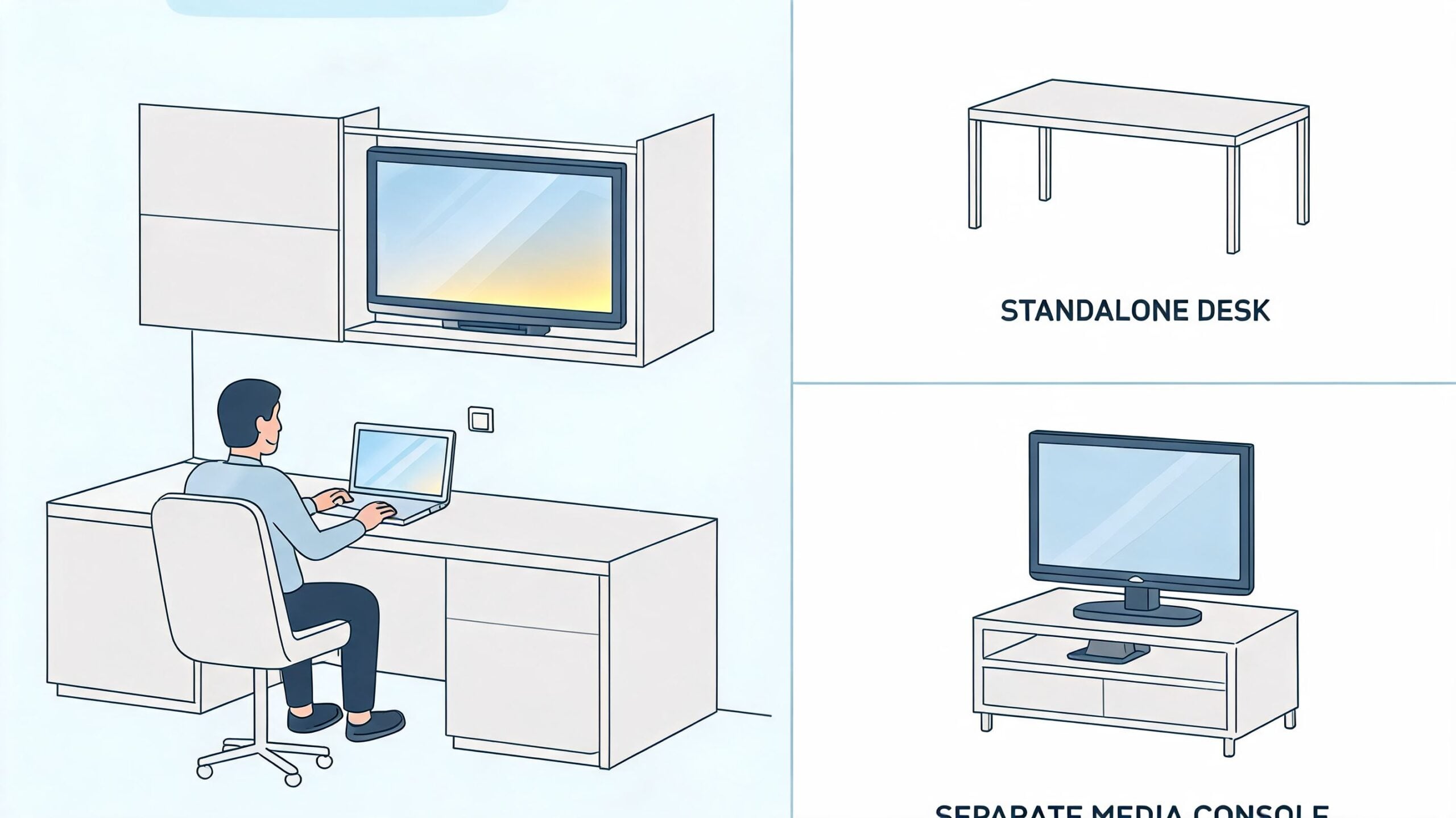
A desk and tv stand combo is a single furniture unit that combines a usable work surface with a dedicated TV-supporting structure. It's more integrated than placing a small desk beside a media console, and more practical than trying to use a standard TV stand as a workstation.
The idea is simple. One piece anchors your screen, electronics, and storage while also giving you a place to sit down and work.
How this furniture category developed
These pieces didn't appear out of nowhere. Their roots go back to the mid-20th century, when televisions first became common household items and people needed furniture designed around them. As TV technology changed from bulky cabinet-style sets to slimmer flat screens, furniture changed too.
Early TV furniture focused on concealment. Modern combinations focus on multifunctional use, integrated electronics, and smaller-space planning. By the time flat-screen TVs became standard, it made sense for designers to merge media storage with workspace needs.
What it usually includes
Most combo units include a few shared traits:
- A defined desk surface that can support a laptop, keyboard, writing tasks, or a compact monitor setup
- A TV placement zone such as a stand top, back panel, or mount-compatible section
- Storage elements like drawers, cabinets, shelves, or open cubbies
- Cord control features that help prevent visible cable clutter
- A layout that supports dual use so the room doesn't feel split into unrelated zones
Some are very sleek. Others are closer to full entertainment walls with an attached desk return.
Common forms you'll see
Not every combo looks the same, and that's where people often get confused. The term can describe several layouts:
| Type | Best for | What it looks like |
|---|---|---|
| Wall-mounted combo | Tight rooms | Floating desk surface with TV bracket above or nearby |
| Media console with desk extension | Shared living areas | Standard console shape with one side adapted for work |
| Full wall unit | Larger dens or flex rooms | TV center with shelving and a built-in desk zone |
| Convertible design | Rooms with changing needs | Desk area that tucks away or shifts visually after work |
A true combo should feel intentional from every angle. If it looks like two unrelated pieces shoved together, it usually functions that way too.
That's why proportion matters so much. The desk section needs to feel comfortable for daily use, while the TV side still needs to look balanced in the room.
Key Benefits for Your Central Florida Home
Some furniture categories sound clever in theory but don't hold up in daily life. A desk and tv stand combo usually does, especially in homes where one room has to serve more than one purpose.
The biggest advantage is simple. You stop dedicating separate floor space to separate functions.
For many households around Orlando, Lake Mary, and Longwood, that matters. In Greater Orlando, median home size is around 1,800 square feet, and for hybrid workers, comfort matters just as much as square footage. A 2025 Cornell University Ergonomics Lab study cited in this background material found that 62% of remote workers reported back pain from non-ergonomic setups, as noted in this remote-work furniture reference.
Why this works well locally
In Central Florida, rooms often do double duty. A guest room becomes a weekday office. A living room corner becomes a workstation. A loft has to support homework, streaming, and video calls.
A combo can help in a few practical ways:
- It reduces crowding by replacing two pieces with one coordinated solution.
- It creates visual order because electronics, work tools, and storage live in one footprint.
- It helps define a work zone without making the room feel like a corporate office.
- It supports everyday flexibility when different people use the same room for different tasks.
If you're trying to map out where a combo could go, our room layout planning guide can help you think through traffic flow and wall placement before you shop.
It makes hybrid work feel more intentional
A lot of people aren't working from a full office. They're working from a corner of the family room, a loft landing, or a multipurpose den. That's exactly where these pieces shine.
Instead of balancing a laptop on a console or squeezing a desk into an already busy room, you create one defined station that feels planned. The result is usually better posture, fewer loose accessories, and less mental clutter overall.
It can improve how the room feels after hours
This benefit is easy to overlook until you live with it. A room with a coordinated combo usually feels calmer at night because there isn't a random office desk competing with the entertainment setup.
When the furniture itself organizes the space, you don't have to work as hard to make the room feel finished.
That's especially helpful in open-plan homes, where every visible surface affects the whole room.
Sizing Your Combo for Perfect TV and Desk Compatibility
Sizing mistakes are where good intentions go wrong. A combo can be beautifully made and still feel awkward if the TV overwhelms it, the desk surface is too shallow, or the overall piece crowds the room.
The first measurement to get right is the relationship between the TV width and the stand width.
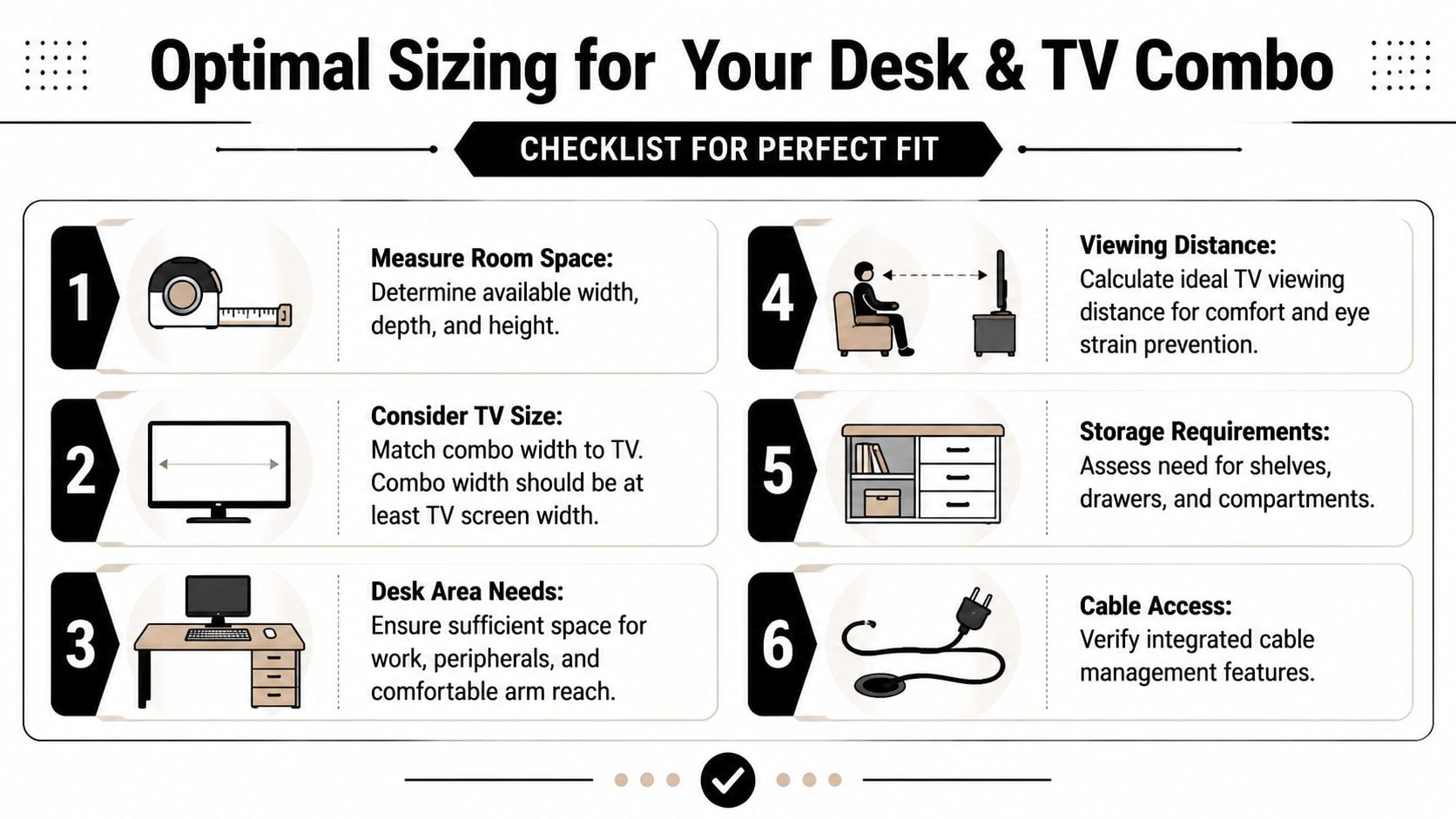
According to this TV stand size and height guide, the TV's diagonal size shouldn't exceed the stand's width by more than 8 inches. The same guide notes that a 55-inch TV, typically 48 to 49 inches wide, needs a console that is at least 58 inches wide for stability. It also notes that standard stand heights of 31 to 34 inches place the screen center at the ideal 42 inches from the floor for couch viewing.
Start with the TV, then build around it
People often do this backward. They fall in love with the furniture first, then hope the television fits.
A better approach is:
- Measure the actual width of your TV, not just the marketed diagonal size.
- Confirm the combo gives the screen enough support and visual margin.
- Check whether the desk section still leaves usable work surface after the TV zone is accounted for.
If you're unsure how to capture the right dimensions for your room and existing pieces, our furniture measuring guide is a good resource.
The desk side needs its own evaluation
A combo isn't successful just because the television fits. The desk portion still needs to support how you work.
Look closely at these questions:
Laptop only or full setup
A simple laptop station can use a smaller footprint than a setup with monitor, keyboard, mouse, and printer.Seated work or occasional use
If you only pay bills there, a compact surface may be enough. If you work there daily, you'll want more elbow room.Open leg space
Storage is useful, but not if it prevents comfortable seating.Nearby accessories
Think about soundbars, gaming systems, modems, or decorative pieces that also need room.
A quick compatibility check
| Question | Why it matters |
|---|---|
| Does the TV fit the width guidelines? | Safety and visual balance |
| Is the screen height comfortable from the sofa? | Better viewing posture |
| Can the desk hold your actual work tools? | Daily usability |
| Is there room for cords and electronics? | Cleaner setup, less frustration |
| Will drawers or doors open fully? | Function in real spaces |
Bigger isn't always better. In a smaller room, the right-sized combo often feels more refined and works better than an oversized statement piece.
When you get the measurements right, the room feels settled. When you don't, even a premium piece can feel like a compromise.
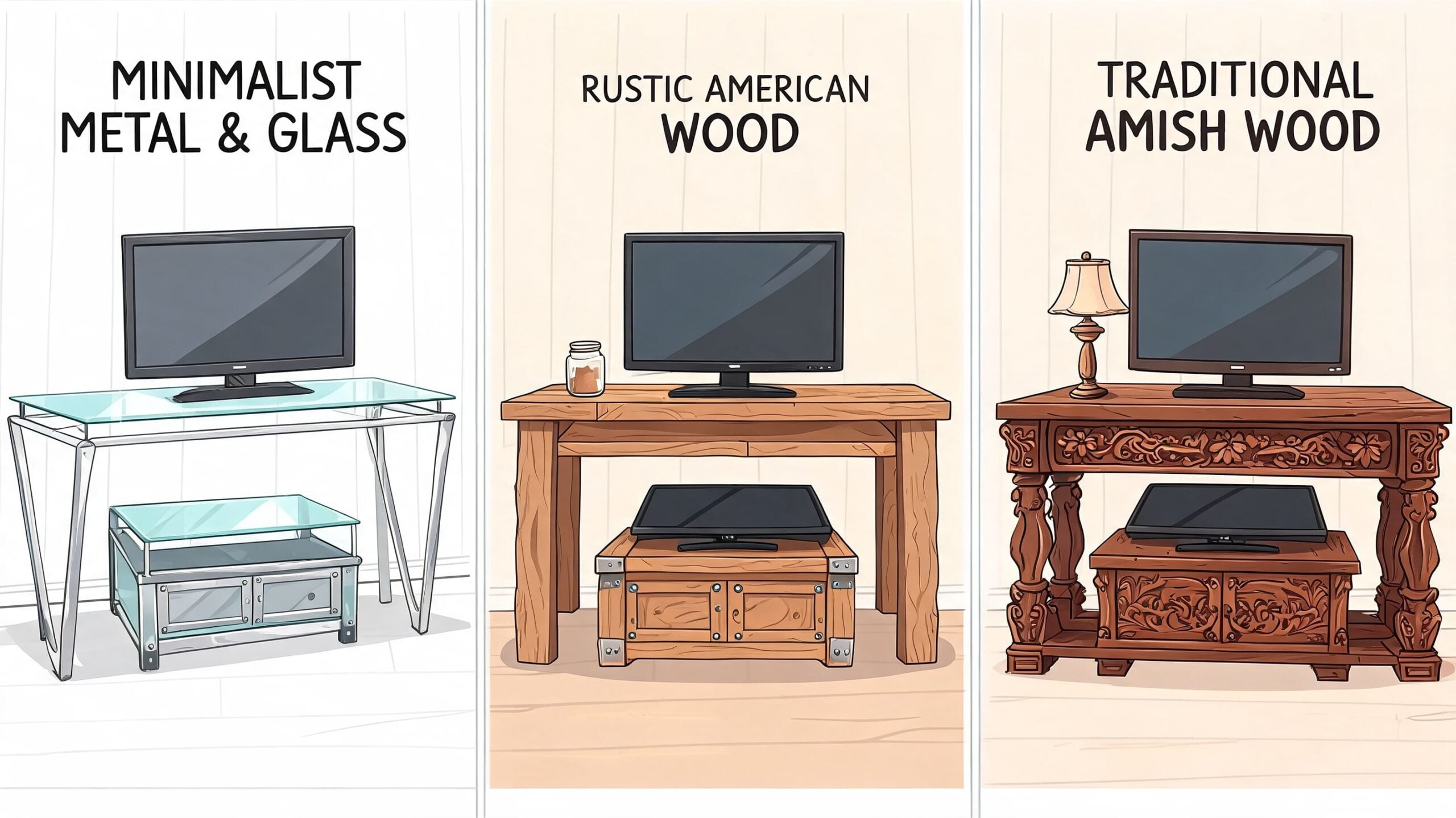
Exploring Materials and Styles from American-Made to Amish
Once the size works, the next question is what the piece is made of. This matters more with a desk and TV combo than many people expect, because the furniture is doing daily-duty work. It supports electronics, handles repeated use, and often becomes one of the most touched pieces in the room.
That's why construction quality deserves a closer look.
What changes from one material to another
Mass-market units often rely on engineered materials with printed finishes. Those can work for short-term needs, but they don't usually age the same way as solid wood construction.
Solid hardwood pieces tend to offer better long-term stability, repairability, and visual depth. That's one reason many homeowners looking for lasting value focus on American-made furniture options, especially when furnishing a primary living space instead of a temporary room.
Here's a simple comparison:
| Material type | Typical strengths | Common tradeoff |
|---|---|---|
| Engineered wood with veneer or laminate | Accessible style, lighter weight | Less character over time |
| Solid hardwood | Durability, refinish potential, richer grain | Heavier, often a bigger investment |
| Mixed-material construction | Useful for modern looks | Quality varies a lot by maker |
Why Amish and American-made pieces stand out
Amish-crafted and American-made furniture often appeals to shoppers who are tired of replacing furniture every few years. The value isn't just in the look. It's in the joinery, wood selection, finish options, and overall longevity.
Brands such as Simply Amish and Mavin are good examples of what many homeowners want in this category. They're often chosen when someone needs a piece that fits a real home for the long haul, not just a fast shipment and a temporary fix.
The best desk and media pieces don't just match your room today. They still make sense when your needs shift a few years from now.
Matching the style to the room
Style should support the architecture and mood of the home. A combo can disappear into the room beautifully or pull too much attention if the design language is off.
A few common directions include:
Minimalist
Clean lines, lighter visual weight, hidden storage, simple hardwareRustic or organic
Heavier wood presence, warm finishes, visible grain, more textureTraditional
Framed cabinet details, deeper stain tones, classic symmetryIndustrial-inspired
Wood paired with metal, open shelving, stronger contrast
If your home leans modern, a slim profile works well. If the room already includes classic case goods, a more substantial wood design usually feels more at home.
Designing for Comfort Ergonomics and Cable Management
A desk and tv stand combo has to do more than fit the room. It has to feel good to use. That means paying attention to body position, viewing angles, and the small details that keep the setup neat.
Many shoppers make an understandable mistake. They focus on finish and storage, then treat ergonomics as an afterthought.

What comfortable positioning looks like
According to this ergonomic desk and entertainment center reference, monitor screens should sit 20 to 26 inches from your eyes with a 15 to 20 degree downward viewing angle. The same reference notes that height-adjustable TV lift mechanisms with two positions, one for work and one for entertainment, can reduce musculoskeletal disorders by up to 25%.
Those numbers matter because work posture and viewing posture are not the same thing.
When you're using the desk, the screen often needs to be closer and lower. When you're watching from a sofa, the screen position changes. A combo with adjustability can handle both more gracefully than a fixed arrangement.
Small ergonomic choices that matter
You don't need a complicated setup to make a combo more comfortable. Focus on the basics:
Screen placement
Keep the display at a comfortable line of sight for the task you're doing.Chair pairing
The desk height and seat height need to work together. If you're choosing seating for regular use, our guide to ergonomic office chairs can help.Arm reach
You shouldn't have to hunch forward every time you type.Leg clearance
Drawers and support panels shouldn't crowd your knees.
A combo works best when it supports both focus and relaxation. If one mode feels strained, the design isn't finished yet.
Why cable management matters more than people think
Cords are often what make a multifunction room feel messy. Even a beautiful piece can lose its appeal when charging cables, HDMI cords, power strips, and modem wires are visible from every angle.
Look for built-in wire channels, pass-through holes, rear access panels, and enough concealed space to route cords without stuffing everything behind the unit. If you're sorting through connection types for TVs and accessories, these HDMI 2.1 and optical audio tips are a useful technical companion.
Smart features are also becoming more relevant. Built-in charging, integrated power access, and cleaner device storage can make the furniture easier to live with every day.
Create Your Custom Solution at Slone Brothers
A lot of desk and tv stand combo options on the market ask you to adapt your room to the furniture. That's usually the wrong way around. The better approach is to choose or customize a piece around how your room functions.
That matters even more in Central Florida homes, where floor plans vary so much. One homeowner needs a slim combo for a condo wall. Another needs a larger unit for a family room that doubles as a weekday office. A third wants a cleaner setup with hidden wiring and a more furniture-grade look than most ready-to-assemble options offer.
Why custom matters in this category
A custom or made-to-order piece can solve the details that standard sizes often miss:
- A better width for your wall
- A finish that works with your flooring
- Storage placed where you need it most
- A desk height that feels more natural
- Integrated features for modern electronics
That flexibility is especially useful for shoppers who want quality materials and a more customized result. It's also useful for anyone trying to avoid the “one-size-fits-someone-else” problem that happens with mass-market furniture.
Smart features are becoming part of the conversation
Technology expectations are changing. A 2025 Houzz report noted that 73% of Orlando homeowners seek voice-activated desks/TV units, but relatively few combos offer that capability, according to this smart office and entertainment furniture reference.
That helps explain why custom planning is becoming more attractive. If you want a cleaner tech setup, better device integration, or a piece built around your specific room, customization gives you more control than an off-the-shelf unit.
For homeowners thinking through cable routing before they finalize a design, this network cabling guide from Constructive-IT is a practical read.
What to bring when you shop in person
If you want useful guidance, come prepared with the basics:
- Room measurements including wall width and nearby door swings
- TV size and whether it sits on a base or needs mounting support
- Your work habits such as laptop-only use or a fuller desk setup
- Photos of the room so finishes and scale can be discussed accurately
That's usually enough to start narrowing the options in a meaningful way.
Ready to find the perfect piece for your home? Visit Slone Brothers Furniture in Longwood, FL, and let our design experts help you get started. As a local, family-owned showroom serving Greater Orlando since 1980, we offer quality furniture, Amish and American-made options, a robust custom-order program, complimentary in-house design services, home delivery, flexible financing, and a Low Price Promise built around long-term value.