
A 30 Console Table Guide for Your Orlando Home

A blank entry wall can make an otherwise finished room feel unresolved. The same goes for that narrow strip behind the sofa, or the hallway that looks empty but still needs to stay easy to walk through. In many Central Florida homes, a 30 console table solves exactly that problem because it adds surface space, style, and function without the bulk of a deeper case piece.
Around Longwood, Lake Mary, and Sanford, these are some of the most common furniture questions local homeowners bring into the showroom. They don't need a huge statement piece. They need something that fits the space, works with traffic flow, and still looks intentional.
Console tables also have real design history. Their origins trace back to 17th-century France, where they began as small ornamental pieces before becoming a more functional furniture category, as noted in this history of the console table. That long design lineage helps explain why they still work in entryways, living rooms, bedrooms, dining rooms, and compact work areas today.
Since 1980, Slone Brothers has helped Central Florida families sort through choices like these with a practical eye. A good console table isn't just about style. It's about proportion, placement, and daily use.
Table of Contents
- Introduction The Perfect Piece for That Awkward Space
- What Does a 30 Console Table Really Mean
- Measuring for the Perfect Fit in Your Orlando Home
- Exploring Styles and Materials from American-Made to Amish
- How to Place and Style Your Console Table
- Your Vision Your Style Custom Options at Slone Brothers
- Find Your Perfect Console Table in Longwood
Introduction The Perfect Piece for That Awkward Space
Some spaces are too small for a dresser, too exposed for a bookcase, and too important to leave empty. That's where a console table earns its place. It can soften a bare wall, give an entryway a useful landing spot, or anchor the back of a sofa without making the room feel crowded.
That versatility is part of why the category has lasted for centuries. A console table moved from aristocratic settings into everyday homes over time, becoming a practical piece for smaller homes and apartments as well as larger interiors, according to this console table guide. For homeowners across Orlando and Central Florida, that flexibility matters. One piece can shift from decorative accent to working surface depending on the room.
A console table often succeeds because it's narrow enough to respect the room, but useful enough to change how the room functions.
The phrase 30 console table can sound simple, but it often creates confusion. Some shoppers think it refers to overall width. Others assume it means a low profile piece. In practice, the dimensions and intended use matter more than the label alone.
What Does a 30 Console Table Really Mean
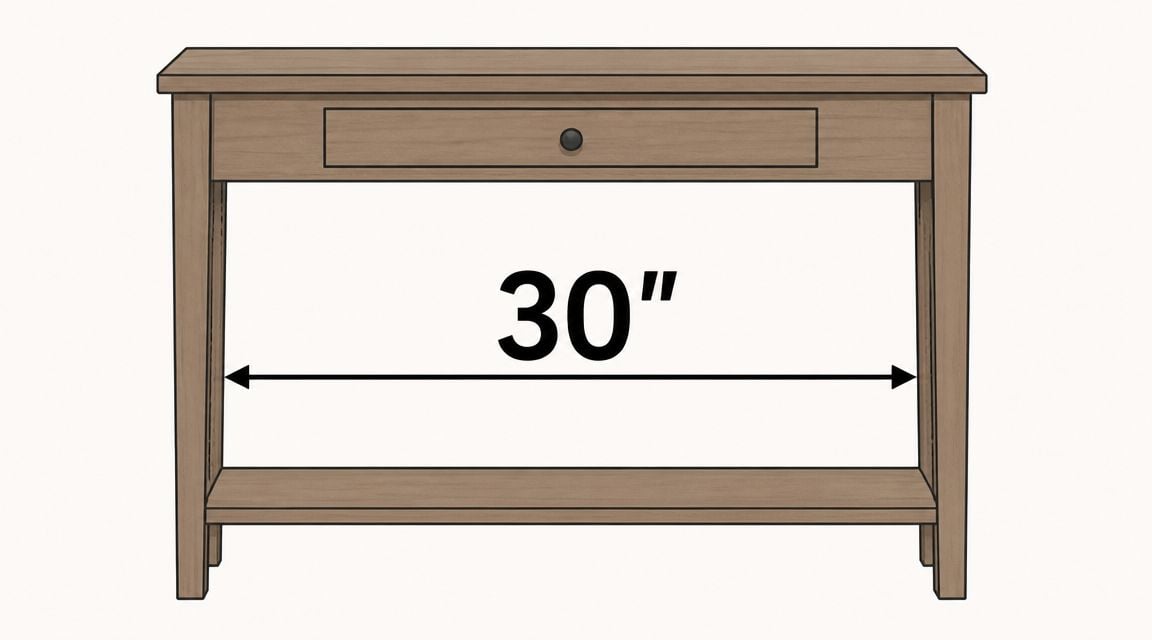
Many shoppers search for a 30 console table and expect one exact format. Furniture sizing doesn't work that neatly. In most residential settings, the most common console table specification is about 30–32 inches high, with 12–18 inches of depth for decorative use and 18–24 inches of depth when more storage or buffet-style function is needed, according to this console table dimensions guide.
Height first, then depth and length
In everyday furniture shopping, “30-inch console table” often points to height, not width. That's why a table can be described this way even when it's much longer across the wall.
A standard-height console works well for standing tasks and visual balance. It's comfortable next to an entry door, behind a sofa, or under artwork because it usually lands at a familiar, usable height.
Depth changes the purpose:
- Shallower depth works well for a lamp, tray, small plant, or framed photos.
- Medium depth gives a little more flexibility for baskets or a larger decorative arrangement.
- Deeper tops can support serving pieces, stronger storage needs, or buffet use.
Why shoppers get tripped up by the term
The confusion usually happens because online filters and showroom labels don't always describe the same dimension first. A shopper in Longwood might search for a 30 console table thinking about a short wall near the front door, while the product category may be organized by height.
That's why the full measurement set matters more than the phrase alone. A practical way to think about it is this:
| Dimension | What it affects |
|---|---|
| Height | How the table feels beside the body and under art or a mirror |
| Depth | How much walking space stays open |
| Length | How well the piece fits the wall and looks scaled to the room |
Practical rule: A console table should solve a space problem, not create a circulation problem.
For many Orlando-area homes, especially those with narrower entries or open-plan rooms, understanding those three dimensions early helps narrow the choices much faster.
Measuring for the Perfect Fit in Your Orlando Home
The most common mistake with a console table isn't style. It's buying one that technically fits the wall but doesn't fit the room. In homes around Central Florida, that shows up in entryways that feel squeezed, hallways that become obstacle courses, and sofa tables that sit awkwardly far from the seating.
Start with the room, not the product tag
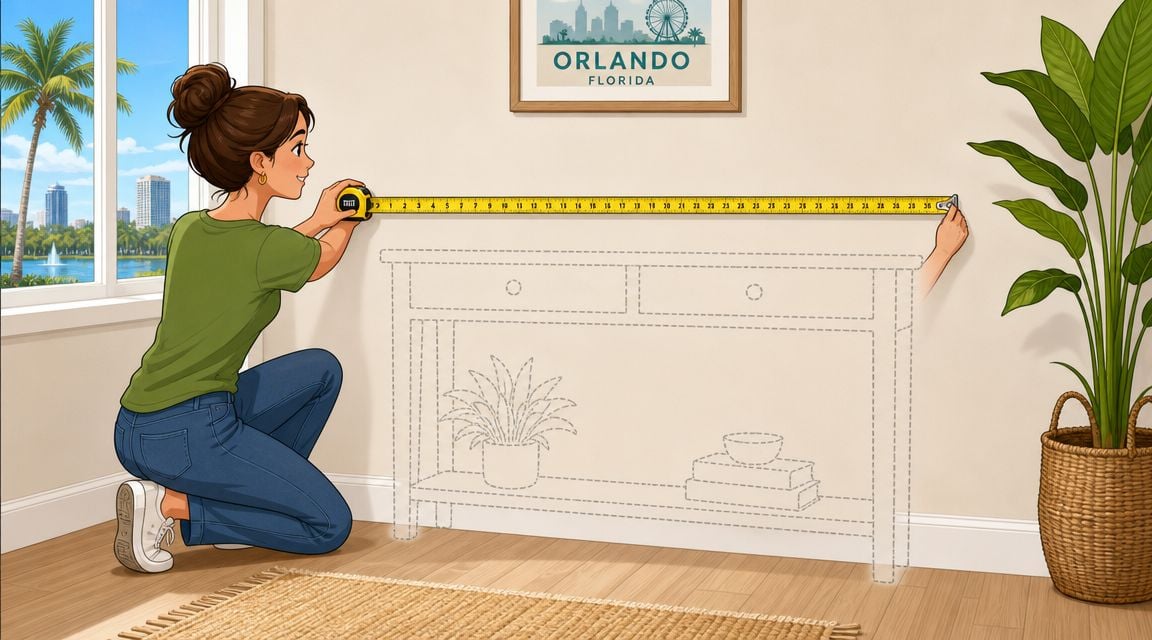
Neutral design guidance emphasizes that walkways need about 30–36 inches of clearance, and a console placed behind a sofa should sit only 4–6 inches from the sofa back, as explained in these console table placement rules. That single idea changes how a shopper should measure.
A good measuring process looks like this:
- Mark the usable wall space. Measure the section that's available after accounting for trim, outlets, vents, and door swings.
- Measure the walking path. This matters more than the wall width in a hallway or entry.
- Check nearby furniture. Behind a sofa, the table should feel connected to the seating, not detached from it.
- Test the footprint on the floor. Painter's tape helps show the extent of the intrusion into the room.
For homeowners who want more help with room planning, this guide to measuring a room for furniture gives a useful starting point.
Two common Central Florida layouts
Entryways in Central Florida often have one of two challenges. They're either narrow and direct, with little extra wall depth, or they open into a larger living area where scale becomes the issue. A too-small console may look lost, even if it technically clears the walkway.
Behind a sofa, the problem is different. The table needs to relate to the length and presence of the seating. If it's undersized, the room can look accidental. If it's too deep, the entire conversation area starts to feel compressed.
Smaller isn't always safer. A tiny console can still interrupt movement while also looking visually disconnected from the room.
A quick comparison helps:
| Placement | Main concern | What to watch |
|---|---|---|
| Entry wall | Traffic flow | Door swing, walkway, and daily drop-zone use |
| Hallway | Clearance | Comfortable passage and visual weight |
| Behind sofa | Proportion | Gap to sofa and balance with seating scale |
Thoughtful measuring pays off. The right console table doesn't just fit the tape measure. It fits how the household moves through the room.
Exploring Styles and Materials from American-Made to Amish
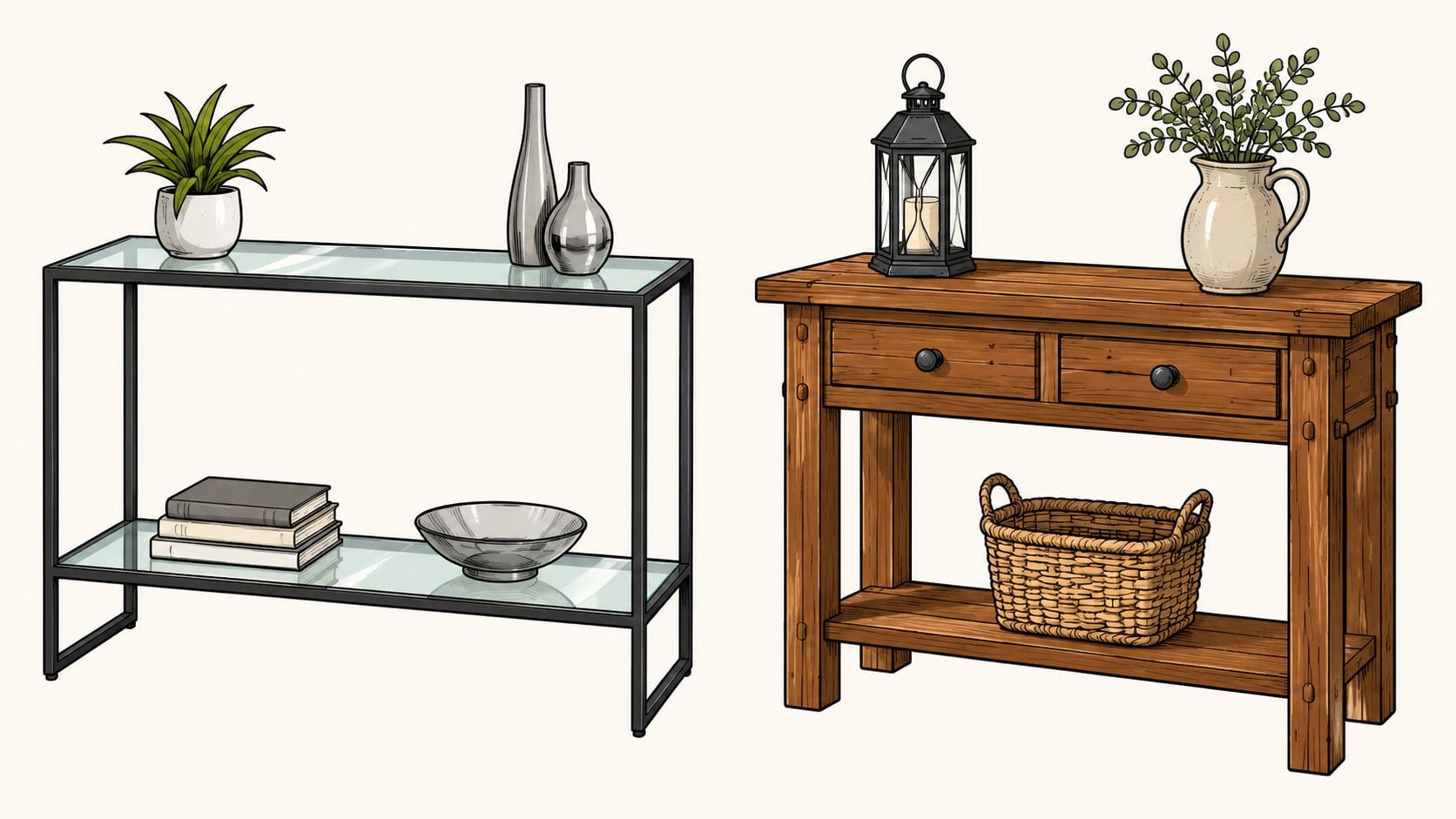
Material choice changes how a 30-inch console feels in the room. In many Central Florida homes, that matters as much as the silhouette. The same table size can read light and easy in a bright Winter Park entry, or heavy and crowded in a tighter Longwood hallway, depending on what it is made from and how it is finished.
Match the material to the room
Lighter woods often suit the relaxed, sunlit look many Florida homeowners want. They reflect light instead of absorbing it, which helps an entry or living area feel open. If your home already has pale flooring, woven accents, linen textures, or soft neutral upholstery, a light wood console usually fits in without asking for too much attention.
Metal-and-wood designs create a cleaner line. They work well in condos, home offices, and open-plan spaces where you want the table to read crisp rather than bulky. Glass can have a similar effect, though it brings a more polished look and shows fingerprints more easily in busy households.
Solid wood offers a different kind of value. It has visual weight, but it also has warmth. A well-built solid wood console works like a steady anchor in the room. It can soften a large blank wall, add character behind a sofa, and hold up better to real daily use than lighter construction. Shoppers comparing build quality can see the difference in these American-made solid wood furniture options.
Amish-crafted furniture often appeals to homeowners who want straightforward construction, durable joinery, and natural wood character instead of quick-turn trend pieces. That matters in spaces like entryways, where tables collect keys, bags, mail, and all the small impacts of everyday life.
For homeowners who like to watch broader design direction, these key furniture trade shows for 2026 show how finishes, forms, and materials are changing.
Why craftsmanship matters more than extra bulk
A console table does not need thick legs or a chunky top to feel substantial. Good craftsmanship shows up in cleaner joinery, smoother drawer action, balanced proportions, and materials that wear in gracefully over time.
That distinction is helpful in Central Florida layouts. Many homes here flow from the front door into the main living area, or from the sofa into a dining space without much visual separation. In that kind of plan, a bulky table can feel like a roadblock. A well-made console with slimmer lines can still give you storage or display space while keeping the room easier on the eye.
A simple rule helps. Choose visual weight that matches the room's openness. Airy rooms usually benefit from lighter-looking consoles. More traditional interiors with heavier case goods or darker wood tones can support a console with more presence.
The best console material is the one that fits your room's traffic, light, and furniture scale, not just the one that looks good on its own.
How to Place and Style Your Console Table
You walk in the front door, drop your keys, and need a spot that looks tidy by the time neighbors stop by that evening. Or you have a sofa floating in the middle of the living room, and the back of it feels a little unfinished. A console table solves both problems, but only if the placement fits the room the way Central Florida homes work.

Entryway styling that feels welcoming
At the entry, a console table works like a landing strip. It gives everyday items a home so the whole area does not turn into a pile of keys, mail, and sunglasses.
Start with function first. If your front door opens into a narrow foyer, keep the top surface simple and leave enough open walking space so the table does not catch a bag or shoulder on the way through. In many Orlando area homes, that matters more than adding one more decorative object.
A useful entry setup often includes:
- A tray or bowl for keys, sunglasses, and small daily items
- A lamp for softer light in the evening
- A mirror or artwork to give the wall height and visual balance
- A basket below for shoes, dog leashes, or loose items if the table has an open shelf
If you want a clearer picture of how these layers work together, this entry table styling guide with practical decor elements shows how to build the look without crowding the surface.
One more rule helps here. Keep about one-third of the tabletop open. That empty space is what makes the arrangement feel calm instead of crowded.
Behind-the-sofa styling that feels balanced
Behind a sofa, the console table has a different job. It helps define the edge of the seating area, especially in open floor plans where the living room flows into dining space or a walkway.
The scale has to be right. A console that is too deep starts to push traffic paths too tight. A console that is too short can look disconnected from the sofa, like shoes that almost match but do not quite belong together. For many homes, the cleanest look comes from choosing a table close to the sofa width, or a little shorter, while keeping enough room to walk behind it comfortably.
Styling should follow the shape of the room. If the sofa sits under tall ceilings or faces a large open area, use a few pieces with different heights so the table does not look flat. A lamp adds height, books add structure, and one natural accent softens the arrangement.
Restraint usually looks better than quantity.
If every object is the same size and lined up in a row, the console fades into the background. A smaller group of well-chosen items gives the table more presence and keeps the room easier on the eyes. For a busy family room, that often means one lamp, a small stack of books, and one bowl, vase, or framed photo.
Your Vision Your Style Custom Options at Slone Brothers
A console table often misses the mark by just a little. The width works, but the stain fights the floor. The shape fits the wall, but the storage is wrong for how the family uses the space. In many Central Florida homes, those small mismatches stand out fast because open entryways and sightlines between rooms make one piece affect the whole area.
Custom ordering helps solve those details with more precision.
When standard sizes don't quite work
A made-to-order console table gives you more control over the parts that change how the room feels day to day. You may need a lighter wood tone for a bright Florida interior, a darker finish that relates better to existing beams or floors, or drawers that hide the everyday clutter that collects near the door.
It also helps with those in-between situations that big-box sizing often misses. A wall may be too narrow for a long console but too wide for a small one to look intentional. A sofa table may need a specific height so it lines up well with the back of the sofa instead of looking too low or awkwardly tall. In those cases, custom options work like tailoring a jacket. The basic idea is familiar, but the fit is made for the house you live in.
Homeowners who want to see how finish, material, and configuration choices come together can review custom furniture options before visiting the showroom.
Design help makes the process easier
The custom process gets much easier when someone looks at the room as a whole. A console table should relate to the flooring, nearby seating, wall color, and the amount of visual weight already in the space. If one piece is too heavy, too rustic, too glossy, or too delicate, the room can feel slightly off even if the measurements are correct.
That outside perspective helps.
At Slone Brothers Furniture, homeowners across Central Florida can get guidance on finish selection, storage needs, proportions, and style direction based on the layout they are trying to solve. That is especially useful for common local challenges, such as narrow entry walls, open-concept living areas, and behind-the-sofa placements where the table is visible from several angles. A well-chosen custom piece does more than fill an empty spot. It makes that awkward space feel considered and connected to the rest of the home.
Find Your Perfect Console Table in Longwood
A lot of Central Florida homes have one of these spots. The entry wall feels too empty, but a larger piece would crowd the walkway. The space behind the sofa needs definition, but the wrong table will stick out like a speed bump in the room.
That is where an in-person look helps. A console table has to fit the path people use, not just the wall measurement on paper. In many Longwood, Winter Park, and Orlando-area homes, that means checking how the table will sit near the front door swing, hallway traffic, or the open path between the living room and kitchen.
A well-chosen console table solves a spacing problem and finishes the room at the same time. If you want a starting point, the Bella console table gives a clear example of balanced proportion, usable surface space, and a look that works in many Florida homes.
Slone Brothers has served the Greater Orlando area since 1980 as a family-owned showroom in Longwood. Homeowners can compare scale, wood tone, storage features, and craftsmanship in person, which makes it much easier to judge whether a console table will feel light enough for a narrow entry or substantial enough behind a sofa.
Sometimes the right answer is simple. Sometimes it takes a custom size or finish to make an awkward space feel intentional.
If you want to see options up close and get help choosing the right fit for your home, visit Slone Brothers Furniture in Longwood, FL.