
Your Faux Leather Chair and Ottoman Buying Guide


A lot of Central Florida homeowners start with the same goal. They want one comfortable seat where they can relax and unwind, but they also want it to look polished when friends stop by on a weekend.
That's where a faux leather chair and ottoman often enters the conversation. It can bring the refined look of leather, the practicality many busy households want, and the kind of footprint that works in a Longwood condo, a Lake Mary reading nook, or a larger Orlando family room. The hard part is knowing whether a set will hold up in real life, not just look good in a product photo.
A smart purchase comes down to more than color and price. Material type, stitching, room placement, and day-to-day use matter just as much, especially in a climate where heat, humidity, and frequent entertaining shape how furniture performs over time.
Table of Contents
- The Search for Comfort and Style in Your Florida Home
- Understanding Faux Leather Materials
- How to Spot a High-Quality Faux Leather Chair and Ottoman
- The Pros and Cons for Central Florida Living
- Perfect Placement Sizing Your Chair and Ottoman
- Styling Your Faux Leather Set in a Florida Home
- Protecting Your Investment Simple Care Instructions
- Find Your Perfect Set at Slone Brothers Furniture
The Search for Comfort and Style in Your Florida Home
A common scene plays out in homes across Central Florida. The sofa is full, the TV is on, and one corner of the room still feels unfinished. It needs a chair that can stand on its own visually, but it also needs to be the seat everyone wants after a long day.
For many households, a faux leather chair and ottoman checks that box. The chair gives the room structure. The ottoman adds a place to put feet up, set down a tray, or offer flexible seating when company comes over. In smaller homes around Longwood or Sanford, that kind of multitasking matters.
The appeal isn't only about appearance. Florida living asks a lot from furniture. Guests come in from the patio, air conditioning runs hard for much of the year, and everyday life moves fast. A chair can't be precious if it's going into a real family room.
A good accent chair shouldn't force a choice between style and usefulness. It should do both quietly.
That's why buyers often gravitate toward faux leather before they fully understand what they're buying. The look feels elevated. The upkeep sounds simple. But not every faux leather chair and ottoman offers the same level of comfort, durability, or long-term value.
Some sets are a smart fit for apartments, reading corners, and active living rooms. Others look sharp on day one but don't age the way buyers hoped. The difference usually comes down to material quality, construction, and whether the piece matches the way the room is used.
Understanding Faux Leather Materials
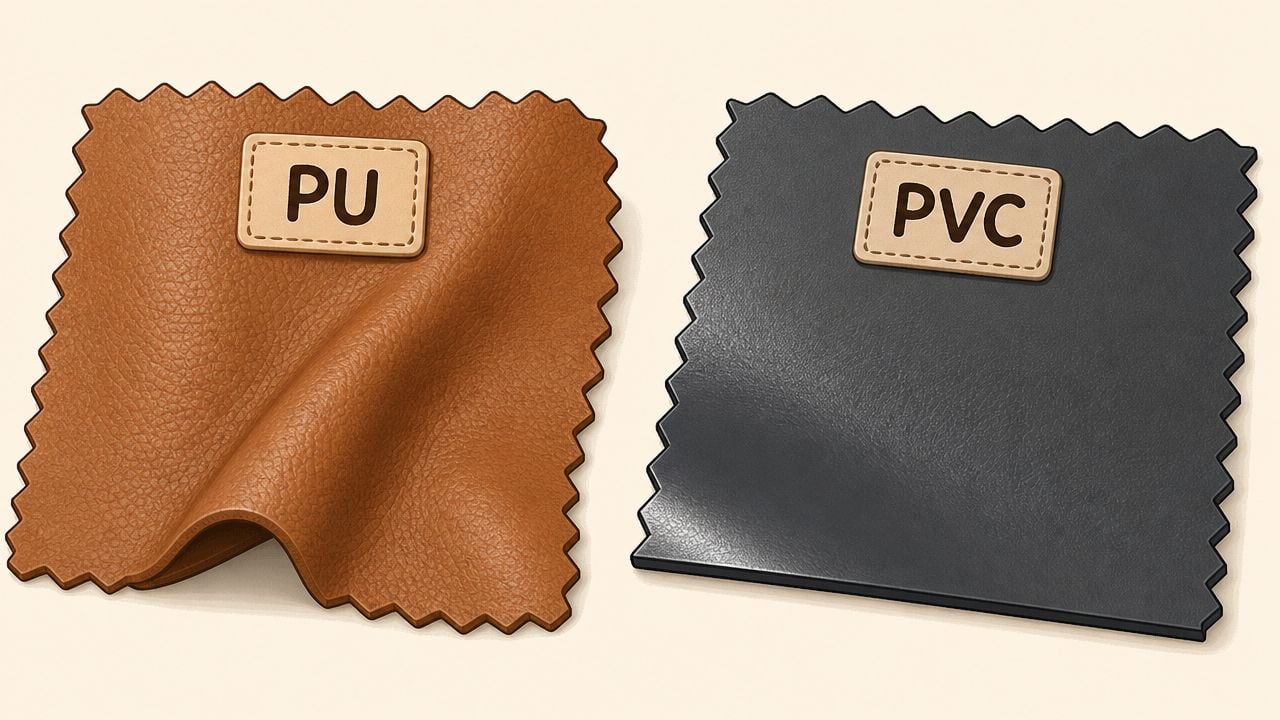
Faux leather isn't one single material. That's the first point that clears up a lot of confusion for shoppers. Most faux leather furniture is made with PU (polyurethane) or PVC (vinyl), and that difference matters for feel, finish, and how the piece functions in daily life. Industry guidance also notes that higher-quality PU faux leather can typically last 5 to 10 years or longer with proper maintenance while being easier to clean than many fabric alternatives, and faux leather is generally more resistant to moisture and stains, often needing only a damp cloth for spills, according to this faux leather buying guide.
PU and PVC in plain language
An easy way to think about it is this. PU often aims for comfort and softness. PVC often leans toward toughness and surface protection.
That doesn't mean one is automatically right and the other is wrong. It means each one suits a different priority.
- PU faux leather often feels more supple and more furniture-like in a lounge chair.
- PVC faux leather can make sense when the main concern is wipeability and a more protected surface.
- Both materials give manufacturers flexibility with color and finish, which is one reason faux leather can offer a leather-inspired look at a lower cost than genuine leather.
Many shoppers get tripped up because the product page says “faux leather” and stops there. That's not enough information. The better question is what kind of faux leather it is and how that upholstery feels when someone sits in it for more than a minute.
For anyone comparing upholstery options more broadly, this guide to upholstery materials helps put faux leather in context with fabric and other coverings.
Why material choice affects value
A faux leather chair and ottoman can be a practical value purchase when the material quality is decent and the household expects realistic performance. In a busy Central Florida home, that can mean easier cleanup after snacks, drinks, or everyday dust compared with many fabric surfaces.
A reading nook is a good example. If the chair mostly handles evening use, occasional guests, and regular wipe-downs, faux leather can make a lot of sense. If the same chair becomes the household's all-day landing spot for kids, pets, and constant movement, material quality becomes much more important.
Practical rule: If a listing talks a lot about style but says very little about upholstery type, stitching, or use conditions, it hasn't told the buyer enough.
The goal isn't to memorize technical jargon. It's to understand that “faux leather” covers a range of products. Some feel refined and hold up well with proper care. Others are better suited to light use or short-term needs.
How to Spot a High-Quality Faux Leather Chair and Ottoman
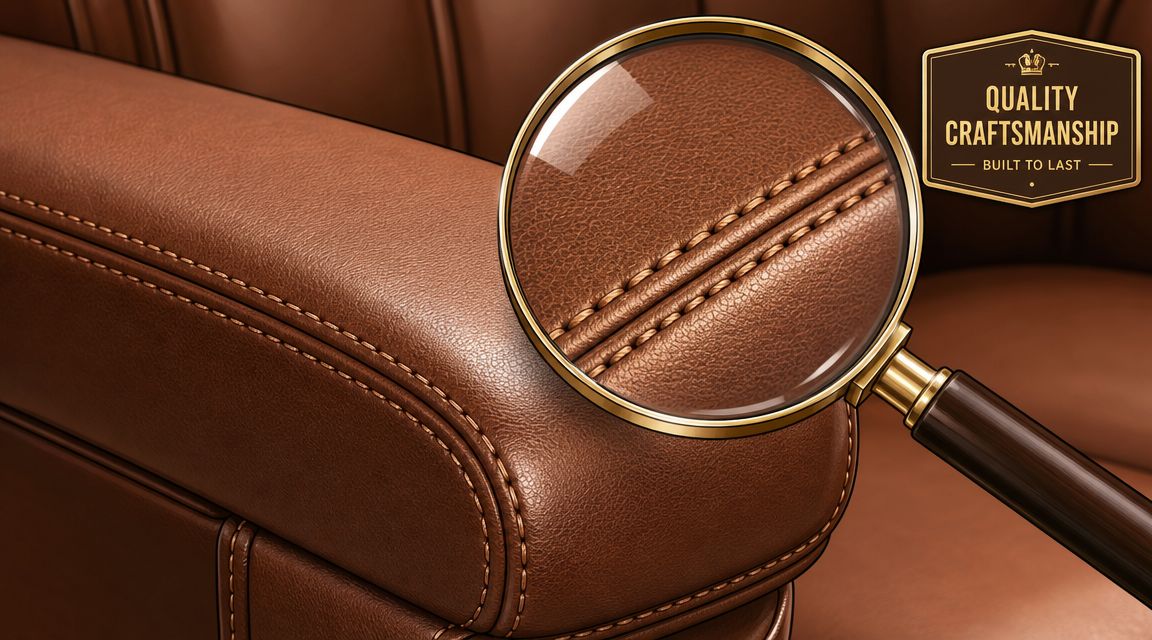
The biggest mistake shoppers make is judging a chair only by surface appearance. Faux leather can look polished under showroom lighting or in an online photo, but long-term performance usually shows up first at the stress points.
That's especially true with an ottoman. A footrest takes concentrated pressure over and over. People shift, pivot, sit on the edge, and sometimes use it as an extra seat. The chair sees a different kind of stress at the seat front, arm seams, and backrest.
Start with the stress points
Technical testing gives a useful clue about what matters. Faux leather grades in a Yarwood technical pack showed tensile strength of 310–350 N and tear resistance of 45–55 N, with higher values indicating better resistance to stretching, punctures, and seam failure at stress points, according to this Yarwood faux leather technical pack.
Those numbers don't need to become a math exercise for the buyer. What they mean in plain language is simple. Stronger upholstery is better equipped to handle repeated pulling, pressure, and edge wear.
Here's where that shows up in everyday use:
- Seat fronts: People slide in and out here, which creates repeated drag and tension.
- Arm seams: Hands press down here when someone stands up.
- Ottoman corners: Feet, trays, and shifting weight can concentrate pressure at edges.
- Joined panels: Weak seam areas tend to reveal themselves before flat surfaces do.
A well-made chair doesn't just look neat. It manages tension well.
What to inspect before saying yes
Most buyers don't have access to a full technical sheet in the store. That's fine. There are still practical signs worth checking.
- Look at the stitching: Seams should appear straight, even, and tight, not loose or wavy.
- Press the cushion and release: The seat should feel supportive, not hollow or overly soft.
- Check the ottoman top: It should feel stable, especially if it may be used as a tray surface or spare seat.
- Ask about the frame and build: The upholstery gets attention, but the structure underneath carries the load.
- Notice how the cover wraps corners: Thin-looking upholstery at corners can be an early warning sign.
A buyer who wants a deeper checklist can review these things to look for in a new sofa or chair.
The best faux leather chair and ottoman sets don't announce their quality loudly. They show it in the seams, the sit, and the way the ottoman feels under repeated use.
Shoppers in Central Florida often focus first on cleanability, which makes sense. But if the material stretches poorly, tears easily, or sits over weak construction, easy cleaning won't matter for very long. The better purchase is the one that balances appearance with structure.
The Pros and Cons for Central Florida Living
Faux leather can be a very practical choice in Central Florida, but it isn't perfect for every room or every household. That honest answer helps buyers make a better decision than a generic “easy to clean” promise ever could.
A key issue is long-term performance in real homes. Product listings often highlight style and convenience, but durability against cracking or peeling depends heavily on material quality, and for some high-use households a higher-quality fabric or custom-order piece may offer better long-term value, as noted in this faux leather accent chair overview.
Where faux leather fits well
In many Florida homes, faux leather works best in rooms that need a smart look without fussy upkeep.
- Busy entertaining spaces: Spills are usually easier to wipe than they are on many fabric surfaces.
- Apartments and condos: Faux leather often gives a more finished look in a compact footprint.
- Homes with shifting uses: A chair-and-ottoman set can move from reading corner to guest room more easily than a large recliner.
- Humidity-aware households: Many shoppers prefer a surface that doesn't feel as absorbent as some fabrics.
For people relocating to the area, furniture choices are often part of a much bigger adjustment. This overview of key factors for moving to Florida is helpful because climate, entertaining habits, and room use often shape what materials feel practical after the move.
Where buyers should slow down
The drawbacks are real, especially with lower-grade products. Some faux leather can feel warm in a room that gets afternoon sun or doesn't stay consistently cool. In heavy-use households, surface wear can become the deciding issue.
A cautious buyer should pay attention if any of these sound familiar:
- The chair will be used every day for long stretches
- Pets regularly jump on furniture
- The room gets strong direct sunlight
- The ottoman will double as a seat or table often
- The shopper wants a very long-term piece rather than a value-focused one
For anyone comparing leather categories more carefully, this explanation of bonded vs genuine leather helps clarify where faux leather sits in the broader conversation.
Some homes need a wipe-clean surface. Others need a piece built for years of constant use. Those aren't always the same thing.
This is the tradeoff. Faux leather can be a smart fit for many Orlando-area homes, but only when the buyer matches the material to the room's actual demands.
Perfect Placement Sizing Your Chair and Ottoman
A chair and ottoman can look perfect in the showroom, then feel awkward the first evening at home. In many Central Florida living rooms, the problem is not the upholstery or the color. The set is too large for the corner, too far from the side table, or placed where people naturally walk through the room.
That matters more than many shoppers expect. A faux leather chair and ottoman often serves as the cool-down seat after work, the reading spot near a window, or the extra perch when family drops by. If the scale is off, comfort disappears fast.
Use the chair dimensions as a planning tool
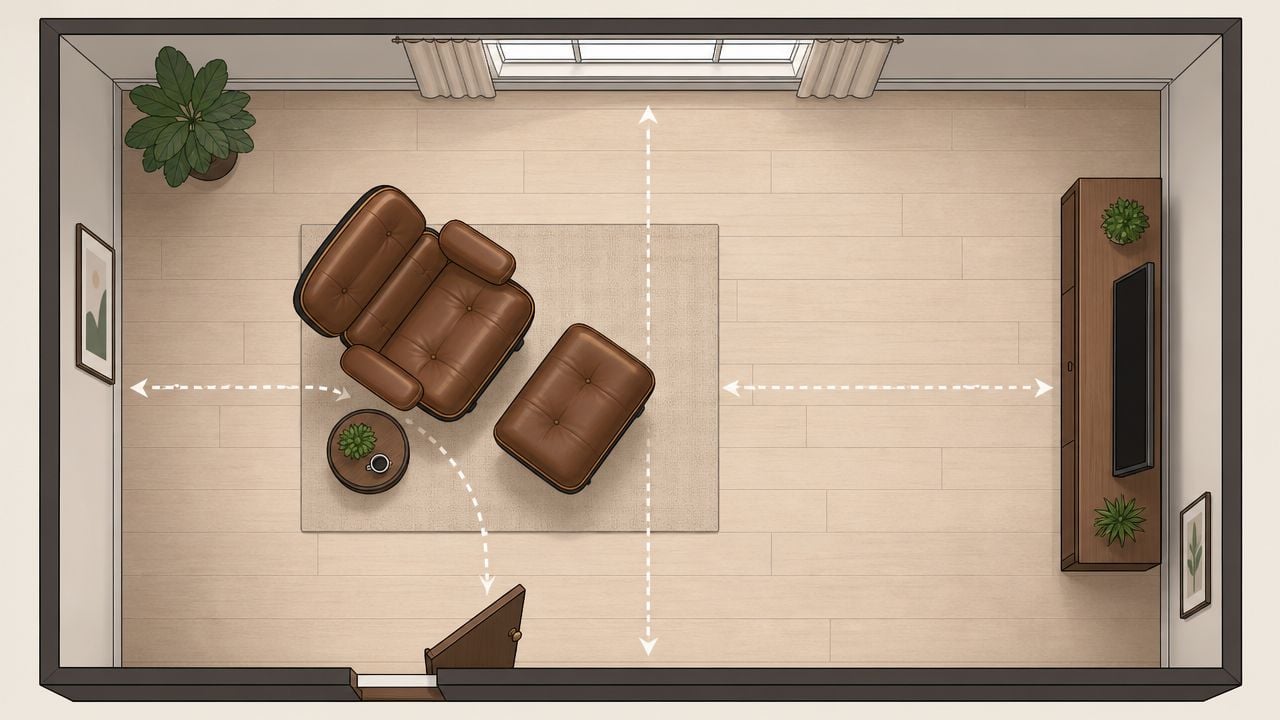
A lounge-style accent chair often takes up more visual and physical space than buyers expect. The chair itself may fit the wall, but the usable zone includes legroom, ottoman placement, and enough open space to sit down and stand up without twisting sideways.
A helpful way to plan is to treat the set like a small conversation area, not a single piece.
| Area | What to check |
|---|---|
| Chair footprint | Leave enough space so the chair does not press against a table, wall, or another seat |
| Ottoman reach | Place the ottoman close enough that your legs can rest naturally without stretching |
| Movement space | Allow room to lean back, shift position, and stand up comfortably |
| Traffic flow | Keep walkways clear between seating, doorways, and the routes people use every day |
For a more exact setup, this guide on how to measure a room for furniture helps you map the space before delivery.
Measure for the way the room is actually used
Many Florida homes need a little extra thought. Open floor plans make a room feel bigger, but they also create busy walkways between the kitchen, family room, and patio doors. A chair and ottoman can end up sitting right in the path of daily traffic if you measure only the empty wall and ignore how people move through the room.
Sun exposure matters too. Many homeowners place an accent chair near a bright window or sliding glass door. That can be a pleasant reading spot, but you still need enough clearance so the ottoman does not drift into the walkway or crowd nearby furniture when the room is in use.
Placement mistakes that affect comfort
Comfort problems often show up as layout problems. The chair looks fine from across the room, yet it never becomes anyone's favorite seat.
A few setup mistakes cause that:
- The chair is too deep for the main user. Knees stay straight instead of relaxing, so sitting feels formal rather than restful.
- The ottoman is too low or too far away. Legs are unsupported, and the lower back starts doing extra work.
- The pair is oversized for the corner. The room feels tight, and people start walking around the furniture instead of through the room naturally.
- The ottoman is treated like an afterthought. It should support the chair, not float several feet away like a separate piece.
A good chair-and-ottoman setup works like a well-fitted pair of shoes. If the size and spacing are right, you stop noticing them and feel comfortable.
A well-placed chair and ottoman supports the body, protects the room's flow, and feels inviting from the first sit.
Delivery planning deserves attention too. Condos, stair turns, narrower doorways, and upstairs bonus rooms can all change what size makes sense. If you are bringing in the piece yourself, Home Removals Sydney's expert moving tips offers practical guidance for handling heavy furniture safely.
For buyers who want a second opinion, Slone Brothers Furniture offers design services and consultations to help map chair placement, ottoman spacing, and room balance before the set comes home.
Styling Your Faux Leather Set in a Florida Home
A faux leather chair and ottoman can look thoughtful and warm in a Florida interior. It only starts to feel cold or overly office-like when the rest of the room doesn't support it.
That styling gap trips up a lot of shoppers. Online listings usually show the chair alone, even though buyers are trying to solve a full-room problem that includes sofas, rugs, wood finishes, and lighting. Retail assortments also suggest demand for multifunctional versions with storage ottomans and utility features, which reinforces the need for practical room guidance, as discussed in this faux leather accent chair assortment overview.
Make the set feel intentional
The easiest fix is to stop treating the chair as a stand-alone object. It should repeat something already happening in the room.
A few reliable pairings work well:
- Repeat the wood tone: If the room has medium oak or walnut tables, choose a faux leather color that feels warm against that finish.
- Use a rug to soften the set: This keeps the chair from feeling visually hard.
- Add a textile nearby: A woven throw, soft pillow, or drapery panel balances the smoother upholstery.
- Echo the color elsewhere: The chair looks more anchored when its tone shows up in artwork, lamp shades, or smaller accents.
Good matches for Central Florida aesthetics
Florida interiors often lean brighter and airier than rooms in other parts of the country. That doesn't rule out faux leather. It just means the palette and surrounding materials matter.
For coastal-leaning rooms
Choose a lighter, relaxed scheme around the chair. Soft woods, woven textures, and pale rugs help the set feel casual instead of heavy.
For warm transitional spaces
Brown faux leather works well when paired with upholstered sofas, layered lighting, and mixed materials. This is often the safest path for a home that wants polish without feeling formal.
For modern farmhouse looks
A simpler chair shape with clean lines tends to work better than anything too bulky. Black or darker brown faux leather can provide contrast, especially when the room already has lighter walls and natural finishes.
When a faux leather chair looks out of place, the issue usually isn't the chair. It's the missing relationship between that chair and the rest of the room.
Matching ottomans usually create a cleaner, more cohesive look. A contrasting ottoman can work, but only if another element in the room bridges the difference. Otherwise, the pairing can read as accidental.
Protecting Your Investment Simple Care Instructions
The day-to-day care routine for faux leather is usually straightforward, which is one reason the material appeals to busy households. Most messes are easiest to handle when they're addressed quickly and gently.
A simple routine that helps
A practical care rhythm looks like this:
- Dust regularly: A soft, dry cloth helps keep grit from rubbing into the surface.
- Wipe spills promptly: A damp cloth is often enough for routine cleanup.
- Use mild products carefully: Harsh cleaners can damage the finish.
- Keep it out of strong direct sun: This matters in bright Central Florida rooms with large windows.
- Check seams and corners: Early wear often starts there, not in the center panel.
For broader upholstery upkeep, even though the material differs, guides on how cleaning professionals approach fabric care can still help households build better habits around quick spill response, gentle tools, and routine maintenance.
Anyone caring for leather-look furniture alongside other upholstered pieces may also find this overview on how to protect leather furniture useful for room placement and general preservation habits.
The key is consistency. Gentle routine care usually does more good than occasional aggressive scrubbing.
Find Your Perfect Set at Slone Brothers Furniture
A faux leather chair and ottoman makes sense when the buyer wants a clean-lined look, practical upkeep, and flexible function in a real Central Florida home. The stronger purchase comes from looking past the label and paying attention to material quality, stress points, comfort, and room fit.
That's also why seeing furniture in person matters. The same chair can look ideal online and feel completely different once someone checks the seat depth, the ottoman height, and the surface texture under normal room lighting. For households furnishing homes in Longwood, Orlando, Lake Mary, or Sanford, those details often decide whether a piece becomes a favorite or a frustration.
Local shoppers also tend to benefit from a wider conversation than “Is this easy to clean?” Some homes need a value-focused solution for a guest room or reading corner. Others call for a custom-order piece, a different upholstery category, or a more substantial frame from an American-made collection. Since 1980, Slone Brothers has served Central Florida as a family-owned showroom with an in-house Design Team, custom-order options, a curated brand mix that includes names such as Stickley, Stressless, Smith Brothers, Bassett, Craftmaster, American Leather, Canadel, Amisco, Simply Amish, Mavin, and Palasar, plus a Low Price Promise and clearance outlet for shoppers balancing quality and value.
The right chair isn't just attractive. It fits the body, the room, and the way the household lives.
Ready to find the perfect piece for your home? Visit the Slone Brothers Furniture showroom in Longwood, FL, and let their design experts help you get started!