

Natural Home Decor: Longwood & Central Florida Guide

A lot of Central Florida homes have the same tension. The light is beautiful, but it can feel harsh by midday. The rooms are open, but they don't always feel restful. After a long week in Orlando traffic, school pickups in Lake Mary, or busy family life in Sanford, many homeowners want the house to feel cooler, calmer, and more grounded.
That's where natural home decor becomes useful. It isn't just a look built around baskets, plants, and pale colors. It's a design approach that uses real texture, softer shapes, better light, and durable materials to make a home feel settled and easy to live in.
Families across the region are investing in their homes for the long term. The global home decor market is projected to reach US$128.60 billion in 2026, according to Statista's home decor outlook, which shows that thoughtful decorating is a mainstream priority, not a niche hobby. For homeowners in Longwood and across Central Florida, that makes quality natural pieces a lasting choice rather than a passing phase.
Since 1980, local families have looked for practical guidance on how to make their homes feel beautiful without making them precious. Helpful ideas for decorating a Florida home often start with the same goal. A room should look relaxed, handle daily life, and still feel good years later.
Table of Contents
- Embracing Calm with Natural Home Decor in Central Florida
- The Building Blocks of Natural Design
- Room-by-Room Strategies for Natural Decor
- Finding Your Perfect Natural Home Decor Pieces
- Maintenance and Durability for Central Florida Homes
- Start Creating Your Natural Oasis
Embracing Calm with Natural Home Decor in Central Florida
In Central Florida, calm often comes from contrast. Outside, there's heat, traffic, afternoon storms, and a fast pace. Inside, most homeowners want the opposite. They want rooms that feel airy, steady, and comfortable enough for everyday living.
Natural home decor helps create that feeling by leaning on materials and finishes that feel familiar and grounded. Wood grain, woven texture, stone-like surfaces, linen-inspired fabrics, and soft shapes all work together to take visual pressure out of a room. The result doesn't need to feel rustic or overly themed. It feels easier to be in.
Why this style works so well in Florida homes
Many homes in Longwood, Lake Mary, and the greater Orlando area already have one big advantage. They get plenty of daylight. Natural design makes better use of that light instead of fighting it with heavy contrasts and overly glossy surfaces.
A calm room also benefits from restraint. Instead of filling every corner, natural home decor usually works best when a few strong pieces lead the room and smaller textures support them. That approach often gives a home a cleaner, cooler feeling without making it look empty.
Practical rule: If a room feels busy before anything is technically wrong, the problem is often too many finishes competing at once.
What readers usually get wrong
The most common confusion is thinking natural design means unfinished, fragile, or overly casual. It doesn't. A home can feel organic and still be polished. It can use solid wood, precisely fitted upholstery, and carefully chosen lighting while staying warm and relaxed.
That balance matters for families who want rooms that perform well over time. In a Central Florida setting, the goal isn't to mimic a cabin or a beach rental. It's to create a home that feels breathable, timeless, and well considered.
The Building Blocks of Natural Design
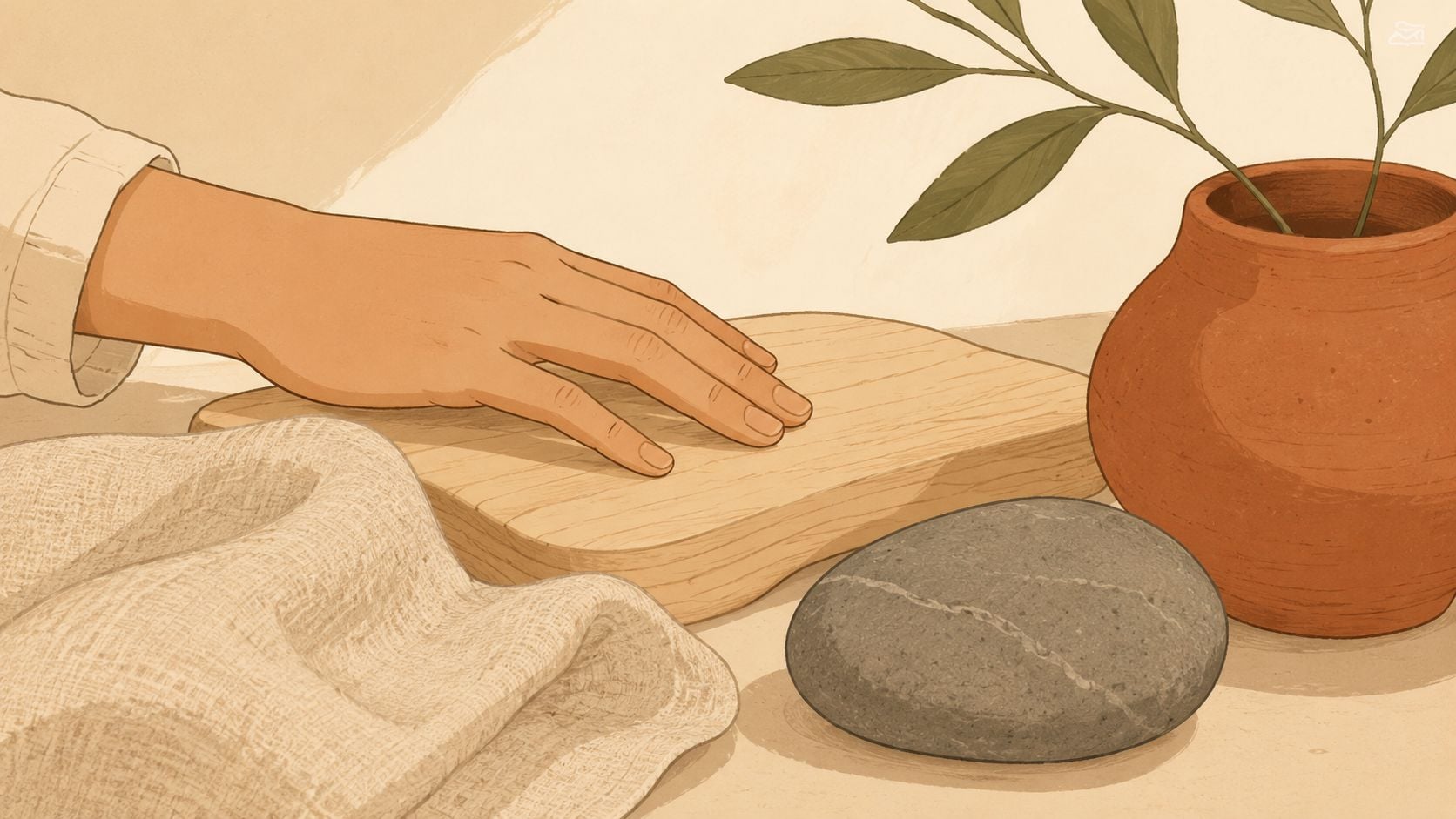
Natural home decor works best when the room has a clear foundation. That usually means one main material carries the visual weight, then other textures support it. Design guidance on incorporating nature indoors recommends material pairing and scale control, with the strongest rooms combining a dominant organic material like wood with secondary textures and softer, curved forms to reduce visual rigidity and create a calmer atmosphere, as explained in this guide to incorporating nature.
What natural home decor really means
A natural room doesn't depend on one material. It depends on the relationship between materials.
For example, a wood dining table can feel heavy on its own. Pair it with lighter woven seating, a soft rug, and a rounded pendant, and the room starts to breathe. A neutral sofa can feel plain by itself. Add linen-like pillows, a textured lamp base, and a warm wood table, and it begins to feel layered.
Homeowners who want to create healthier living environments often focus on daylight, airflow, and surfaces that feel less synthetic. That thinking fits naturally with this style. The room doesn't need to become minimalist. It needs a few materials that work together instead of competing.
Key Materials in Natural Home Decor
| Material | Key Characteristics | Best For |
|---|---|---|
| Wood | Warm, grounding, structured, visually timeless | Dining tables, bed frames, consoles, occasional tables |
| Linen-inspired fabric | Soft look, relaxed texture, breathable appearance | Sofas, accent chairs, bedding, drapery |
| Wool or wool-look textiles | Cozy, layered, slightly tactile | Throws, pillows, area rugs in lower-mess spaces |
| Jute or sisal | Earthy texture, casual, visually organic | Accent rugs, layered rug looks, lower-splash areas |
| Rattan or cane | Light visual weight, woven detail, airy feel | Dining chairs, accent pieces, lighting |
| Stone or stone-look surfaces | Cool, solid, quiet visual contrast | Lamps, tabletops, decorative objects |
| Bamboo | Clean lines, subtle natural texture | Accessories, occasional furniture, shades |
| Glass | Reflective, light-spreading, visually open | Lamps, doors, tabletops, decor accents |
A practical way to start is by assigning roles.
- Structural materials hold the room together. Think solid wood beds, dining tables, bookcases, and media pieces.
- Textural materials soften the room. Rugs, throws, drapery, and upholstery do most of that work.
- Accent materials add lift. Glass, pottery, woven baskets, and greenery keep the room from feeling flat.
Readers who enjoy adding greenery can also get ideas from houseplants that complement new furniture, especially when they want texture without more furniture.
How color keeps the room calm
Natural design usually starts with colors found outdoors. Sand, clay, oat, warm white, muted green, weathered brown, and soft gray all help.
That doesn't mean every room has to be beige. The important part is temperature and contrast. Softer, earth-based colors tend to make materials look richer. They also make wood grain and woven texture more noticeable.
A calm palette doesn't remove personality. It gives texture room to do the talking.
For many Central Florida homes, that's especially helpful because strong daylight already adds drama. A quieter palette lets the light shift through the day without making the room feel stark.
Room-by-Room Strategies for Natural Decor
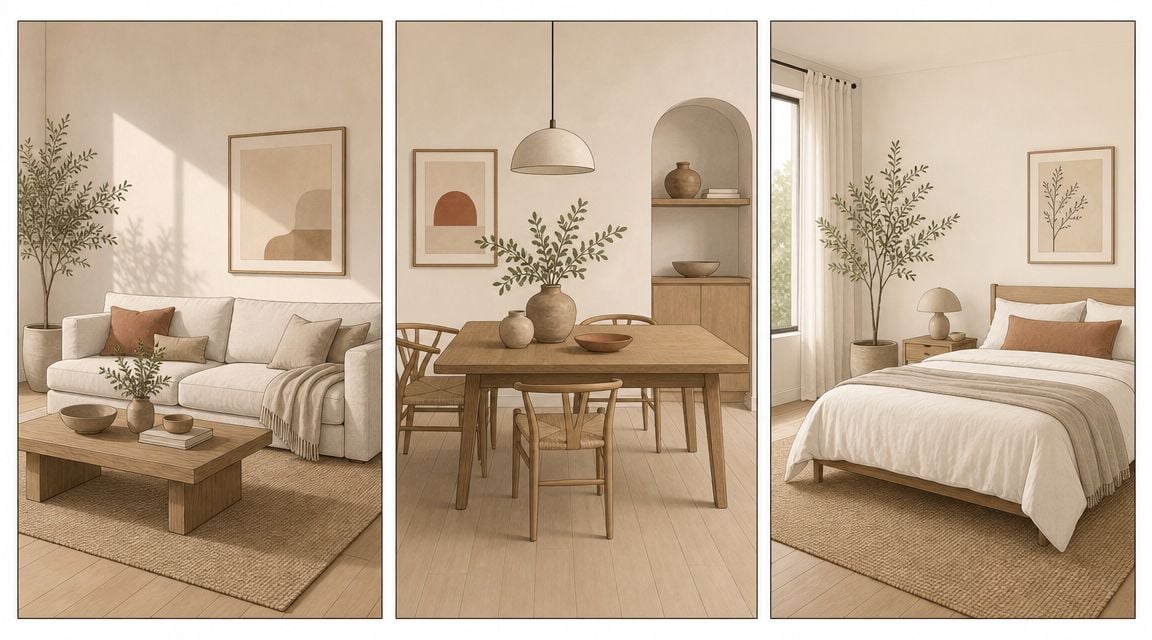
Many homeowners like the idea of natural home decor but get stuck when they try to apply it in a real house. The easiest fix is to think room by room. Each space needs one anchor, a few supporting textures, and enough durability for daily life.
That practical side matters because a 2023 survey found that 65% of consumers prefer eco-friendly home decor, and furniture makes up 45% of the sustainable decor market, according to home decor industry statistics gathered here. In other words, many shoppers are looking for lasting pieces in the rooms they use the most.
Living room
The living room usually carries the most pressure. It hosts family time, guests, snacks, pets, and long afternoons when the Florida sun shifts across the floor. That's why the anchor piece matters so much.
A strong natural living room often starts with a sofa in a soft neutral fabric that looks organic but handles real use. A refined shape with rounded arms or a softer profile helps the room feel less rigid than a boxy silhouette. From there, a solid wood coffee table or entertainment console adds visual weight and warmth.
A good setup often looks like this:
- Anchor the seating area with a sofa in a warm neutral tone, then add one accent chair with visible wood or woven detail.
- Layer the floor with a rug that brings texture first, pattern second.
- Use light as decor through table lamps, reflective surfaces, and open sightlines rather than relying only on overhead fixtures.
For homeowners drawn to an airy Florida look, coastal look furniture ideas can overlap nicely with natural styling when the palette stays restrained and the materials stay authentic.
Houseplants also help a living room feel complete, especially when corners look empty or shelves feel too hard. A simple guide on how to decorate with houseplants can help readers choose scale and placement without turning the room into a greenhouse.
Dining room
The dining room benefits from a different kind of calm. It needs permanence. A natural dining space should feel welcoming on an ordinary Tuesday night, not just during holidays.
This is where solid wood shines. A substantial dining table with visible grain gives the whole room a center of gravity. It also ages in a way many homeowners appreciate. Small variations in tone and texture often make the room feel richer, not more fragile.
Chairs don't all need to match perfectly in feel. What matters more is that they belong to the same visual family. A table with a grounded wood finish can pair well with upholstered seats, woven accents, or cleaner-lined side chairs if the tones stay consistent.
Design note: In dining spaces, natural decor works best when the table is the loudest material and everything else supports it.
If the room opens into the kitchen or living space, repeating one finish or one undertone helps the entire zone feel connected. That's especially useful in many newer Orlando-area floor plans where separate rooms blend together.
Bedroom
The bedroom should feel quieter than the rest of the house. Natural design does that well because it leans on touch as much as sight.
A wood bed frame gives the room structure. Soft bedding in layered neutrals lowers contrast. A bench, woven pendant, or textured nightstand keeps the room from becoming too smooth or too formal. Bedrooms often improve fastest when shiny surfaces are reduced and tactile ones take their place.
A comfortable natural bedroom usually includes:
- One substantial wood piece such as the bed or dresser to establish warmth.
- Soft layers near the body like cotton, linen-inspired bedding, or a textured throw.
- Calmer accessories such as ceramic lamps, woven baskets, or muted artwork.
The room doesn't need many accessories. In fact, bedrooms usually feel more restful when the decor is edited down. One beautiful bed, useful nightstands, soft light, and a few natural textures can do most of the work.
Finding Your Perfect Natural Home Decor Pieces

A natural room rarely comes together by buying everything at once. Most successful spaces are built around a few dependable pieces chosen carefully. That's why quality matters so much more than novelty in this style.
The enduring quality of Amish and American-made furniture
Natural home decor depends heavily on furniture with visible material character. If the grain, finish, proportions, and construction feel convincing, the room feels grounded. If the main pieces feel thin or overly artificial, the supporting decor can't fully fix that.
That's where Amish-crafted and American-made furniture often fits well. Solid wood dining tables, bed frames, and storage pieces bring honest texture into a room. Brands such as Simply Amish and Mavin are relevant for shoppers who want wood furniture that feels substantial, while Smith Brothers is useful for households that want upholstered comfort with customization and long-term value.
These pieces also make practical sense for a home that's meant to evolve. A solid table can work with changing chairs. A well-built dresser can move from one bedroom to another over time. The room stays flexible because the foundation stays strong.
The flexibility of custom orders
Natural design often falls apart when a piece is almost right but not quite. The wood tone is too cool. The fabric is too flat. The scale is off for the room. Custom ordering helps solve that.
With customizable lines such as Amisco or American Leather, homeowners can adjust finishes, materials, and configurations to better suit the architecture of the room and the way the household lives. That matters in Central Florida homes with open plans, mixed flooring, or multipurpose spaces that need a careful fit.
This is also the section where one local option can be named plainly. Slone Brothers Furniture offers product categories that align with natural styling, including wood dining pieces and custom-order options that help shoppers match finish, scale, and function more precisely.
Exploring the Longwood showroom
Seeing natural materials online only goes so far. Wood tone changes under real light. Upholstery texture is hard to judge on a screen. The curve of an arm or the depth of a seat can completely change how relaxed a room feels.
That's why a showroom visit can be useful for this style in particular. It lets homeowners compare wood species, touch fabrics, and see whether a piece feels serene or plain. It also helps narrow down what kind of natural room they want.
A productive visit usually starts with a few simple questions:
- Which room needs the strongest foundation piece first
- How much daily wear will the piece handle
- Does the home need a cleaner refined look or a softer organic one
- Would a custom finish or fabric solve a near miss
For families furnishing multiple rooms, the in-house design team can also help keep wood tones, upholstery, and scale aligned from space to space. That's often the difference between a collection of nice pieces and a home that feels cohesive.
Maintenance and Durability for Central Florida Homes
Natural home decor has a reputation problem. Many homeowners assume it looks beautiful but won't survive family life, humidity, or bright Florida sun. That assumption is understandable, but it isn't always accurate.
One gap in online advice is the lack of practical guidance around family-friendly, low-maintenance natural decor. As noted in this article on natural decor ideas for the home, materials like jute may look great but can be harder to clean, which makes material choice especially important in busy, high-traffic spaces.
Natural doesn't have to mean delicate
The fix is choosing the right natural expression for the right location.
In a formal bedroom, a textured rug with more visual softness might be a great fit. In a family room with snacks, pets, and constant use, a tightly woven rug or a lower-maintenance layered approach may be smarter. The same logic applies to upholstery. A fabric can still look natural without being fussy.
Solid wood is another good example. People sometimes worry about warping or wear, but well-made wood furniture with a durable finish often performs very well when it's used thoughtfully. Consistent indoor conditions, reasonable placement away from harsh direct exposure, and regular care all matter more than chasing a perfectly untouched surface.
Some of the most practical rooms use natural-looking materials in strategic places rather than using the most delicate version of every material everywhere.
Simple habits that protect the look
A Central Florida home does better with routines than with rescue efforts. Small habits keep natural decor looking settled and attractive.
- Control the light with window treatments that soften intense sun in the hottest parts of the day.
- Choose wipeable surfaces where hands land often such as dining chairs, coffee tables, and bedside pieces.
- Use washable or easier-care layers for throws, pillow covers, and small accents that take frequent contact.
- Follow material-specific care for wood, woven fibers, and upholstery instead of using one harsh cleaner on everything.
For hard surfaces underfoot, homeowners looking for gentler cleaning habits may find ideas in these sustainable floor care solutions. And for wood case goods or dining furniture, care guidance like how to care for wood furniture can help preserve finish and appearance over time.
The larger point is simple. Durable natural decor isn't about making every piece indestructible. It's about matching the material to how the room is used.
Start Creating Your Natural Oasis
The most successful natural home decor doesn't come from piling on rustic accessories or trying to copy a photo exactly. It comes from choosing a few materials that feel honest, calming, and appropriate for the way the home is used.
For many Central Florida households, that means starting with strong basics. A solid wood dining table. A comfortable upholstered piece in a soft, practical fabric. A bedroom with fewer shiny finishes and more tactile layers. Once those are in place, the room usually needs less decorating than expected.
Light also changes everything. To make natural decor work better in a Florida home, design guidance recommends layering daylight with sheer window treatments and mirrors so natural light reaches deeper into the room and better highlights the texture of wood and fabric, as described in this natural-elements interior design article. That one adjustment can make a room feel more open and more restful without adding clutter.
A calm home rarely comes from excess. It usually comes from restraint, texture, and better choices at the foundation level. That's what gives natural design its long-term value.
Ready to find the perfect piece for a Central Florida home? Visit Slone Brothers Furniture in Longwood, FL, and let the design team help bring natural calm into living rooms, dining spaces, and bedrooms with quality furniture built for real Florida living. Want to experience the comfort of a Stressless recliner or the beauty of Stickley in person? Stop by the Longwood showroom today!