
Mattress Foundation vs Box Spring: 2026 Guide for Central Florida Sleepers

The fundamental difference between a mattress foundation and a box spring is structural. A box spring uses a wooden frame with internal steel coils designed to flex and absorb shock, primarily for traditional innerspring mattresses. A foundation provides a rigid, flat base—usually wood slats or a solid platform—that prevents modern foam and hybrid mattresses from sagging. Choosing the wrong one doesn't just affect comfort; it frequently voids the mattress warranty.
How We Evaluate Mattress Support Systems
Before comparing the two options, it helps to know how this decision should be made. The "best" support isn't a matter of taste; it's dictated by the engineering of your sleep surface.
In researching this guide, we evaluated options based on four concrete criteria:
- Mattress Compatibility: Does the support allow the mattress materials to function as designed? (e.g., Foam requires rigidity; innersprings require some flex).
- Warranty Protection: Will using this support void the manufacturer's coverage?
- Durability: Will the support degrade before the mattress does? (Coils sag; wood generally does not).
- Comfort Impact: Does the support change the feel of the bed too much (e.g., adding unwanted bounce to a pressure-relieving foam bed)?
The verdict is usually clear-cut: if you have a foam or hybrid mattress, you need a foundation. If you have a traditional innerspring, you can use either, but a box spring offers a softer feel.
This guide will walk you through everything you need to know. We’ll compare these two essential support systems to help you protect your investment and improve your sleep quality. After all, the right base not only ensures comfort but also maintains your mattress warranty.
Before we dive deep, it helps to understand the basics. Our team often gets asked how to pick the perfect mattress in the first place, and you can learn more by checking out our ultimate guide for choosing a mattress.
Foundation vs Box Spring At a Glance
A side-by-side comparison shows the core differences in construction, compatibility, and the best use cases for each type of support system, offering a concise snapshot to help you understand where each one performs best.
| Feature | Mattress Foundation | Box Spring |
|---|---|---|
| Primary Function | Provides a firm, flat, and stable surface | Absorbs shock and adds a gentle bounce |
| Internal Structure | Solid wood slats or a solid platform | A network of steel coils or springs |
| Best For | Memory Foam, Latex, and Hybrid mattresses | Traditional Innerspring mattresses |
| Feel | Creates a firm, supportive sleep surface | Adds a slight "give" or springiness to the bed |
| Airflow | Good, especially with slatted designs | Excellent due to the open coil structure |
| Durability | Very durable with minimal wear over time | Coils can weaken and sag over several years |
In short, foundations offer unwavering support for modern beds, while box springs are designed to work in tandem with older, traditional innerspring mattresses. Now, let's explore these differences in more detail.
Does a Box Spring Make a Mattress Softer or More Comfortable?
This is the single most common question we hear from customers weighing their options. The short answer is: it depends entirely on the mattress.
If you have a traditional innerspring mattress, a box spring will make the bed feel softer and more comfortable. Because the box spring coils compress under your weight, they work in tandem with the mattress coils to create a cushioned, bouncy feel. It acts as a second suspension system, reducing the firmness you would feel on a rigid platform.
However, if you have a memory foam or latex mattress, a box spring will not make it more comfortable—it will make it uncomfortable and likely ruin it. Foam mattresses are designed to contour to your body based on their own material density. They require a perfectly flat, unyielding surface to distribute weight evenly. When placed on a bouncy box spring, the foam creates voids between the coils, leading to an uneven surface, poor spinal alignment, and accelerated breakdown of the foam cells.
So, does a box spring make a bed more comfortable? Only if that bed is designed to work with one. For modern foam beds, a firm foundation is objectively more comfortable because it provides the stability the mattress was engineered for.
Exploring the Traditional Box Spring
For generations of families here in Central Florida, the term "box spring" was just a natural part of setting up a bedroom. It was the essential partner to a traditional innerspring mattress, and for very good reason. Its classic design has a long history of providing a specific kind of support that many of us grew up with and still love today.
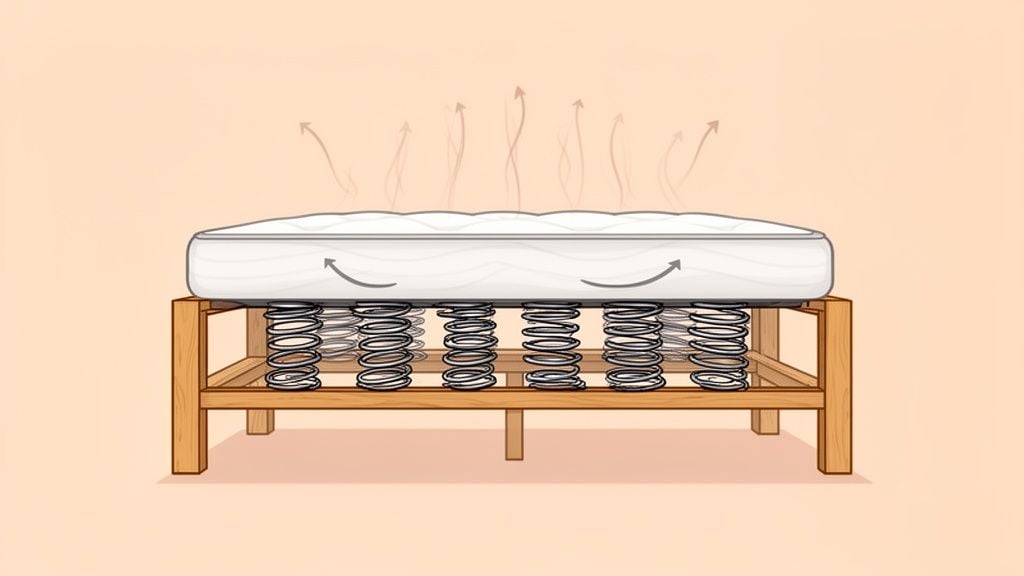
A box spring is a sturdy wooden frame that houses a grid of steel coils, all wrapped in fabric to match the mattress. This setup isn't just about lifting the bed higher off the floor; the coils are engineered to act as shock absorbers. When you sit or lie down, the coils compress slightly, which creates that gentle "give" and subtle bounce so characteristic of traditional beds.
Design and Key Benefits
The main advantage of a box spring is its perfect synergy with an innerspring mattress. The coils inside the box spring work right alongside the coils in the mattress, sharing the load and absorbing impact. This prevents the mattress coils from taking all the strain, which significantly reduces wear and tear and helps stop premature sagging.
Another huge benefit, especially here in Orlando's humid climate, is superior airflow. The open-coil structure of a box spring lets air circulate freely beneath the mattress. This fantastic ventilation helps wick away moisture and dissipate body heat, leading to a much cooler and more comfortable night's sleep.
A well-made box spring does more than just elevate your bed. It actively participates in your comfort by distributing weight evenly and protecting the integrity of your innerspring mattress for years to come.
The enduring popularity of this system makes a lot of sense when you look at the market. In fact, innerspring mattresses still command a 45.3% share of the United States mattress market. This highlights why their ideal partner, the box spring, remains a vital piece in so many bedrooms. That statistic alone shows why providing the right support system is so important for the most popular mattress type out there.
Limitations and Downsides
While box springs have a loyal following, they have significant downsides in the modern era that every Florida homeowner should understand before buying one.
1. They are incompatible with foam mattresses.
As noted above, placing memory foam or latex on a box spring causes sagging. Most major manufacturers explicitly void warranties if foam mattresses are used on flexible box springs. The lack of a solid base causes the foam to lose its structural integrity.
2. Coils sag over time.
A box spring is a mechanical product with moving parts. The steel coils eventually lose tension. Sleep Foundation notes that a compatible box spring may last around seven years, whereas a foundation is described as capable of holding up for years without the same breakage risk. Once the coils sag, they create an uneven hammock effect that hurts your back and ruins the mattress above it.
3. Height and Aesthetics.
Box springs add significant height, often 9 to 12 inches alone. While this was desirable in the past for easy entry, it can make a bed feel overwhelming in smaller modern bedrooms. The bulky fabric-covered look is considered dated by many contemporary design standards.
4. Confusion with "Box Foundations."
Many shoppers walk into a store looking for a box spring and end up buying a "box foundation" because they look identical from the outside. A box foundation is wood-framed with slats (rigid), while a true box spring is wood-framed with coils (flexible). This distinction is critical for warranty purposes.
Who Should Choose a Box Spring
So, when is a box spring the right choice for your home? The answer is pretty straightforward.
- You Own an Innerspring Mattress: If you have a traditional innerspring mattress, a box spring is almost always what the manufacturer recommends. Using anything else could compromise the feel and even void your warranty.
- You Prefer a Taller Bed Profile: Box springs add significant height to a bed. This can make getting in and out easier and creates a more commanding presence in the room—a classic look that’s a staple in many traditional bedroom sets.
- You Enjoy a Slight Bounce: If you appreciate that gentle give and responsive feel of a classic bed, a box spring is the only support that really delivers this sensation.
At Slone Brothers Furniture, we've helped countless neighbors from Lake Mary to Sanford find the perfect sleep setup. While modern foundations certainly have their place, the traditional box spring remains an excellent, time-tested solution for anyone with an innerspring mattress, offering a unique blend of support, durability, and classic comfort.
Understanding the Modern Mattress Foundation
Mattresses have changed a lot over the years, especially with memory foam and hybrid models hitting the scene. As they evolved, it became pretty clear that the old-school support systems just weren't cutting it anymore. That's where the mattress foundation comes in—it's the modern, firm, and stable solution built specifically for this new generation of beds. If a box spring is the classic shock absorber, think of the foundation as the solid bedrock your mattress needs.
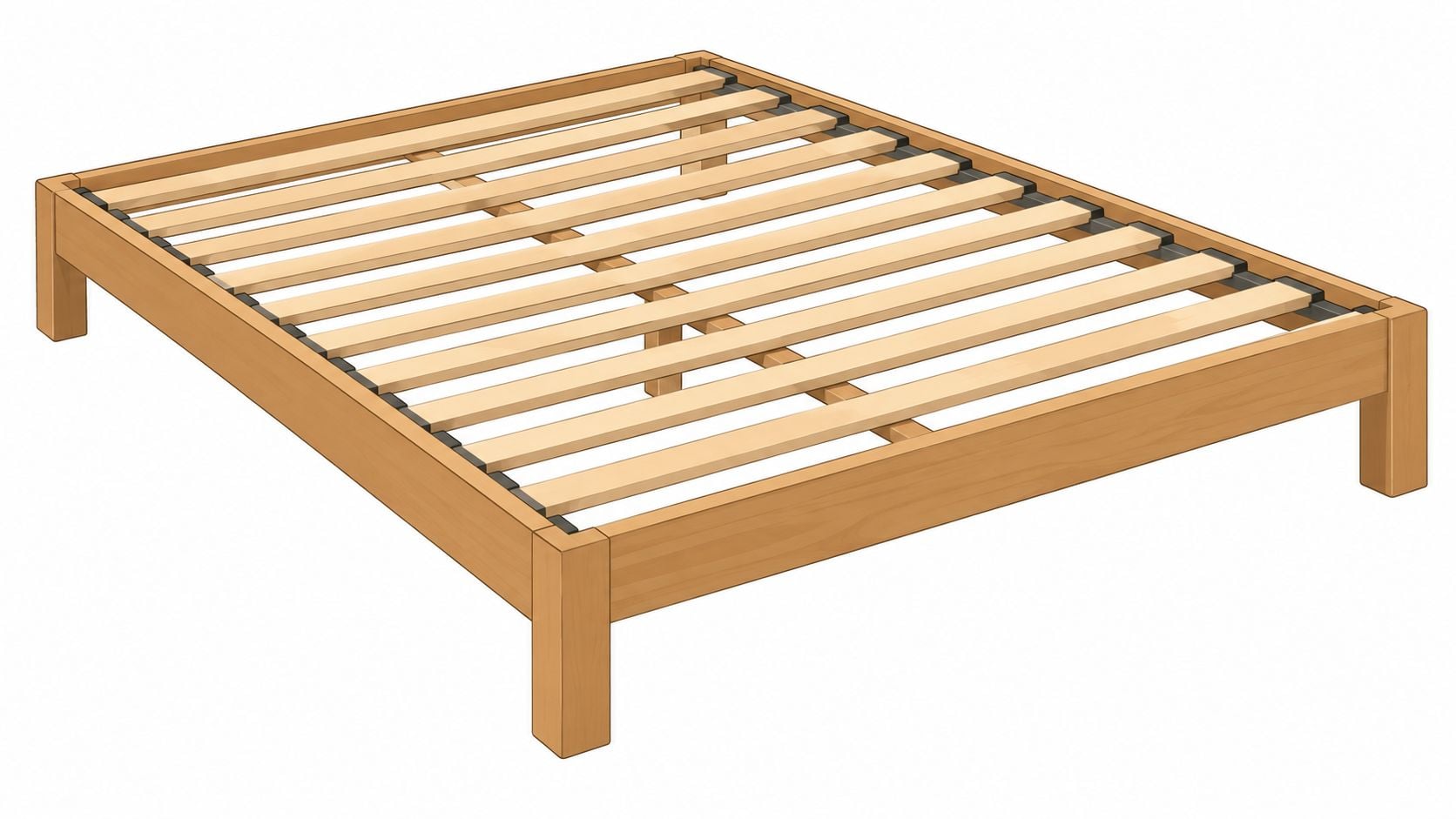
Unlike a box spring with its grid of coils, a foundation is usually a wooden frame with either a solid top or, more commonly, a series of wooden slats running across it. It’s a simple but strong design engineered to do one thing perfectly: provide a completely flat and rigid surface. This is essential for foam-based mattresses, which can be damaged by the springy "give" of a traditional box spring.
The shift toward these newer beds has been huge. Foundations, which are flat, rigid platforms, really took off after 2010 with the memory foam boom. They offer superior weight distribution without adding a ton of height, often sitting 5-9 inches lower, and you can finally say goodbye to the squeaks that come with aging box springs.
Why Modern Mattresses Need Foundations
The way memory foam, latex, and hybrid mattresses are built makes them completely incompatible with the flexing coils of a box spring. These materials are designed to contour to your body and relieve pressure points, and they absolutely require a solid base to do their job right. If you put a foam mattress on an old box spring, it will eventually start to sag between the coils, leading to discomfort and ruining the mattress.
That’s why a foundation is so essential. It guarantees the mattress stays perfectly flat, preserving its structural integrity and letting you get the full benefit of its design. For our customers in communities like Lake Mary and Sanford, the lower, cleaner profile of a foundation also happens to complement contemporary bedroom designs far better than a bulky box spring.
A mattress foundation acts as a silent partner to your modern mattress. It provides the unwavering support necessary for foam and hybrid materials to deliver optimal comfort and durability, protecting your investment for years.
Key Benefits for Central Florida Homes
Beyond just compatibility, foundations offer distinct advantages that many of our local customers here in the Orlando area are looking for.
- Superior Motion Isolation: Since foundations are rigid, they don't transfer movement. This means if your partner tosses and turns, you’re far less likely to feel it—a huge win for light sleepers.
- Enhanced Durability: With no springs to wear out, a well-built foundation can easily outlast a traditional box spring, especially one featuring quality American craftsmanship.
- Sleek, Modern Aesthetics: Foundations offer a lower profile, which aligns perfectly with modern and minimalist bedroom furniture styles.
- Versatility: Most foundations are designed to work with all sorts of bed frames. Many are even compatible with adjustable bases for the ultimate comfort setup.
In fact, the technology behind modern support systems has advanced significantly. For those seeking the ultimate in personalized comfort, we highly recommend you discover the benefits of an adjustable base, which takes the stable support of a foundation to a whole new level.
A Detailed Comparison for Florida Homeowners
When you’re trying to decide between a mattress foundation and a box spring, the right answer really comes down to your mattress, your needs, and even the style of your home here in Central Florida. As your local furniture experts in Longwood since 1980, we want to skip the generic lists and give you a practical comparison, helping you make a decision you’ll be happy with for years.
Let’s break down the key differences that actually matter.
1. Mattress Compatibility
The single most important factor, hands down, is the mattress you already have or plan to buy. Your mattress and its support system have to work together like a team.
- Box Springs are for Innerspring Mattresses: A traditional innerspring mattress is specifically designed to work with the shock-absorbing coils of a box spring. This classic pairing gives you that buoyant, responsive feel and helps protect the mattress coils from wearing out too soon.
- Foundations are for Modern Mattresses: Memory foam, latex, and hybrid mattresses require the firm, unyielding support that only a foundation can provide. The springy "give" from a box spring will cause these materials to sag and break down over time, a mistake that often voids the manufacturer's warranty.
2. Feel and Comfort
How your bed feels is a personal choice, and the support system underneath plays a massive role in the final result. A foundation provides a firm, stable base, letting the mattress itself do all the heavy lifting in contouring and comforting your body. You'll feel the true firmness of the mattress exactly as the maker intended.
A box spring, on the other hand, introduces a subtle flex or "give" to the sleep surface. This creates a slightly softer, more responsive sensation that many people who grew up with traditional beds really prefer. It’s less about rigid support and more about a gentle, shock-absorbing cushion.
The core difference in feel comes down to this: A foundation offers unwavering stability for modern comfort materials, while a box spring provides responsive shock absorption for traditional coil systems.
3. Durability and Lifespan
When you invest in a quality sleep system, you should be thinking long-term. A well-built mattress foundation, especially one with solid wood construction like the American-made and Amish-crafted pieces we love at Slone Brothers, is made to last. With no moving parts or coils to wear out, it delivers consistent support year after year.
A box spring, however, has coils that can weaken over time. After a few years, those springs might start to sag, creating an uneven surface that harms both your comfort and your mattress. While the open structure of a box spring does offer great airflow in our humid Central Florida climate, its mechanical parts are just more likely to wear out than the solid build of a foundation.
4. Bed Height and Profile
The height and style of your bed frame and its support system can completely change your bedroom's look and feel.
- Box Springs for a Traditional, Taller Profile: Box springs usually add more height to a bed, creating that classic, commanding presence that looks beautiful with traditional bedroom sets. For many, this extra height also makes getting in and out of bed a bit easier.
- Foundations for a Modern, Lower Profile: Foundations are generally slimmer, creating a lower-profile bed. This sleek, clean look is a perfect fit for the modern and minimalist home designs popular in communities all over the Orlando area, from Lake Mary to Sanford.
Choosing the right support system is a critical part of the mattress buying journey. This decision goes hand-in-hand with selecting the right base.
Overall Value and Long-Term Investment
When we talk about value, it's about more than just the initial price. A box spring might seem more affordable upfront, but if it starts to sag and needs replacing sooner, those initial savings are gone. A durable foundation protects your bigger investment, the mattress itself, by providing the exact support it needs to last. At Slone Brothers, our Low Price Promise ensures you get exceptional value, but we always guide you toward the choice that delivers the best long-term performance. A high-quality foundation is an investment in a decade or more of consistent, reliable sleep.
Matching Your Mattress With the Right Support
Choosing between a mattress foundation and a box spring isn't just about what looks good; it’s a practical decision that directly impacts how well you sleep, how long your mattress lasts, and even whether its warranty remains valid. Here in Central Florida, where getting a good night's rest matters, getting this pairing right is a critical step. As your local furniture experts in Longwood, we're here to give you clear, straightforward advice for your specific needs.
Honestly, making the right choice is simpler than you might think. This little decision tree breaks it down to the single most important factor: your mattress type.
This visual guide gets straight to the heart of the debate. If you have a traditional innerspring bed, you’ll need a box spring. For just about everything else—like modern foam and hybrid beds—a foundation is the way to go.
If You Own a Memory Foam or Latex Mattress
For anyone in the Orlando area who has invested in a memory foam or latex mattress, the answer is crystal clear: you need a mattress foundation. These modern materials are designed to contour precisely to your body, and to do their job, they demand a completely flat, solid, and rigid surface underneath them.
Putting a foam mattress on an old-school box spring is a recipe for disaster. The coils in a box spring will cause the foam to sag and dip over time, leading to an uncomfortable sleep surface and permanently damaging the mattress. In fact, using the wrong support is one of the quickest ways to void a mattress warranty.
If You Own a Hybrid Mattress
Hybrid mattresses, which blend the responsive coils of an innerspring with plush layers of foam or latex, almost always perform best on a mattress foundation. Even though they have internal springs, their complex comfort layers require the same unwavering support as a full-foam bed.
A solid foundation ensures the foam layers don’t prematurely compress or break down, allowing you to get the full benefit of both the supportive coils and the pressure-relieving foam. This combination is growing in popularity, and it reflects a huge shift in the industry. The foam mattress segment is the market's fastest-growing, with a projected CAGR of up to 4.46%, which tells us foundations are quickly becoming the new standard. These systems provide the firm, vented platform that's ideal for modern mattresses, which can reduce pressure points by up to 33% for side sleepers.
If You Own a Traditional Innerspring Mattress
If you love that classic, buoyant feel of a traditional innerspring mattress, then a box spring is still your best friend. Box springs are specifically engineered to work with innerspring systems. Their coils act like shock absorbers, cushioning the mattress and distributing weight evenly to prevent the internal springs from wearing out too quickly. This partnership is what creates that signature gentle bounce and helps extend the life of your mattress.
For our neighbors in Lake Mary and Sanford, the takeaway is simple: protect your investment and ensure your comfort by following the manufacturer's recommendation. Modern mattresses need modern support.
A Note on "Box Spring vs Mattress"
It is important to clarify a common category error: the box spring vs mattress question compares a support layer to a sleep surface. They are not interchangeable. The mattress is what you sleep on, and the box spring or foundation supports the mattress. When evaluating your options, start with the mattress specs (what support does it require?) and then select the support layer that meets those requirements.
Slats, Bunkie Boards, and Slat Spacing
You may encounter recommendations for slatted platforms or bunkie boards instead of a full foundation. These are valid alternatives in specific scenarios:
- Slatted Platforms: Many modern bed frames come with integrated slats. These are acceptable replacements for foundations if the slat spacing is tight (typically no wider than 3 inches apart). Wide gaps can cause foam mattresses to sag between the slats.
- Bunkie Boards: A bunkie board is a thin, rigid platform (usually 1-2 inches thick) used to raise a low-profile bed frame slightly or to provide solid support under a mattress on a frame with widely spaced slats.
- Adjustable Bases: If you own an adjustable base, you typically do not need a separate foundation or box spring, as the base itself acts as the support structure.
Always check your mattress warranty regarding slat spacing. Some manufacturers explicitly state that gaps wider than 2 or 3 inches void the warranty.
When you're ready to match your mattress with its perfect support, a critical first step is consulting a mattress size comparison guide. This ensures you get a perfect fit for your new foundation or box spring. A mismatched size can cause instability and uneven wear, no matter which support type you choose.
Ultimately, the mattress itself dictates what it needs. At Slone Brothers Furniture, our Design Team can help you evaluate these choices, making sure you find the perfect pairing for your body type and sleep style. For more personalized advice, see which mattress is right for your body type.
Finding Your Perfect Sleep Solution in Longwood
Figuring out the whole mattress foundation vs. box spring thing really just comes down to your mattress and what you need. We've walked through the main differences: box springs are built with that slight give and shock absorption for traditional innerspring beds, while foundations offer the solid, rigid base that modern memory foam, latex, and hybrid mattresses demand. Getting this right protects your investment, keeps your warranty intact, and is the first real step toward a great night's sleep.
Here at Slone Brothers Furniture, we’ve been helping our neighbors in Longwood, Orlando, and all over Central Florida find their perfect sleep setup since 1980. As a local, family-owned business, we know that real value isn't just about a low price—it's about getting something that lasts and having an expert guide you to the right choice.
Your Local Sleep Experts
Unlike the big, faceless national chains, we offer a personal touch that comes from decades of hands-on experience. We’re committed to quality, and you can see it in our selection of American-made and Amish-crafted furniture that’s built to stand the test of time. When you walk into our showroom, you’re not just another sale; you’re our neighbor.
Choosing the right support system is a huge decision. Our in-house Design Team is here to offer complimentary advice, making sure the mattress and support you choose are the perfect match for your comfort, your bedroom's style, and your needs for years to come.
We've always believed that you have to feel it to believe it. That's why we invite you to come in and try out the different options in person. Feeling the firm stability of a foundation under a memory foam mattress or the gentle bounce of a box spring can make the decision click. Our team is always here to answer your questions—no pressure, just honest advice—and we'll help you find a solution that fits your budget with our Low Price Promise.
Of course, the right support is just one piece of the puzzle. If you want to take your sleep to the next level, check out these 10 proven ways to improve sleep quality for even more helpful tips.
Proper storage is another consideration if you are moving or rotating your bed. For insights on protecting your investment during transition, you can read more over at Orange Box Self Storage regarding how to properly cover and store bedding materials.
From picking the right piece off the floor to using our Custom-Order program to get that exact look you’ve been dreaming of, we’re here to help Central Florida families create homes they love.
Ready to find the perfect piece for your home? Visit the Slone Brothers Furniture showroom in Longwood, FL, and let our design experts help you get started!
A Few Common Questions We Hear About Mattress Support
Here in our Longwood showroom, our Design Team gets asked a lot of great questions about mattresses and what goes under them. We've pulled together a few of the most common ones our Central Florida customers ask, hoping the answers will help you make a more confident choice.
Can I Use a Foundation Instead of a Box Spring?
This depends entirely on your mattress type. If you have a traditional innerspring mattress, you generally should not replace a box spring with a rigid foundation unless the mattress manufacturer explicitly allows it. Innersprings are designed to flex; putting them on a rigid foundation changes the feel significantly, often making the bed uncomfortably firm and potentially voiding the warranty.
However, if you have a memory foam or hybrid mattress, you absolutely should use a foundation. These mattresses cannot function correctly on a box spring. In this case, a foundation is not just an alternative—it is the required support.
What Are the Disadvantages of a Box Spring Bed?
While box springs offer a classic feel, they have notable downsides compared to modern foundations:
- Durability Issues: The internal coils lose tension over time (typically 5-7 years), leading to sagging and an uneven sleep surface.
- Compatibility Limits: They are strictly for innerspring mattresses. They damage memory foam and latex beds.
- Height: They add substantial height, which can be awkward for shorter users or modern low-profile bedroom aesthetics.
- Dust Collectors: The fabric and open coil structures can trap dust and allergens more easily than sealed wooden foundations.
Why Don't Modern Beds Use Box Springs Anymore?
The shift away from box springs is driven by the evolution of mattress technology. As mentioned by Sealy, flat foundations replaced box springs as the preferred support system roughly 20 years ago because modern mattresses are heavier, more complex, and require rigid support.
Tom's Guide notes that while box springs are lighter, foundations are heavier and significantly more durable because they lack the moving parts that fail over time. Modern consumers prefer the longevity and warranty safety of foundations.
What Are People Using Instead of Box Springs?
Most consumers today are using mattress foundations (the standard rigid wooden alternative). However, there is a growing trend toward other support systems:
- Platform Beds: Beds with integrated, wide-spaced slats that act as their own foundation.
- Bunkie Boards: Low-profile boards used to add support to existing frame slats without adding height.
- Adjustable Bases: Motorized frames that raise the head and feet, eliminating the need for a separate box spring or foundation entirely.
What Is the Difference Between a Foundation and a Bunkie Board?
This is a fantastic question that gets into the finer details. Think of it in terms of height and purpose. A mattress foundation is the standard, full-height support system, usually between 5 to 9 inches tall. It's built to raise your mattress to a comfortable height while providing that firm, even base it needs.
A bunkie board, on the other hand, is a super low-profile version of a foundation—typically just 1 to 3 inches thick. It’s basically a sturdy, fabric-covered board. They were originally made for bunk beds, where you need solid support without adding height that could become a safety issue. Today, people use them on platform beds if the slats are too far apart, or if they just want to add a little extra firmness without changing the bed's overall profile.
Feeling inspired? Stop by our showroom and chat with our Design Team for a complimentary consultation.