

A Guide to DIY Cafe Curtains for Your Florida Home


A lot of Central Florida homeowners have the same window problem. The kitchen gets beautiful morning light, but the lower half of the window feels a little too exposed to the street, the neighbor's patio, or the side yard.
That's where DIY cafe curtains make so much sense. They soften a room, keep the top of the window open for daylight, and add privacy where it is needed. In a Longwood, Lake Mary, or Sanford home, that balance matters because bright sun is a gift until glare, fading, and humidity start affecting how a room feels.
This project also fits real life. It's approachable for a weekend, forgiving for beginners, and easy to style so it looks thoughtful instead of improvised. For Florida homes especially, the difference between curtains that feel charming and curtains that feel fussy usually comes down to smart fabric choices, the right hardware, and careful measuring.
For more ideas on making bright spaces feel finished without losing their airy feel, this guide to decorating a Florida room is full of useful inspiration.
Table of Contents
- Bringing Charm and Privacy to Your Florida Home
- First Steps Measuring for a Perfect Fit
- Choosing Fabrics and Hardware for Our Climate
- Creating Your Panels With or Without a Sewing Machine
- Installation and Professional Styling Tips
- When to Go Beyond DIY with a Design Pro
Bringing Charm and Privacy to Your Florida Home

By midafternoon in a Central Florida kitchen, the sun can be bright enough to wash out a room, while the window over the sink still feels a little too exposed. Cafe curtains solve that specific problem well. They cover the lower glass for privacy and leave the top open for daylight, which keeps the room lighter and more comfortable than a full window treatment in many casual spaces.
That balance is a big reason they work so well in Florida homes. In our area, you usually want softness and privacy without blocking every bit of natural light. A cafe curtain gives you that middle ground, and it suits the relaxed, pulled-together look many homeowners want in kitchens, breakfast nooks, laundry rooms, and baths.
The best results come from treating this as more than a quick craft project. Fabric choice affects how the curtain handles humidity, how quickly it fades, and whether it hangs crisp or limp after a few months. Hardware matters too, especially near sinks where moisture and daily use can wear out lower-quality finishes faster than people expect.
Good design is practical first.
I also like cafe curtains because they can connect a simple window update to the rest of the room. A striped panel can echo the tones in a breakfast table or barstool cushion. A soft woven fabric can make a hard-working kitchen feel warmer. If you are trying to create that easy, airy look common in sunrooms and casual dining spaces, some of the same ideas used in decorating a Florida room with comfort and light in mind apply here too.
Before buying fabric, it helps to have a rough plan for fullness so you do not end up with panels that look flat or skimpy. A simple yardage check also helps with avoiding overbuying sewing fabric, which is useful if you are choosing a better-quality material that costs a bit more per yard.
Cafe curtains are still one of the friendliest weekend projects I recommend, but there is a professional side to getting them right. The scale has to suit the window. The fabric has to fit the climate. The rod and rings need to work with the room instead of reading like an afterthought. If the window is oversized, sits in a tricky spot, or needs to coordinate with other treatments in the home, that is usually the point where our design team at Slone Brothers can help turn a simple idea into a finished look that feels intentional.
First Steps Measuring for a Perfect Fit
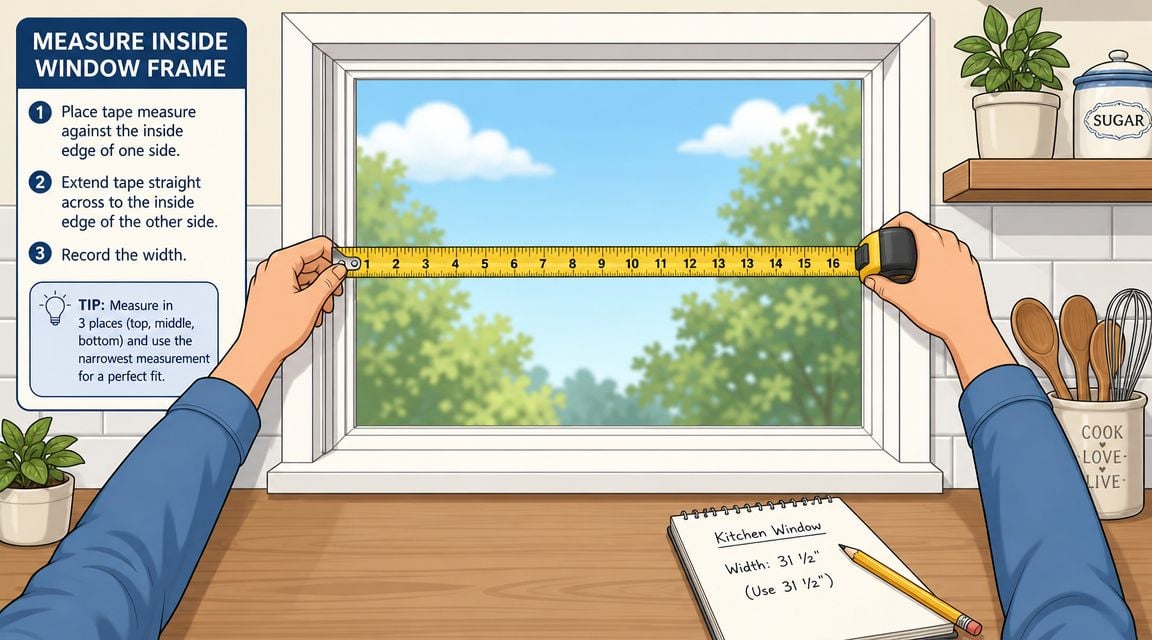
Saturday morning is usually when this project feels easy. By Sunday afternoon, a lot of homeowners realize the curtain is too short, too flat, or rubbing the sill because the measuring step got rushed.
Cafe curtains are forgiving, but they still need a plan. The cleanest results come from measuring the rod location first, deciding how much fullness you want, and writing those numbers down before you buy fabric. That matters even more in Central Florida, where kitchens often get strong daylight and a little extra humidity, so a panel that hangs awkwardly tends to look tired fast.
Start with rod placement
Measure from the point where the rod will sit, not from the top of the glass. That sounds obvious, but it is the mistake I see most often on quick weekend installs.
In many homes, the rod looks best around the lower half of the window. The right spot still depends on the trim, the sill depth, and anything near the window that could interfere with the fabric. Over a sink, I always check faucet height first. In older Florida homes, I also look for uneven trim or a sill that is slightly out of level, because even a well-made curtain can look off if the rod line is not straight.
A few checks help before you drill or cut:
- Check sill clearance. The curtain should hang just above the sill or barely touch it, not bunch up.
- Watch for obstacles. Faucets, handles, soap pumps, and chunky trim can push the panel forward.
- Choose the look you want. A slightly higher rod placement feels tidier and a little more polished. A lower placement reads more casual and traditional.
Measure width before buying fabric
Width is what gives cafe curtains their softness. Too little fabric, and the panels look thin. Too much, and they can feel bulky on a smaller kitchen window.
Measure the full span the curtain will cover, then decide whether you want one panel or a split pair. I usually suggest a little extra fullness so the fabric can gather naturally instead of hanging flat. That approach also makes prints and stripes look more intentional once the curtain is on the rod.
If you are planning yardage carefully, this guide to avoiding overbuying sewing fabric is useful for mapping out cuts before you head to the store.
The same habit helps with larger design projects too. If you like to plan a room before making purchases, our guide on how to measure a room for furniture follows the same principle. Measure first, then buy with confidence.
Keep a simple measuring checklist
Before cutting fabric, write down these four numbers:
- Rod width
- Finished drop
- Hem allowance
- One panel or two
That short checklist saves time, cuts waste, and gives you a better-looking result from the start.
Choosing Fabrics and Hardware for Our Climate
A cafe curtain over a sunny Florida sink has a tougher job than it gets credit for. Between hard afternoon light, humidity, and frequent washing, the wrong fabric can fade, sag, or start looking tired long before the season changes.
That is why I usually start with performance first, then style. A pretty panel is easy to sew. A pretty panel that still looks good after steam, splashes, and strong sun takes better material choices.
What works best in sun and humidity
Central Florida windows put fabric under steady stress. Kitchens collect grease and moisture. Bathrooms hold humidity longer than homeowners expect. South- and west-facing windows can bleach color fast, especially if the fabric is dark or the weave is delicate.
For most DIY cafe curtains, cotton, linen, cotton-linen blends, and select synthetic blends are the practical shortlist. Each one gives you a different balance of texture, maintenance, and lifespan.
Cotton is often the easiest starting point. It presses well, sews cleanly, and gives a crisp, precise look that fits cottage, coastal, and traditional kitchens. Linen has beautiful texture and a relaxed drape, but it wrinkles more and can ask for gentler care. A cotton-linen blend is often the sweet spot in Florida homes because it keeps some of that airy texture while holding up better in everyday use.
If the window sits above a sink, near a range, or in a bath that stays damp, I would rather see a washable midweight fabric than a precious one. That trade-off usually pays off. You wash it more often, spend less time fussing with it, and the curtain keeps its shape better.
For readers sorting through options before buying yardage, this overview of selecting fabric by the yard can help narrow down fiber types and basic characteristics.
Fabric Comparison for Florida Homes
| Fabric Type | Pros | Cons |
|---|---|---|
| Cotton | Easy to sew, easy to wash, crisp finish, works well for casual kitchens | Can wrinkle easily and may need more pressing |
| Linen | Beautiful texture, airy look, hangs softly, fits coastal and cottage styles | Often wrinkles more, may need careful laundering |
| Cotton-linen blend | Good balance of texture and practicality, easier upkeep than pure linen | May not have the same drape character as full linen |
| Synthetic blend | Often easier care, can resist wrinkling, useful in hard-working spaces | Can look less natural and may not press or drape as elegantly |
Color deserves the same attention as fiber. Lighter neutrals, soft greens, muted blues, and warm whites generally wear better in bright Florida light. They also hide gradual fading more gracefully than saturated reds, navy, or charcoal. If you love a bold print, use it in a less exposed window or line the panel only if the added weight still suits the rod and the scale of the window.
The same design logic applies across the room. Fabric has to suit the way the space is used, not just the way it looks in the store. Our guide on how to choose upholstery fabric walks through that same decision process with durability, sunlight, and maintenance in mind.
Hardware that makes maintenance easier
Hardware affects the finished look, but in Florida it also affects how easy these curtains are to live with. If a panel is annoying to take down, it usually gets washed less often.
Clip rings are a smart choice for first-time DIY projects and hardworking rooms. They let you remove the curtain in minutes, and they help if your hem is not perfectly even because the clips give you a little adjustment. Tension rods work well for renters, lightweight panels, or a quick guest bath update. Mounted cafe rods give the cleanest, most custom result, especially when you want the curtain to sit neatly and stay put through daily use.
A few hardware choices make a noticeable difference:
- Clip rings: Fast removal, easy adjustment, helpful for beginners
- Tension rods: Good for renters and small windows with very light fabric
- Mounted rods: Better long-term stability and a more finished look
- Moisture-friendly finishes: Brass, coated metal, black, or white finishes usually hold up better than cheap untreated pieces in humid rooms
Keep the pairing simple. Patterned fabric usually looks better with a quiet rod. Plain fabric can handle a little more character in the hardware. That is basic design balance, and it is one of the reasons even a small DIY curtain can look polished instead of improvised.
If you are choosing between several fabrics and cannot tell which one will hold up best in your specific light and humidity, that is a good point to ask for help. It is still a small project, but the same principles our design team uses for full-room plans apply here too. Material, scale, finish, and maintenance all need to work together.
Creating Your Panels With or Without a Sewing Machine
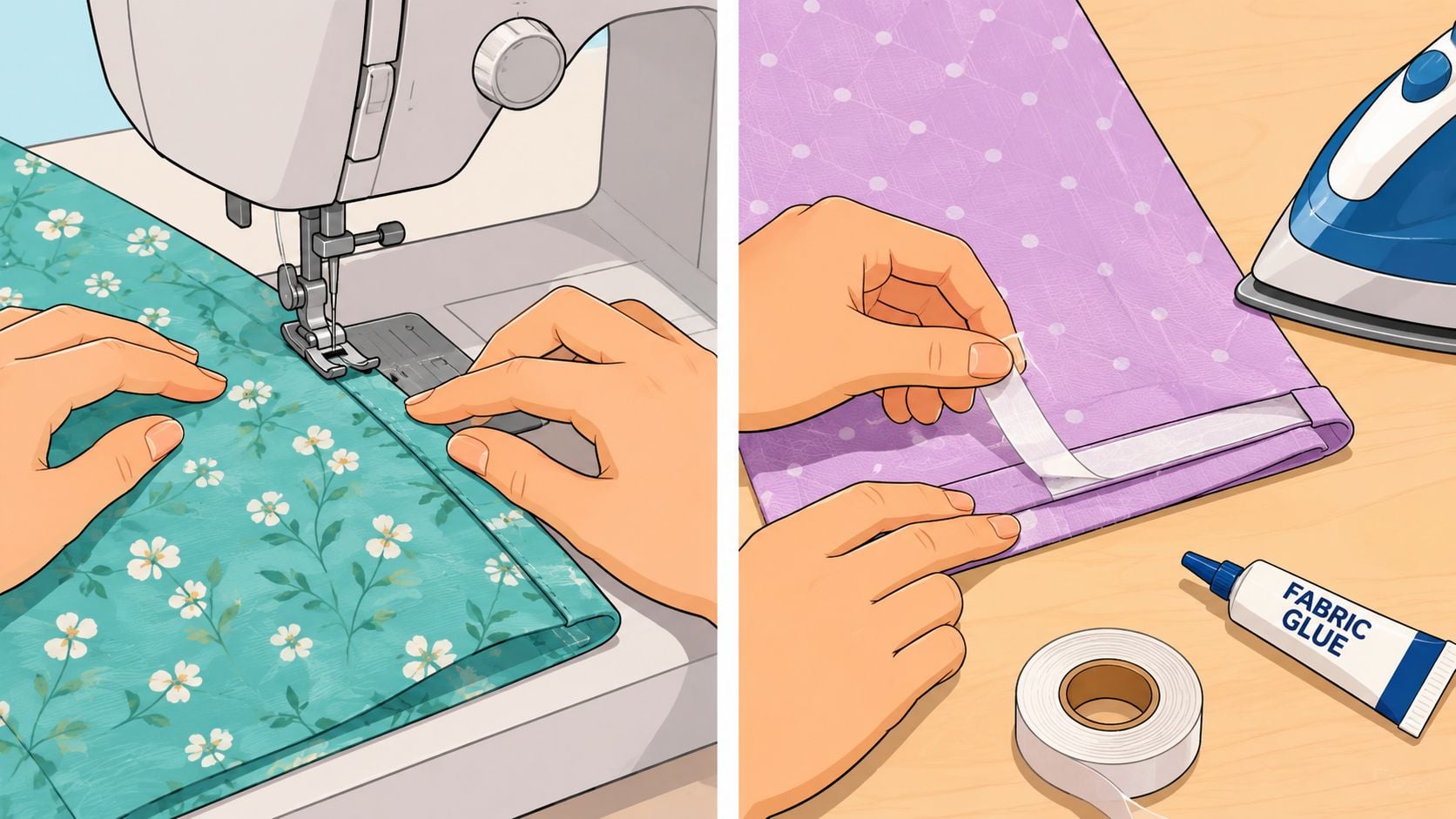
Cutting and hemming is the point where a simple cafe curtain starts to look custom, or starts to look homemade in the wrong way. In Central Florida, that difference often comes down to two things. Choose a fabric that cooperates in humidity, and finish it cleanly enough that strong daylight does not spotlight every wavy edge.
Fullness still matters here. A panel needs enough extra width to gather softly instead of stretching flat across the glass. For most cafe curtains, that means planning more fabric than the exact window width so the finished panel has shape and privacy.
The no-sew route
No-sew panels work well for quick weekend projects, especially in powder rooms, laundry rooms, or breakfast nooks where the fabric is lightweight and the curtain will not be tugged on all day. Fusible hem tape can give a neat result if the fabric presses crisply and the folds are measured carefully.
Use a simple process:
- Cut the panel square on a flat surface.
- Fold and press the side hems first.
- Apply fusible tape inside the fold.
- Repeat at the top and bottom.
- Press again so the edges set cleanly.
Pressing does half the work.
That matters even more with bright Florida sun. Any ripple in the hem shows up once light comes through the window, especially on pale cottons and linen blends. I usually tell customers to spend more time at the ironing board than they expect. It pays off.
No-sew has limits. In humid rooms, adhesive hems can loosen over time, especially on heavier fabric or panels that get washed often. If you are making curtains for a kitchen sink window, a busy bath, or a spot that gets regular laundering, stitching holds up better.
The sewn route
A sewing machine gives you more control and a longer-lasting finish. It is the better choice for washable fabrics, for panels with a little weight, and for any window where you want the hem to stay straight through seasons of moisture and sun.
A reliable method is simple:
- Press before stitching: Fold each hem and set it with the iron first.
- Keep the hem depth consistent: Uneven folds lead to twisting once the panel is hung.
- Check the panel for square: Match the top and bottom edges before you sew the final side.
- Give the bottom hem a little substance: A slightly deeper bottom hem helps the curtain hang straighter.
This is also where good fabric choices make life easier. Cotton-linen blends, lightweight indoor-outdoor fabric, and stable poly blends usually behave better for beginners than very loose weaves or slippery sheers. They resist sagging, hold a crease, and stand up better to our heat and moisture. If you have ever worked on a sunny Florida window with true linen, you know it can look beautiful and still shift enough to test your patience.
What usually goes wrong
A few mistakes show up again and again:
- Too little fabric width: The curtain looks skimpy and gives less privacy.
- Crooked cuts: Even a careful hem cannot fully fix an uneven panel.
- No pressing between steps: The finished edge looks soft and slightly messy.
- Fabric that is too thick for the scale of the window: The panel stacks awkwardly and feels bulky.
- Choosing style over performance: A delicate fabric may look pretty in the store but fade or relax too much in a hot, bright window.
Good DIY work follows the same design principles we use on larger projects. Proportion, clean lines, and material performance matter just as much on a small kitchen window as they do in a full room plan. That is also why I encourage homeowners to look at surrounding finishes before sewing the first hem. A cafe curtain near woven stools, wood tones, or casual dining furniture should relate to the room, the same way you would coordinate textiles in an entryway decorating plan.
If your fabric frays badly, refuses to press straight, or needs pattern matching across multiple windows, it may be time to stop treating it as a quick craft project. That is often the point where our team steps in and helps turn a good idea into a polished result that fits the house properly.
Installation and Professional Styling Tips
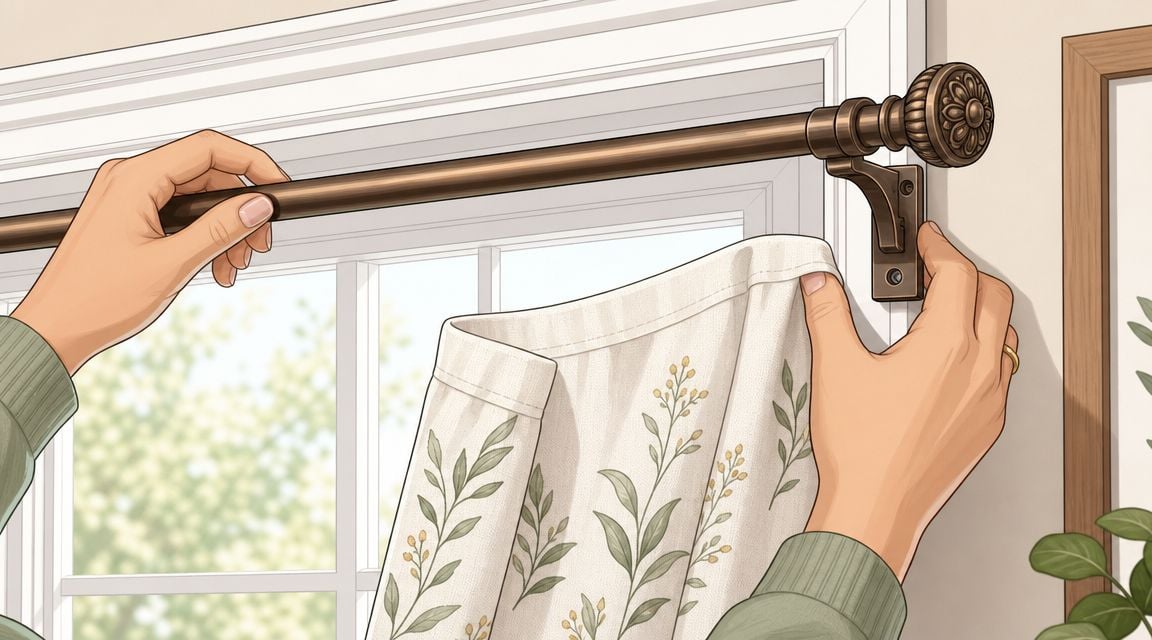
A cafe curtain can look charming on the worktable and still disappoint once it goes on the window. In Central Florida, heat, humidity, and strong afternoon sun make installation details matter more, because lightweight fabrics relax faster and any crooked line shows up immediately in bright light.
Start with the rod height and bracket placement. A rod set level with the sash or just above it usually looks cleanest for a true cafe treatment, and it keeps the proportion tied to the window instead of letting the curtain drift too high. If the window sits over a sink or in a bath, use hardware that resists moisture well. Painted steel can chip over time in damp rooms, while brass, stainless, and quality coated finishes tend to hold up better.
Clip placement should be even across the panel so the folds hang consistently and the hem stays level. I prefer to lay the panel flat, mark the center first, then work outward to each side. That simple step prevents the common problem of having fuller gathers on one end and a stretched, skimpy section on the other.
How to hang them so they drape well
Put the clips on before the rod goes up if possible. It is faster, and you can catch spacing problems while the fabric is still flat.
Once the rod is installed, step back and check the curtain from a few angles, not only straight on. Morning and late-day light can reveal a slight tilt that you will miss at noon. Look for these practical checkpoints:
- The bottom edge reads level with the sill
- The folds are distributed evenly across the panel
- The fabric clears the sill and does not catch on locks or trim
- The rod finish relates to nearby fixtures, cabinet pulls, or faucet metals
If the panel twists, the issue is usually uneven clip placement, a rod that is not level, or a top edge that was not finished straight. Adjust the hardware first before blaming the fabric.
A little training helps. Shape the folds by hand after hanging, then leave them in place for a day or two. Linen blends and cotton blends usually settle nicely, while very soft fabrics may need occasional reshaping in humid rooms.
Professional styling comes down to proportion and coordination. A slim rod and small clips suit a modest breakfast nook window. Heavier hardware can overpower it. In the same way, an oil-rubbed bronze rod beside warm wood tones feels grounded, while polished nickel or matte black often looks sharper against white trim and cleaner-lined kitchens. Those choices may seem small, but they are the same design decisions that make a room feel finished, much like the layering and sightline planning in this guide on decorating an entryway with cohesive finishes and textiles.
If you are installing cafe curtains across several windows, working around tile, or trying to match hardware to other finishes throughout the room, that is usually the point where DIY starts overlapping with design planning. A simple panel is manageable for a weekend. Consistent placement, balanced scale, and whole-room coordination take a more practiced eye.
When to Go Beyond DIY with a Design Pro
A cafe curtain is an easy weekend project when the window is straightforward and the goal is simple privacy with a little softness. The decision changes once the window treatment needs to solve several problems at once.
I usually suggest bringing in design help when windows are uneven, extra wide, set into tile, or part of an open kitchen and dining space where every finish is visible at the same time. That is also the point where fabric choice stops being just a style decision. In Central Florida, the wrong fabric can fade fast in strong sun, hold moisture in a bath, or wrinkle in a way that always looks slightly tired. A designer can help you choose materials and hardware that suit the light, the humidity, and the rest of the room instead of treating the curtain like a stand-alone craft project.
The same goes for layered treatments. If you want cafe curtains under woven shades, side panels near a slider, or matching textiles that relate to dining chairs, seat cushions, and nearby wood tones, proportion matters. One panel might be easy to make. Getting five or six windows to feel consistent takes planning.
Maintenance matters, too. In kitchens and baths, washable fabric, simple removal, and hardware that holds up in humid air will save frustration later. Those are the details many first-time DIY projects miss, and they are usually the reason a curtain looks good for a month but not for years.
If you want help pulling those decisions together, Slone Brothers offers furniture store design services for whole-room planning so your window treatments relate to your furnishings instead of feeling like an afterthought.
Ready to find the perfect piece for your home? Visit Slone Brothers Furniture in Longwood, FL, and let the design experts help bring your vision together, whether that means finishing a single kitchen corner or coordinating an entire Central Florida home with lasting style.