
Discover Your Perfect Dining Room Table Hutch

A lot of Central Florida families walk into a dining room and see the same problem. The table works. The chairs are fine. But the room still doesn't feel finished, and the storage situation is frustrating.
Holiday platters end up in the kitchen, glassware gets split between cabinets, and the dining room either feels too empty or too crowded. That's usually when the question comes up: should the room get a dining room table hutch, or would a sideboard make more sense?
That question matters even more in open homes around Longwood, Lake Mary, Sanford, and greater Orlando, where dining rooms often need to feel polished without becoming overly formal. A hutch can solve real storage problems. It can also feel too heavy if the size, finish, or layout is wrong. The good news is that it doesn't have to be a guess.
Table of Contents
- Finding the Perfect Dining Room Table Hutch in 2026
- Hutch or Sideboard Which Is Right for Your Home
- Matching Styles for a Cohesive Look
- Planning Your Layout Size and Scale
- Decoding Quality Materials and Craftsmanship
- Creating Your Perfect Piece with Custom Orders
- Pricing Delivery and Long-Term Care
- Frequently Asked Questions About Dining Hutches
Finding the Perfect Dining Room Table Hutch in 2026
The modern dining room isn't as rigid as it used to be. Some homes still have a dedicated room for gatherings. Others use that same space for homework, holiday hosting, and everyday overflow storage.
That's why the hutch debate is back. Design commentary for 2026 notes that many homeowners are weighing a hutch against a sleeker sideboard, especially in open-plan spaces where visual bulk matters as much as storage needs, according to Homes & Gardens on outdated dining room trends. The core issue isn't whether a hutch is “in” or “out.” It's whether the piece fits the way the room functions.
A dining room table hutch makes sense when a family needs enclosed storage, a place to display meaningful pieces, and more vertical function without spreading farther into the room. A sideboard often makes more sense when the goal is a lower profile and a more relaxed look.
A good dining room doesn't need more furniture. It needs the right furniture doing more than one job.
Shoppers often get stuck at this point. They can picture the table. They can usually picture the chairs. The storage piece is harder because it affects style, traffic flow, and how formal the room feels.
For families still deciding on the table itself, this guide on how to choose a dining room table helps frame the room from the center outward. The same principle applies to flowers for a big gathering. A room feels more intentional when the supporting pieces are chosen around real use, much like the planning advice in this Guide to LA wedding flowers by Fiore, where coordination matters more than picking what looks pretty alone.
Hutch or Sideboard Which Is Right for Your Home
Some confusion starts with the names. People use hutch, buffet, sideboard, and credenza almost interchangeably. They're related pieces, but they don't solve the same problem in the same way.
A simple way to define each piece
A hutch is the upper vertical storage or display unit that sits on top of a buffet or sideboard. That vertical design adds storage without increasing the floor footprint, which is one reason sizing guidance often recommends taping off the piece before buying, as explained by DutchCrafters in its hutch and buffet sizing guidance.
A sideboard or buffet stays lower and longer. It offers storage and a serving surface, but it doesn't bring the eye upward in the same way.
For readers comparing similar low storage pieces, this explanation of what a credenza is used for can also help sort out the vocabulary.
Hutch vs. Sideboard At a Glance
| Consideration | Dining Room Hutch | Sideboard / Buffet |
|---|---|---|
| Storage style | Mix of display and enclosed storage | Mostly enclosed storage with a broad top surface |
| Visual effect | Taller, more architectural presence | Lower, lighter profile |
| Best for | Rooms that need vertical storage | Rooms that need flexibility and a casual feel |
| Display potential | Strong, especially for china, glassware, or collected pieces | Limited to the top surface |
| Floor-space impact | Adds storage upward instead of outward | Keeps the room visually open but offers less vertical capacity |
| Serving function | Can support storage and display, with a base for serving | Excellent for buffet-style serving |
| Open-plan fit | Works when scaled carefully | Often easier in relaxed, mixed-use spaces |
When each one makes more sense
A hutch usually fits best when the room has one or more of these needs:
- Storage pressure: Serving bowls, holiday dishes, table linens, and glassware need a home close to the table.
- Vertical opportunity: The room can handle height better than extra width.
- Defined dining zone: The family wants the dining area to feel more intentional inside a larger open layout.
A sideboard usually wins when these needs matter more:
- Visual calm: The room already has a lot going on, such as nearby kitchen cabinetry or open shelving.
- Flexible use: The top surface may double for serving, decor, or everyday drop-zone duty.
- Less formality: The goal is a dining area that feels current and relaxed.
Practical rule: If the main complaint is “there's nowhere to put anything,” a hutch deserves a serious look. If the main complaint is “the room already feels full,” a sideboard is often the safer first move.
Matching Styles for a Cohesive Look
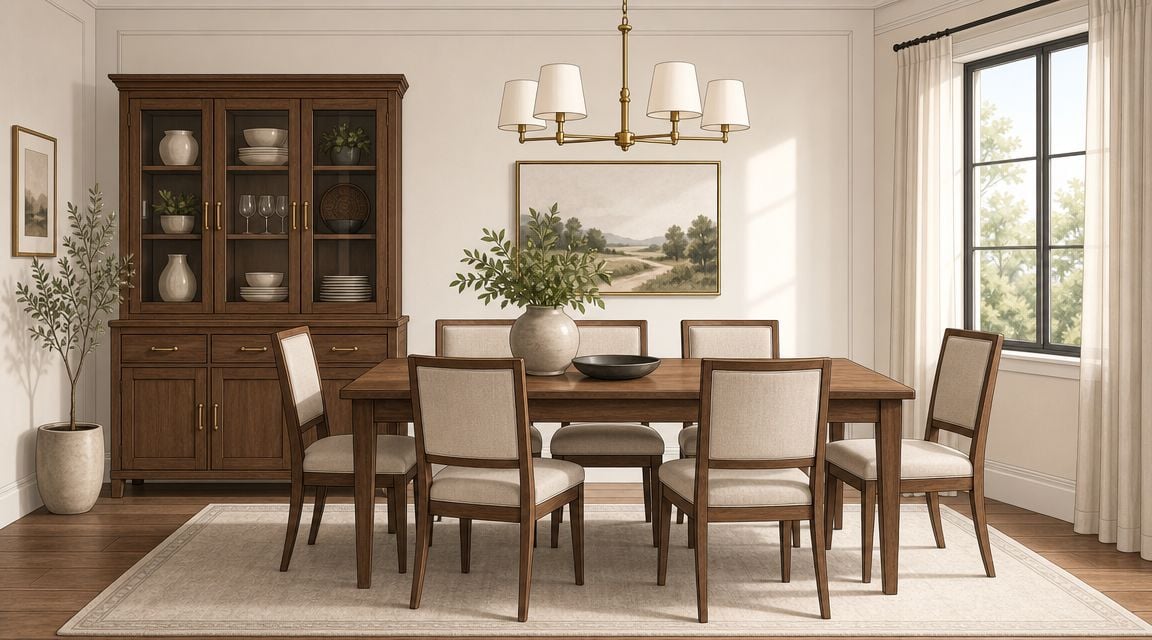
A dining room table hutch doesn't have to look old-fashioned. Most of the dated feeling comes from one mistake. Every piece matches too closely, in the same height, finish, and visual weight.
That's especially noticeable in many Central Florida homes, where natural light and open sightlines make heavy furniture feel heavier. A cohesive room usually needs coordination, not perfect duplication.
Historical context helps here. The hutch wasn't originally an afterthought. It appeared as a standard companion to the dining table and chairs in early American dining rooms, including at Thomas Jefferson's Monticello in 1772, which shows how firmly rooted the piece is in dining-room function and display, as noted in Wikipedia's dining table history. The point today isn't to recreate that old room. It's to use the same logic in a fresher way.
Why matching too perfectly can hurt the room
A room feels flatter when every dining piece comes from one visual idea with no variation. A better approach is to match the tone of the room, not every detail.
That might mean:
- Repeating wood warmth: A table and hutch can share a general wood family without being the exact same stain.
- Balancing shapes: If the table is substantial and grounded, a hutch with more glass or lighter lines can keep the room from feeling top-heavy.
- Mixing periods carefully: A traditional hutch can work with a simpler table if the scale and finish still relate.
Readers comparing broader style directions can use this overview of furniture styles explained to narrow down what “goes together” before focusing on a specific piece.
Style pairings that work well in Central Florida homes
A few combinations tend to work especially well in Longwood-area homes.
Transitional with warmth
This is often the easiest route. The table has clean lines. The hutch includes some classic detailing, but not too much ornament.
That balance works well for families who want a polished room without making the space feel formal every day.
Coastal or light casual
A lighter finish, simpler hardware, and a hutch with a cleaner silhouette can bring storage into the room without weighing it down. This approach fits homes that lean airy and relaxed.
Craftsman or heritage-inspired
Some families want furniture with visible character and stronger wood presence. In that case, the key is editing the rest of the room. Let the hutch be the statement piece, then keep lighting, rug pattern, and tabletop styling quieter.
A room doesn't need a full “set” to feel finished. In many cases, it looks better when the hutch complements the table instead of copying it.
Planning Your Layout Size and Scale
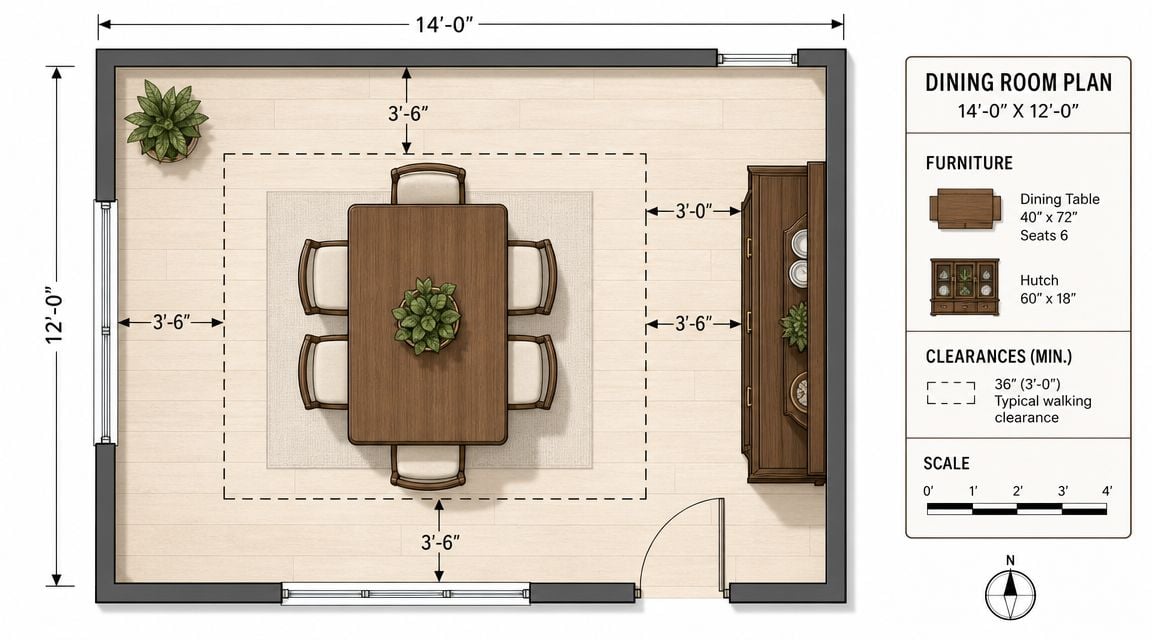
The most common hutch mistake isn't style. It's scale.
A piece can be beautifully made and still feel wrong if it pinches traffic flow, blocks sightlines, or overpowers the table. That's why layout planning should happen before anyone falls in love with a finish.
Traditional American dining rooms often centered on a large table with six or eight chairs, and the hutch made practical sense nearby because all the serving pieces had to live somewhere, as described in Suzanne Spellen's quick history of the dining room. Modern homes vary much more, which means hutch sizing has to be more deliberate.
Start with floor space, not furniture photos
A showroom photo can hide a lot. Ceiling height, wall width, and walking paths are what decide whether a dining room table hutch feels just right or oversized.
A practical measuring process usually looks like this:
- Measure the wall first. Note total width, nearby doors, windows, and vents.
- Measure the table and chairs in use. Include the space chairs need when pulled out.
- Look at walking routes. Pay attention to paths between kitchen, dining area, and nearby living spaces.
- Mark the footprint on the floor. Painter's tape helps people see what the furniture will claim.
For more detailed room planning help, this room layout guide is useful before making a final decision.
How to test a layout before ordering
One of the easiest ways to avoid regret is to act out a normal day in the taped-off space.
- Pull the chairs back: Make sure people can sit down without bumping the hutch behind them.
- Walk the serving path: Carry an imaginary platter from kitchen to table.
- Check sightlines: Stand in the adjacent room and see whether the hutch feels balanced or abrupt.
- Think about doors: Cabinet and drawer access matters just as much as the outside dimensions.
If a hutch only works when no one is seated and nothing is being served, it doesn't work.
Open-plan Florida homes often need special attention here. A hutch may look right from the dining room itself but feel too tall when viewed from the kitchen or family room. Tape testing catches that early.
Decoding Quality Materials and Craftsmanship
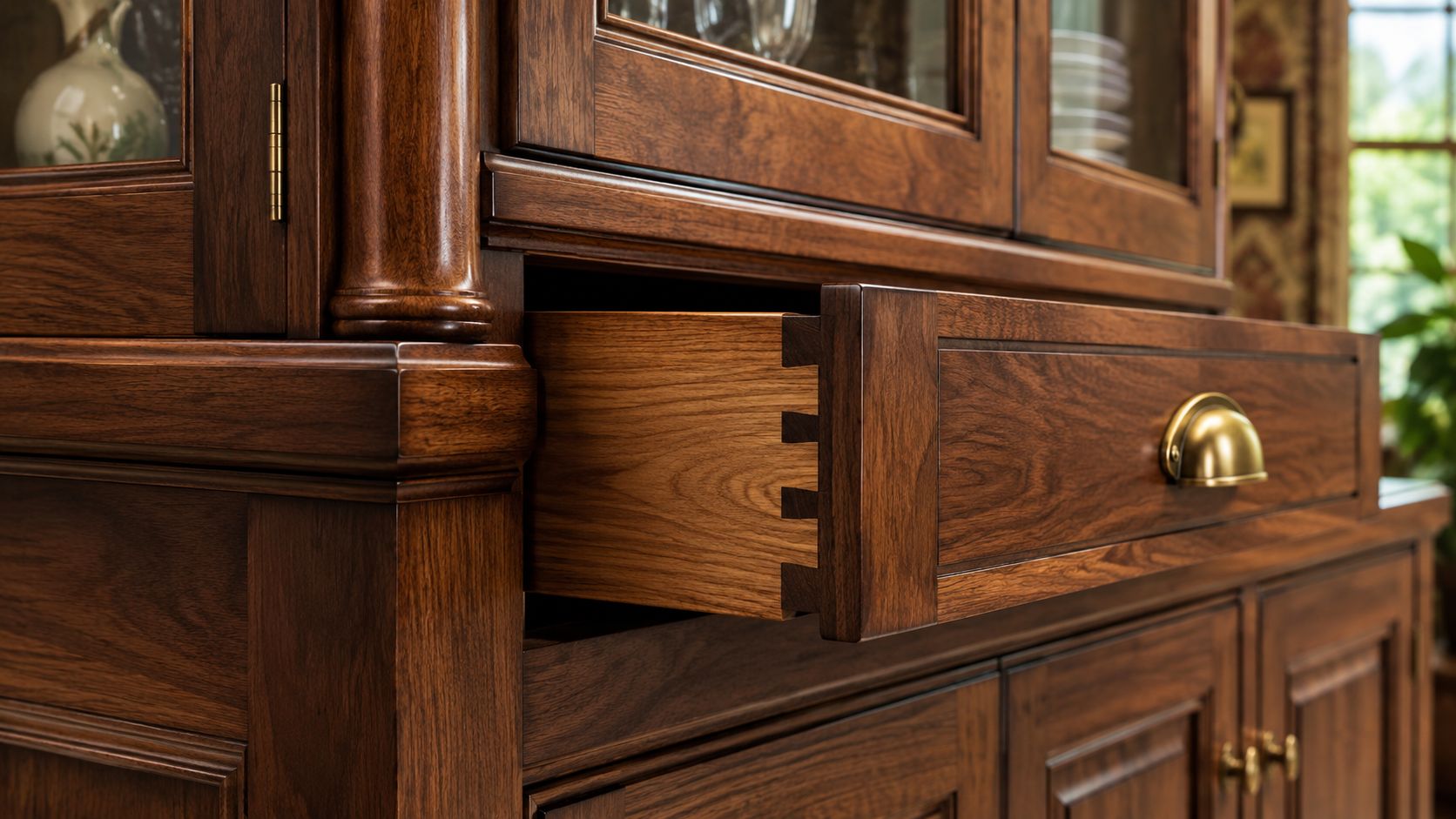
A hutch has a tougher job than many dining pieces. It doesn't just sit low and wide. It rises vertically, carries weight, and gets opened and closed constantly.
That means construction matters more than it might in a simple accent cabinet. A handsome finish can catch the eye in a showroom, but structure is what keeps the piece feeling solid years later.
What to look for in the structure
Verified construction guidance shows that dining hutches are typically built with 3/4-inch material for structural components such as sides and shelves, with joinery often using pocket-hole screws and wood glue. In that same guidance, pocket holes on top boards are spaced about every 6 inches to help keep assembly flush during glue-up, according to the Kreg buffet with hutch plan.
That sounds technical, but the takeaway is simple. A tall storage piece needs enough substance and sound joinery to resist wobble and racking.
Readers who want a broader wood primer can review this guide to choosing the right hardwood for longevity and style.
Why craftsmanship matters more in a tall storage piece
A dining room table hutch often holds dishware, glass, serving pieces, and decorative objects. The higher the storage goes, the more obvious any weakness becomes.
A quality-built hutch should feel steady when doors open and close. Shelves should inspire confidence, not caution. Drawers should track cleanly instead of shifting or dragging.
Helpful signs to look for include:
- Substantial shelves: Thin shelving can sag under the weight of dishes over time.
- Tight joinery: Hidden fastening and glued joints matter because they support long-term alignment.
- Balanced upper and lower sections: The top should sit securely on the base rather than feeling perched.
- Finish quality: A good finish doesn't just look nice. It also helps the wood hold up to daily use.
Strong construction is easier to appreciate after a few years than on day one, but that's exactly why it matters.
For shoppers considering American-made or Amish-crafted dining furniture, this is often where the difference shows up most clearly. The piece tends to feel grounded, not flimsy, even before anything is placed inside.
Creating Your Perfect Piece with Custom Orders
A family walks into the showroom with one clear problem and three competing needs. They want more storage. They do not want the dining room to feel heavy. They are still deciding whether a hutch makes more sense than a sideboard.
Custom ordering helps answer that question with the room in front of you, not with a standard piece built for an average floor plan. In many Central Florida homes, the right choice comes down to scale and function. If you need vertical storage for serving pieces, glassware, or holiday dishes, a hutch can earn its footprint. If the room already feels visually busy or ceiling height is limited, a sideboard may serve the space better.
That is why custom work matters. It lets you shape the furniture around the room instead of forcing the room to accept a preset size.
A well-planned custom hutch usually feels more current because the details are controlled. Lighter finishes soften the look. Simpler doors and hardware reduce formality. More closed storage and less glass can keep the piece practical instead of fussy. The same logic shows up in kitchen planning. The Cabinet Coach on cabinet options explains how fit often improves when storage is sized to the home instead of pulled from a standard catalog.
For many shoppers, the first custom decision is not style. It is proportion.
What to customize first
Size and footprint
Start with the wall, ceiling height, and the space you need to walk around the table. A hutch works like a built-in bookcase in one important way. If it is too tall or too deep, the whole room feels tighter, even when the square footage has not changed.
If that measurement exercise shows the room wants something lower and longer, a sideboard may be the cleaner answer. If the room has enough wall height and you need storage above the serving surface, a custom hutch can give you both function and presence without overwhelming the space.
Storage mix
This choice affects daily life more than many families expect. Open shelving and glass doors are useful if you enjoy displaying dishes or keeping entertaining pieces in easy view. Solid doors make more sense if you want the room to look calmer and hide the practical items.
A good custom order lets you adjust that balance so the piece matches how your household uses the dining room.
Finish
Florida homes often look better with finishes that feel lighter, clearer, and less formal. Natural wood tones, soft browns, and painted finishes can help a hutch sit comfortably in an open-plan home where the dining area connects to the kitchen or living room.
Hardware and door style
These are small choices with a big visual effect. Cleaner pulls, flat or shaker-style doors, and restrained detailing can shift a hutch away from the old matched-set look and toward something that feels collected and personal.
Slone Brothers Furniture offers a custom-order program that helps shoppers work through these decisions with finish, size, and style options for dining pieces. That matters when a family likes the storage idea of a hutch but needs it to fit a specific wall, table, or traffic path.
Custom does not have to mean elaborate. It means the piece solves the right problem, whether that ends up being a hutch, a sideboard, or something between the two.
Pricing Delivery and Long-Term Care
A dining room table hutch is usually a long-term purchase. That's why the smartest pricing question isn't just “What does it cost today?” It's “How well will it function, hold up, and still fit the home years from now?”
How to think about value
Families usually choose between three paths. They buy a temporary piece, they wait, or they invest in a piece with stronger materials and a better fit. The third path often brings the least frustration because the furniture isn't being replaced when storage needs change or quality issues show up.
Useful shopping questions include:
- Does the piece solve a real storage problem?
- Does the construction feel dependable?
- Will the finish and scale still work if the room changes a little over time?
- Is there a better value through custom order or a clearance floor sample?
For Central Florida shoppers, local showroom support also matters. Delivery coordination, order tracking, and help with room-fit questions can make the process much smoother than trying to figure out a large case piece alone.
Care habits that help wood furniture age well
Long-term care is straightforward, but consistency matters.
- Dust gently: Soft, dry cloths help keep finishes clear without scratching.
- Use protective layers: Pads or runners help under serving pieces and décor.
- Wipe spills promptly: Wood furniture handles everyday life better when moisture doesn't sit.
- Keep placement in mind: Strong sun and heat exposure can affect how a finish ages.
A well-made hutch should develop character through use, not look worn out too early. Good care helps preserve both the finish and the stability of moving parts such as doors and drawers.
Frequently Asked Questions About Dining Hutches
Is a hutch the same as a china cabinet
Not exactly. People often use the terms loosely, but a hutch usually refers to the upper unit that sits on a buffet or sideboard. A china cabinet is often discussed as a complete display-and-storage piece.
Can the top hutch be bought without the base
Sometimes, but it depends on the design. Some upper sections are made specifically for a matching base, while others work more independently. This is a good question to ask before ordering.
Does a hutch only work in traditional rooms
No. The dated look usually comes from poor scale, heavy matching sets, or too much visible clutter. A simpler silhouette and edited styling can make a hutch work in a more current home.
What should stay inside a hutch all year
The most useful everyday items are the best candidates. Think serving pieces, glassware, linens, and dishes used often enough to justify easy access. Seasonal pieces can go in lower cabinets or rotate in and out.
How can the inside of a hutch feel less dark
Interior lighting, glass doors, lighter finishes, and restrained display all help. Even without built-in lighting, a hutch looks brighter when it isn't overfilled.
Ready to find the perfect piece for your home? Visit Slone Brothers Furniture in Longwood, FL, and let the design team help with dining room layout, custom-order options, and quality pieces that fit the way Central Florida families really live.