
Faux Bamboo Chairs: A Guide for Your Florida Home


A homeowner in Lake Mary spots a set of airy dining chairs online and pauses. They have the light, coastal look that works so well in Central Florida, but the listing says “faux bamboo,” and that raises questions. Are they real bamboo? Will they hold up in a busy dining room? Will the style still feel right a few years from now?
Those are smart questions. Faux bamboo chairs sit in a sweet spot between decorative charm and everyday usefulness, which is why they keep showing up in dining rooms, foyers, sunrooms, and covered lanais across Orlando and the surrounding area. For households trying to create a Florida home that feels bright, collected, and timeless, they can be a strong fit.
This guide walks through what faux bamboo chairs are, how they're made, why the style has lasted so long, and what matters most before bringing a set home. For readers refining a breezy interior, coastal look furniture ideas for Central Florida homes can also help place this style in a broader room plan.
Table of Contents
- An Introduction to Faux Bamboo Chairs
- Understanding Faux Bamboo Materials and Construction
- The Timeless History of Faux Bamboo Design
- Choosing the Right Material for Your Florida Home
- How to Style Faux Bamboo Chairs
- What to Look for When Buying Faux Bamboo Chairs
- Your Faux Bamboo Chair Questions Answered
An Introduction to Faux Bamboo Chairs
Faux bamboo chairs have a way of solving a very Florida design problem. Many homes in Longwood, Sanford, and greater Orlando need furniture that feels open and refined, not bulky or formal. These chairs bring that lighter profile without looking flimsy or temporary.
The phrase faux bamboo chairs can confuse shoppers at first. It sounds like a material description, but it's really a style description. The chair is made to look like bamboo through its shape and detailing, even when the frame itself is wood or metal.
That distinction matters because it changes how a buyer judges quality. A good faux bamboo chair shouldn't be evaluated as a tropical novelty piece. It should be judged like any other well-made chair, with attention to frame material, finish, comfort, and how it fits the room.
Practical rule: Treat faux bamboo as a design language, not a shortcut term for casual furniture.
In Central Florida homes, that design language works across several looks:
- Coastal rooms: The slender lines keep a breakfast area or dining room feeling breezy.
- Traditional interiors: The shape adds elegance without the weight of heavier carved furniture.
- Eclectic spaces: Faux bamboo mixes easily with painted case goods, woven textures, and refined upholstery.
- Entryways and smaller rooms: Their compact scale often helps a space feel furnished without feeling crowded.
For many households, the appeal comes down to balance. The style feels decorative, but it can still be practical. It looks collected, but it doesn't have to feel precious. That's why it keeps earning a place in Florida homes that need both beauty and usability.
Understanding Faux Bamboo Materials and Construction
A faux bamboo chair succeeds or fails on the hidden parts first. The bamboo look catches your eye, but the frame, joints, finish, and seat construction decide whether that chair will serve your home for years or frustrate you after one season of use.
What faux bamboo means in practical terms
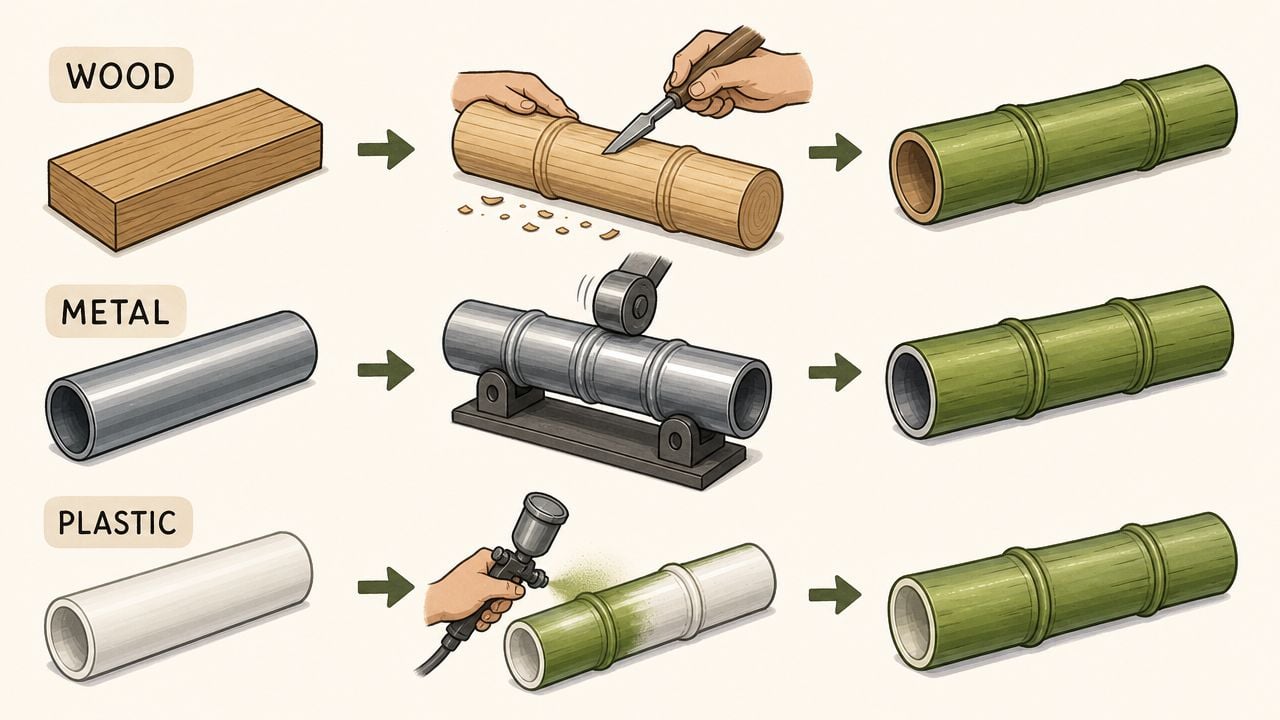
Faux bamboo describes a furniture style, not a single material. Makers create the familiar bamboo-like nodes and slender stalk shape by carving, turning, casting, or shaping other materials into that profile. Museums and decorative arts collections regularly catalog faux bamboo pieces as wood furniture made to resemble bamboo rather than furniture built from the plant itself, as shown in the Metropolitan Museum of Art's faux-bamboo furniture examples.
That distinction helps homeowners ask better questions. If the chair is wood, you should judge the wood species, joinery, and finish. If it is metal or aluminum, you should look at welds, coatings, and how the chair will hold up in a humid Florida setting.
In other words, the silhouette is style. The material is performance.
The main materials you'll see
Most faux bamboo chairs fall into three broad construction groups, and each one has a different personality in the home.
Turned hardwood is often the most traditional choice. It gives you warmth, visual depth, and the kind of furniture-grade presence that works well in dining rooms, studies, and bedrooms. On a good hardwood chair, the bamboo joints look crisp rather than soft or swollen, and the chair should feel steady when you shift your weight.
Metal gives a slimmer, more refined look. It can suit smaller breakfast areas or homes that mix classic lines with cleaner finishes. The key is rigidity. A metal faux bamboo chair should feel intentional and stable, not springy.
Aluminum is popular where lighter weight and easier movement matter. That can be useful in Florida homes where chairs may shift between dining, sunroom, and occasional seating use. The finish matters here, because the best versions still read like furniture, not patio leftovers brought indoors.
Households comparing wood tones across a room may also find it helpful to review durable wood flooring styles so the chair finish relates well to the floor instead of competing with it.
Construction details that change daily comfort
Two faux bamboo chairs can look nearly identical in a photo and behave very differently in person. That usually comes down to construction.
Start with the joints. On wood frames, tight joinery matters more than decorative carving. If the chair wobbles at the side rails or back, the bamboo styling will not save it. On metal or aluminum frames, look for clean connections and an even finish around welded areas.
Then check the seat. An upholstered seat usually makes the chair more comfortable for long dinners and gives you another layer of design control. Cane or rush seats bring texture and charm, but they need inspection because wear shows up there first. If you want a chair that works hard in everyday family life, the upholstery selection deserves as much attention as the frame. Our guide to choosing upholstery fabric for everyday living can help you sort through that decision.
Finish quality is another part shoppers often miss. In Central Florida, sunlight and humidity test furniture every day. A painted or stained faux bamboo chair should have even coverage in the grooves and around the nodes, with no drips, thin patches, or rough buildup. Those small details are often the difference between a chair that looks polished in a Longwood dining room and one that starts to feel tired too soon.
A faux bamboo chair may look light and decorative, but its long-term value comes from sound joinery, a stable frame, and a finish suited to real household use.
At Slone Brothers, this is the part of the conversation we slow down for. A chair like this should fit your room visually, but it should also fit the way your household lives. That practical plan matters more than chasing a trend, especially when custom finishes, fabrics, and room-specific guidance are available close to home in Longwood.
The Timeless History of Faux Bamboo Design
Some furniture styles feel tied to one decade. Faux bamboo isn't one of them. Its staying power comes from a long design history that stretches across countries, periods, and changing tastes.
A style shaped by trade and taste
The style has a deep transatlantic history. American firms in the 1860s made faux-bamboo furniture from local woods to compete with imported Asian decorative arts, and the tradition had already been established earlier in Britain, where it spread as an alternative to heavier Victorian furniture. That places faux bamboo in a design lineage of over 150 years, according to the Art Institute of Chicago's side chair history.
That history explains something many shoppers sense instinctively. Faux bamboo doesn't read like a passing novelty because it never was one. Craftsmen returned to it again and again because it offered a lighter visual rhythm than bulkier furniture forms, while still feeling decorative and refined.
The style also sits comfortably within broader currents such as Chinoiserie and the Brighton Pavilion look. That gave it a place in both formal interiors and later revival periods, where households wanted a room to feel graceful rather than weighed down.
Why that history still matters
A historic style isn't automatically a practical one, but this background does help a buyer make better design decisions. It means faux bamboo chairs can be used with confidence in homes that aren't trying to look themed or trendy. They already belong to a well-established furniture tradition.
That matters in Central Florida, where many interiors blend influences rather than sticking to one strict period. A home in Longwood might combine refined dining furniture, woven textures, painted finishes, and soft coastal colors. Faux bamboo fits into that mix because it has enough history to feel grounded and enough lightness to feel fresh.
Good design ages well when it carries a real lineage. Faux bamboo does.
For a homeowner deciding between a chair that feels classic and one that feels tied to a moment, that history is part of the answer. The style has already proven it can adapt.
Choosing the Right Material for Your Florida Home
A chair that looks lovely in a showroom can feel very different after a Florida summer of bright windows, daily meals, and constant movement around the table. In Central Florida homes, furniture often has to be both attractive and hardworking. That is why material selection deserves the same attention as shape or finish.
For faux bamboo chairs, the important question is how the piece is made and where it will live. A faux bamboo frame can be carved from wood, formed from metal, or made in aluminum for lighter weight and easier upkeep. The decorative profile stays graceful, but the material underneath changes how the chair handles humidity, shifting, cleaning, and everyday wear.
A simple way to judge it is to treat the chair like a house frame behind a finished wall. The outer look sets the style. The inner build determines how well it lives in your home.
Where faux bamboo has an edge
Real bamboo has a naturally irregular beauty. Faux bamboo gives furniture makers more control over the frame, joints, and finish, which is often a better match for busy indoor use in Florida.
That matters in dining rooms and breakfast areas, where chairs are pulled in and out several times a day. A well-made wood or metal faux bamboo chair usually feels more predictable because it is built with furniture joinery rather than relying on the character of a plant material. The result is often a chair that keeps its shape, accepts painted or stained finishes well, and fits a wider range of interiors.
For many Longwood homeowners, that flexibility is the point. Faux bamboo lets you bring in the charm of the style without locking yourself into a tropical look. It can read polished, coastal, tailored, or traditional, depending on the finish and seat treatment.
If you are considering a chair near a lanai or another partially exposed area, our guide on how to choose outdoor furniture for Florida conditions can help you sort out what belongs indoors, what can handle covered outdoor use, and what needs more protection.
You can also use visual planning tools before you buy. An ai backyard patio design tool can help you see whether a faux bamboo silhouette feels right near adjacent outdoor spaces, especially in homes where the dining room and patio work together.
Faux Bamboo vs. Real Bamboo for a Florida Home
| Feature | Faux Bamboo (Wood/Metal) | Real Bamboo |
|---|---|---|
| What it is | A chair made from hardwood, metal, or aluminum, shaped to resemble bamboo | A chair made from actual bamboo material |
| Visual look | More controlled, often more tailored and furniture-like | More natural and organic in expression |
| Daily dining use | Often better suited to regular repositioning and frequent use | Can work well, but build quality needs closer inspection |
| Finish options | Usually available in more painted and stained looks | Often shaped by the material's natural color and texture |
| Style flexibility | Fits coastal, traditional, and transitional rooms with ease | Works best in rooms with a more natural or tropical direction |
| Higher-traffic settings | Metal and aluminum versions can be a practical option | Usually less adaptable for repeated heavy use |
| Buying mindset | Judge the frame, joinery, seat, and finish like any other furniture piece | Judge condition, stability, and finish care as a natural-material piece |
If you want one rule to start with, use this one. For daily use, choose construction first. For occasional use, let texture and character carry more weight.
That approach helps remove a lot of the guesswork. It also turns faux bamboo from a style choice into a practical plan for your home, which is exactly how we guide clients at Slone Brothers in Longwood when they want timeless design that also makes sense for Central Florida living.
How to Style Faux Bamboo Chairs
You walk into a Central Florida dining room at 3 p.m. The light is bright, the table is substantial, and the room can feel heavy fast if every piece has visual weight. Faux bamboo chairs solve that problem beautifully. They bring shape and character while still letting the room breathe.
That balance is what makes them so useful. In design terms, faux bamboo works like trim on a structured jacket. The lines are decorative, but they stay disciplined enough to fit into everyday rooms instead of taking them over.
Where they work best
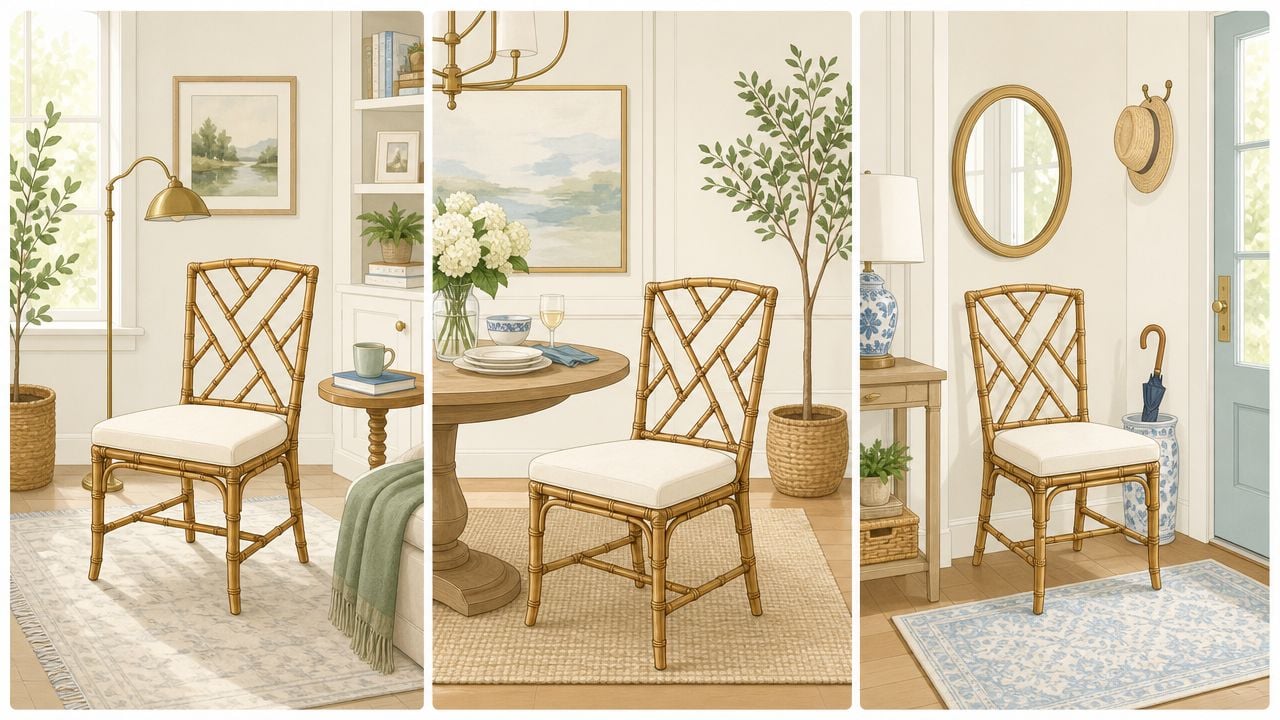
A dining room is often the easiest place to start. Faux bamboo chairs can lighten the look of a heavier wood table, which is especially helpful in Florida homes where openness matters. If you want the room to feel polished instead of formal, add upholstered seats in a quiet fabric. You keep the structure of the chair, but the comfort level improves for real daily use.
Entryways are another smart spot. A single chair beside a console, or a pair flanking a small table, can add finish and purpose without crowding the path in and out of the house. That matters in homes where the front door opens straight into the main living area.
They also do good work in living rooms, bedrooms, and offices. If your sofa, storage pieces, or desk have more visual bulk, a faux bamboo chair can break up that density. It gives the eye a place to rest.
Easy pairings for Central Florida interiors
The easiest styling plan is simple. Let the chair provide line and texture, then keep the surrounding materials calm.
A few combinations tend to hold up well over time:
- Coastal and relaxed traditional: White walls, soft sand tones, muted blue accents, and woven textures let the chair's frame stand out without feeling busy.
- Classic dining spaces: Faux bamboo side chairs around a rectangular wood table create a pleasing contrast between light lines and solid mass.
- Eclectic rooms: Painted frames, patterned seats, or cane details can add personality, as long as one element stays quiet enough to keep the mix organized.
- Covered Florida rooms: Breezy silhouettes pair well with indoor friendly fabrics and casual tables. Homeowners planning a lanai or garden-side seating area can use ai backyard patio design to test layout ideas before buying.
If you are styling a sunny sitting area or enclosed porch, our guide on how to decorate a Florida room can help you connect faux bamboo with lighter palettes and Florida-friendly textures.
One caution is worth keeping in mind. Faux bamboo has a clear point of view, so it usually looks better as a supporting player than the star of every piece in the room. Two to six chairs can feel intentional. A full room of matching bamboo-look elements can start to feel staged.
That is often the difference between a home that feels timeless and one that feels stuck in a theme. Here in Longwood, we often help clients use faux bamboo as a smart accent within a larger plan, especially when they want classic style that still suits Central Florida living.
What to Look for When Buying Faux Bamboo Chairs
A chair can win you over in ten seconds on a showroom floor. Then it has to live in your home for years. That is why the best faux bamboo purchase starts with beauty, then moves quickly to structure, comfort, and fit.
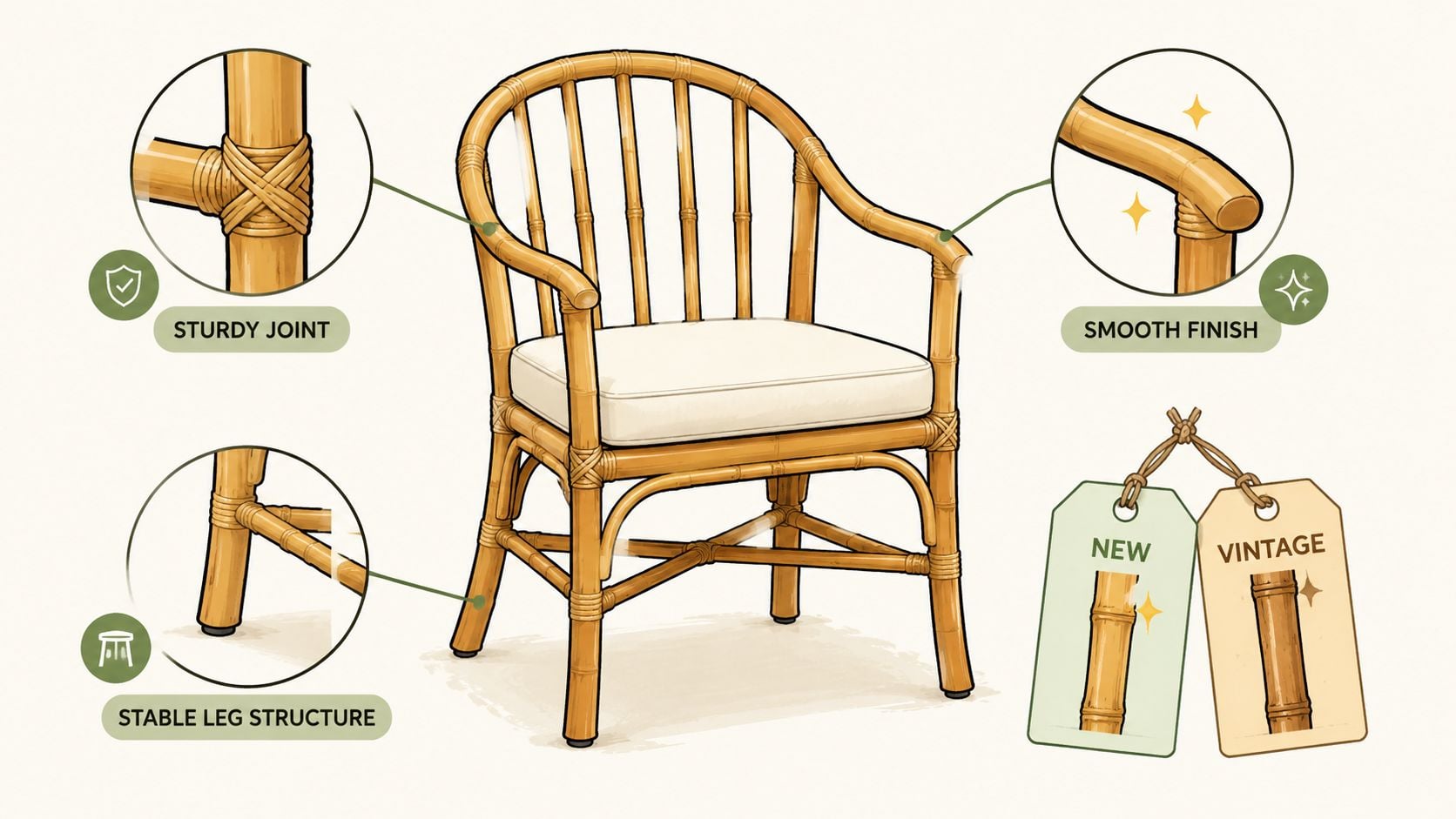
Here in Central Florida, I usually tell homeowners to inspect faux bamboo chairs the same way they would inspect a good window. The style matters, but the ultimate test is how well the piece is built and how calmly it holds up to daily use, shifting humidity, and regular cleaning. A chair that looks graceful but feels shaky will not stay charming for long.
A practical quality checklist
Start with the frame, because that is the skeleton of the chair.
- Joinery: Lightly shift the chair from side to side. It should feel planted, not loose or creaky. Movement at the joints often means repair work is coming.
- Finish condition: Minor age and patina can be attractive. Chipping, rough touch-ups, or uneven color usually deserve a closer look.
- Seat construction: Upholstered seats should feel secure and properly scaled to the frame. Cane inserts should look tight and even, not brittle, cracked, or sunken.
- Leg stability: Faux bamboo chairs often have slender lines, but slender should still feel dependable.
- Proportion to the room: Check seat height, width, and back scale against the table or spot where the chair will live. A pretty chair that sits too low can feel awkward every single day.
One small check helps a lot. Sit in the chair longer than you think you need to. A minute can reveal whether the back hits in the right place, whether the seat edge feels hard, and whether the chair works for dinner, reading, or occasional use.
A decorative chair becomes a useful chair when the frame feels steady, the seat supports the body well, and the finish can handle real life.
When custom options make more sense
Vintage and resale pieces can be wonderful, but they are not always the smartest path for every home. Some buyers want the faux bamboo look without guessing about old repairs, fading finish, or fabric that does not suit the room.
For those homes, custom-order furniture often gives a clearer plan. Slone Brothers Furniture in Longwood helps homeowners compare finishes, fabrics, and scale so the chair works with the table, flooring, and nearby upholstery already in place. That matters in many Central Florida homes, where open layouts let one dining or accent chair influence the look of several connected spaces.
Custom options are also helpful when your needs are specific. You may want an easier-care seat fabric for grandchildren, a painted finish that feels lighter in a sunny room, or dimensions that suit a breakfast nook instead of a formal dining room. If you want help sorting through those details, our furniture questions and answers page is a useful place to start.
The goal is not just to buy a chair that looks right in a photo. It is to choose one that feels settled in your home, suits Florida living, and still looks good after the novelty wears off.
Your Faux Bamboo Chair Questions Answered
A lot of homeowners reach this point with the same practical question. The chair is beautiful, but will it work in daily life here in Central Florida?
Are faux bamboo chairs comfortable
They can be very comfortable, but comfort comes from the build, not the bamboo look itself. A faux bamboo frame is the visual language. Ultimately, comfort stems from seat depth, back angle, cushion firmness, and how long you expect someone to sit there.
A dining chair and a foyer chair may share the same silhouette but perform very differently. For longer meals, an upholstered seat and a supportive back usually feel better. For a hallway, bedroom corner, or occasional pull-up chair, a firmer seat may be perfectly fine.
Size matters too. As noted earlier, faux bamboo chairs come in a fairly wide range of widths and heights, which is one reason they can work in both compact breakfast nooks and larger dining rooms. In open-plan Florida homes, that flexibility helps a chair tuck neatly under a table without looking undersized in the room.
What do they cost and how are they cleaned
Price depends on what you are buying. A newer chair made for everyday use is priced differently from an older piece with age, patina, and collectible appeal. With vintage examples, condition often affects value as much as style. Loose joints, replaced caning, finish wear, and provenance can all change the price.
Cleaning is usually simple. Start with a soft, dry cloth and regular dusting, especially around the carved joints where grime can settle. Painted or sealed finishes often handle gentle wiping well, but cane panels and older finishes deserve a lighter touch. If a chair already has wobble, surface loss, or splitting, repair should come before cleaning.
That order matters.
People also ask whether faux bamboo is too delicate for everyday use. In many cases, no. The better question is whether the chair was made for daily dining, occasional seating, or decorative placement. A well-made chair used in the right setting tends to hold up far better than a beautiful chair asked to do the wrong job.
If you want help sorting through scale, materials, custom options, or what makes sense for your room, our furniture planning FAQ for Central Florida shoppers is a helpful next step.
For many homes, faux bamboo works like a well-cut summer jacket. It brings polish, stays light on its feet, and fits into more settings than people expect. With the right guidance and the option to customize details here in Longwood, it becomes less of a decorating trend and more of a smart, lasting plan for your home.