
Patio Table Dimensions: Central Florida Outdoor Living

A lot of Central Florida homeowners reach the same point at almost the same time. The patio is there, the grill is ready, and the outdoor room feels close to finished, but the table choice suddenly gets tricky. A table can look right in a showroom or online and still feel oversized once chairs are pulled out on a Lake Mary lanai or a Sanford pool deck.
That's why patio table dimensions matter so much. The right size doesn't just determine how many people can sit down. It shapes traffic flow, comfort, and whether the patio feels open or cramped during everyday use. Outdoor living keeps becoming a bigger part of home design, and 63.7% of new single-family homes in 2023 included patios, marking the eighth consecutive year of record growth according to outdoor patio design statistics.
For homeowners comparing layouts, materials, and seating plans, this guide on essential outdoor furniture pieces helps connect patio table dimensions to real-life Florida living.
Table of Contents
- Your Guide to Perfect Patio Table Dimensions
- Standard Patio Table Sizes by Seating Capacity
- The Golden Rule of Patio Space Planning
- Choosing a Table Shape to Maximize Your Patio
- Materials Built for the Central Florida Climate
- Example Layouts for Orlando Area Homes
- Find Your Perfect Fit at Slone Brothers Furniture
Your Guide to Perfect Patio Table Dimensions
A patio table should fit the way a family lives. In Central Florida, that often means weeknight dinners outside, relaxed weekend brunches, and last-minute get-togethers when the weather cooperates. A table that's too small feels limiting. A table that's too large makes every chair scrape into a walkway.
The easiest mistake is focusing only on tabletop size. Most people start by asking how many seats they want, which is reasonable, but the better first question is how much usable patio area they really have once chairs move in and out.
Practical rule: A patio table isn't just the tabletop. It's the tabletop plus the space people need to sit, stand, and pass through comfortably.
That mindset helps homeowners avoid a common Orlando-area problem. Many lanais and patios look generous until dining chairs are added, especially when a railing, screen wall, slider, or grill station eats into the footprint.
For Central Florida homes, good patio planning usually comes down to three decisions:
- Guest count: Everyday seating and occasional entertaining aren't always the same need.
- Patio footprint: Shape matters just as much as square footage.
- Table use: Dining, casual drinks, and poolside gathering call for different heights and layouts.
Once those pieces are clear, patio table dimensions start to feel much less confusing.
Standard Patio Table Sizes by Seating Capacity
Seat count is the easiest way to narrow the field. Once you know whether the table needs to handle four, six, or eight people on a regular basis, the size ranges start to make sense. If you want a useful companion for comparing indoor and outdoor proportions, the dining room table size guide can help.
On Central Florida patios, this matters because a table rarely serves just one job. The same set may handle a quiet Tuesday dinner, a Saturday lunch after the pool, and holiday guests under a covered lanai. A size that works on paper still needs to feel comfortable in real life.
Quick size chart
Standard sizing ranges are fairly consistent across the outdoor furniture industry:
| Shape | Dimensions | Seats |
|---|---|---|
| Round | 36 to 44 inches | 4 |
| Rectangular | 40 to 48 inches | 4 |
| Round | 48 to 60 inches | 6 |
| Rectangular | 60 to 72 inches | 6 |
| Oval | 60 to 72 inches | 8 |
| Rectangular | 72 to 84 inches | 8 |
A simple way to read this chart helps avoid confusion. Round tables keep everyone close and usually suit smaller conversation areas. Rectangular tables give each person a more defined spot, which often works better for longer, narrower Orlando-area lanais. Oval tables land in the middle. They soften the corners but still stretch enough to seat a larger group.
Comfort is the ultimate test. A table may technically hold one more chair, but elbows, serving dishes, and drink space disappear fast.
Homeowners planning larger gatherings sometimes ask about oversized round options. If that is part of the plan, this guide on choosing a 10 person round table can help you picture how larger diameters translate to actual seating.
Table height matters too
Length and width get the attention first, but height changes how the set feels. Standard outdoor dining tables usually sit at regular dining height, which pairs well with the widest range of patio dining chairs and works best for full meals.
Other common height categories include:
- Standard dining height: Best for everyday outdoor meals and the broadest chair compatibility
- Counter height: Better for casual gathering and a slightly more lifted view across a railing or screen enclosure
- Bar height: Better suited to drinks, conversation, and poolside social spaces than long family dinners
A mismatch between chair height and table height creates problems fast.
For many Central Florida homes, standard dining height is still the safest choice. It feels familiar, fits multigenerational households well, and makes year-round outdoor dining easier, especially on covered patios where families use the space almost like an extra room.
The Golden Rule of Patio Space Planning
The most overlooked part of patio table dimensions isn't the table. It's the empty space around it.
A dining set works like a parking space. The boundaries matter, but the room needed to get in and out matters just as much. If there isn't enough clearance, guests have to turn sideways, drag chairs awkwardly, or interrupt everyone else just to move around.
Why clearance matters more than most people expect
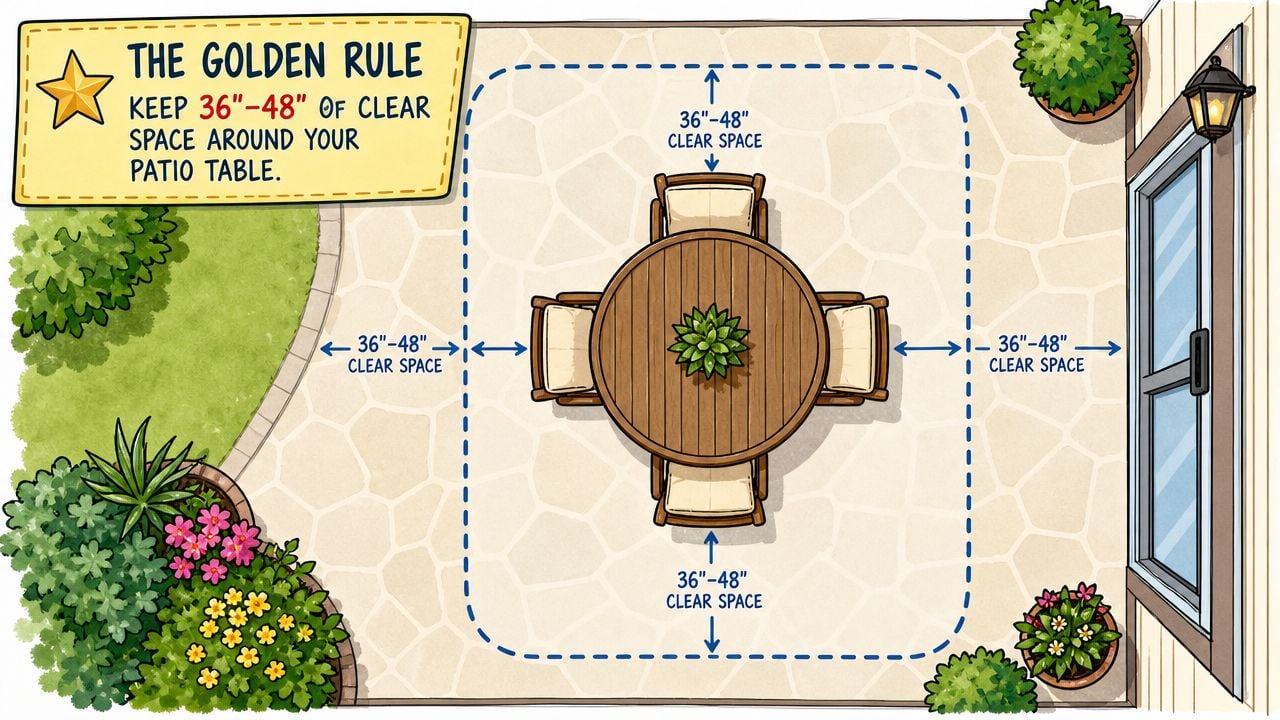
A key guideline from this patio table sizing guide is to allow about 30 inches of clearance per person and at least 30 to 34 inches on all sides of the table so chairs can be pulled out and people can pass behind seated guests in tighter layouts.
That's the minimum workable approach. In real entertaining spaces, especially where people are carrying platters or moving between the grill and the table, more breathing room usually feels better.
A few practical clearance zones help simplify the decision:
- Chair pull space: Room for someone to sit down or stand up without bumping a wall or railing.
- Pass-through space: Enough room for another person to walk behind that chair.
- Active hosting space: Extra circulation for homes that entertain often.
For homeowners planning a very large round setup, this guide on choosing a 10 person round table is useful because it shows how seating goals can quickly change the space needed around the table.
A simple way to measure the full dining zone
The most reliable method is to measure the entire dining area, not just the tabletop. A tape measure, painter's tape, and a simple floor outline usually reveal problems before furniture ever arrives. For anyone planning a full setup, how to measure a room for furniture offers a practical way to map those dimensions.
A straightforward process works well:
- Measure the patio footprint from wall to wall, screen to screen, or edge to edge.
- Mark the table size on the ground with tape.
- Add clearance on every side for chairs and movement.
- Check fixed obstacles like sliders, columns, grills, and planters.
If the clearance zone feels tight on the ground, it won't feel better once the chairs arrive.
As a result, many oversized patio tables get ruled out, and that's usually a good thing. A slightly smaller table in a comfortable layout almost always works better than a larger table that dominates the patio.
Choosing a Table Shape to Maximize Your Patio
Shape can solve problems that size alone can't. Two tables may seat the same number of people, but one shape may leave much better flow around a Central Florida lanai.
When round works best
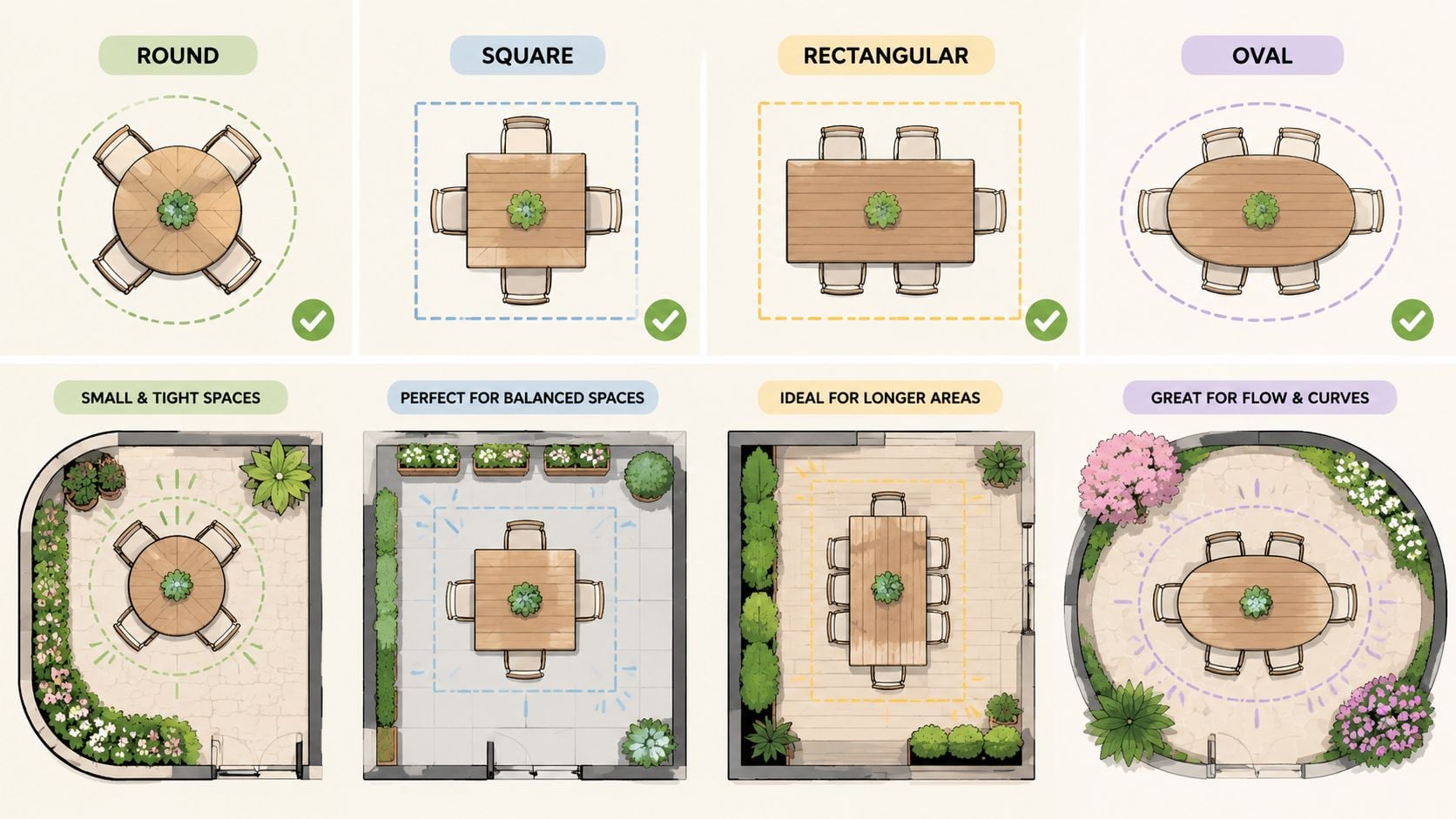
According to guidance on choosing outdoor dining table size, round tables can be preferable in smaller spaces because they keep traffic flow more open, while rectangular tables become more practical as the patio and guest count grow.
That's especially true on many Orlando-area patios where corners get interrupted by doors, posts, or planters. A round table softens those tight spots and makes movement feel easier.
Round tables are often a strong fit for:
- Smaller square patios
- Conversation-focused seating
- Homes with young kids, since there are no sharp corners
- Lanais where walkway flow matters more than maximum seating
A round table also tends to feel visually lighter. That can help a covered patio feel less crowded, particularly under a lower lanai roof.
When rectangular and square tables make more sense
A rectangular table usually becomes the better tool when the space is long, narrow, or built for bigger gatherings. On a stretched patio, it follows the architecture instead of fighting it. The result often feels cleaner and more intentional.
The article on maximizing dining space with table shapes and seating arrangements gives a good framework for matching table shape to the room around it.
Square and oval tables have their own place too:
- Square tables: Good for balanced patios and smaller groups where symmetry matters.
- Oval tables: Useful when a homeowner wants the length of a rectangular table with softer traffic flow at the ends.
- Rectangular tables: Best for larger families, buffet-style serving, and narrow outdoor rooms.
Some patios need more seats. Others need better movement. The right shape depends on which problem needs solving.
Materials Built for the Central Florida Climate
A patio table in Orlando has a harder job than one in a mild, dry climate. It may sit under a covered lanai, then catch windblown rain in the afternoon. It may bake in sun near the pool, then stay damp overnight from humidity. Size still matters, but material decides how well that table lives with Florida weather year after year.
That is why dimensions and material should be chosen together. A table can fit the footprint on paper and still feel wrong in daily use if it is too heavy to shift, too high-maintenance for the setting, or too delicate for constant moisture. For a broader look at finishes, frame types, and upkeep, how to choose outdoor furniture walks through the main material tradeoffs.
What tends to hold up well here
Some materials consistently make life easier in Central Florida.
- Powder-coated aluminum: Resists rust well and is usually easier to move, which helps on lanais that need occasional rearranging.
- Teak: Handles outdoor exposure well and develops character over time, though it does need the owner to be comfortable with natural aging or routine care.
- HDPE or poly lumber: A practical choice for wet conditions, frequent wipe-downs, and homeowners who want low maintenance.
- Outdoor woven seating on sturdy frames: Works well for relaxed dining areas where comfort matters as much as durability.
The easiest way to picture it is this. Material works like the table's weather shield, while dimensions control how the set fits and moves. You need both parts working together.
For homes with pool decks, tile surfaces, or outdoor kitchens nearby, furniture finish choices often tie into the larger patio project. Homeowners comparing surrounding surface materials may also want to review these pool tile adhesive options while planning the full outdoor space.
Matching material to how the patio is used
A large dining table made from a heavier material can make sense in a permanent entertaining zone where the layout rarely changes. On a smaller screened lanai, that same weight can become a nuisance during cleaning, storm prep, or weekend furniture shuffling.
A few practical patterns show up often in local homes:
- Smaller patios and lanais: Lighter materials are usually easier to live with.
- Poolside dining areas: Smooth, moisture-friendly surfaces tend to be easier to clean.
- Covered outdoor rooms: More finish options can work, but humidity still needs to be part of the decision.
- Year-round gathering spaces: Stable materials with simple upkeep usually hold up better under constant use.
Some furniture lines offer durable finishes with a more refined look. The label matters less than the match. The right choice is the one that fits the table size you need, the amount of maintenance you will do, and the way your Central Florida patio gets used from weeknight dinners to nearly year-round entertaining.
Example Layouts for Orlando Area Homes
Real patio planning gets easier when the dimensions are tied to familiar home types. The examples below show how seating goals, shape, and clearance work together in common Central Florida settings.
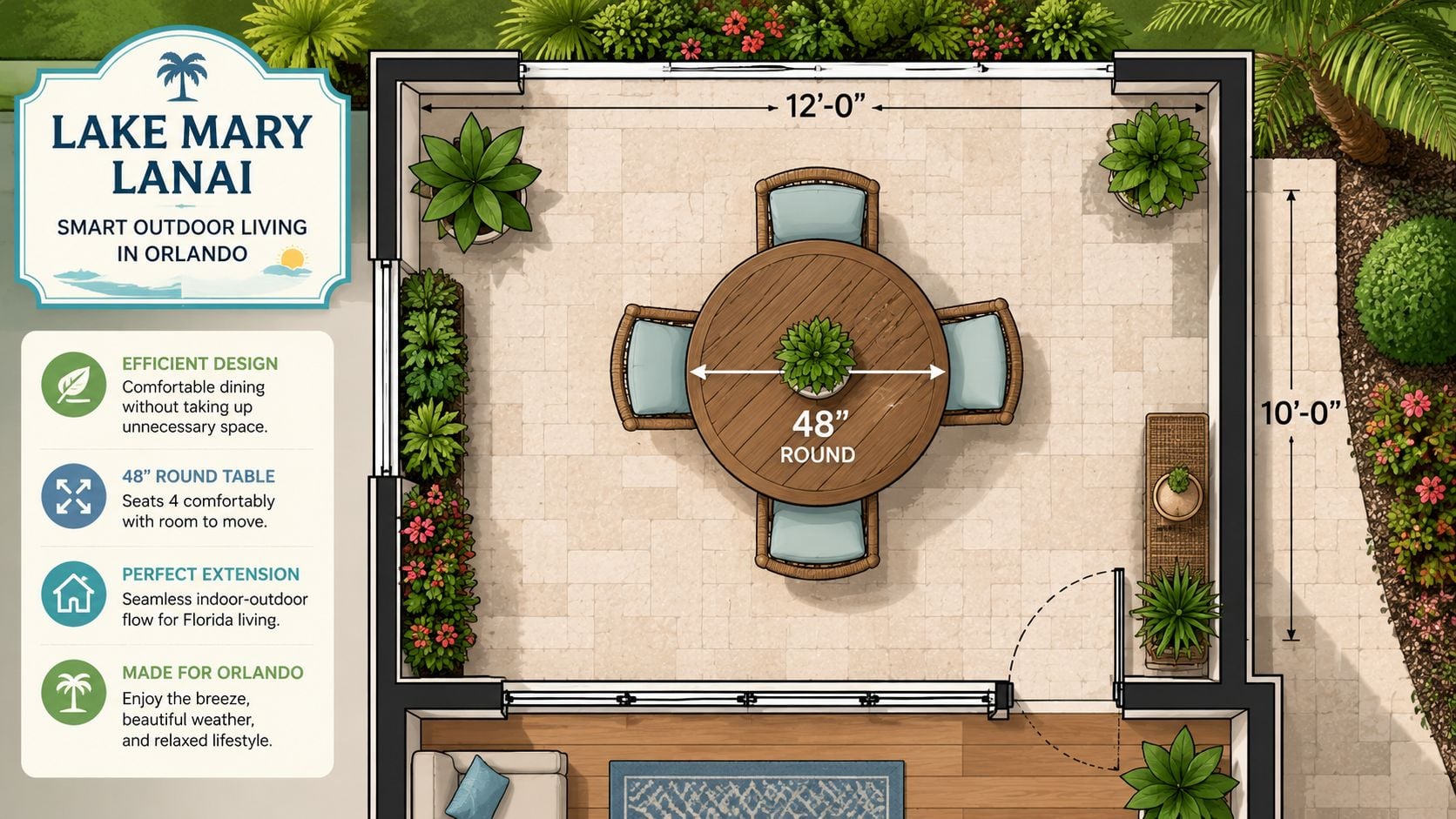
According to patio set footprint guidance, practical patio layouts often need an 8 x 8 foot area for a 4-seat set, a 10 x 10 foot area for 6 seats, and a 12 x 12 foot area for 8 seats once chair and walkway clearance are included.
A compact Lake Mary lanai
A homeowner with a smaller screened lanai wants a dining setup for everyday use and the occasional coffee with neighbors. A round table often makes the most sense here because the softer shape preserves movement around the perimeter.
A setup like this usually works well when the priority is:
- Seating four comfortably
- Keeping the walkway open near a slider
- Avoiding sharp corners in a tighter footprint
This is the kind of layout where smaller dimensions feel intentional, not limiting.
A family patio in Longwood
A Longwood household that eats outside often may need room for more than the usual weeknight dinner. In that case, a mid-size rectangular or round table can balance daily practicality with occasional hosting.
The trick is choosing a table that supports regular family use without swallowing the patio. That usually means treating the patio as an active room, not a furniture storage zone.
The best family patio layout leaves room for chairs, serving, and kids moving around, not just room for the tabletop itself.
A larger Sanford poolside setup
A larger patio near a pool can handle a bigger rectangular table, especially when entertaining is a regular part of the lifestyle. Here, the length of the table can work well with the shape of the deck and create a stronger gathering area.
That said, bigger still isn't automatically better. A large table works only when the surrounding circulation remains comfortable. If the pathway between the water, the grill, and the seating zone gets pinched, the table is doing too much.
Find Your Perfect Fit at Slone Brothers Furniture
The right patio table dimensions come from a sequence, not a guess. First comes the patio footprint. Then clearance. Then shape. Then height and material. When those decisions happen in that order, the final layout usually feels easy to live with.
Some homes fit neatly into standard sizes. Others don't. A narrow lanai, an angled pool deck, or a covered patio with multiple doors can call for more specialized planning. In those cases, custom-order flexibility becomes especially useful, whether the homeowner is considering a specific finish, a different top shape, or a table that needs to coordinate with existing outdoor seating.
For Central Florida shoppers who want help laying out a patio in real dimensions, Slone Brothers Furniture offers access to an in-house design team, custom-order options, and outdoor collections that can be compared in person in Longwood. That's often the easiest way to judge scale, height, and material before making a final decision.
A well-sized patio table doesn't just fill space. It makes outdoor living work better.
Ready to find the perfect piece for your home? Visit the Slone Brothers Furniture showroom in Longwood, FL and let their design experts help you get started!