

Lamps for Living Room Near Me: 2026 Buyer’s Guide


A living room can have beautiful furniture, generous windows, and carefully chosen art, yet still feel unfinished after sunset. Often, the problem is a single ceiling fixture that leaves reading chairs dim, creates glare across the television, and makes the room feel flatter than it does during the day. For homeowners searching for lamps for living room near me in Longwood, Orlando, Lake Mary, or elsewhere in Central Florida, the right purchase begins with the room's lighting plan, not with a finish selected from a screen.
Lamps belong to a larger home-furnishings decision. The global lamps market was valued at $34.2 billion in 2025 and is projected to reach $60.7 billion by 2034, with a projected compound annual growth rate of 6.5% from 2026 to 2034, according to this lamps market overview. For a discerning homeowner, that growth reflects more than decoration. It reflects the continuing need for comfortable, efficient, well-made lighting that supports the way a home is really used.
Why Layered Lighting Beats One Ceiling Fixture
A family may switch on the central ceiling light at dinner, then leave it on while someone reads, another person watches television, and guests move between the sofa and kitchen. The room is technically illuminated, but the light arrives from one direction. Faces look shadowed, the television may reflect overhead glare, and a reading chair remains less comfortable than it should be.
A better arrangement distributes light across the room. Independent buying guidance commonly recommends two to four lamps, or three to five total light sources, depending on the living room's size and layout, as outlined in this living room lamp selection guide. Those figures aren't a rigid prescription. They give homeowners a useful starting point for creating distinct zones instead of asking one fixture to perform every job.
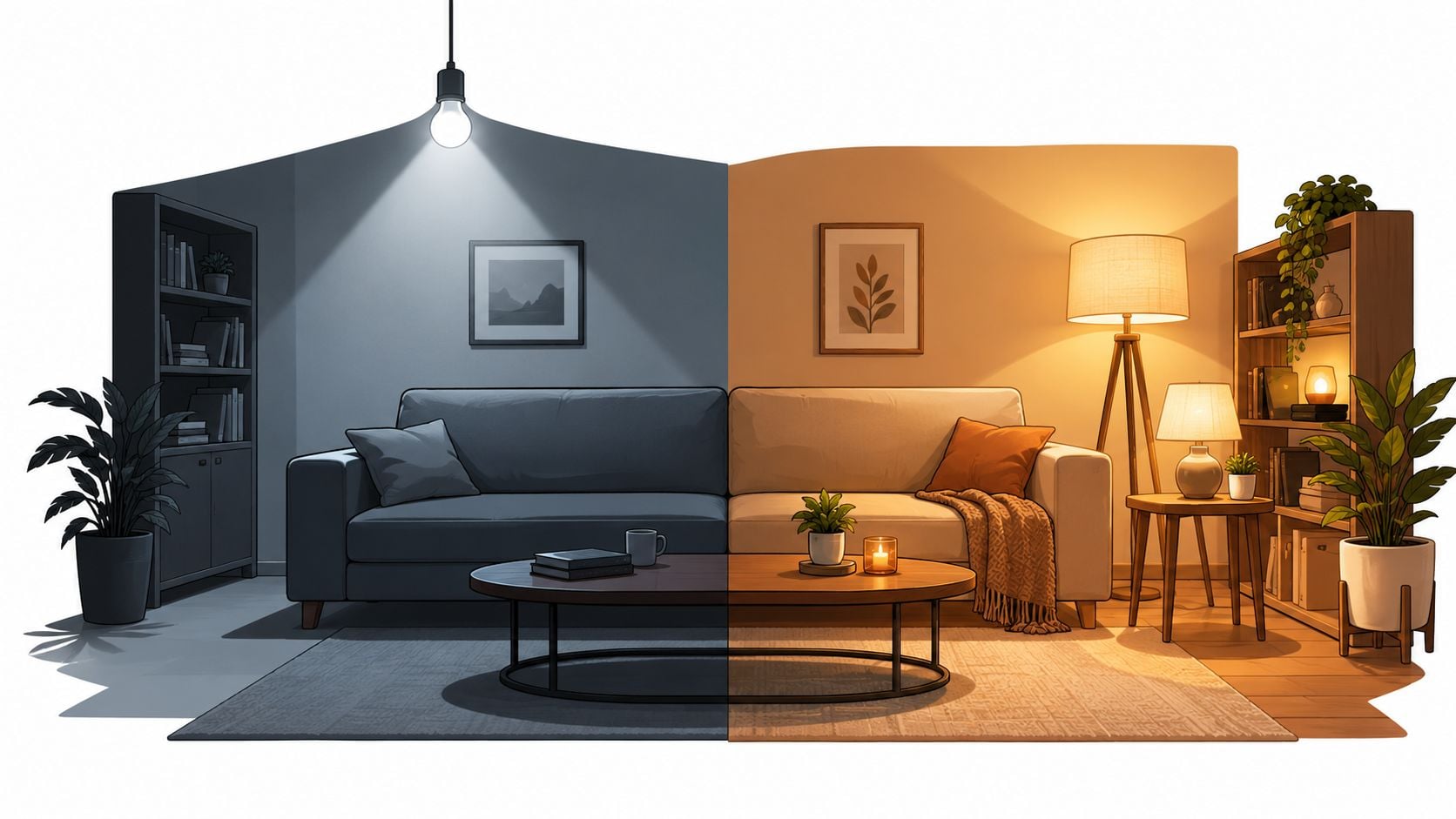
A room can change without changing its furniture
Consider a Longwood living room with a sofa facing the television, a lounge chair near a window, and a console behind the seating. A floor lamp beside the chair can support reading. Table lamps on the console can soften the far wall. A restrained accent source near artwork can add depth without competing with the television.
The result feels more intentional because each source has a job. The room can be brightened for conversation, softened for an evening film, or adjusted for reading without exposing every surface to harsh overhead light.
Practical rule: A living room should feel comfortable from every important seat, not merely bright at its center.
Warm, adjustable light also responds well to Central Florida homes, where open floor plans and large windows can create strong contrasts between daylight and evening illumination. A thoughtful living room lighting plan helps connect lamps with sofas, tables, artwork, and circulation paths, so the room reads as a complete composition rather than a collection of separate purchases.
How to Layer Ambient, Task, and Accent Lamps
Layered lighting becomes easier to plan when every lamp is assigned a role. Ambient lighting establishes the room's general glow, task lighting supports a specific activity, and accent lighting draws attention toward architecture, artwork, or a valued object. The same lamp can sometimes serve more than one role, but its primary purpose should remain clear.
Ambient light fills the room
Ambient lighting should reach beyond one seating position. A pair of table lamps on a console, a well-shaded floor lamp in a corner, or several modest sources distributed around the perimeter can prevent the room from feeling bright in one area and vacant in another.
A large living room in Winter Park may need more widely spaced sources than a compact sitting room in an Altamonte Springs condominium. The correct arrangement depends on furniture placement, wall reflectance, ceiling height, and whether the room opens directly into a dining or kitchen area.
Task light belongs beside the activity
Task lamps should sit close enough to illuminate the activity without shining directly into the eyes. A floor lamp works naturally beside a sofa or armchair, particularly where a side table is too small for a lamp base. A table lamp can anchor an end table, writing surface, or console, provided its shade and switch remain accessible from the seat.
A reading chair should have light that falls onto the page from the side or slightly behind the reader. That placement reduces shadows across the book and avoids the uncomfortable glare that occurs when the bulb sits directly in the line of sight. A dedicated reading nook design guide can help connect the chair, table, lamp, and surrounding clearance.
Accent light gives the room visual depth
Accent lamps don't need to dominate. A small source near a textured wall, sculpture, bookcase, or architectural feature can create a quiet pool of light that makes the room feel finished after dark. In a room with substantial upholstery or solid wood furniture, that lower glow can reveal material texture without adding visual clutter.
A useful placement test is simple. From each frequently used seat, the lamp should contribute to the room's balance without becoming the first thing the eye notices. If every source competes at the same intensity, the room loses hierarchy.
Choosing Lamp Height and Shade Size That Fit Your Room
Expensive materials can't correct poor proportions. A floor lamp that's too short can disappear beside a substantial sofa, while one that's too tall may expose the bulb to seated eyes. Scale should be checked against the ceiling, seating, end table, and shade before style becomes the deciding factor.
For standard 8-foot ceilings, a commonly used guideline places floor lamps between 60 and 72 inches tall. The accompanying formula multiplies ceiling height in feet by 2.5 to 3 to estimate lamp height in inches, as explained in this floor lamp sizing guide. Higher ceilings generally call for proportionally taller fixtures, while a smaller room may benefit from a visually lighter profile even when the height remains appropriate.
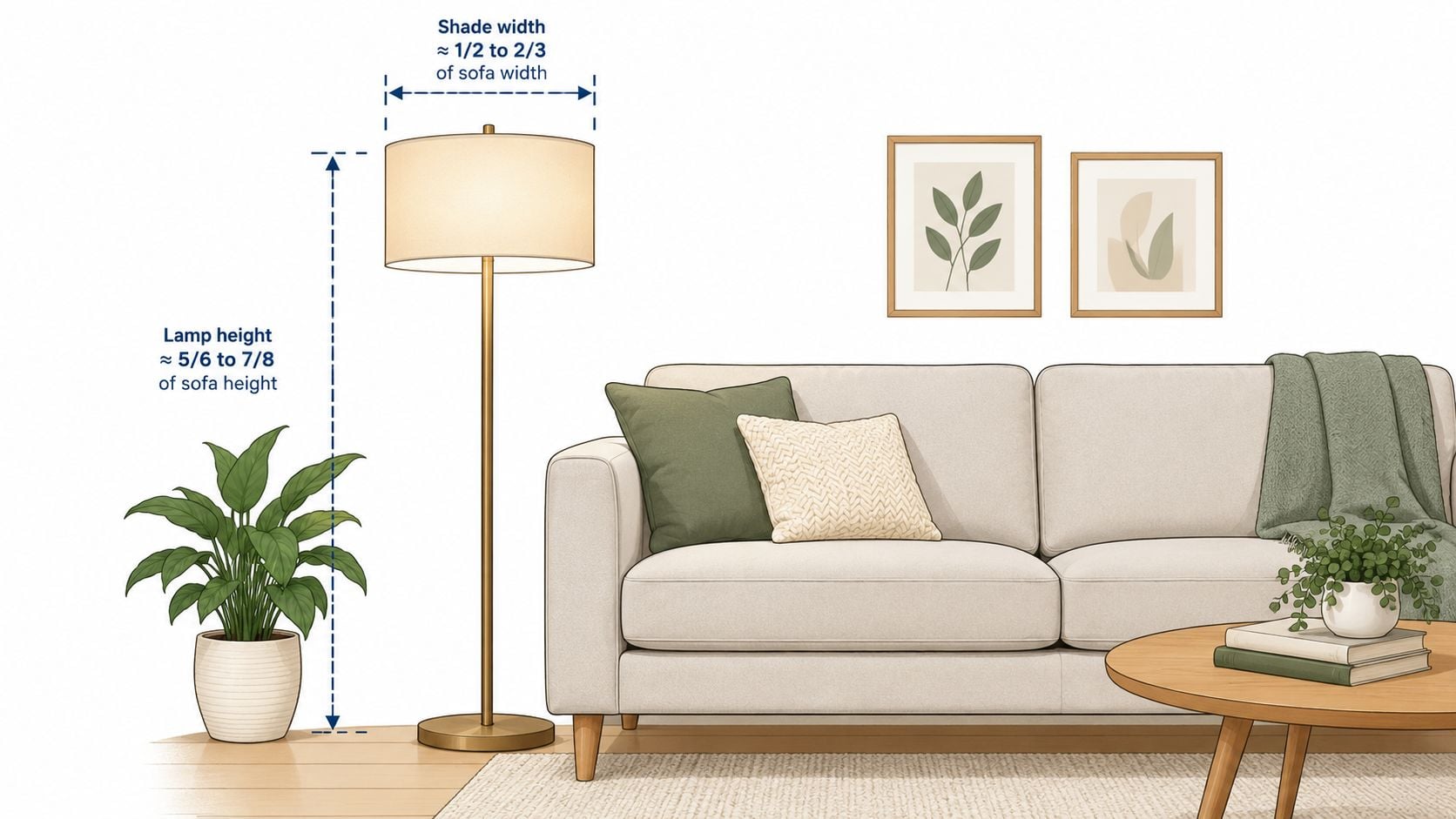
Start with the seated eye line
The shade should shield the bulb when a person is seated. For a table lamp, the bottom of the shade generally works best near eye level, although sofa height, end-table height, and the lamp's base all affect the final result. A homeowner in Sanford should test the lamp from the actual chair rather than judging it only while standing in a showroom.
The end table matters just as much as the lamp. Its width, depth, and height should leave room for a drink, book, or remote without making the lamp appear crowded. These end table dimension guidelines help evaluate the complete arrangement instead of treating the lamp as an isolated accessory.
Use the shade as a proportion check
One widely used rule places the shade at roughly two-fifths of the full lamp height, including the shade. Under that guideline, a 30-inch lamp would pair with a shade around 20 inches tall, according to this lampshade proportion guide. Another commonly cited approach uses approximately one-third of the full lamp height, so the ratios should be treated as proportional guidance rather than an inflexible formula.
The shade's width also needs visual authority. If it looks narrow compared with the base or the nearby sofa arm, the lamp may appear top-heavy. If it overwhelms the table, artwork, or walkway, the room loses breathing space. A correctly scaled shade makes the entire lamp look more deliberate.
Matching Brightness and Style to Your Living Room Size
Brightness should be evaluated in lumens, not watts. Watts describe energy use, while lumens describe visible light output, making lumens the more useful measure when a homeowner compares lamps or LED bulbs.
A typical living room needs approximately 1,500 to 3,000 lumens total for comfortable ambient lighting. For a 100-square-foot living room, one guide gives a range of 1,000 to 2,000 lumens, or about 10 to 20 lumens per square foot, as detailed in this LED lighting selection guide. These figures are starting points, not guarantees, because a room with dark walls, high ceilings, or heavy window coverings may need a different distribution.
Distribute brightness instead of concentrating it
A homeowner shouldn't automatically place the entire target in one central fixture. Several lamps can divide the output across seating, walls, and corners, creating a more comfortable room with fewer harsh contrasts. Dimmable, warm LEDs are especially useful because the same living room may need stronger illumination for reading and gentler light for entertaining.
LED adoption has also changed practical expectations. One source reports that 90% of U.S. households used LED bulbs by 2024, while 63% relied on them for most or all indoor lighting, and notes that lighting represents about 15% of global electricity consumption, as summarized in this history of household lighting resource. An LED producing about 800 lumens can replace a 60-watt incandescent while using about 10 watts, according to this lightbulb selection guide. The practical lesson is to judge both comfort and efficiency.
Let the room's finishes guide the lamp's character
Wall color affects how light is perceived. Pale surfaces tend to reflect more of a lamp's output, while deeper colors absorb more and create a moodier result. Homeowners who are reconsidering wall finishes can pair lamp planning with independent interior paint color advice from Home Pro's Remodeling & Repairs.
Style should follow the room's existing language. A substantial solid-wood table may call for a lamp with a grounded base and tactile finish. A sleek sectional may suit a narrow arc or sculptural floor lamp. In a smaller Orlando room, a slim profile can preserve circulation and keep the furniture from feeling crowded, as shown in this guide to making a small room feel bigger.
Why Quality Lamps Are an Investment, Not a Quick Decor Fix
A lamp is handled repeatedly. Someone reaches for its switch late at night, moves it during cleaning, adjusts its shade, or relies on it beside a reading chair for years. Construction quality becomes apparent through these ordinary actions, not through a single showroom glance.
A durable lamp should feel stable on its surface, operate with dependable hardware, and hold its shade securely. The finish should relate to the furniture rather than depend on a fleeting trend. Quality isn't limited to the base material. It includes the switch, socket, shade fitting, cord placement, and the way the piece sits within the room.
Look for continuity with the furnishings
A carefully chosen lamp can remain useful through several room updates. A timeless ceramic, metal, glass, or solid-wood form may work beside a new sofa, an inherited table, or a custom upholstery piece without forcing a complete redesign. That continuity supports long-term value because the lamp isn't treated as disposable décor.
The same standard applies to the shade. A well-made shade should sit evenly, diffuse the bulb comfortably, and maintain the intended silhouette. Poor construction often becomes visible when a shade warps, discolors, or no longer sits squarely on the base.
Design guidance protects the larger investment
Lighting mistakes can affect more than appearance. A lamp placed too close to a walkway may become an obstacle. A poorly shielded bulb can create glare. A base that's too light for a busy side table may feel precarious around children or pets. A design consultant can identify these issues before a homeowner commits to a piece that doesn't suit the room.
Local, human guidance also brings the lamp into conversation with sofas, end tables, rugs, window treatments, and built-ins. The Longwood showroom provides curated lighting and home décor alongside living room furnishings, with complimentary consultation from experienced design professionals rather than commission-driven order takers. That consultative approach suits homeowners seeking a coherent, lasting interior rather than a quick seasonal change.
Shopping for Living Room Lamps Locally in Longwood and Orlando
Online browsing can make it easy to collect attractive images, but a photograph rarely communicates a lamp's true scale, visual weight, or finish. A base that appears refined on a small screen may feel undersized beside a deep sofa. A shade that looks warm online may cast a very different glow against a Central Florida home's wall color.
An in-person showroom offers a more useful comparison. Homeowners can view table lamps beside appropriately scaled furniture, assess whether a floor lamp fits a reading chair, and compare finishes under real illumination. They can also discuss how the lamp will relate to a room that includes a television, open walkway, pets, or limited end-table space.

The local advantage is measured in fit
A Longwood visit serves homeowners from Orlando, Lake Mary, Sanford, Winter Park, and Altamonte Springs who want lighting to work with the entire room. Experienced consultants can discuss scale, placement, shade opacity, finish coordination, and the practical needs of everyday use without reducing the decision to a search filter.
The showroom also supports a broader furnishing process. A homeowner replacing a sofa may discover that the existing lamps are too low. Someone furnishing a new home may need lighting for several seating zones. The Orlando furniture store guide offers additional context for shoppers evaluating a local, full-home showroom experience.
For homeowners seeking immediate value while maintaining attention to quality, the clearance outlet provides another avenue to explore. The important distinction is not whether a piece is reduced. It is whether the lamp remains proportionate, functional, and appropriate for the room it will serve.
Your Next Steps for Better Living Room Lighting
A considered lighting decision can begin with a simple room assessment. The homeowner should measure the seating area, note the ceiling height, identify the primary reading or conversation seats, and observe where the current overhead fixture creates glare or shadow. A quick sketch often reveals that the room needs distributed light rather than a larger central fixture.
A practical planning sequence
-
Map the furniture. Mark the sofa, armchairs, end tables, console, television, artwork, and main walkways. Lamp placement should support movement, not narrow it.
-
Set the brightness target. Use the room's approximate size and the lumen guidance already established, then distribute the output across more than one source where possible.
-
Assign lamp roles. Choose ambient sources for general comfort, task lighting for reading or focused activities, and accent lighting for artwork or architectural features.
-
Check proportions. Compare floor-lamp height with the ceiling and seating. Evaluate shade height and width against the base, end table, and surrounding upholstery.
-
Test the finish in person. A metal, ceramic, wood, or glass finish can look different under warm light and beside Central Florida daylight. The room's existing materials should guide the selection.
Homeowners who want a broader view of fixture placement and installation considerations can consult this residential lighting guide from Cultivate House Detailing. For a complete furnishing plan, the local showroom offers complimentary in-home interior design services, custom-order options, flexible financing, home delivery, and a Low Price Promise. Its family-owned team has served Central Florida since 1980, giving homeowners a long-standing local resource for connecting lighting with furniture that is built for continued use.
The strongest lamp choice is rarely the most dramatic object in the room. It is the one that makes a sofa more inviting, a book easier to read, artwork more visible, and evening routines more comfortable while remaining proportionate as the home evolves.
Homeowners ready to refine their lighting plan can visit Slone Brothers Furniture in Longwood, where experienced design consultants can compare lamp scale, shade proportions, finishes, and placement alongside quality living room furnishings. A face-to-face consultation, complimentary in-home design support, and reliable home delivery make it easier to invest in a beautifully coordinated room built for lasting comfort.