
California King Mattress Guide: Smart Picks for 2026


A Central Florida homeowner may be standing in a newly finished primary bedroom, measuring the wall where the bed should go, and wondering whether a California king mattress would finally solve the nightly problem of feet near the edge. The choice can look like a luxury upgrade, but it's really a question of proportion, construction, access, and compatibility.
A California king can be an excellent investment for a taller sleeper or a long, narrow bedroom in Longwood, Orlando, Lake Mary, Sanford, Winter Park, or Altamonte Springs. It can also be the wrong choice for a couple who values shoulder room, or for anyone hoping to reuse a standard king frame and foundation. The mattress size is only the beginning. The foundation, bedding, delivery path, and room layout all need to agree.
What Is a California King Mattress and Why the Size Exists
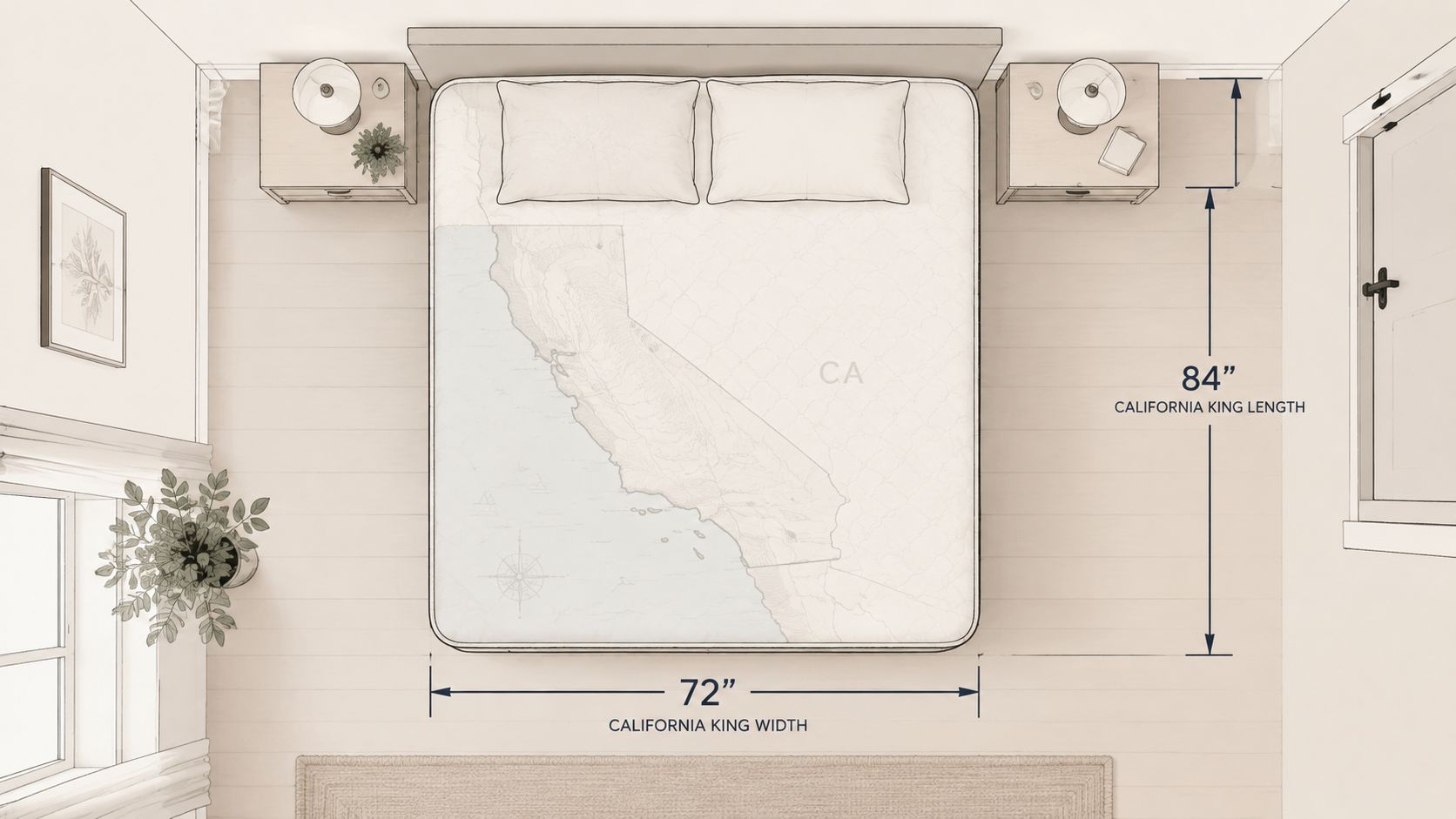
A California king mattress measures 72 inches wide by 84 inches long, giving it a distinctly longer, narrower profile than a standard king. It's often visualized as a sleep surface measuring 6 feet by 7 feet, a proportion created for sleepers who need more legroom without adding width across the room. The exact dimensions and surface-area comparison are documented in this history of the California king bed.
The difference from a standard king is precise. A California king is 4 inches narrower and 4 inches longer than a standard king, so the sleeper gains length but gives up lateral room. Its surface area is 6,048 square inches, compared with 6,080 square inches for a standard king, meaning the California king isn't the largest mattress by total area. Its advantage is shape, not sheer size.
Practical rule: Choose the California king for the body and room that need its proportions, not because the name sounds larger.
Why the West Coast needed a different king
Historical accounts trace the California king to Los Angeles shortly after World War II. A mattress merchant reportedly developed a “Big Bed” measuring 6 feet by 7 feet for spacious Southern California homes, and later reporting connected the format with Hollywood celebrities, wider traction in the 1960s, and mass production in the 1970s. The Los Angeles Times history of the California king provides that background.
The design problem was straightforward. A taller sleeper could receive additional foot clearance while the mattress maintained a slimmer width, which helped it work in rooms that were deeper than they were wide. That logic still applies in Florida homes where a long primary suite may have doors, windows, or built-ins that make extra width awkward.
For Central Florida homeowners furnishing a new primary suite, the California king should be treated as a specialized premium format. It solves a clear comfort or layout problem, but it isn't an automatic improvement over a standard king. Buyers exploring the history and construction of sleep surfaces can also review Slone Brothers' mattress history guide before deciding which format deserves a place in the room.
How California King Compares to Standard King, Queen, and Full
A California king is the right fit when length matters more than width. The table below offers a quick orientation, but the final decision still depends on the sleepers, furniture plan, and usable walking space.
| Size | Width (in) | Length (in) | Surface Area (sq ft) | Per-Person Width for Couples (in) | Minimum Room Size |
|---|---|---|---|---|---|
| California King | 72 | 84 | 42 | 36 | Roughly 12 by 12 feet |
| Standard King | 76 | 80 | 42.22 | 38 | Roughly 12 by 12 feet |
| Queen | Not provided | Not provided | Not provided | Not provided | Depends on furniture and clearance |
| Full | Not provided | Not provided | Not provided | Not provided | Depends on furniture and clearance |
The California king and standard king figures come from the documented 72 by 84 inch and 76 by 80 inch footprints, along with their respective surface areas, in this mattress size comparison resource. The room guidance should be treated as a planning baseline, not a guarantee. A bed may technically fit while leaving too little space for nightstands, doors, benches, or comfortable movement.
The trade-off couples feel
For couples, the practical distinction is easy to understand. A standard king offers 38 inches per person, while a California king offers 36 inches per person, based on dividing each mattress width between two sleepers. Those 4 inches of total width can matter to partners who move often, sleep with children or pets, or dislike feeling confined.
The California king earns its place when one or both sleepers need the extra length. A tall person who sleeps straight, stretches diagonally, or tends to slide toward the foot of the bed may notice the benefit immediately. A couple with generous shoulder room as the first priority should usually choose the standard king instead.
The two formats are not interchangeable in the details that matter most. A standard king fitted sheet won't properly conform to a California king's length and width, and bases must match the mattress footprint. For a broader overview of how mattress dimensions affect room planning, Slone Brothers offers an ultimate guide to mattress sizes.
Best Mattress Constructions for a California King
A California king works best with consistent support, strong perimeter construction, and controlled material response. The extra length is useful only when the mattress maintains an even sleeping surface from head to foot. Weak materials can compress unevenly, leaving the added span feeling less supportive rather than more comfortable.
Hybrid construction is the strongest default
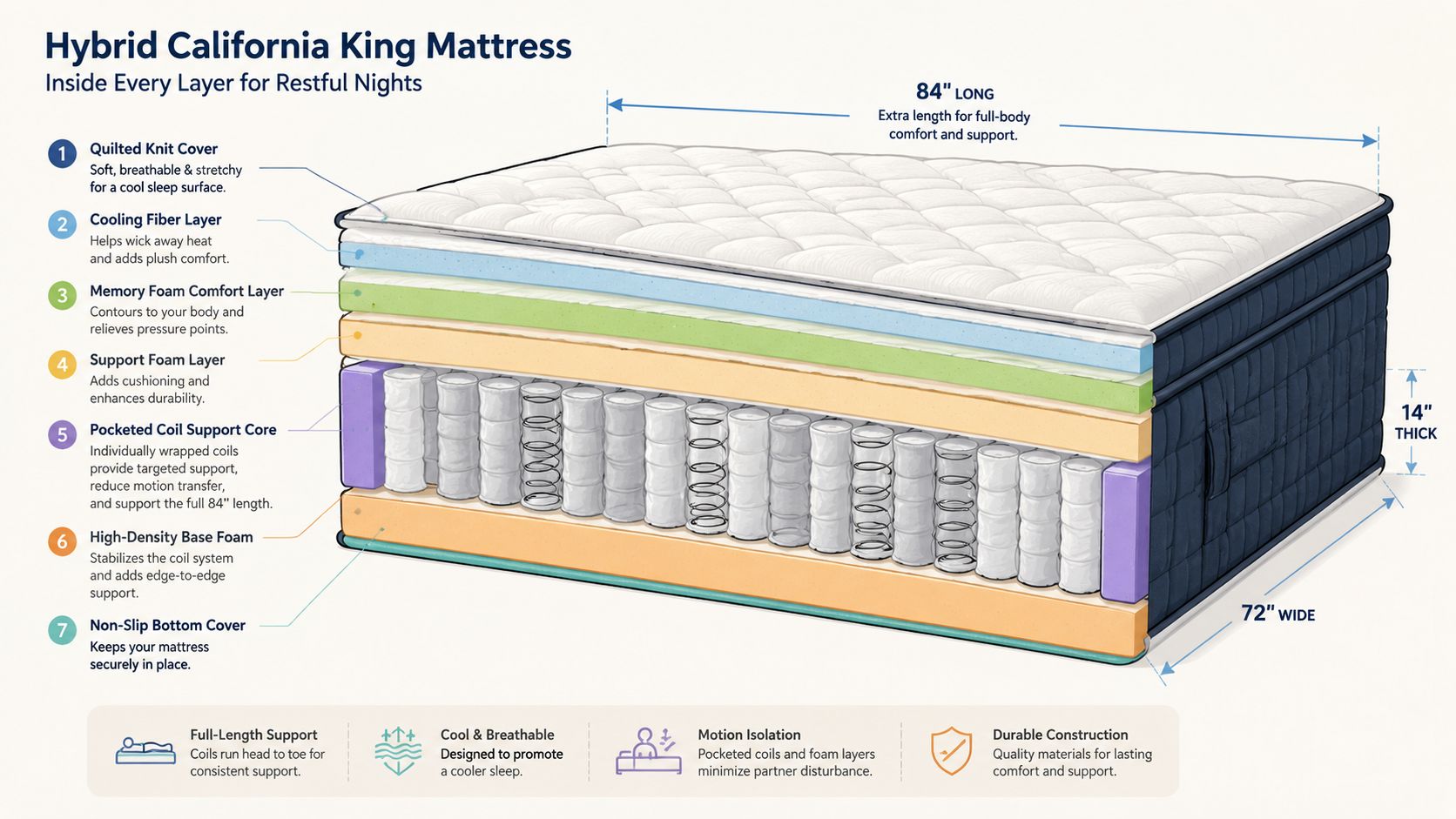
A well-built hybrid combines a pressure-relieving comfort system with a coil support core. Individually responsive pocketed coils can support sleepers across the longer surface, while reinforced edges help preserve usable space when someone sits down or sleeps near the perimeter.
Hybrids also suit Central Florida's warm, humid conditions. Coil systems generally permit more internal airflow than dense all-foam designs, so the surface may feel less enclosed. That benefit depends on the entire build, including the foam layers, cover, coil spacing, and edge reinforcement. In the showroom, test whether the mattress supports the lower legs, hips, shoulders, and sides with similar consistency.
When a mattress is longer, weak support becomes more apparent across the full sleeping surface. The frame and foundation must preserve the mattress's shape, while the internal materials must distribute weight evenly to prevent a hammock effect.
Mattress profiles commonly vary, and the height alone does not determine performance. Foundation compatibility and edge support matter just as much as the comfort layers. A California king mattress construction guide explains how the longer format benefits tall sleepers only when the support system maintains the usable sleeping area.
Memory foam can work, but density matters
Memory foam suits couples who prioritize motion control and pressure relief. A well-engineered design can absorb movement and contour around the shoulders and hips, helping two sleepers share the narrower width with less disturbance.
Judge the foam by its density, resilience, and recovery rather than by the label alone. Higher-density foams and open-cell formulations can support a long surface more consistently than weak, low-density foam. Poorly engineered all-foam mattresses may compress unevenly under repeated loading, creating sagging or a hammock-like feel. In a California king, that problem can make the extra length feel wasted.
Latex provides a more buoyant option. It responds faster than memory foam, makes position changes easier, and still offers pressure relief. Choose it if you dislike a deep, slow-sinking sensation.
What deserves caution
Low-density all-foam builds and thin coil systems deserve careful testing, particularly when two adults will share the mattress. Check these points before choosing:
- Edge stability: Sit along the side and note whether the perimeter collapses.
- Center support: Lie near the middle third and check whether your body stays level.
- Motion control: Have one sleeper move while the other remains still.
- Temperature feel: Stay on the mattress long enough to notice heat retention.
- Foundation pairing: Confirm that the support system matches the selected construction.
Review this hybrid mattress explanation from Slone Brothers to understand why coils, foams, and edge reinforcement should be evaluated as one engineered system. The construction choice matters, but so does the foundation that supports it.
Bedroom Fit, Frames, and Foundation Compatibility
Before ordering a California king, measure the full route from the driveway to the bedroom. Account for entry doors, hallways, stairways, tight corners, and the final furniture arrangement. The mattress needs a delivery path, not only enough floor space.
A room of roughly 12 by 12 feet offers a sensible starting point for circulation around a king-size bed, though furniture placement can change the fit. In a long, narrow primary bedroom, the California king often follows the room's length more naturally. In a square room, its narrower width may help, but dressers, nightstands, doors, and windows still determine whether the layout works.
Check ceiling clearance before choosing a tall headboard or substantial upholstered wall. Central Florida homes range from newer open-plan construction to older properties with tighter transitions and stairways. A professional measurement before delivery is more reliable than assuming the mattress can be angled through every opening.
The support system must match exactly
A standard king frame and a California king frame use different footprints. The standard king is wider and shorter, while the California king is narrower and longer. The wrong rails can leave gaps, unsupported edges, or foot-end overhang, compromising comfort and durability.
| Item | Standard King | California King |
|---|---|---|
| Mattress footprint | 76 by 80 inches | 72 by 84 inches |
| Frame requirement | Standard king frame | California king frame |
| Foundation requirement | Standard king foundation | California king foundation |
| Fitted sheet | Standard king fitted sheet | California king fitted sheet |
| Adjustable base | Must match standard king dimensions | Must match California king dimensions |
Use a frame, foundation, fitted sheet, and adjustable base built for the selected size. The mattress and base specification guide confirms why these dimensions must align. A California king requires its own frame and foundation. A standard king support system will not align with the 72-by-84-inch footprint.
Foam mattresses also need appropriate slat support and spacing. A box spring and a low-profile foundation produce different finished heights, affecting how easily you get into bed, the headboard's visual scale, and how much mattress remains visible beneath the bedding. Slone Brothers' guide to mattress foundations versus box springs explains the practical differences before you commit.
Plan the protection before a move or storage period. A correctly sized cover helps shield the mattress during transport, and this guide to large mattress covers for moving provides a useful sizing reference. Factor the cost of a California king frame, foundation, sheets, and moving protection into the purchase, especially when replacing a standard king setup.
Who Should Choose a California King and Who Should Skip It
A sleeper whose feet reach the edge of a standard king will notice the 84-inch length of a California king immediately. The extra legroom suits people who sleep straight, stretch diagonally, or change positions throughout the night.
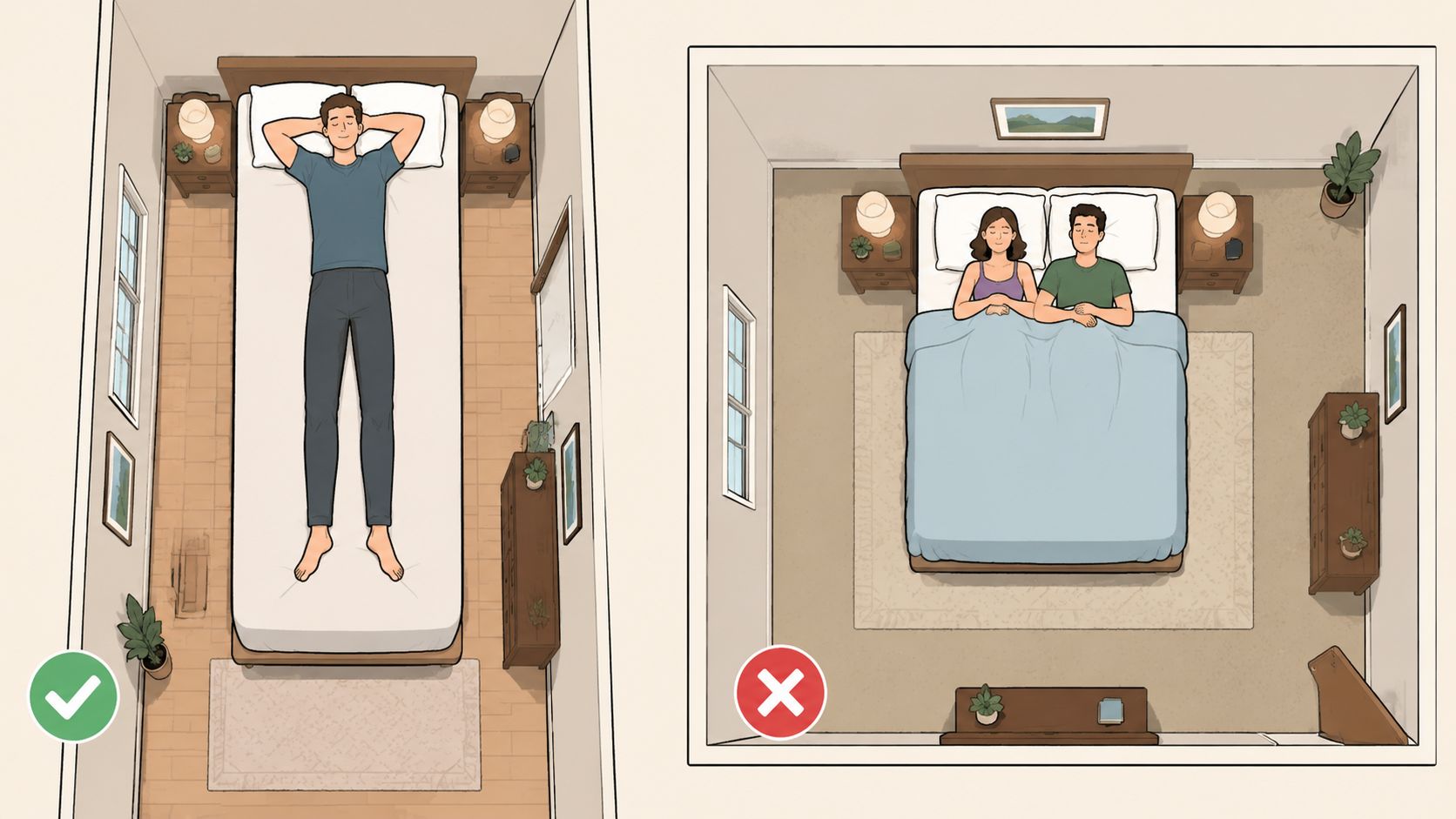
Room shape matters just as much. In a long, narrow Central Florida bedroom, the slimmer profile can preserve space for nightstands and walking paths while placing the bed along the room's longer axis. That layout often works better than forcing a wider standard king into the same footprint.
The better-fit sleeper profiles
- Tall adults: Sleepers over six feet can use the added legroom every night.
- Combination sleepers: People who turn or stretch diagonally gain usable space at the foot of the mattress.
- Uneven-height couples: A longer sleep surface can address one partner's recurring legroom complaint.
- Lengthwise family sharing: A pet or child near the foot of the bed makes the added length more practical.
Choose a California king when length is the problem you need to solve. Choose a standard king when shoulder room matters more. Couples who spread out laterally, or who regularly share the bed with children, may find the narrower width restrictive even if one sleeper appreciates the added length.
When switching doesn't make sense
A square bedroom under 12 by 12 feet can feel crowded after adding the mattress, frame, nightstands, and walking routes. Measure the usable room, not just the open floor area. Door swings and furniture placement can remove clearance that looked available on paper.
Do not choose a California king to reuse a standard king frame or foundation. The support system must match the mattress dimensions, so an existing setup may create another purchase rather than save money. The same applies to fitted sheets, protectors, and replacement bedding. Include those items, along with delivery and setup, in the actual cost of changing sizes.
California king models may cost more than comparable standard king models, and fewer closeout options may be available. That price difference is a market consideration, not a reason to buy less mattress than your body and room require. Review the duvet and mattress upkeep guide to establish a practical maintenance routine after delivery.
Before selecting the size, use Slone Brothers' guide to choosing a mattress for different body types. Your sleeping position, height, preferred space, and partner's habits should decide whether the longer footprint earns its added setup cost.
How Slone Brothers Helps You Choose the Right California King
A California king purchase should begin with a fitting, not a guess based on a product photo. At a Central Florida showroom, shoppers can compare the longer sleep surface, test edge support, and assess how movement travels across the mattress while lying in normal sleeping positions.
The showroom experience should answer practical questions that online specifications can't settle:
- Body fit: Does the sleeper's heel remain supported in a natural position?
- Partner comfort: Does the narrower width still feel generous for both people?
- Construction feel: Does the hybrid respond quickly, or does the foam allow too much sink?
- Bed height: Does the mattress and foundation combination work with the room's headboard and furniture?
- Movement: Can each sleeper turn, rise, and sit at the edge without disturbing the other?
Slone Brothers Furniture, a family-owned Longwood showroom serving Central Florida since 1980, offers mattresses alongside bedroom furnishings and design support. Its design team can help connect the mattress decision to the room itself, including the frame, headboard scale, foundation height, and surrounding furniture.
The room should be measured before the mattress is ordered
A complimentary in-home design consultation can identify problems that a showroom visit won't reveal. Measurements should include the entry door, hallway turns, stairway, bedroom door, ceiling height, and the intended location of nightstands or dressers.
That process matters in older homes around Orlando, Sanford, and Winter Park, where access may be less forgiving than the finished bedroom suggests. A white-glove delivery plan can also address setup, removal of the old mattress where available, and placement of the new sleep system.
Adjustable-base shoppers should discuss the exact California king configuration before ordering. The base, mattress, frame, and any split arrangement need to be compatible as a complete system, not selected as separate pieces.
The relationship can continue after delivery. A local showroom can help with protectors, correctly fitted sheets, bedroom refreshes, and future furniture changes. That service model suits homeowners who are furnishing an entire home with considered pieces from brands such as Stickley, Stressless, Smith Brothers, Bassett, Craftmaster, Amish, Canadel, Amisco, American Leather, Palasar, and Mavin, rather than treating the mattress as an isolated purchase.
Common California King Questions Answered
Will standard king sheets fit a California king mattress?
Not reliably. The fitted sheet must follow the mattress footprint, and a standard king is wider while a California king is longer. Depth matters as well, because a fitted sheet designed for a different mattress profile may pull loose at the corners or fail to cover the sidewalls.
Flat sheets, duvet covers, and decorative bedding may sometimes be adaptable, but the fitted sheet and foundation-specific pieces deserve exact sizing. California king bedding is less commonly stocked, so it should be ordered at the same time as the mattress rather than treated as an afterthought.
Can an existing king frame or foundation be reused?
Usually, not without modification or replacement. A standard king support system does not match the California king footprint, and the mismatch can leave unsupported areas or unwanted gaps. A retailer or design consultant should inspect the existing frame before a new mattress is ordered.
Starting fresh is often cleaner when the current foundation is older, poorly ventilated, or not suitable for the selected foam or hybrid construction. The right comparison is the complete sleep system, not the mattress alone.
Does an adjustable base work with a California king?
It can, provided the base is built for the California king dimensions and the mattress is approved for that type of articulation. Split configurations may offer independent positioning for couples, but the exact base, mattress, and frame combination must be confirmed before purchase.
What delivery problems should Central Florida homeowners expect?
Access is the main concern. Doorways, stairways, tight corners, and older home layouts can make a large mattress difficult to maneuver, even when the bedroom itself is spacious. A delivery team should review the route before delivery day, especially when the room is upstairs or reached through a narrow interior passage.
What happens if the fit disappoints?
Return and exchange policies vary by retailer and product. Those terms should be read before purchase, with specific attention to trial requirements, pickup conditions, foundation eligibility, and whether opened bedding can be returned. A showroom fitting reduces the risk, but it doesn't replace a clear written policy.
Is a mattress-in-a-box California king different from traditional delivery?
Yes. A compressed mattress-in-a-box can be easier to move through certain access points, while a traditional coil mattress may arrive at full size and require more careful handling. The unboxing process, expansion instructions, support requirements, and delivery route should all be discussed before selecting the format.
Slone Brothers Furniture offers California king mattresses, compatible foundations, bedroom furnishings, complimentary design guidance, and local delivery planning for homeowners throughout Longwood and Greater Orlando. Visit Slone Brothers Furniture to test the right mattress in person and speak with an experienced design consultant before committing to the size, frame, and foundation.