

Tall Dining Room Table and Chairs Buying Guide


A tall dining room table and chairs purchase usually starts the same way in Central Florida. A homeowner in Lake Mary or Winter Park stands between the kitchen island and the living room, looks at the open space in between, and wonders whether a taller dining set will make the room feel smarter or just harder to live with.
That's the right question. Height changes the way a room works. In an Orlando-area home with an open kitchen, sightlines to the lanai, and people moving in and out for dinner, homework, or weekend entertaining, a tall table affects posture, traffic flow, conversation, and comfort long before it affects style. The right set feels natural. The wrong one feels awkward every single day.
Why Tall Dining Sets Are Different
A tall dining set isn't just a standard table lifted a few inches. It changes how people gather.
In a typical Sanford or Altamonte Springs home, the dining zone often sits between active spaces. One person is plating dinner, another is leaning at the island, children are moving toward the family room, and guests drift toward the sliding doors. A taller table can bridge those zones better than a low, formal dining set because it holds visual weight and keeps seated diners more connected to what's happening around them.
Height changes behavior
A standard-height dining set tends to create a settled posture. It's comfortable, grounded, and familiar. A tall set creates a more casual, upright experience. People perch a little more. They pivot more. Conversations often feel more connected to the kitchen because seated guests are closer in height to someone standing at a counter.
That's why a tall dining room table and chairs decision is a planning decision first. It has to match how the household uses the room.
A counter-height table often works best when the dining area functions as part of the kitchen, not as a separate formal room.
For many Central Florida homes, that distinction matters more than the finish color or chair silhouette. Homes with vaulted ceilings, large kitchen islands, and sightlines to outdoor living spaces often benefit from the visual anchor of a taller table. Households that host long holiday meals, older relatives, or young children often need a more careful fit.
Florida homes need practical thinking
Indoor-outdoor living also changes the equation. A dining area near a patio door deals with heavier traffic, brighter light, and more casual use than a tucked-away formal room. Some homeowners find it helpful to think through those adjacent spaces too, especially when patio seating and indoor dining need to feel visually related. Pinnacle Property Media's patio advice offers a useful outside perspective on proportion and function that translates well to homes where the lanai and dining room work together.
Tall sets can be excellent. They just aren't forgiving. If the height is wrong for the room or the people using it, the problem shows up fast.
Understanding Counter Height and Bar Height
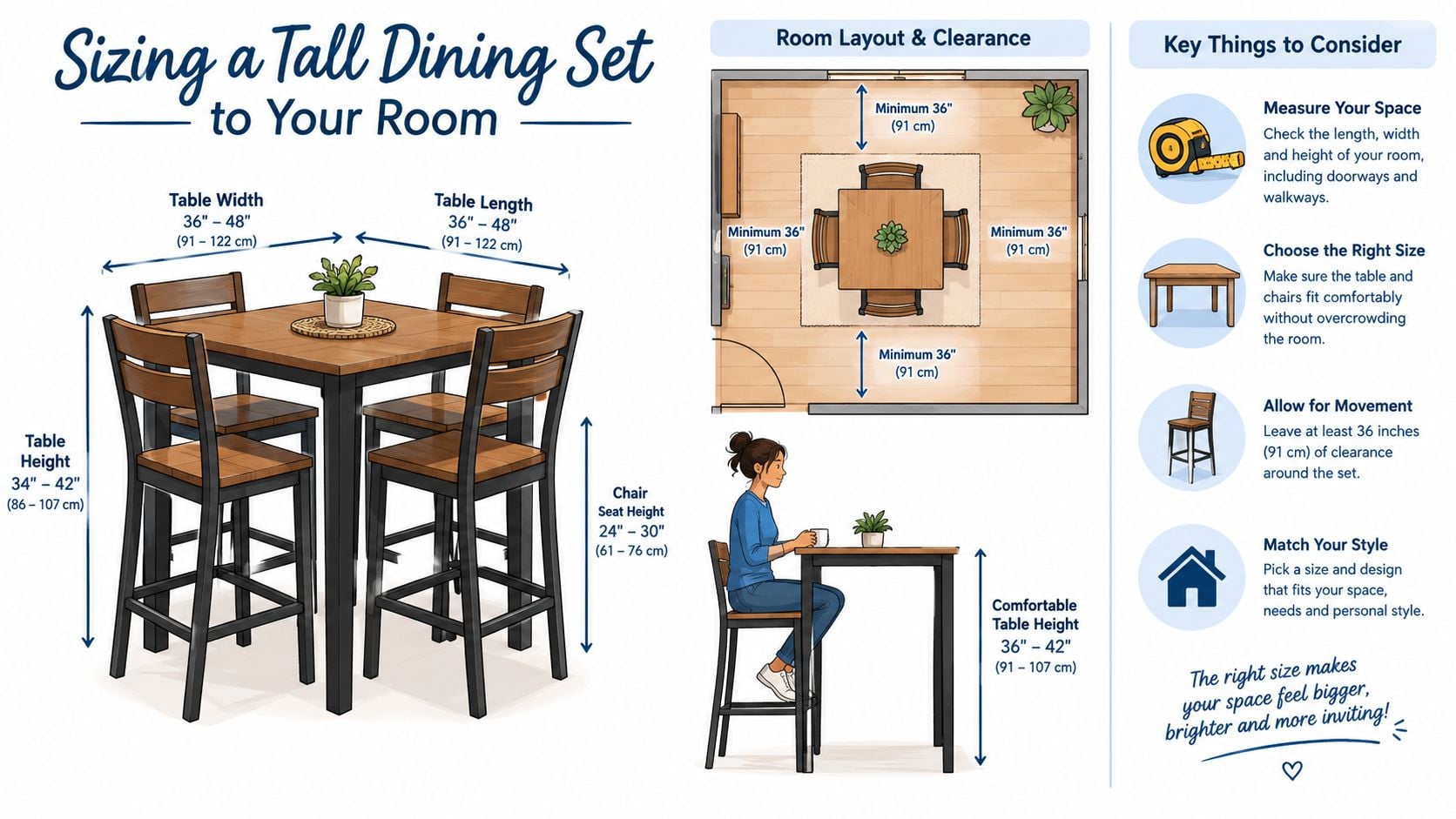
Standard dining tables are typically 28 to 30 inches high, counter-height tables are 34 to 36 inches, and bar-height tables are 40 to 43 inches, with matching seats scaled to each category according to standard dining table dimensions.
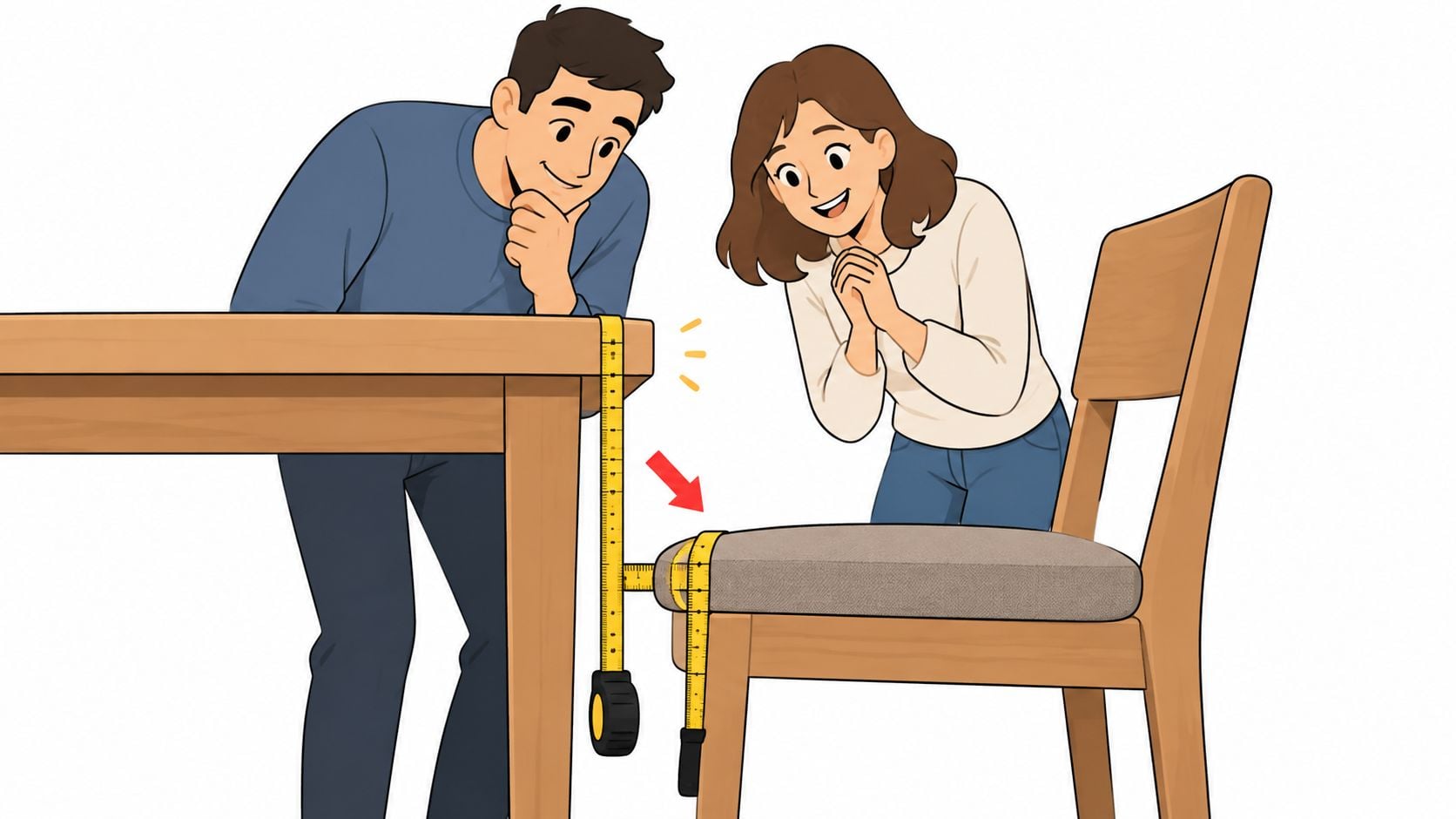
Most confusion starts because buyers hear “tall dining” and lump everything together. That's a mistake. Counter height and bar height are not interchangeable, and they don't live the same way.
Standard dining feels easiest
Historically, dining tables were once commonly around 34 inches high before dropping to roughly 30 inches by the Stuart period, which is close to the modern standard used today, as noted in this history of table heights. That lower standard stuck for a reason. It's comfortable for long meals and easy for most households.
Standard-height dining still makes the most sense for buyers who want classic seated comfort, especially in dedicated dining rooms.
Counter height is the sweet spot for many open plans
Counter-height tables usually sit at 34 to 36 inches, and matching seats usually land at 24 to 26 inches, according to this guide on how tall a dining table should be. In plain English, that means the set feels closer to a kitchen island than a formal table.
For many Longwood and Lake Mary homeowners, this is the most practical tall option. It feels casual without becoming theatrical. It usually works better for everyday meals than bar height does.
Bar height is a specialty choice
Bar-height tables typically reach 40 to 42 inches, with stools around 28 to 32 inches, based on this overview of dining chair and table height relationships. That format can look striking in a game room, entertainment nook, or compact pub-style setting.
It's rarely the right answer for a primary family dining space.
Showroom rule: If the household wants one table for nightly dinners, homework, and holidays, counter height deserves a serious look before bar height.
Buyers who want a broader framework before shopping can also review this dining table heights guide. It helps narrow the category before style takes over the conversation.
Matching Chairs and Stools the Right Way
Saturday night in a Central Florida home usually looks the same. Someone is coming in from the patio, someone else is carrying plates over from the kitchen, and at least one family member wants to sit longer than ten minutes. If the seats are wrong, a tall dining set stops working fast.
The table height gets the attention. The chair choice decides whether the room feels good to live in.
Start with seat-to-surface clearance
Good proportions are felt before they are measured. Sit too high and knees crowd the underside. Sit too low and everyone ends up reaching upward to eat.
For counter-height dining, a table in the mid-30-inch range usually pairs well with seats in the mid-20-inch range, preserving the ergonomic gap people need for relaxed shoulders and comfortable knee room, according to this dining height guide. Standard-height dining follows the same logic. Lower tables call for lower seats so the body stays in a natural eating position, as explained in this guide to choosing dining chair dimensions.
In the showroom, this is easy to spot. If a buyer has to climb up, scoot forward, or drop their elbows to find the table, that pairing is wrong.
Check what knees hit
Tall tables fail underneath all the time. Aprons, pedestal bases, stretcher bars, and chunky cross supports can steal legroom even when the top dimensions look fine.
Industry sizing guides note that about 26 inches of clear floor-to-cross-stretcher space is a useful benchmark on heavier counter-height designs because it gives knees and feet more room and helps the seat tuck in properly. Online photos rarely show that well. A showroom floor does.
That matters in open-plan homes around Orlando, Winter Park, and Lake Mary, where people slide in and out from multiple sides and the dining space often pulls double duty for meals, homework, and visiting.
Choose the seat style for real household use
A tall breakfast perch and a true dining chair are not the same purchase.
- Backless stools keep sightlines open and tuck in neatly. They suit quick meals and smaller breakfast areas better than long family dinners.
- Full-back counter chairs are the right call for households that gather at the table. They support the back, feel more grounded, and look finished in a dining zone.
- Swivel seats help in tighter layouts, especially when the table sits near an island or sliders to the lanai.
- Upholstered seats add comfort for longer sitting. Wood and performance finishes are easier to wipe down after messy weeknights or big holiday meals.
For buyers comparing durability standards, this article on dining chairs for hospitality use gives a useful outside perspective on how chairs hold up under repeated use.
My advice is simple. Bring your measurements, sit in the actual chair, and test how it feels getting in and out from every side you will use at home. This guide to choosing dining room chairs will help you narrow the right options before you step onto the showroom floor.
Sizing a Tall Dining Set to Your Room
You feel sizing mistakes faster with a tall dining set than with a standard one. In a Central Florida home with an open kitchen, sliders to the lanai, and people crossing through from three directions, a table that looks fine on paper can choke the room in real life.
Measure the room in three passes
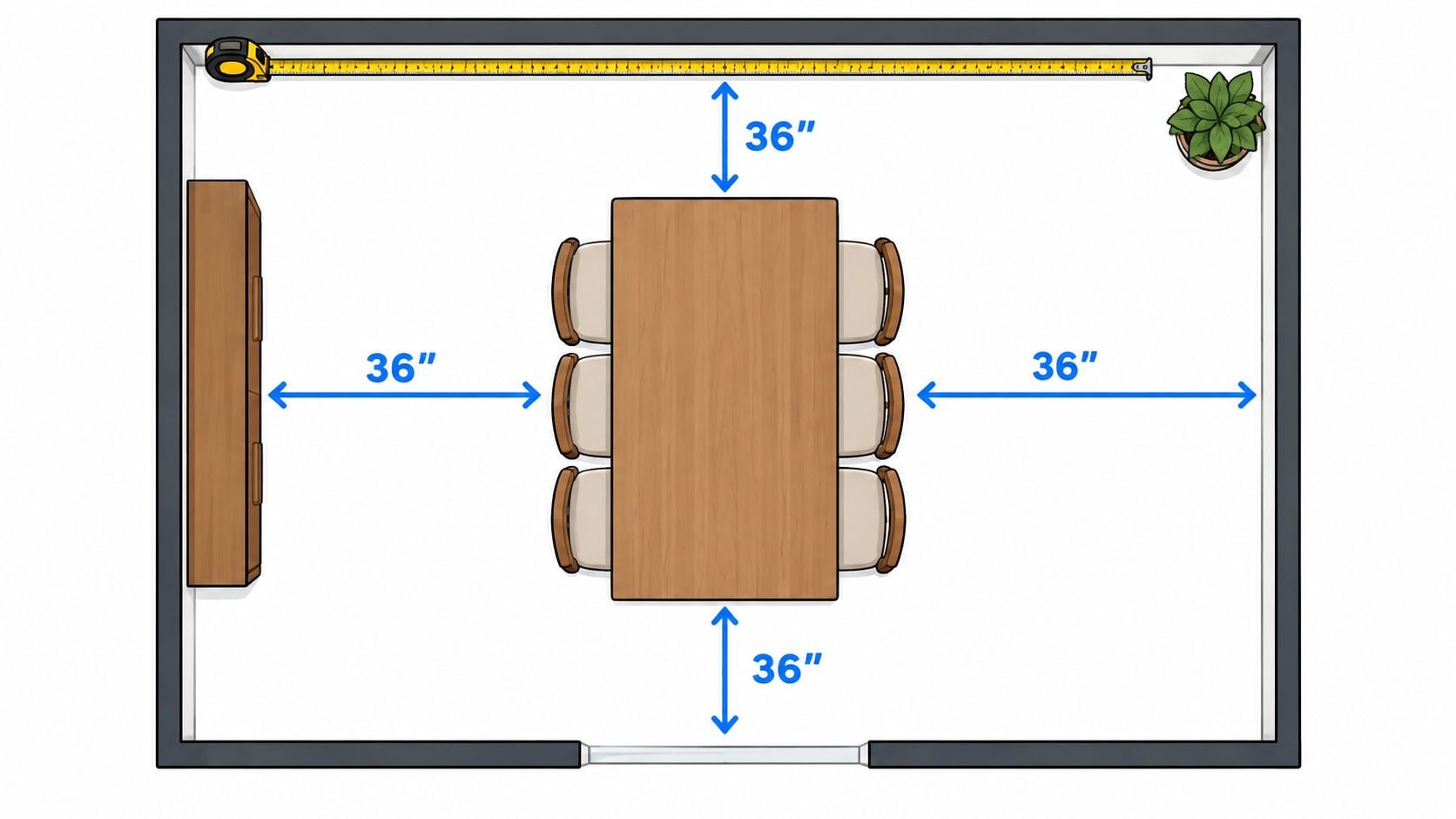
Start on the floor, not on a product page. Tape out the exact tabletop shape and size where it will sit. Then walk the room the way your household uses it. Cut through from the kitchen, pull out an imaginary chair, and open the path toward the patio or hallway. That quick test exposes bad sizing decisions immediately.
Next, measure for movement, not just placement. A tall set needs enough space for chairs to slide back and for someone to pass behind them without turning sideways. That matters in homes where dinner, homework, and casual drop-ins all happen in the same zone.
Then check overhead clearance. Tall tables sit closer to pendants and fans, so the vertical relationship matters more than buyers expect. In the showroom, this is one of the first things we flag when a piece feels right in width but wrong in proportion.
If the layout feels crowded before the set arrives, it is already too big.
Match the shape to the room
Shape decides how the room behaves.
- Round tops work best in square breakfast areas and in households that want easier conversation from every seat.
- Rectangular tables fit long open-plan layouts better and usually make more sense when the dining area runs parallel to an island or kitchen wall.
- Extension tables earn their keep in homes that host often, especially when grandparents, kids, and extra guests show up at the same table.
Seat count is never just a matter of tabletop dimensions. Base placement, chair width, and how people enter the table all affect real capacity. A compact round or square counter-height table usually serves four comfortably. Mid-size rectangular tops often suit six. Longer rectangular tables can handle eight if the base leaves proper knee and chair space. For a more accurate starting point, use this dining room table size guide for measuring your space.
Don't ignore the island relationship
Many Florida floor plans go wrong. A tall dining table placed too close to an island creates two competing work zones at nearly the same height, and the room starts to feel crowded and repetitive.
The right setup gives each surface its own job. The island handles prep, quick perching, and traffic. The dining table handles meals, conversation, and longer sitting. In the showroom, that distinction is easy to see when you compare footprints side by side instead of guessing from online dimensions.
Buy for flow first. The right tall set should make the room easier to live in, especially when the house fills up.
Materials and Craftsmanship That Endure
A tall table works harder than a standard one. It carries more visual weight, the legs and stretchers matter more structurally, and people lean on it differently. Cheap construction shows up quickly.
The serious choices usually come down to three categories: solid hardwood, hardwood veneer over a stable core, and metal or mixed-material construction. Each has a place. They are not equal.
Construction Comparison for Tall Dining Sets
| Factor | Solid Hardwood | Hardwood Veneer | Metal / Mixed |
|---|---|---|---|
| Core strength | Strong and substantial | Stable when well built | Strong frame, depends on top material |
| Repairability | Usually easier to refinish or repair | More limited surface repair | Frame can last, tops vary |
| Feel in daily use | Warm, weighty, substantial | Cleaner uniformity, lighter feel | Crisp, industrial, sometimes noisier |
| Climate behavior | Performs well when properly finished and maintained | Often dimensionally stable | Handles moisture well, but feel matters |
| Long-term value | Highest when construction is excellent | Good when expectations are realistic | Best when design intent suits the room |
What to look for in a true investment piece
Solid wood still sets the benchmark for heirloom dining. It offers weight, presence, and serviceability that lower-grade construction doesn't. It also allows better joinery, which matters at taller heights.
Solid-wood furniture commonly relies on box or dovetail joints, tongue-and-groove joints, mortise-and-tenon joints, and dowel joints for strength and durability, according to this woodworking coursebook on furniture joinery. Those details aren't decorative trivia. They're what keep a table rigid over time.
Practical rule: Turn the conversation away from stain color for a moment and ask how the apron, legs, and stretchers are joined.
The best fit for Central Florida homes
Florida humidity punishes poor construction. Thin veneers over weak substrates, loose joints, and low-grade finishes don't age gracefully.
For that reason, Amish-built and American-made solid wood deserve serious attention for a tall dining purchase. Amish brings hand-selected solid hardwoods and traditional joinery. Mavin builds precision solid wood dining collections in Amish country. Stickley remains the reference point for heirloom solid wood and handcrafted joinery with deep Arts & Crafts heritage. Canadel offers hand-finished solid birch custom dining furniture with strong design flexibility, while Amisco is a smart option when a buyer wants durable Canadian-made metal and wood seating in a more modern profile.
A veneer table isn't automatically a bad purchase. A good one can be stable and visually consistent. But if the goal is a long-term piece for a Longwood or Winter Park home, solid wood usually justifies the investment. Buyers comparing species and construction details can sort through the basics in this guide to wood types for dining tables.
Why Showroom Guidance Beats Online Guesswork
Tall dining is one of the worst categories to buy blindly.
Photos flatten proportions. Product listings often gloss over the underside of the table. Seat height may be listed, but the actual sit won't show up on a screen. That's how households end up with stools that technically fit and still feel wrong.
Where online purchases go sideways
The failure points are predictable.
One chair arrives slightly too tall, so thighs press the apron. Another stool has a stretcher that lands exactly where a guest wants to place a foot. The finish looked warm online but turns orange under Florida light. The crate arrives with damage at a leg joint, and now the household is negotiating a problem instead of enjoying the room.
Even the rise of digital visualization has limits. For broad context, Virtual Tour Easy insights on 3D showrooms make a fair case for how digital presentation can help buyers understand scale and layout. That's useful. It still isn't the same as sitting down, swinging a leg under the apron, and deciding whether the chair supports an actual dinner.
What an in-person consult actually solves
A serious showroom visit removes the guesswork that matters.
- Sit-testing reveals fit fast. Counter stools that look elegant may feel too shallow or too upright after five minutes.
- Knee clearance becomes obvious. A buyer can test the apron, stretcher placement, and foot support immediately.
- Finish selection gets more accurate. Wood and fabric samples read differently under real light than they do on a phone.
- Customization opens up. Many quality lines offer finish, seat, and size options that generic listings never explain well.
A local showroom in Longwood earns its keep. Slone Brothers Furniture offers custom-order dining, access to American-made and Amish-crafted collections, and experienced design consultants who can work from room photos, floor measurements, and finish samples without turning the process into a high-pressure sales exercise.
For a purchase this visible and this tactile, the showroom visit isn't an extra errand. It's the least expensive insurance in the whole project.
Your Next Step at Slone Brothers
A tall set works when five decisions are settled before the shopping gets emotional. Most mistakes happen when buyers fall in love with a silhouette before they lock down the basics.
The five-point pre-visit checklist
- Confirm the height category. Decide whether the room needs counter height or bar height based on daily use, not just appearance.
- Measure the circulation space. The table has to share the room with walkways, island traffic, and door openings.
- Match the seat correctly. The chair or stool needs the right relationship to the tabletop and a usable foot position.
- Choose the footprint. A compact round top and a long rectangle solve different problems.
- Set a real material standard. If the piece is meant to stay for years, construction quality should lead the budget conversation.

What a Longwood showroom visit should deliver
A worthwhile visit should give the buyer more than a pretty display. It should answer the practical questions the internet can't resolve.
That means sitting in actual counter-height and bar-height seats. It means handling wood samples, comparing finishes, studying apron depth, and seeing which chair backs feel supportive enough for a full dinner. For many Central Florida homeowners, it also means bringing room photos and using interior design consultation services to sort out layout, finish balance, and how a new dining set will live beside existing flooring, cabinets, and upholstery.
The right tall table doesn't just fit the room. It fits the household's routine, posture, and pace of life.
The strongest choices in this category usually come from customization. Canadel brings dining flexibility in solid birch. Amisco is excellent when a cleaner metal-and-wood profile suits the room. Amish, Mavin, and Stickley are the names to study when the goal is long-horizon value in solid wood. That's the level where a piece stops being a quick purchase and starts becoming part of the home.
Custom orders take planning, and that's a good thing. Buyers who slow down long enough to test, measure, and compare usually end up with a table that still feels right years later.
A tall dining set should feel effortless to use, not merely impressive to look at. Slone Brothers Furniture offers Central Florida homeowners a hands-on way to compare counter-height and bar-height dining, evaluate solid wood craftsmanship, and work through room planning with experienced design consultants in Longwood, FL. Visit the showroom, bring room photos and measurements, and let a real person help match the right tall dining room table and chairs to the way the home lives.