
Apartment Decorating Cheap

A new apartment in Central Florida usually starts the same way. The keys are on the counter, the boxes are stacked by the wall, and the rooms feel bigger and emptier than they looked during the tour. That first walk-through is exciting, but it also raises the same question almost every renter has. How does anyone make this place feel finished without overspending?
That's where apartment decorating cheap needs a smarter definition. The goal isn't to fill every corner with the lowest-priced item available. It's to use a high-low strategy. Save aggressively on pieces that can be thrifted, repainted, framed, or swapped out later. Invest carefully in the few items that carry daily wear and set the tone for the whole room.
That approach makes sense in a category where small purchases add up fast. The U.S. home décor market is projected to reach $215.20 billion in 2025, and Millennials spend an average of $1,771 annually on home décor, according to this home décor market analysis. Before any decorating starts, it also helps to get the logistics under control. Anyone settling into a rental can benefit from these practical tips on preparing for your apartment move, especially when unpacking and furniture placement need to happen in the right order.
For renters in Orlando, Lake Mary, Sanford, and Longwood, the smartest first move is choosing what deserves the budget and what doesn't. Readers looking for a solid starting point can browse furniture for a first apartment to see how a room comes together without treating every purchase like a forever piece.
Table of Contents
- Welcome Home to Your New Central Florida Apartment
- First Create Your Decorating Game Plan
- The Art of Smart Savings Finding Treasures
- Invest in Quality Where It Counts Most
- Style and Personalize Your Florida Apartment
- Your Local Partner for Affordable Long-Term Style
Welcome Home to Your New Central Florida Apartment
A blank apartment can either calm a person down or make the budget panic set in. In Central Florida, that feeling is even more familiar because many renters are starting fresh in fast-growing neighborhoods, moving for work, school, or a shorter commute across the Orlando area. The space may be clean and new, but it rarely feels like home on day one.
The biggest mistake happens early. People rush to fill rooms. They buy a handful of low-cost pieces online, add a few trendy accents, then realize the scale is wrong, the finish clashes, and the room still feels temporary. Cheap purchases can become expensive fast when they have to be replaced a few months later.
Practical rule: Cheap decorating works best when the room is edited, not crowded.
A more durable approach is to divide the apartment into two categories. First are the pieces that need to work hard every day, like seating, sleep, dining, and storage. Second are the visual layers that add warmth and personality, like art, textiles, plants, mirrors, and lighting. The first category needs thought. The second category gives renters more freedom to save.
In Longwood and the greater Orlando area, apartment living also brings local realities. Strong sunlight can wash out fabrics. Humidity can punish flimsy materials. Narrow stairwells and compact floor plans mean oversized furniture often becomes an expensive mistake before it even reaches the living room.
That's why apartment decorating cheap isn't really about bargain hunting alone. It's about building a home in the right order, with enough flexibility to adapt as the apartment starts to reflect real daily life.
First Create Your Decorating Game Plan
A budget decorating project usually succeeds or fails before anything gets delivered. The apartments that feel polished aren't always the ones with the biggest spending plan. They're the ones where each purchase had a job.
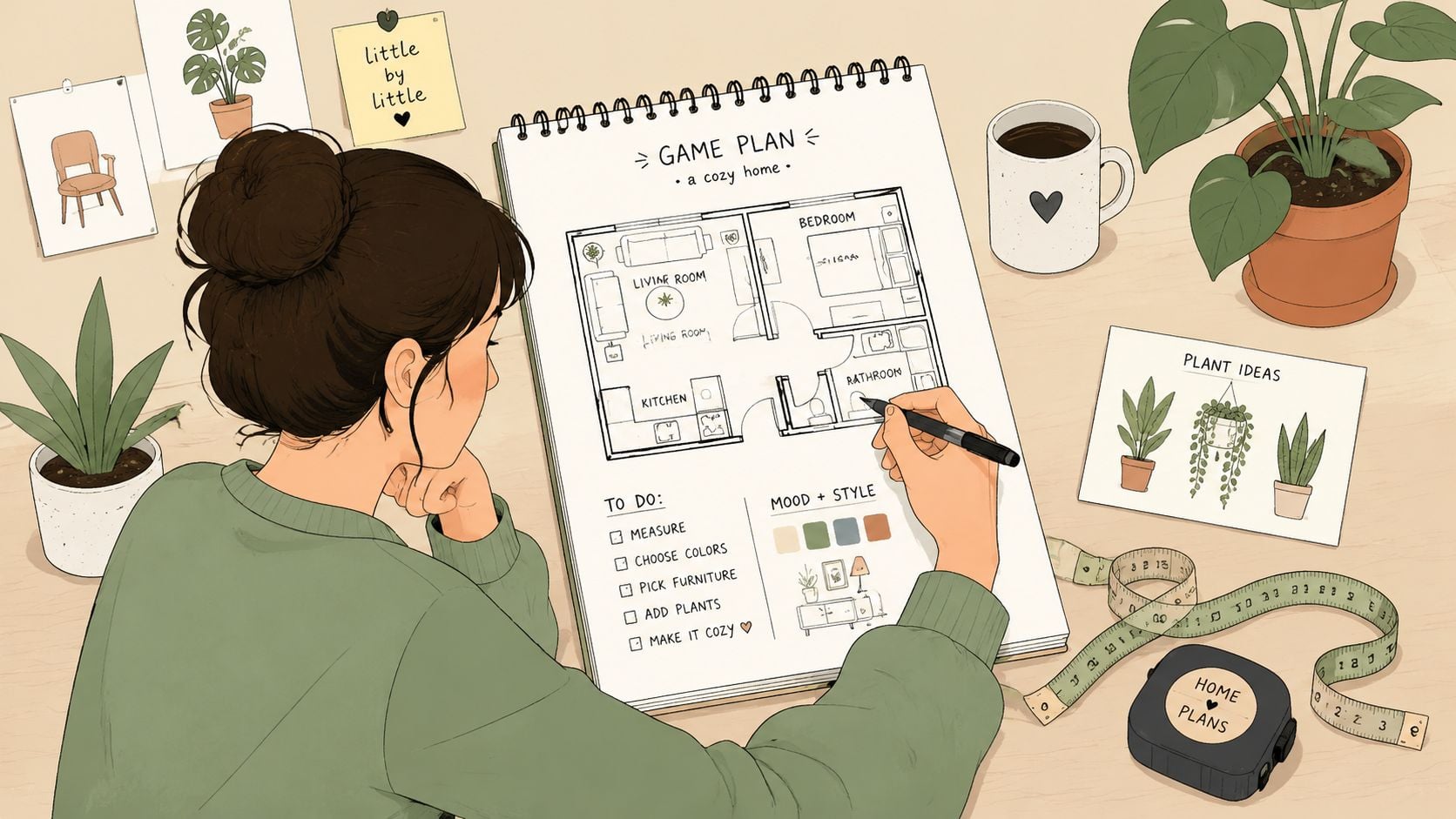
A practical workflow for low-cost decorating is to start with a floor plan, define functional zones, build a mood board, check measurements against real products, and only then place orders. That process helps reduce mismatches between layout, scale, and budget, as shown in this room planning walkthrough. Renters who want a local version of that process can also review this guide to planning a room layout for Central Florida homes.
Start with use, not style
Style matters, but use comes first. In a one-bedroom apartment, the living room might also need to function as an office, a dining spot, and a guest area. A studio may need one rug placement to suggest a sleeping zone and another to anchor conversation space.
A good planning pass should answer questions like these:
- Morning routine: Where does someone sit to put on shoes, drop keys, or charge a phone?
- Daily traffic: Is there a clean path from the entry to the kitchen, bedroom, and balcony?
- Storage pressure: Which items need hidden storage, and which can be displayed?
- Nighttime comfort: Does the lighting support reading, relaxing, and winding down?
Those answers do more than organize the room. They stop decorative purchases from taking over the budget before the essentials are handled.
Build a simple buying filter
Every item should pass through the same filter before money gets spent.
| Question | Why it matters |
|---|---|
| Does it fit the measured space? | Small apartments punish scale mistakes quickly. |
| Does it serve more than one purpose? | Multi-use pieces stretch the budget and save floor space. |
| Can it move to a future home? | A flexible piece has better long-term value. |
| Will it survive humidity and daily wear? | Materials matter more in Florida than many renters expect. |
A mood board doesn't need to be fancy. A saved folder of finishes, fabric colors, rug ideas, and lighting shapes is enough to keep the apartment from turning into a mix of unrelated impulse buys.
A realistic game plan also means accepting that not every room needs to be finished at once. Most renters are better off completing the main living zone first, then layering in the bedroom, entry, and wall décor once the apartment has a clear direction.
The Art of Smart Savings Finding Treasures
Saving money on décor isn't about settling for poor quality. It's about recognizing which categories reward patience and creativity. Some of the most stylish apartments in Central Florida are built from a mix of vintage finds, practical DIY, and a few well-chosen new pieces.
Guidance for decorating on a budget consistently favors multi-use and low-commitment pieces. It also warns against low-quality particle-board furniture, while recommending secondhand solid wood that can be refinished and renter-friendly options like removable wallpaper and leanable mirrors, as outlined in this budget apartment decorating guide. Timing also helps. Renters watching for markdowns can use this overview on the best time to buy furniture to shop more strategically.
What's worth thrifting
Certain categories are ideal for the hunt because they don't need perfect upholstery, advanced assembly, or precision sizing.
- Solid wood side tables: These often have good structure and can be updated with sanding or paint.
- Mirrors: Leanable mirrors add light and visual height without wall damage.
- Ceramics and baskets: They bring texture and storage without asking much of the budget.
- Small lamps and framed art: These are easy to mix, replace, or regroup as the apartment evolves.
A modest thrifted table beside a quality sofa can look intentional. The same table beside three other disposable pieces usually looks temporary.
What usually disappoints
The lowest-priced furniture often fails in the same ways. It wobbles, chips, sags, or looks undersized once it lands in the room. That's especially true with heavily engineered pieces that need to bear weight every day.
The categories that often create regret are:
- Sofas with weak frames
- Coffee tables made from thin laminate
- Bookcases that bow under normal use
- Dining chairs that feel unstable after assembly
The cheapest version of a hard-use item usually costs more than expected because replacement comes fast.
Resourceful decorating also includes simple cosmetic upgrades. A thrifted dresser gets new hardware. A basic frame becomes a gallery wall with personal prints. An inexpensive neutral curtain panel softens a room immediately. These moves don't require a huge budget. They require restraint and a good eye for what has strong bones.
Invest in Quality Where It Counts Most
The high-low strategy only works if the “high” side is chosen with intention. Every apartment has a few pieces that carry most of the visual and practical weight. Those are the items that need better construction, better comfort, and a longer horizon than the current lease.
Anchor pieces carry the room
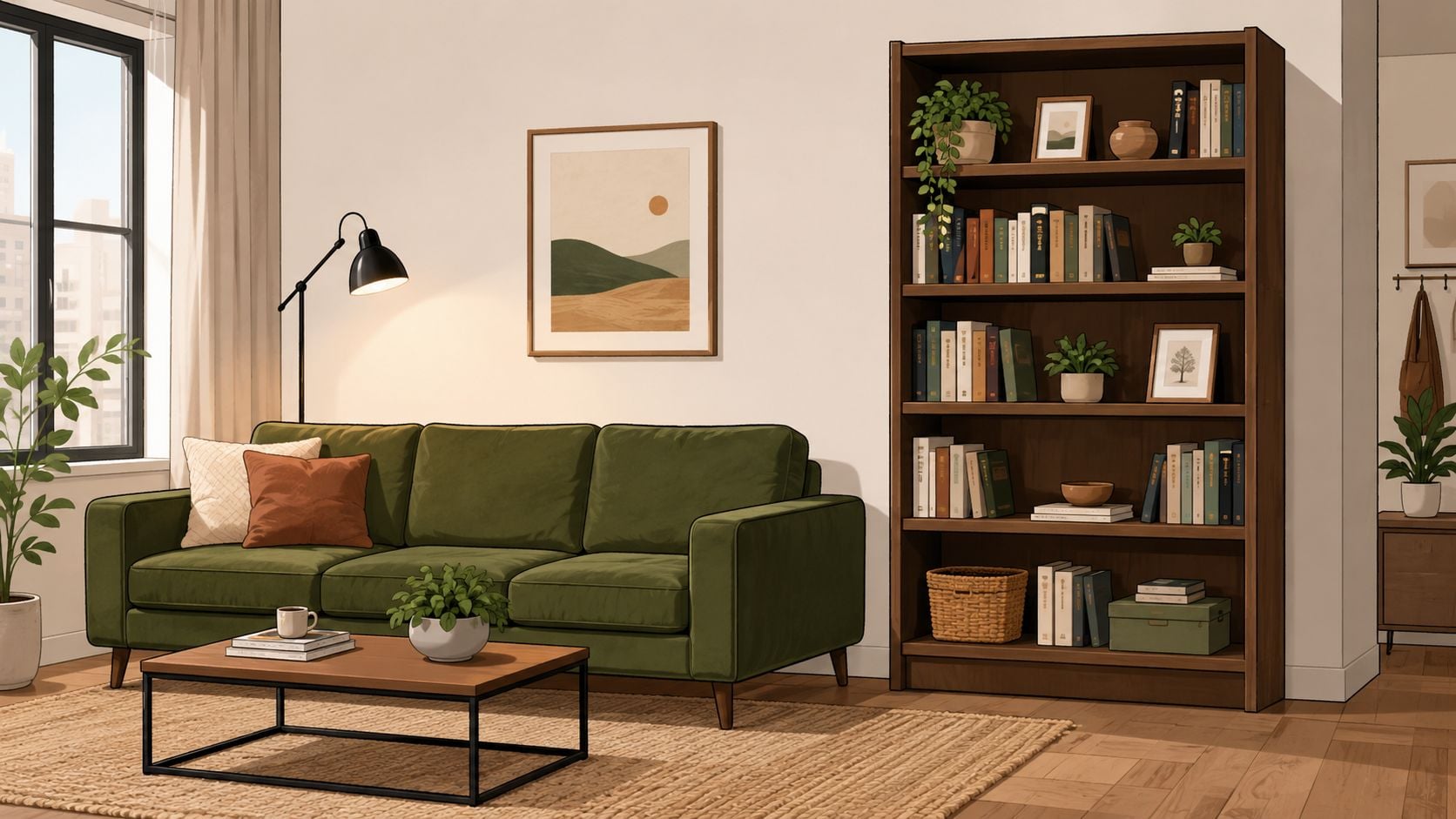
A strong anchor piece changes how everything around it reads. A well-scaled sofa makes thrifted side tables feel curated. A sturdy dining table gives the apartment a settled, adult feel even if the chairs are mixed for now. A mattress or bed with real support improves daily life more than almost any decorative purchase.
For many renters, the smartest investment list includes:
- A sofa or sectional that will hold shape and comfort through multiple moves
- A mattress and bed that support sleep instead of treating it like an afterthought
- A dining table that can work for meals, work-from-home time, and hosting
- One substantial storage piece that prevents clutter from taking over the apartment
In Central Florida, this is where material quality matters. Upholstery needs to handle heat, sun, and everyday use. Wood construction needs to feel solid, not disposable. A better-made piece can move from an apartment in Sanford to a future home in Lake Mary without looking like a starter purchase.
A better material choice changes the math
Long-term value proves superior to a low sticker price. American-made and Amish-crafted furniture tends to justify itself through construction, repairability, and finish quality. Brands such as Smith Brothers, Bassett, Simply Amish, Mavin, and American Leather fit naturally into that strategy because they focus on the kinds of foundational pieces people keep.
Readers comparing construction quality can look at this explanation of why American-made furniture matters. For renters who want one reliable source for those higher-use pieces, Slone Brothers Furniture carries American-made and Amish-crafted options, along with custom-order choices that help fit apartment scale, fabric needs, and layout constraints.
A room rarely needs expensive everything. It usually needs one honest, well-made piece that sets the standard.
That's the high-low formula. Save on accessories, accent tables, wall art, and temporary layers. Spend where the body feels the difference and where the room depends on structure.
Style and Personalize Your Florida Apartment
Once the essentials are in place, personality should come from layers that are easy to move, easy to update, and easy on the lease agreement. Renters don't need major construction to make an apartment feel settled.
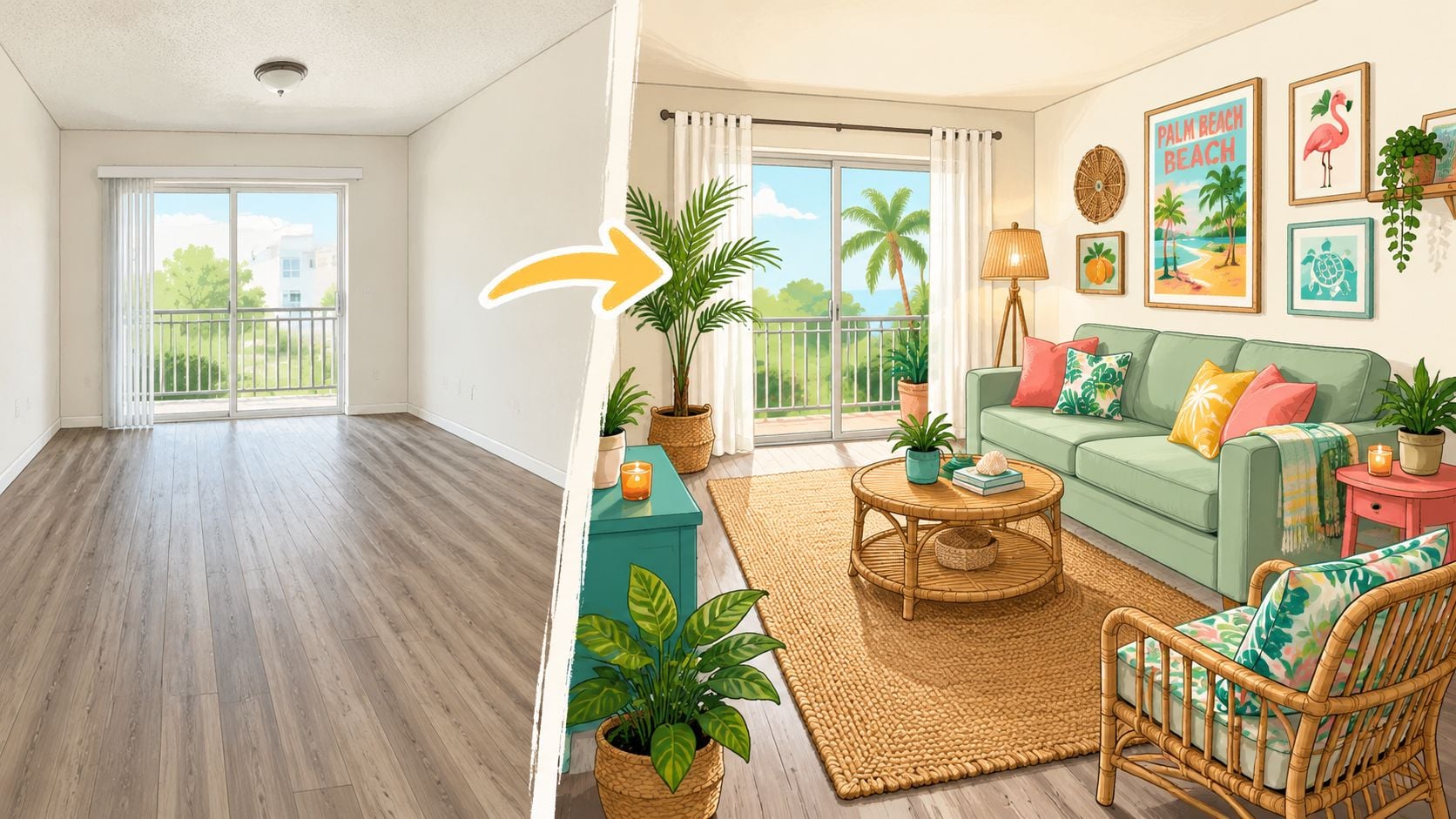
A renter-first decorating approach makes sense because homeowners have been spending more on large-scale renovation. A 2024 analysis noted a 20% increase in median renovation spending, reaching $18,000, while apartment decorating still leans on low-commitment updates like color, gallery walls, rugs, and removable wallpaper, as described in this apartment décor guide. For renters refining a look, it can also help to discover timeless mid-century style and adapt the shapes and restraint of that aesthetic with more affordable accessories.
Use renter-friendly layers
The strongest styling tools are usually soft goods and wall treatments.
- Rugs: They define living, dining, and sleeping zones in open layouts.
- Curtains: They add height, soften hard apartment finishes, and improve light control.
- Pillows and throws: They introduce color and texture without committing to a major purchase.
- Framed art and personal photos: These turn generic walls into something specific and lived-in.
- Removable wallpaper: It gives an accent wall real personality without permanent change.
Gallery walls work especially well in apartments because they can fill vertical space and shift attention away from builder-grade finishes. A collection of simple matching frames usually looks more refined than a random assortment of novelty décor.
Decorate for Florida light and humidity
Florida apartments need a little more thought than a style board on a screen might suggest. Strong sunlight can fade fabrics and overheat a room visually. Humidity can make certain materials feel tired sooner.
A few practical choices help:
- Light-filtering window treatments soften glare without making the room feel closed off.
- Performance-minded fabrics hold up better in rooms with strong afternoon sun.
- Greenery adds life, but easier-care plants are often the better fit for busy renters.
- Layered lighting matters because overhead apartment fixtures rarely make a room feel inviting on their own.
Good apartment styling doesn't depend on permanent upgrades. It depends on contrast, texture, and better light.
A neutral base with a few warmer woods, woven textures, and one repeating accent color often feels calmer than trying to use every trend at once. That matters in smaller spaces, where clutter shows up quickly and visual noise makes the apartment feel tighter than it is.
Your Local Partner for Affordable Long-Term Style
The smartest apartment decorating cheap strategy has a simple structure. Save on the pieces that are easy to change. Invest in the items that support daily life, survive the next move, and keep the room from feeling temporary.
That balance is especially helpful in Central Florida, where renters often need furniture that fits compact layouts, handles bright light, and still feels grown-up enough to move into a future home. A good sofa, a durable dining table, or a better bed frame can do more for a room than a pile of trendy accessories ever will.
For people in Longwood, Orlando, Lake Mary, and nearby communities, local design help can prevent expensive mistakes before they happen. Floor plans, finish coordination, and scale decisions matter more in apartments because there isn't much room to hide a wrong choice. Anyone who wants help sorting through layout, style, and investment priorities can start with these interior design consultation services.
Shoppers who want long-term value should also keep an eye on quality closeouts, custom-order opportunities, and American-made construction rather than assuming “budget” has to mean temporary. That's often the difference between an apartment that looks assembled and one that feels finished.
Ready to find the perfect piece for your home? Visit the Slone Brothers Furniture showroom in Longwood, FL, and let the design experts help you get started!