
How to Measure a Couch for a Slipcover: An Orlando Guide

A lot of Central Florida homeowners end up in the same spot. The sofa still feels solid, the frame is good, and the room works, but the fabric has picked up wear, pet hair, or that washed-out look that strong Orlando sun can leave behind. A slipcover can be a smart answer when replacement isn't necessary and a full reupholstery job isn't the right move.
That only works if the fit is right. Learning how to measure a couch for a slipcover is what separates a clean, well-fitted update from a cover that pulls, sags, or shifts every time someone sits down. Before measuring, it also helps to start with a fresh surface, especially if the fabric has built-up dust or odors. A thorough upholstery cleaning method can make it easier to see the true shape of the piece and decide whether a slipcover is the right next step.
Fabric choice matters too. In humid, sunny homes around Longwood, Lake Mary, and Orlando, performance and texture deserve as much attention as color. A quick review of upholstery materials and how they behave can help homeowners think beyond appearance and plan for daily use.
Table of Contents
- Revive Your Sofa The Smart Way
- Your Pre-Measurement Toolkit and Prep
- The Core Measurements For A Perfect Fit
- Navigating Tricky Spots and Unique Sofas
- From Measurement to Masterpiece Choosing Your Slipcover
Revive Your Sofa The Smart Way
A Florida living room tells the story fast. The sofa still feels solid, but the fabric by the windows looks tired, the seat cushions have seen a few years of daily use, and replacing the whole piece feels unnecessary. In that situation, a slipcover is often the smarter move.
A good sofa frame can outlast its original fabric by a long stretch. In Central Florida, humidity, sun exposure, and everyday traffic usually show up on the upholstery before they show up in the construction. If the sofa still fits the room, sits comfortably, and has a stable frame, covering it can protect a piece you already like and give the room a cleaner, more intentional look.
That approach works for DIY projects and for custom work with a local shop. The difference between a cover that looks relaxed and well-fitted versus one that sags, pulls, or twists usually comes down to measuring the sofa you have, not guessing from a product label or a broad size category.
Why measuring matters more than style photos
Photos sell color and mood. Measurements decide fit.
Two sofas can both be called three-seaters and still need very different covers because arm shape, deck depth, back height, and cushion layout change the silhouette. Rolled arms take fabric differently than track arms. Loose back cushions behave differently than attached backs. Sun-faded upholstery can make a sofa look ready for replacement even when the bones are still worth saving.
That is why I tell Longwood homeowners to treat a slipcover as a design project, not just a quick cover-up. Good measurements help you choose the right fabric weight, the right construction style, and the right level of fit. If you are comparing fabrics before you order, this guide to upholstery materials for sofas and chairs helps connect the numbers to the finished look.
What works in real homes
The best results come from measuring the full shape of the sofa. Include the parts that stick out, curve inward, or change how the cover will drape. Arms matter. The height of the back matters. Cushion thickness matters. So do details like a skirt, a tight seat, or a deep frame that sits low to the ground.
A little prep helps too. Clean upholstery gives you a clearer read on the true lines of the piece, especially around seams and cushion edges. If the sofa needs freshening before you start, a professional upholstery cleaning method can remove buildup that hides the actual shape.
One trade-off is fit versus forgiveness. Stretch slipcovers can hide small measuring mistakes, but they rarely look as clean on a sofa with distinctive arms or a deeper seat. A more custom-fit cover demands better numbers and more patience, but the payoff is a result that looks chosen for the room, not borrowed from a bin.
That patience is what protects the project. A slipcover should solve a problem and improve the room at the same time.
Your Pre-Measurement Toolkit and Prep
A slipcover project usually goes off course before the first number is written down. The sofa is still loaded with pillows, the tape measure is the wrong type, and someone measures the puff of the cushions instead of the frame underneath. In our Longwood showroom, that is one of the first things we correct, because a cover can only fit the structure it is built for.
Florida homes add a few practical concerns. Humidity can soften cushion fills and change how loose upholstery sits day to day. Strong sun through sliders and large windows can also highlight a bad fit fast, especially on lighter fabrics where sagging and pulling show more clearly. Good prep gives you cleaner measurements and a better-looking result, whether you are ordering a ready-made cover or planning a custom one through a local workroom.
If you want a baseline for frame sizing before you start, this guide on how furniture is measured helps clarify the terms you will see.
Gather the right tools first
A few basic tools make the job easier and the numbers more dependable.
- Flexible tape measure: Best for wrapping arms, backs, and rounded corners.
- Notebook or phone notes: Record each number immediately. Memory is not reliable halfway through a sofa.
- Painter's tape or sticky notes: Useful for marking left arm, right arm, inside back, or any area that needs a second check.
- A second person: One person holds position while the other reads and records.
- Clear floor space: Move baskets, side tables, and anything else that blocks the tape or hides the base.
Use the same tape measure for the whole job if you can. Switching between tools sounds harmless, but small differences add up.
Prep the sofa before measuring
Strip the sofa down to its true shape. Remove throws, loose back pillows, seat cushions if they come off, and anything tucked into the corners. You want to see the frame lines clearly, especially around the arms, deck, and back.
Measure the frame first, then measure removable cushions separately if the slipcover style calls for individual cushion covers. That trade-off matters. A stretch cover can forgive small cushion variation, but a custom-fit slipcover needs the frame and cushion numbers to agree.
Take a quick look at the condition of the piece too. In Florida, fabric can relax from moisture and wear unevenly on the sunny side of the room. If one arm is fuller, one cushion is flatter, or the back bows slightly, note it now. Those small quirks affect how a finished cover hangs.
A quick prep checklist before the first measurement
- Remove loose pieces: Set aside cushions, pillows, and throws.
- Check visibility at the base: Expose legs, skirt lines, and the lower front rail.
- Look for uneven sides: Some sofas are not perfectly symmetrical.
- Mark curves and flares: Rolled arms, camel backs, and bowed fronts need closer attention later.
- Choose your slipcover goal: Relaxed fit, stretch fit, or precise fit. The cleaner the look you want, the tighter your measuring needs to be.
Five extra minutes here can save a full round of reordering. Clean prep leads to accurate numbers, and accurate numbers lead to a slipcover that looks intentional, holds up better in a sunny Florida room, and feels like a design choice instead of a temporary fix.
The Core Measurements For A Perfect Fit
Start with the measurements that control fit across the whole frame. If those numbers are off, even a nice fabric will look strained, loose, or crooked once the cover is on.
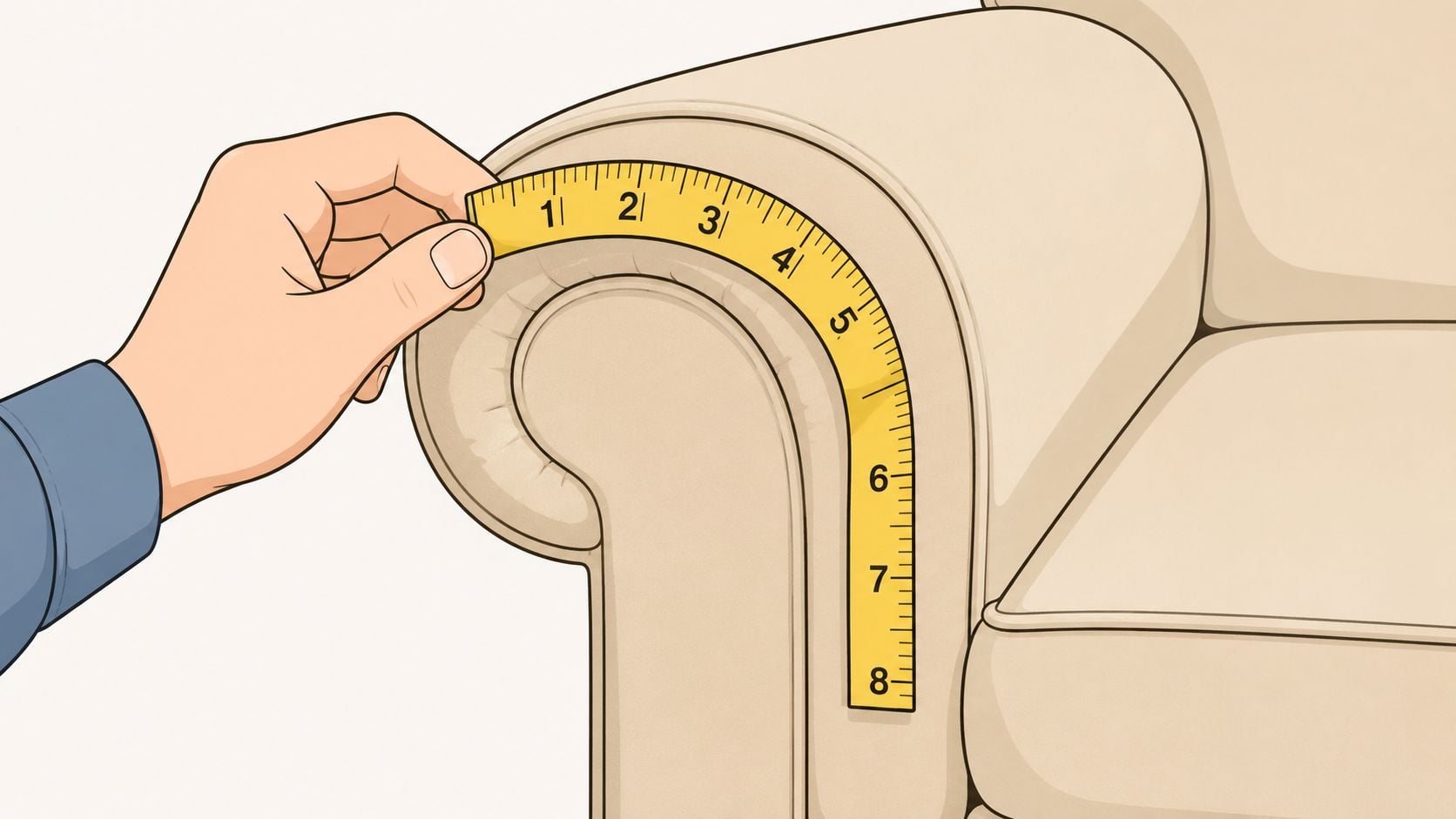
If you are sorting out how to measure a couch for a slipcover, it helps to compare your numbers to the way stores list sofa specs. This overview of how furniture dimensions are typically taken makes that easier and helps you avoid matching your tape measurements to the wrong spec on a product page.
Overall width
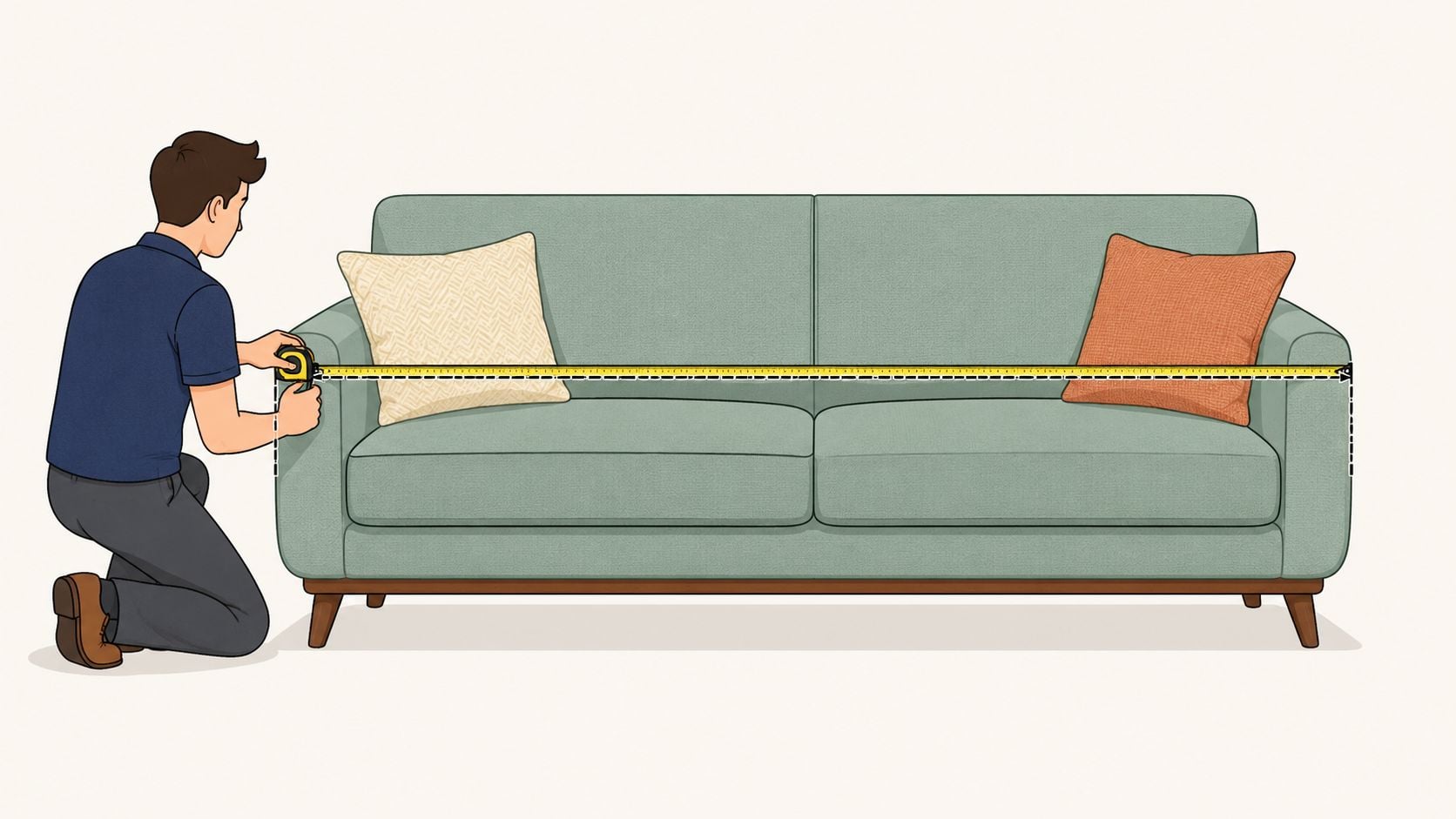
Measure the full outside width first. Run the tape from the farthest outer edge of one arm to the farthest outer edge of the other arm, and keep it level.
Ready-made slipcovers usually live or die by this number. On a larger sofa, even a small measuring mistake can shift the cover from relaxed to tight, especially if the arms flare out or have extra padding. In our Longwood showroom, I usually tell people to measure width twice. Once across the front, and once a little higher where the arms may bulge more. Use the larger number.
That gives you a safer working width.
For a more custom-fit project, width is not just one straight line. You also need to account for the outside of each arm and the span across the seating area so the cover has enough fabric to wrap the full profile of the sofa instead of pulling at the corners.
Overall depth and height
Next, measure overall depth from the front-most part of the sofa to the very back. On many sofas, that means the front edge of the arm or front rail to the furthest point on the back, not just the seat cushion depth. Then measure overall height from the floor to the highest point of the back.
These numbers matter more in Florida than many homeowners expect. Humidity can soften fabric and batting over time, and strong sun can dry out and flatten one side of a sofa faster than the other. A cover cut too tight in depth or height tends to show those irregularities instead of hiding them.
If your sofa has a skirt, also measure from the base of the frame to the floor so the hem lands where you want it. Too short looks skimpy. Too long drags and wears faster.
A slipcover can match the width and still fail if the depth and back height are wrong.
Cushions and total cover planning
If the slipcover includes separate cushion covers, measure each cushion on its own. Record the width, depth, and thickness for every seat and back cushion, even if they look identical at a glance. They often are not.
For a square or box-style cushion, those three measurements are usually enough to get a clean cover made. If the cushion has rounded front corners, a bullnose edge, or a T-shape, write that down with the numbers. Shape changes fit just as much as size.
A simple recording sheet helps:
| Area | What to measure | Why it matters |
|---|---|---|
| Full width | Outer arm to outer arm | Sets the starting size for the whole sofa |
| Overall depth | Front-most point to furthest back point | Prevents tight pull across the seat and back |
| Overall height | Floor to highest back point | Sets full coverage and hem balance |
| Seat cushions | Width, depth, thickness of each cushion | Improves fit on custom or semi-fitted covers |
| Back cushions | Width, height, thickness of each cushion | Keeps the back from looking overstuffed or flat |
Label each number clearly. “Overall depth,” “seat depth,” and “cushion depth” are three different measurements, and mixing them up is one of the fastest ways to end up with a slipcover that looks like a temporary fix instead of a finished design choice.
Navigating Tricky Spots and Unique Sofas
A sofa can look square across the front and still fight you once the tape gets to the arms, back, or base. We see that a lot in Longwood homes, especially with older well-built pieces that are worth keeping, and with Florida rooms where sun and humidity have already done enough damage. A properly measured slipcover protects the frame and fabric you still have, and it looks intentional instead of temporary.
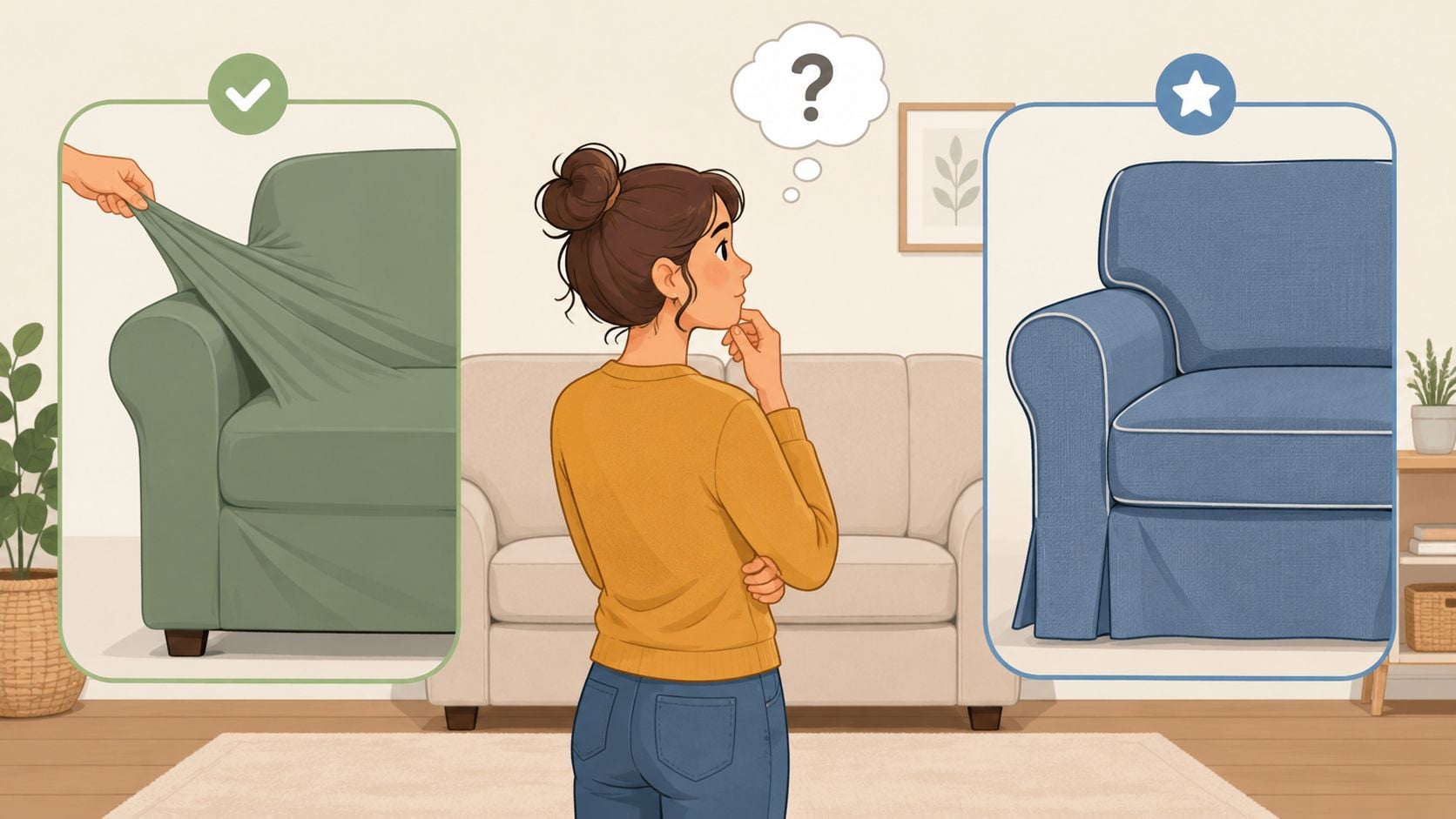
This comes up often in homes around Lake Mary and Sanford where homeowners want to preserve a quality sofa instead of replacing it. It also shows up with larger seating layouts, which is why broader planning guidance like what to know before buying a sectional can be helpful when the piece goes beyond a standard straight sofa.
Curved arms and bowed backs
Curves change how you measure. Follow the furniture's furthest outer point, not the cleanest straight line between seams.
Rolled arms, flared arms, and bowed backs need extra attention because fabric has to travel over the shape, not through it. If you measure the shortest span, the cover usually pulls at the widest part, shifts out of place, or leaves the arm looking half-dressed. On a custom job, that means a remake. On a ready-made cover, it usually means constant tugging and a look that never settles down.
For a bowed back, place the tape where the frame projects, then measure across that full width. For a rolled or flared arm, capture the outside swell at its broadest spot. If the piece has carved trim or a wood edge you want covered, include that too. If you want it exposed, note that clearly before ordering.
Recliners, skirts, and extra-large pieces
Recliners need measurements in the position that matters most. If the cover has to work while the footrest is up, measure the full length with the recliner open, from the highest back point down to the end of the extended footrest. If you only measure it closed, the fabric often goes tight as soon as the mechanism moves.
Skirted sofas bring a different trade-off. Some homeowners want the skirt fully covered for a cleaner, polished look. Others prefer to stop above it so the slipcover breathes better and dries faster after cleaning, which can be a smart choice in Florida's humidity. Decide that before you measure the drop.
Large sofas and casual protector-style covers usually need a little more allowance over the arms, seat, and back so the fabric can stay in place during daily use. That is especially true in busy family rooms where everyone slides into the same corner seat. If you are still choosing material, the fabric itself affects how forgiving the fit will be. A lighter cotton option can look relaxed and livable, and this guide can help you choose perfect cotton fabric for that softer style.
Use these checks for unusual frames:
- Rolled arms: Measure the furthest outside curve.
- Flared arms: Record the widest point at the top.
- Bowed backs: Measure across the full outward projection.
- Attached pillow backs: Measure from the frame, then note the cushion loft separately.
- Skirted sofas: Include the drop only if you want full-length coverage.
- Recliners: Measure closed and open if the cover must function in both positions.
Some sofas do not match ready-made templates very well. That is normal. It usually means a custom slipcover will give you a cleaner result, better sun protection, and less daily adjusting, which is often the smarter buy for a sofa you plan to keep.
From Measurement to Masterpiece Choosing Your Slipcover
Good measurements give you options. They help you decide whether a ready-made cover will sit well enough for a casual room or whether your sofa deserves a custom-fit slipcover that stays put, looks cleaner, and needs less daily straightening.

The next step is fabric. Color matters, but so do weave, weight, washability, and how the material behaves on the frame. If you are comparing options, this guide on how to choose upholstery fabric is a strong place to start, especially for homes with kids, pets, or heavy daily use.
What the numbers tell you about fit
Measurements do more than confirm size. They show how demanding the sofa shape really is.
A boxy frame with simple arms and loose cushions often works with a stretch cover or other ready-made option. A sofa with rolled arms, a bowed back, attached cushions, or uneven proportions usually looks better with a custom approach. That is where accurate measurements pay off, because more shaping, more seams, and details like welting all add fabric use and labor.
I tell Longwood customers the same thing in the showroom. If you had to stop and recheck several spots while measuring, the sofa is already telling you it may not fit a generic pattern very well.
Fabric choices for Central Florida homes
Florida conditions change the decision. Humidity can make some fabrics feel heavier and slower to dry after cleaning. Strong sun through sliders and front windows can fade color, especially on the same arm or back panel that gets hit every afternoon. For that reason, the best slipcover fabric is usually the one that balances appearance with cleanability and resistance to wear, not just the one that looks good on a swatch.
Cotton still works in the right room. It can give a relaxed, comfortable look that suits cottages, casual family rooms, and lighter color palettes. If you are weighing texture and softness against upkeep, this guide can help you choose perfect cotton fabric before you commit.
Here is the practical trade-off:
| Slipcover approach | Best for | Watch for |
|---|---|---|
| Stretch slipcover | Simple sofa shapes and informal spaces | Can pull out of place on deep seats or curved arms |
| Custom-fit slipcover | Cleaner lines and a more polished result | Requires precise measuring and more planning |
| Draped style | Relaxed rooms with softer folds | Uses more fabric and can shift with daily use |
| Protector style | High-traffic seating and easy wash cycles | Usually looks more casual and less refined |
For a good sofa, a slipcover should solve a problem and improve the room at the same time. Done right, it protects against Florida sun, helps the piece last longer, and gives you a result that feels intentional, whether you sew it yourself or have it made through a local shop like Slone Brothers.
Ready to find the perfect piece for your home? Visit the Slone Brothers Furniture showroom in Longwood, FL, and let their design experts help you get started!